
In the dynamic world of financial markets, investors encounter a vast array of instruments designed for various strategies, from long-term growth to short-term speculation. Among these, exchange-traded funds (ETFs) have gained immense popularity for their diversification benefits and ease of trading. However, a particular class of ETFs, known as leveraged inverse ETFs, stands out due to its complex nature and aggressive investment objectives. One such prominent example is SQQQ, an acronym that often sparks curiosity and prompts a deeper dive into its mechanics. Understanding SQQQ is crucial for anyone considering its inclusion in their portfolio, as it represents a sophisticated tool with both significant potential rewards and inherent, substantial risks.
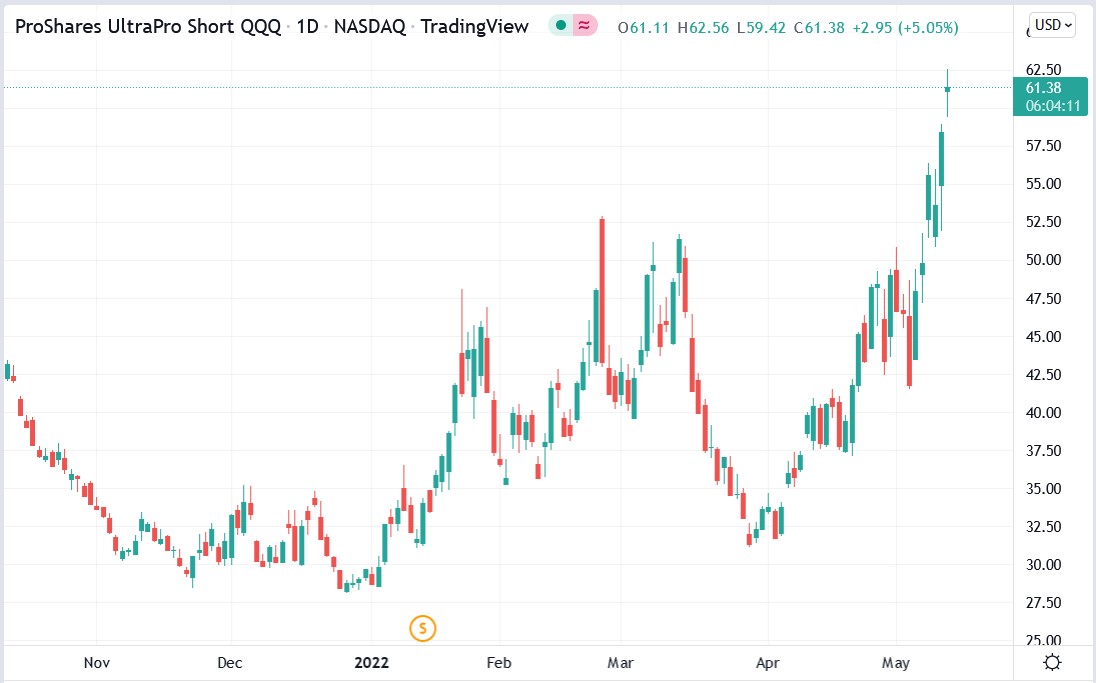
SQQQ, officially known as the ProShares UltraPro Short QQQ, is not a traditional “stock” in the sense of owning a share of a company. Instead, it is an exchange-traded fund that aims to deliver three times (3x) the inverse daily performance of the Nasdaq 100 Index. This seemingly straightforward definition hides layers of complexity related to its daily reset mechanism, compounding effects, and suitability only for specific, often short-term, market scenarios. To truly grasp “what is SQQQ stock,” one must dissect the components of its design, understand its operational intricacies, and appreciate the unique market conditions under which it is intended to perform. This article will demystify SQQQ, exploring its structure, how it works, the risks and rewards it presents, and why it occupies a specialized niche in the investment landscape.
Understanding Leveraged Inverse ETFs
To comprehend SQQQ, it’s essential to first establish a foundational understanding of what an ETF is, and then dissect the terms “inverse” and “leveraged” in the context of these funds. This groundwork is critical because SQQQ combines both these advanced features.
The Basics of Exchange-Traded Funds (ETFs)
An Exchange-Traded Fund (ETF) is a type of investment fund and exchange-traded product, meaning they are traded on stock exchanges like regular stocks. An ETF holds assets such as stocks, commodities, or bonds, and generally operates with an arbitrage mechanism designed to keep its trading price close to its net asset value (NAV). Unlike mutual funds, which are typically priced once a day after the market closes, ETFs can be bought and sold throughout the trading day. They offer investors diversification, often tracking specific indexes, sectors, or commodities, and come with lower expense ratios compared to many actively managed mutual funds. Their transparency and liquidity make them a popular choice for both institutional and retail investors seeking exposure to broad market segments or specific investment themes.
Deconstructing “Inverse” and “Leveraged”
The terms “inverse” and “leveraged” transform a standard ETF into a much more specialized and higher-risk instrument.
-
Inverse ETFs (Short ETFs or Bear ETFs): An inverse ETF is designed to perform the opposite of the underlying index or benchmark it tracks. If the benchmark index falls by 1%, an inverse ETF aiming for a 1x inverse return would ideally rise by 1% (before fees and expenses). These funds are built for investors who believe the market or a specific sector will decline. They achieve this inverse exposure by using various derivatives, such as futures contracts, options, and swap agreements, rather than directly shorting individual stocks.
-
Leveraged ETFs: A leveraged ETF attempts to multiply the daily returns of an underlying index. For example, a 2x leveraged ETF aims to deliver twice the daily return of its benchmark. A 3x leveraged ETF, like SQQQ, seeks to provide three times the daily return. This multiplication works in both directions: if the underlying index gains 1%, a 3x leveraged ETF aims to gain 3%; if the index loses 1%, the 3x leveraged ETF aims to lose 3%. Leveraged ETFs also utilize complex financial instruments like derivatives to achieve their magnified returns.
When “inverse” and “leveraged” are combined, as in SQQQ, the fund aims to deliver a magnified opposite return. Specifically, SQQQ seeks to provide -3x the daily return of its underlying index.
The Role of the Nasdaq 100 Index
The underlying index for SQQQ is the Nasdaq 100. This is a modified market-capitalization-weighted index of the 100 largest non-financial companies listed on the Nasdaq stock market. It is heavily weighted towards technology and growth companies, including giants like Apple, Microsoft, Amazon, Google, Tesla, and Nvidia. As such, the Nasdaq 100 is often seen as a bellwether for the technology sector and broader growth stocks. Movements in the Nasdaq 100 can be quite volatile, especially during periods of significant technological shifts or economic uncertainty. Because SQQQ tracks this specific index, its performance is directly tied to the daily fluctuations of these prominent technology and growth companies.
Diving Deep into ProShares UltraPro Short QQQ (SQQQ)
Having understood the foundational elements, we can now focus specifically on SQQQ, exploring its precise investment objective, how it aims to achieve its daily target, and the instruments it employs.
Its Investment Objective and Strategy
The primary investment objective of ProShares UltraPro Short QQQ is to seek daily investment results, before fees and expenses, that correspond to three times the inverse (-3x) of the daily performance of the Nasdaq 100 Index. This explicit “daily” objective is paramount. SQQQ is not designed to achieve its stated inverse leverage over periods longer than one day. This is a critical distinction that many investors often misunderstand, leading to unexpected outcomes when holding the fund for extended periods. The fund resets its exposure at the end of each trading day, meaning that its performance over weeks or months will almost certainly deviate significantly from -3x the cumulative performance of the Nasdaq 100.
How SQQQ Aims to Deliver Returns
SQQQ achieves its daily 3x inverse exposure through a sophisticated strategy involving a combination of financial instruments. Instead of directly shorting the 100 companies in the Nasdaq 100, which would be impractical and expensive for an ETF, SQQQ primarily uses:
-
Swap Agreements: These are contracts between two parties to exchange financial instruments, cash flows, or payments for a set period. SQQQ enters into swap agreements with major financial institutions, where it agrees to pay a fixed rate or the return of a specific asset, and in return, receives a payment tied to three times the inverse performance of the Nasdaq 100 Index.
-
Futures Contracts: The fund may also utilize futures contracts on the Nasdaq 100 Index. A futures contract is an agreement to buy or sell an asset at a predetermined price at a specified time in the future. To achieve an inverse position, SQQQ would sell these futures contracts, betting on a decline in the index.
-
Options: Options contracts, which give the holder the right (but not the obligation) to buy or sell an asset at a specific price, can also be employed to amplify returns or hedge positions.
These derivative instruments allow SQQQ to gain exposure to the inverse movements of the Nasdaq 100 Index and apply leverage without holding the underlying securities directly. The fund’s managers constantly adjust these positions throughout the day and reset them at market close to ensure it targets the daily -3x objective.
Key Holdings and Underlying Instruments
While SQQQ’s prospectus details its strategy, its “holdings” are predominantly a portfolio of these derivative contracts, cash, and short-term debt instruments. Unlike a traditional equity ETF that lists individual stocks, SQQQ’s portfolio will show a concentration in swap agreements with various counterparty banks, along with futures and options contracts. The specific mix and quantities of these derivatives will fluctuate daily based on market conditions and the fund’s rebalancing efforts to maintain its 3x inverse daily target. It is important for investors to understand that these holdings introduce counterparty risk (the risk that a swap counterparty may default on its obligations) and liquidity risk in the derivatives markets.
The Risks and Rewards of Investing in SQQQ
Investing in SQQQ is fundamentally different from investing in a broad-market index fund or a diversified portfolio of stocks. Its specialized design means it comes with a unique set of risks and potential rewards that necessitate a careful evaluation of an investor’s goals and risk tolerance.
High Volatility and Compounding Effects
The most significant risk associated with SQQQ is the impact of daily compounding, particularly during volatile markets. While SQQQ aims for -3x the daily return, its performance over multiple days will rarely be -3x the cumulative return of the Nasdaq 100. This is due to a phenomenon known as “compounding risk” or “volatility decay.” In simplified terms, when an index fluctuates up and down, even if its net change over time is zero, a leveraged fund’s value can erode significantly. For example, if the Nasdaq 100 goes up 1% one day and down 1% the next, it ends flat. But a -3x leveraged fund might go down 3% on day one and up 3% on day two. The 3% gain on day two is applied to a smaller principal, resulting in a net loss for the leveraged fund. The higher the volatility and the longer the holding period, the greater the potential for deviation and loss, even if the underlying index eventually declines.
Intended for Short-Term Trading, Not Long-Term Holding
Due to the compounding effects and its daily rebalancing mechanism, SQQQ is explicitly designed as a short-term trading tool. It is suitable for highly sophisticated traders who want to capitalize on anticipated single-day downturns in the Nasdaq 100 Index or to hedge existing long positions against short-term market corrections. It is emphatically not designed as a buy-and-hold investment for long-term portfolio growth or even for medium-term speculation. Holding SQQQ for more than a few days, especially in choppy or upward-trending markets, is very likely to result in significant underperformance relative to its stated objective and potentially substantial capital losses.
Potential for Significant Losses

The leverage inherent in SQQQ means that any miscalculation in market direction or unexpected market movements can lead to rapid and substantial losses. If the Nasdaq 100 experiences a strong upward trend, SQQQ will decline dramatically, amplified by its 3x leverage. Even in a declining market, if the declines are interspersed with strong upward reversals, the volatility decay can still eat into the fund’s value, reducing the expected inverse gains. Moreover, like all ETFs, SQQQ has an expense ratio (management fees) that further detracts from returns, particularly over longer periods.
When SQQQ Might Be Considered
Despite its risks, SQQQ serves a purpose for a very specific subset of investors. It might be considered by:
-
Experienced traders: Those with a deep understanding of market dynamics, technical analysis, and risk management who seek to profit from anticipated short-term declines in the Nasdaq 100.
-
Hedgers: Investors with significant long positions in Nasdaq 100-heavy portfolios (e.g., QQQ, individual tech stocks) who wish to temporarily hedge against a perceived imminent downturn without selling their underlying holdings. However, even for hedging, its daily reset nature means its effectiveness diminishes quickly.
In essence, SQQQ offers the potential for outsized gains during sharp, sustained market downturns, but this comes at the cost of significantly amplified risk during any other market condition.
Strategic Considerations and Alternatives
For investors contemplating exposure to market downturns or seeking to manage risk, SQQQ is one option among several, each with its own characteristics and suitability. Understanding the alternatives and broader strategic implications is crucial for informed decision-making.
Hedging Against a Bear Market
When investors anticipate a bear market, or simply want to protect their portfolios from potential downturns, various strategies can be employed. SQQQ offers a direct, leveraged inverse exposure to the Nasdaq 100, making it a powerful short-term hedging tool for portfolios heavily invested in growth and technology stocks. For instance, if an investor holds a substantial amount of QQQ (which tracks the Nasdaq 100) or a basket of large-cap tech stocks, a temporary allocation to SQQQ might offset some losses during a sharp, quick decline. However, due to its daily reset, it’s not a set-and-forget hedge. More traditional hedging strategies might involve:
-
Selling futures contracts: Directly shorting Nasdaq 100 futures for a more precise, but also complex, hedge.
-
Buying put options: Purchasing put options on QQQ or individual tech stocks, which can provide downside protection with a defined maximum loss (the premium paid).
-
Diversification: Shifting capital to less correlated assets like bonds, commodities, or defensive stocks.
-
Selling existing positions: Reducing exposure to risky assets during perceived market weakness.
Speculation on Market Downturns
For those looking to speculate on a market downturn, SQQQ offers a way to potentially profit from falling prices. Its 3x leverage means that even small daily drops in the Nasdaq 100 can translate into significant percentage gains for SQQQ. This attracts traders who thrive on volatility and swift market movements. However, this speculative approach carries the highest level of risk. If the market moves against the trade, the losses are equally magnified and can accrue rapidly. Successful speculation with SQQQ requires exceptional timing, constant monitoring, and strict risk management protocols. It is a game of precision, where even a slight misjudgment of market direction or duration can be costly.
Other Inverse or Leveraged ETFs
The landscape of inverse and leveraged ETFs is broader than just SQQQ. Investors can find:
-
1x Inverse ETFs: Funds like PSQ (ProShares Short QQQ) offer a direct 1x inverse daily return to the Nasdaq 100, without the added complexity and risk of leverage. These are still short-term tools but exhibit less volatility decay.
-
Leveraged Long ETFs: Funds like TQQQ (ProShares UltraPro QQQ) aim for 3x the daily positive return of the Nasdaq 100, serving investors who expect strong upward movements. These funds face similar compounding risks as SQQQ but in the opposite direction.
-
Inverse/Leveraged ETFs for other indexes/sectors: There are inverse and leveraged ETFs for the S&P 500 (e.g., SPXS, SPXL), various sectors (e.g., financials, energy), commodities, and even volatility indexes. Each has its own underlying index, leverage factor, and associated risks.
Understanding the specific objectives and risk profiles of these alternatives is crucial to selecting the most appropriate instrument for a given market outlook and risk tolerance.
Diversification and Risk Management
For most long-term investors, the primary strategies for navigating market downturns revolve around diversification and prudent risk management, rather than tactical bets on instruments like SQQQ. A well-diversified portfolio, encompassing various asset classes (equities, fixed income, real estate, alternatives) and geographies, can inherently cushion the impact of declines in any single market segment. Furthermore, establishing a clear investment plan, adhering to a defined risk tolerance, and rebalancing regularly are fundamental practices that typically outperform attempts to time the market with highly leveraged, short-term instruments. While SQQQ can play a highly specialized role for advanced traders, it should never be considered a core component of a diversified, long-term investment strategy.
Before You Invest: Due Diligence and Investor Profile
The decision to invest in SQQQ, or any complex financial product, should never be taken lightly. It demands thorough due diligence and an honest assessment of one’s own investment knowledge, experience, and financial capacity.
Understanding Prospectuses and Expense Ratios
Before considering SQQQ, it is absolutely essential to read its prospectus. This legal document, issued by ProShares, outlines the fund’s investment objective, strategies, risks, fees, and operational details. Pay particular attention to the sections detailing the risks, especially those related to compounding and the daily reset. Understand the expense ratio; leveraged and inverse ETFs typically have higher expense ratios than traditional index funds due to the active management of derivatives. These fees, even if seemingly small, can further erode returns over time, compounding the negative effects of volatility decay.
The Importance of Market Timing and Technical Analysis
For those who do choose to trade SQQQ, market timing and technical analysis become paramount. Given its short-term nature, successful trading often relies on accurately predicting very near-term market movements. Traders typically use indicators, chart patterns, and volume analysis to identify potential entry and exit points. However, even with advanced analytical tools, predicting short-term market fluctuations with consistent accuracy is notoriously difficult, even for seasoned professionals. Emotional discipline and strict adherence to a trading plan are crucial to avoid impulsive decisions that can lead to significant losses.
Suitability for Experienced Traders
SQQQ is undeniably a product designed for experienced traders and institutional investors. It is not suitable for novice investors, those with a low risk tolerance, or individuals seeking long-term growth. An experienced trader typically possesses:
-
Extensive market knowledge: A deep understanding of how markets function, the drivers of the Nasdaq 100, and the intricacies of derivative instruments.
-
Proven trading strategies: A track record of successful short-term trading and a clear, disciplined approach to managing trades.
-
High risk tolerance: The capacity to withstand rapid and substantial losses without compromising their financial well-being.
-
Active monitoring capabilities: The ability to monitor positions constantly and react swiftly to market changes.
Without these attributes, engaging with SQQQ is akin to gambling rather than investing.

Seeking Professional Financial Advice
Given the complexity and inherent risks of SQQQ, investors who are unsure about its suitability for their situation should always seek advice from a qualified financial advisor. A financial professional can help assess an individual’s overall financial picture, risk tolerance, and investment goals, and determine whether such a specialized instrument aligns with their broader strategy. They can also explain the nuances of leveraged inverse ETFs in detail and highlight potential pitfalls that may not be immediately obvious. Relying solely on internet research or anecdotal evidence for an investment of this nature is a perilous approach.
In conclusion, SQQQ is a powerful, highly specialized financial instrument. It is an exchange-traded fund designed to deliver three times the inverse daily performance of the Nasdaq 100 Index. While it offers the potential for significant gains during sharp, short-term market downturns, it comes with amplified risks due to its leverage, daily rebalancing, and the detrimental effects of compounding over longer periods. It is a trading tool, not an investment, intended for experienced traders and sophisticated hedgers who understand its intricate mechanics and are prepared for rapid capital fluctuations. For the vast majority of investors, a focus on diversification, long-term strategies, and risk-appropriate investments remains the most prudent path to financial success.
aViewFromTheCave is a participant in the Amazon Services LLC Associates Program, an affiliate advertising program designed to provide a means for sites to earn advertising fees by advertising and linking to Amazon.com. Amazon, the Amazon logo, AmazonSupply, and the AmazonSupply logo are trademarks of Amazon.com, Inc. or its affiliates. As an Amazon Associate we earn affiliate commissions from qualifying purchases.