
Algebra, often perceived as a formidable hurdle in academic and professional journeys, is fundamentally the language of patterns and relationships. It’s the gatekeeper to advanced mathematics, science, engineering, and even fields like economics and data analysis. For generations, students have grappled with its abstract concepts, complex equations, and intricate problem-solving methodologies, relying primarily on textbooks, blackboards, and diligent practice. However, in the 21st century, the landscape of learning and problem-solving has been dramatically reshaped by technology. What was once a solitary struggle with pen and paper has evolved into a dynamic interaction with an array of digital tools, software, and AI-powered assistants, transforming how we approach and conquer algebra.
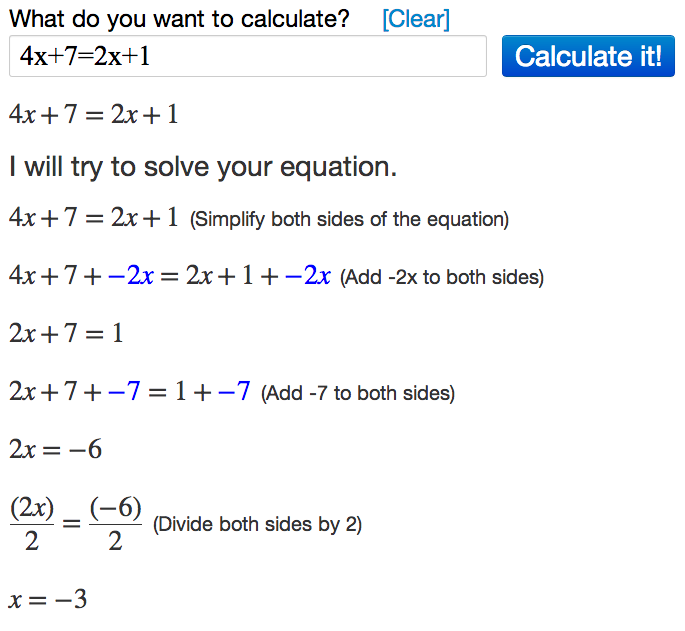
This article explores how modern technology not only demystifies algebra but also empowers learners to understand, practice, and ultimately master its complexities with unprecedented efficiency and engagement. We’ll delve into the specific tech solutions that turn algebraic challenges into solvable puzzles, offering insights into their functionality, benefits, and best practices for responsible utilization.
Leveraging Digital Tools for Algebraic Understanding
The journey to mastering algebra often begins with foundational tools that amplify human cognitive abilities. These digital aids range from sophisticated calculators to comprehensive online learning environments, each designed to clarify concepts, automate tedious calculations, and provide structured practice.
Scientific and Graphing Calculators: Beyond Basic Arithmetic
Modern calculators are far more than just devices for addition and subtraction; they are powerful mini-computers capable of handling complex algebraic operations. Scientific calculators are indispensable for exponents, roots, logarithms, and trigonometric functions, which frequently appear in algebraic contexts. They help users efficiently compute numerical values for expressions, check answers, and explore mathematical properties.
Graphing calculators, such as those from Texas Instruments (e.g., TI-84 series) or online equivalents like Desmos, elevate this utility significantly. They allow users to input equations and instantly visualize their corresponding graphs, revealing patterns, intercepts, slopes, and asymptotes. This visual representation is crucial for understanding concepts like functions, linear equations, quadratic equations, and systems of equations. By plotting multiple functions simultaneously, learners can easily identify points of intersection, which represent the solutions to systems of equations. Furthermore, many graphing calculators offer symbolic manipulation capabilities, enabling them to solve equations, factor polynomials, and perform other algebraic operations step-by-step. The accessibility of these tools, both in physical form and as smartphone apps or web-based platforms, has made complex mathematical exploration available to a broader audience.
Interactive Learning Platforms and Online Courses
The digital age has ushered in a plethora of online platforms dedicated to education, revolutionizing access to high-quality learning resources. Websites like Khan Academy, Coursera, edX, and Brilliant.org offer structured courses, video tutorials, practice problems, and quizzes specifically tailored for algebra. These platforms break down complex algebraic topics into manageable modules, providing clear explanations, animated examples, and immediate feedback on practice exercises.
The benefit of these platforms lies in their interactivity and flexibility. Learners can progress at their own pace, replaying lessons as needed and focusing on areas where they struggle. Many platforms also offer step-by-step solutions to practice problems, allowing users to understand the rationale behind each solution, rather than just memorizing answers. This self-directed, guided learning environment is particularly effective for reinforcing concepts learned in traditional classrooms or for individuals seeking to learn algebra independently.
Specialized Software for Symbolic Computation
For those tackling more advanced algebraic challenges, specialized software offers capabilities far beyond what standard calculators can provide. Tools like Wolfram Alpha, MATLAB, Maple, and Mathematica are powerful computational engines that can perform symbolic manipulation, solve intricate equations, differentiate and integrate expressions, and even generate proofs.
Wolfram Alpha, accessible via web browser, acts as a “computational knowledge engine.” Users can input natural language queries (e.g., “solve 3x^2 + 5x – 2 = 0”) and receive not only the solution but often step-by-step workings, graphs, and related information. This makes it an invaluable resource for checking homework, exploring advanced concepts, and gaining deeper insights into mathematical properties. For professional use in engineering, science, and finance, software like MATLAB, Maple, and Mathematica provides programming environments where users can write scripts to solve vast systems of equations, perform complex matrix operations, and analyze functions with unparalleled precision. While these tools have a steeper learning curve, they are essential for researchers, educators, and advanced students.
AI-Powered Solutions and Mobile Applications
The advent of Artificial Intelligence and the ubiquitous nature of smartphones have introduced an entirely new category of tools for algebraic problem-solving, making assistance more immediate, personalized, and accessible than ever before.
AI Tutors and Problem Solvers
Artificial Intelligence is rapidly transforming how we interact with educational content. AI tutors, often integrated into larger learning platforms or existing as standalone applications, can provide personalized guidance, adapt to individual learning styles, and offer tailored practice problems. These systems analyze a user’s performance, identify areas of weakness, and suggest specific resources or exercises to address those gaps.
Furthermore, AI-powered problem solvers are becoming increasingly sophisticated. Tools like ChatGPT and other large language models can explain algebraic concepts, clarify terminology, provide examples, and even generate step-by-step solutions when prompted correctly. While they may not always be perfect, they can act as a conceptual sounding board or a quick reference for understanding why a certain step is taken. The key is to use them as learning aids rather than simply sources of answers, prompting them for explanations rather than just solutions.
Photo-Based Math Solvers
Perhaps one of the most revolutionary technological advancements for algebra students is the rise of photo-based math solver apps. Applications such as PhotoMath, Microsoft Math Solver, and Socratic (by Google) allow users to simply point their smartphone camera at a handwritten or printed algebra problem. The app then instantly recognizes the equation and provides a step-by-step solution.
These apps offer unparalleled convenience for on-the-go learning and quick verification. They can break down complex equations into digestible steps, highlighting the rules and properties applied at each stage. While incredibly useful for checking work and understanding methodology, it’s crucial for students to use these tools responsibly. The temptation to simply snap a photo and copy the answer must be resisted; the true value lies in dissecting the provided steps to grasp the underlying algebraic principles.
Gamified Learning Apps
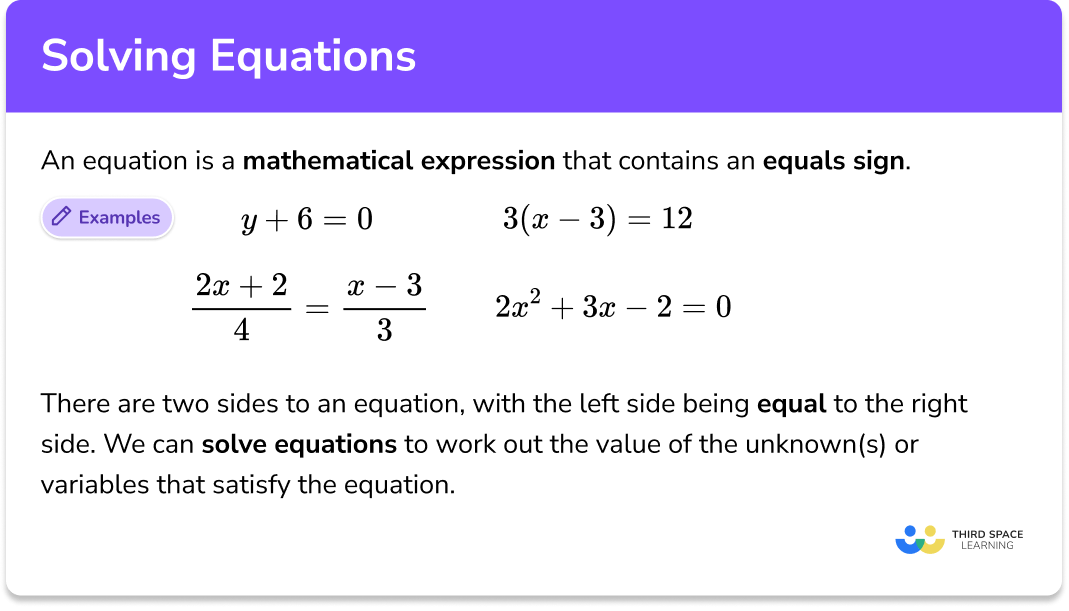
Making learning engaging is a cornerstone of effective education, and technology has enabled the integration of gamification into algebra instruction. Many mobile apps and online platforms now incorporate game-like elements, challenges, rewards, and competitive leaderboards to motivate learners.
Apps like Prodigy Math Game, DragonBox Algebra, or even specific modules within broader educational apps turn algebraic practice into an interactive experience. By framing problems as quests, puzzles, or challenges, these tools can reduce the perceived difficulty and monotony of algebra. They often provide immediate feedback, track progress, and offer virtual incentives, making the learning process more enjoyable and sustainable, particularly for younger learners or those who struggle with traditional methods.
Digital Security and Best Practices for Tech-Assisted Learning
While technology offers immense advantages in solving algebra problems, its effective and responsible use requires adherence to certain best practices, particularly concerning conceptual understanding and digital security.
Avoiding Over-Reliance and Ensuring Conceptual Understanding
The greatest risk of tech-assisted learning is the potential for over-reliance. While calculators and apps can provide answers quickly, the ultimate goal of algebra is to develop critical thinking, problem-solving skills, and a deep conceptual understanding. Relying solely on tools to get answers without comprehending the underlying methods undermines this objective.
Students should be encouraged to attempt problems manually first, using technology primarily to check their work, verify solutions, or explore alternative approaches. AI tutors and step-by-step solvers should be leveraged to understand why a particular step is taken, rather than just what the step is. The true power of technology lies in its ability to illuminate concepts and reinforce learning, not to bypass it.
Verifying Information and Source Reliability
The vastness of the internet means that not all information is accurate or reliable. When using online resources for algebraic explanations or solutions, it’s crucial to exercise caution and critical judgment. Unverified blogs, forums, or user-generated content may contain errors or incomplete information.
Prioritize reputable educational platforms, established academic institutions, and well-known software providers. Cross-referencing information from multiple credible sources can help confirm accuracy. For complex problems, consulting textbooks or seeking guidance from human instructors remains an invaluable layer of verification.
Protecting Your Data and Privacy with Educational Apps
As with any digital tool, educational apps and online platforms collect user data. Before downloading an app or signing up for a service, it’s wise to review its privacy policy and understand what information is being collected, how it’s being used, and whether it’s shared with third parties.
Opt for apps that clearly outline their data protection measures and offer transparency regarding user privacy. Be mindful of permissions requested by mobile apps; an algebra solver generally doesn’t need access to your contacts or microphone. Utilizing strong, unique passwords and enabling two-factor authentication where available adds an extra layer of security to protect personal information.
Future Trends in Algorithmic Problem Solving Technology
The evolution of technology in education is continuous. Looking ahead, several emerging trends promise to further revolutionize how we learn and solve algebra problems, making the process even more intuitive, personalized, and immersive.
Enhanced Personalization and Adaptive Learning
The next generation of AI-powered learning tools will likely feature even more sophisticated adaptive algorithms. These systems will not only track progress but also discern individual learning styles, cognitive biases, and even emotional states to deliver hyper-personalized learning paths. Imagine an AI tutor that knows when you’re frustrated and switches to a different teaching method or provides a motivating challenge. Predictive analytics will also play a larger role, identifying potential learning roadblocks before they occur and proactively offering interventions. This level of customization promises to make algebraic concepts accessible to an even wider range of learners.
Augmented Reality (AR) and Virtual Reality (VR) for Immersive Learning
Augmented Reality (AR) and Virtual Reality (VR) hold immense potential for transforming abstract algebraic concepts into tangible, interactive experiences. Picture stepping into a virtual environment where you can manipulate 3D graphs, physically “walk through” the steps of an equation, or observe how changes in variables dynamically alter geometric shapes.
AR apps could overlay algebraic problems onto real-world objects, allowing students to visualize the application of math in their immediate surroundings. This immersive, experiential learning can significantly enhance understanding of complex topics like vector algebra, coordinate geometry, or multi-variable calculus, making them far more intuitive and engaging than traditional 2D representations.
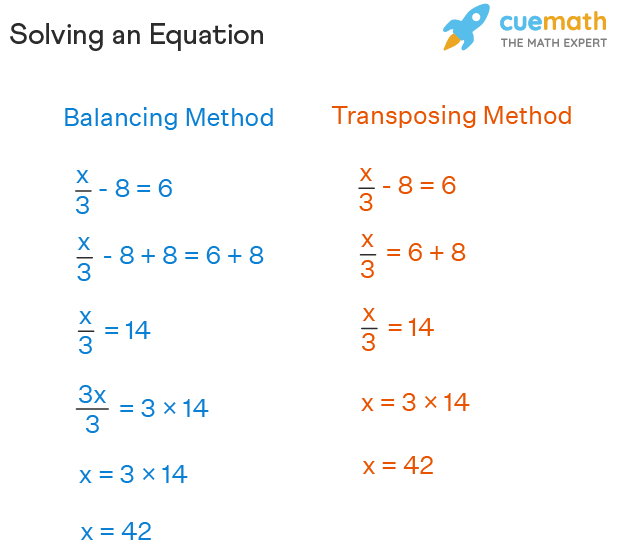
Integration with Smart Devices and Wearables
As smart devices become more ubiquitous and wearables like smartwatches become more advanced, the integration of mathematical learning tools into these platforms could offer unprecedented convenience. Imagine receiving a quick algebraic challenge on your smartwatch during a break, or using a smart home device to verbally guide you through the steps of an equation.
Voice-activated AI assistants could become even more adept at understanding and responding to complex algebraic queries, offering hands-free assistance. While still nascent, the potential for seamless, always-on access to algebraic assistance through everyday technology suggests a future where learning is woven more tightly into the fabric of daily life.
In conclusion, the journey to mastering algebra, once a solitary and often daunting endeavor, has been profoundly transformed by the relentless march of technological innovation. From sophisticated calculators and comprehensive online platforms to the cutting-edge capabilities of AI and immersive AR/VR experiences, technology has not just provided tools for solving problems, but entirely new paradigms for understanding them. By embracing these digital resources thoughtfully and responsibly, learners can demystify algebra, build a robust mathematical foundation, and unlock pathways to countless opportunities in a world increasingly driven by data and quantitative reasoning. The future of algebraic problem-solving is not merely about finding the right answer; it’s about leveraging technology to cultivate deeper insight, foster critical thinking, and ignite a lifelong passion for mathematical exploration.
aViewFromTheCave is a participant in the Amazon Services LLC Associates Program, an affiliate advertising program designed to provide a means for sites to earn advertising fees by advertising and linking to Amazon.com. Amazon, the Amazon logo, AmazonSupply, and the AmazonSupply logo are trademarks of Amazon.com, Inc. or its affiliates. As an Amazon Associate we earn affiliate commissions from qualifying purchases.