
Tesla Inc. (TSLA) has been a fascinating and often polarizing stock to watch in the financial markets, embodying both the immense potential and the inherent volatility of growth-oriented technology companies. Its journey from a niche electric vehicle manufacturer to a trillion-dollar market cap behemoth has been punctuated by dramatic surges and corrections, captivating investors, analysts, and the general public alike. Understanding Tesla’s highest stock price is not merely about identifying a number; it’s about delving into a confluence of technological innovation, market sentiment, entrepreneurial vision, and macroeconomic forces that converged to propel its valuation to unprecedented heights. For anyone interested in investing, market dynamics, or the future of technology, Tesla’s stock performance offers a rich tapestry of lessons.

The Apex of Tesla’s Market Valuation: Pinpointing the Historic High
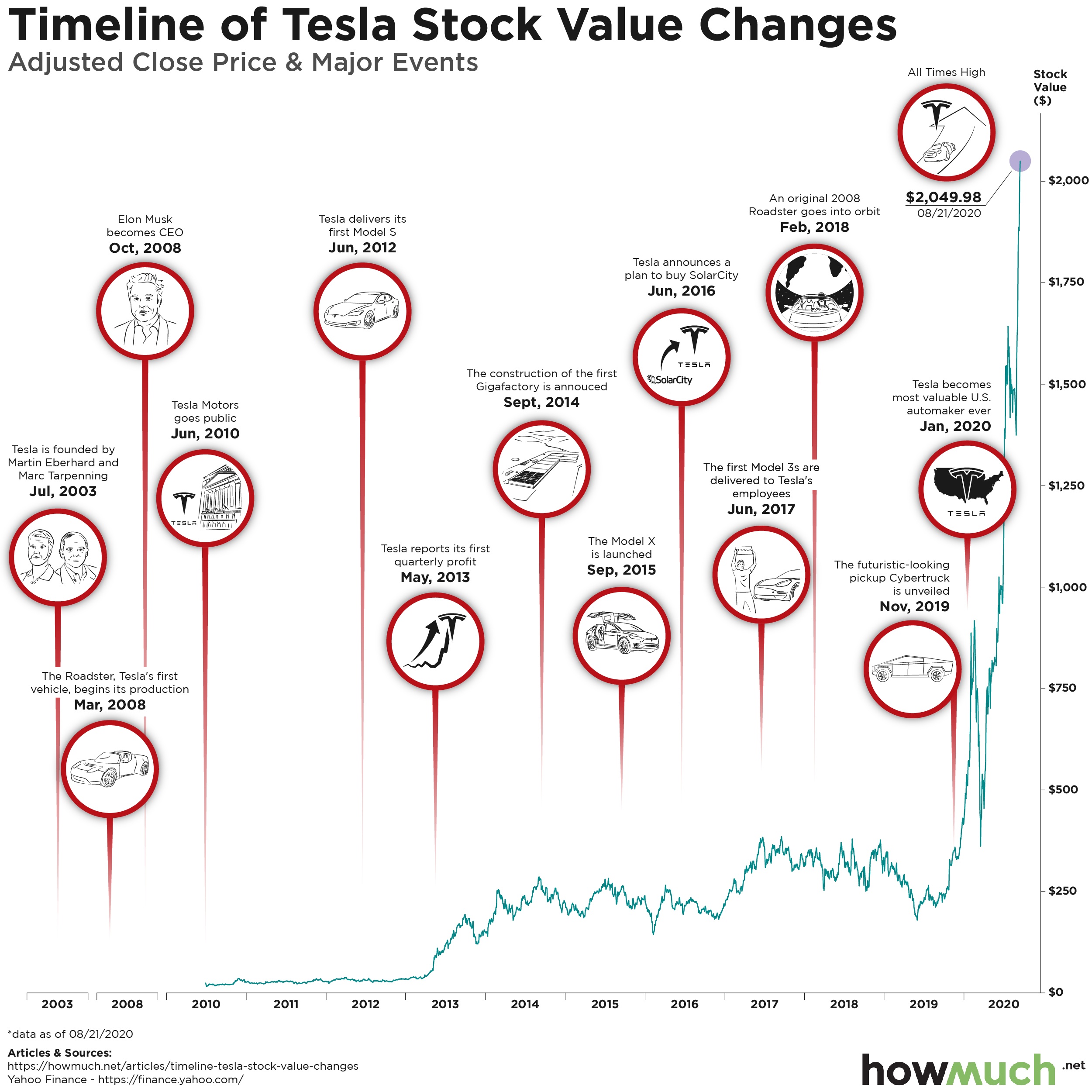
Tesla’s stock market journey has been marked by several significant milestones, but its absolute peak represented a zenith of investor confidence and market enthusiasm. To accurately answer the question of its highest stock price, we must consider the stock’s performance prior to its subsequent stock splits, as these adjustments fundamentally alter the per-share price while maintaining the company’s overall market capitalization.
Pinpointing the Historic High
Tesla reached its all-time highest nominal stock price on November 4, 2021, when it hit an intraday high of approximately $1,243.49 per share. The closing price on that same day was $1,229.91. This monumental valuation placed Tesla among an elite group of companies with market capitalizations exceeding one trillion dollars, a testament to its perceived future growth and market dominance in the burgeoning electric vehicle and renewable energy sectors.
It’s crucial to understand the context of this figure, especially for those tracking the stock today. Tesla executed a 5-for-1 stock split in August 2020 and a 3-for-1 stock split in August 2022. If we were to adjust the November 2021 peak price for these subsequent splits, the equivalent price per share today would be significantly lower, reflecting the increased number of shares outstanding. However, when discussing “highest stock price,” market participants typically refer to the nominal, unadjusted peak that occurred at that specific historical moment. This original peak reflects the sheer psychological and financial momentum behind the company at its zenith before the shares were divided.
The Context of the Record
The period leading up to and encompassing Tesla’s peak valuation was characterized by a unique alignment of factors. Global interest rates were at historic lows, making growth stocks, particularly those promising disruptive innovation, incredibly attractive to investors seeking higher returns. The “EV revolution” was gaining undeniable momentum, and Tesla was widely considered its undisputed leader. Its consistent ability to increase vehicle deliveries, expand manufacturing capabilities with new Gigafactories, and demonstrate increasing profitability fueled a powerful narrative of unstoppable growth. The company’s inclusion in the prestigious S&P 500 index in December 2020 further amplified demand, as index funds and ETFs were compelled to purchase billions of dollars worth of Tesla shares to align their portfolios. This confluence created a “perfect storm” that propelled TSLA shares to their historic high, making it one of the most talked-about and speculated-upon stocks of its era.
Catalysts Behind the Meteoric Rise: Understanding the Drivers
Tesla’s journey to a trillion-dollar valuation and its record-setting stock price was not a fluke. It was the culmination of strategic execution, market timing, technological prowess, and an unparalleled brand mystique. Several key catalysts contributed to this extraordinary ascent, making it a powerful case study in modern finance and investment.
Disruptive Innovation and Market Leadership
At its core, Tesla established itself as a technological innovator. Early on, it solved complex engineering challenges related to battery technology, electric powertrains, and vehicle software that legacy automakers had largely dismissed. Its commitment to a direct-to-consumer sales model, over-the-air software updates, and the continuous evolution of its Full Self-Driving (FSD) capabilities positioned it as a tech company first, and an automaker second. This perception allowed investors to value it more like a software or technology giant rather than a traditional manufacturing firm, contributing to its elevated multiples. Its early mover advantage in the EV space created a significant lead, making it the aspirational brand for electric vehicles globally.
Elon Musk’s Influence and Vision
The indelible mark of Elon Musk on Tesla’s trajectory cannot be overstated. His ambitious vision, often expressed through bold predictions and unconventional communication channels, fostered a passionate community of followers and investors. Musk’s ability to inspire belief in seemingly impossible goals – from colonizing Mars to achieving full autonomy for cars – created a powerful narrative that transcended typical corporate communications. While sometimes controversial, his personality and unwavering confidence in Tesla’s mission served as a perpetual catalyst, attracting attention, capital, and talent, and often insulating the company from the skepticism that might plague other ventures. This “cult of personality” significantly amplified investor sentiment.
Shifting Investor Sentiment Towards ESG and Growth
The late 2010s and early 2020s saw a significant shift in global investment paradigms, with environmental, social, and governance (ESG) factors gaining prominence. Tesla, as a pure-play electric vehicle and sustainable energy company, became a darling of ESG-focused funds and environmentally conscious investors. This broadened its appeal beyond traditional tech or automotive investors. Concurrently, a prolonged period of low-interest rates incentivized investors to chase growth, often prioritizing future potential over immediate profitability. Tesla, with its vast addressable market and disruptive potential, fit perfectly into this “growth at any cost” investment thesis, attracting substantial capital inflows.
Production Milestones and Profitability
While much of Tesla’s early valuation was built on future promise, the company began to demonstrate tangible progress in scaling production and achieving consistent profitability. The successful ramp-up of Gigafactories in Fremont, Shanghai, and later Berlin and Austin, showcased Tesla’s ability to overcome manufacturing hurdles. Consecutive quarters of profitability, driven by increased vehicle deliveries and the sale of regulatory credits, provided fundamental validation for its business model. These milestones chipped away at the “speculative” label and proved to skeptical investors that Tesla could indeed transition from a high-growth startup to a financially viable, mass-market enterprise.
Navigating Volatility: The Ride Down and Subsequent Fluctuations
While Tesla’s ascent to its peak was exhilarating for investors, the subsequent period has been characterized by significant volatility, mirroring broader market shifts and specific company challenges. The journey after the peak offers crucial insights into market corrections, competitive pressures, and the re-evaluation of high-growth valuations.
Valuation Concerns and Market Corrections
Following its peak in late 2021, a number of factors began to exert downward pressure on Tesla’s stock price. Foremost among these were mounting concerns over its valuation. Even ardent supporters acknowledged that the stock’s price-to-earnings (P/E) ratio had soared to historically extreme levels, far exceeding that of established automakers or even many tech giants. As global central banks began signaling and then executing interest rate hikes to combat rising inflation, the investment landscape fundamentally shifted. Higher interest rates typically devalue future earnings, making highly-valued growth stocks, whose worth is heavily reliant on projected future profits, less attractive. This broader market correction, particularly impacting technology and high-growth sectors, inevitably brought Tesla’s stock back to earth from its stratospheric highs.
Competitive Landscape Intensifies
Tesla’s early dominance in the EV market provided it with a significant head start. However, as the industry matured, legacy automakers like General Motors, Ford, Volkswagen, and Hyundai, along with new pure-play EV startups, began to launch increasingly competitive and compelling electric models. This intensified competition meant that Tesla could no longer operate in a relatively uncontested market. The proliferation of attractive alternatives, often at lower price points or with different feature sets, pressured Tesla’s market share and, by extension, its profit margins and growth trajectory. Investors began to factor in a more competitive future, tempering some of the earlier unbridled enthusiasm.
Macroeconomic Headwinds and Geopolitical Events
The period post-2021 was also marked by a series of macroeconomic challenges and geopolitical uncertainties. Persistent supply chain disruptions, particularly for crucial components like semiconductors, impacted automotive production across the board, including Tesla. Rising inflation globally squeezed consumer spending power, potentially dampening demand for new vehicles, especially premium-priced EVs. Geopolitical tensions, such as the conflict in Ukraine and ongoing U.S.-China trade relations, added layers of unpredictability to global markets, creating a risk-off sentiment among investors. These broader external factors contributed to a more cautious investment environment, which inherently affected growth stocks like Tesla.
Impact of CEO Distractions (Twitter/X Acquisition)
Elon Musk’s acquisition of Twitter (now X) in late 2022 was widely perceived by many investors as a significant distraction from his primary responsibilities at Tesla. Concerns arose that his attention, time, and potentially even Tesla’s resources (through stock sales to fund the acquisition) were being diverted. This perceived dilution of focus, coupled with controversies surrounding Musk’s management of the social media platform, created a period of heightened uncertainty and negative sentiment around Tesla’s leadership, contributing to further stock depreciation during that specific time frame.
What Investors Can Learn from Tesla’s Journey: Lessons in Investing
Tesla’s stock performance offers a potent education in market dynamics, investor psychology, and the fundamental principles of investing. Its dramatic rise and subsequent corrections provide invaluable lessons for both novice and seasoned investors.
The Power of Narrative and Hype
Tesla’s story illustrates the profound impact of a compelling narrative on market valuation. For years, investors bought into a vision of a sustainable future powered by Tesla’s innovations, often overlooking traditional valuation metrics. While fundamentals eventually reassert themselves, the initial stages demonstrate how a strong story, charismatic leadership, and a passionate community can drive a stock’s price far beyond what conventional analysis might suggest. This underscores the psychological aspect of investing, where belief and emotion can significantly influence market movements.
Understanding Volatility and Risk
Tesla epitomizes the concept of a high-beta stock – one that is significantly more volatile than the broader market. Its extreme swings, both upward and downward, serve as a stark reminder that high potential returns often come hand-in-hand with equally high risks. Investors who bought at the peak learned firsthand the pain of significant drawdowns, while those who held through the dips and subsequent recoveries experienced the potential rewards. This highlights the importance of risk tolerance assessment and understanding that even fundamentally strong companies can experience severe price fluctuations.
Importance of Diversification
The allure of a single, high-flying stock like Tesla can be immense, tempting investors to concentrate a significant portion of their portfolio into it. However, Tesla’s journey vividly illustrates the dangers of over-concentration. While early investors in Tesla enjoyed phenomenal returns, those who put all their eggs in one basket at or near the peak faced substantial losses when the stock corrected. Diversification across various asset classes, industries, and geographies remains a cornerstone of prudent investing, mitigating the impact of any single stock’s downturn on an overall portfolio.
Long-Term vs. Short-Term Investing
Tesla’s stock behavior clearly differentiates between short-term trading and long-term investing. Day traders and short-term speculators likely found Tesla a playground of rapid gains and losses. In contrast, long-term investors who weathered the volatility, focusing on the company’s underlying growth trajectory and market position, have historically seen significant returns despite the interim drawdowns. This emphasizes the value of a patient, long-term perspective, allowing compound growth to work its magic and insulating portfolios from knee-jerk reactions to daily market noise.
The Role of Fundamentals vs. Speculation
Ultimately, even for a visionary company like Tesla, market speculation eventually gives way to fundamental analysis. While hype can drive prices temporarily, sustained valuation growth requires robust revenues, healthy profit margins, scalable production, and a defensible competitive moat. Tesla’s stock corrections often occurred when its valuation became detached from its near-term earnings potential or when competitors began to erode its perceived technological lead. This reiterates that while market sentiment is powerful, long-term investment success is often rooted in a thorough understanding of a company’s financial health and its ability to execute its business plan.
Tesla’s Future Outlook: Beyond the Peak?
Looking forward, Tesla remains one of the most closely watched companies in the world, with its future trajectory a subject of intense debate among investors and analysts. While its days of purely exponential growth and unchallenged market dominance might evolve, new avenues for expansion and innovation continue to present both opportunities and challenges.
Future Growth Drivers
Tesla’s growth narrative extends far beyond just electric vehicles. The company is actively pursuing expansion in several high-growth sectors. The development of its Full Self-Driving (FSD) technology, if fully realized and monetized, represents a potentially massive revenue stream, transforming cars into robotic taxis and offering lucrative software subscriptions. Its energy division, encompassing solar panels, battery storage (Powerwall, Megapack), and virtual power plants, is poised to capitalize on the global transition to renewable energy. Furthermore, ambitious projects like the humanoid robot Optimus and advanced AI capabilities could unlock entirely new markets and redefine Tesla’s identity as a broader AI and robotics company. New vehicle models like the Cybertruck and the potential for a more affordable next-generation platform are expected to drive future delivery growth.
Challenges and Opportunities
Despite its potential, Tesla faces significant hurdles. The competitive landscape for EVs continues to intensify, requiring continuous innovation and cost efficiencies to maintain market share and pricing power. Regulatory environments across different countries for autonomous driving and energy products present complex compliance challenges. Macroeconomic factors, including interest rates, inflation, and global economic growth, will continue to influence consumer demand and investor sentiment. Supply chain resilience, labor relations, and the consistent execution of ambitious production targets remain critical operational challenges. The opportunity lies in Tesla’s ability to leverage its brand, technological lead, and manufacturing prowess to overcome these challenges and expand into new, high-margin ventures.
Analyst Projections and Investor Sentiment
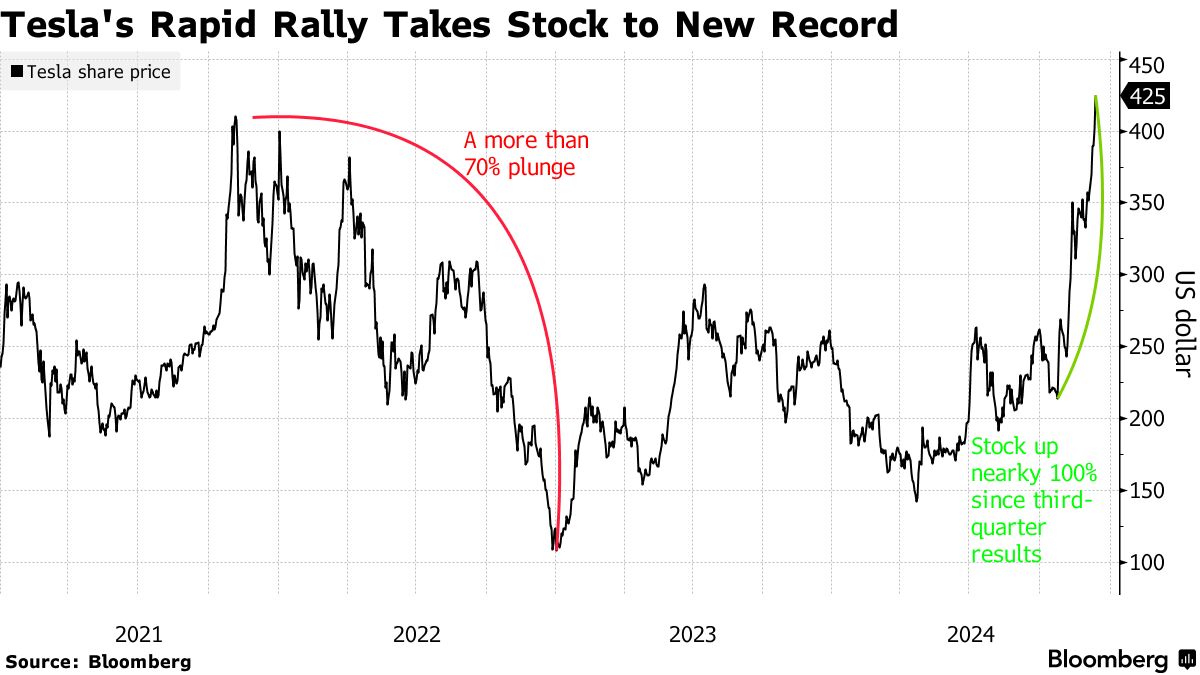
Analyst projections for Tesla’s future stock performance are notably diverse, reflecting the complexity of valuing a company with such broad ambitions and a history of extreme volatility. Some remain highly bullish, predicting new peaks based on the realization of FSD, AI, and robotics. Others maintain a more cautious stance, emphasizing competitive pressures, valuation concerns, and the difficulty of scaling revolutionary new technologies. Investor sentiment will continue to swing between optimism and skepticism, heavily influenced by quarterly earnings, product announcements, technological breakthroughs, and the broader economic climate. The debate about whether Tesla is a high-growth tech company or a cyclical automaker will likely persist, shaping its future valuation and stock price movements.
In conclusion, Tesla’s highest stock price of approximately $1,243.49 on November 4, 2021, stands as a landmark in financial history. It was not merely a number but a powerful indicator of a moment when market optimism, technological disruption, and unique leadership converged. The journey to and from this peak offers a profound education for investors, underscoring the interplay of innovation, market psychology, and fundamental realities. While its past performance provides a rich case study, Tesla’s future remains a dynamic and closely watched narrative in the evolving landscape of global finance and technology.
aViewFromTheCave is a participant in the Amazon Services LLC Associates Program, an affiliate advertising program designed to provide a means for sites to earn advertising fees by advertising and linking to Amazon.com. Amazon, the Amazon logo, AmazonSupply, and the AmazonSupply logo are trademarks of Amazon.com, Inc. or its affiliates. As an Amazon Associate we earn affiliate commissions from qualifying purchases.