
Discovering you owe taxes to the IRS can be a source of anxiety for many individuals and businesses. Whether it’s a result of under-withholding, unexpected income, or simply miscalculations, the critical next step is understanding how to fulfill your obligation accurately and on time. Ignoring a tax bill can lead to significant penalties and interest, compounding the initial debt. This comprehensive guide will demystify the process, outlining various payment methods, exploring options if you can’t pay in full, and providing strategies to prevent future tax surprises. Navigating your tax responsibilities effectively is a cornerstone of sound personal and business finance, ensuring compliance and peace of mind.
Deciphering Your Tax Bill: Understanding What You Owe
Before you can pay your taxes, it’s crucial to understand exactly what you owe and why. The IRS communicates tax obligations through various notices and statements, each designed to inform you of a specific situation.
The IRS Notice or Statement: What to Look For
Upon filing your tax return, if there’s a balance due, the IRS will typically send you a CP14 notice, indicating the amount owed and the payment due date. If you haven’t filed, or if there are discrepancies the IRS has identified, you might receive other notices, such as a CP2000 (proposed changes to your tax return) or a Letter 3219 (Statutory Notice of Deficiency). Each notice provides vital information: the tax year in question, the specific amount due (including tax, penalties, and interest), and instructions on how to respond or pay. It’s essential to read these documents carefully, verify the information against your own records, and note any deadlines. If you believe there’s an error, you have the right to dispute it, often requiring you to mail a written response with supporting documentation by a specified date.
Common Reasons for Owed Taxes
Owing taxes isn’t always a sign of poor financial management; sometimes, it’s a natural outcome of life events or income structures. One of the most common reasons is under-withholding from paychecks. If you haven’t adjusted your W-4 form properly, your employer might not be withholding enough federal income tax, leading to a balance due at year-end. Self-employment income often results in owed taxes because independent contractors and small business owners are responsible for paying their own estimated taxes quarterly, covering income tax and self-employment taxes (Social Security and Medicare). Failing to make these estimated payments or underestimating income can lead to a significant tax bill. Other factors include significant capital gains from selling investments, unexpected income from bonuses or side hustles, or changes in tax laws that impact your deductions or credits. Understanding the root cause can help you adjust your financial planning for future tax years.
Penalties and Interest: The Cost of Late Payment
The IRS is clear about the consequences of not paying taxes on time: penalties and interest. The failure-to-pay penalty is typically 0.5% of the unpaid taxes for each month or part of a month that taxes remain unpaid, maxing out at 25% of your unpaid tax bill. If you fail to file on time, a separate and often higher failure-to-file penalty (5% of the unpaid taxes for each month or part of a month, up to 25%) can also be assessed. If both penalties apply, the failure-to-file penalty is reduced by the failure-to-pay penalty. Additionally, interest is charged on underpayments, and it accrues daily on the unpaid balance, including any penalties. The interest rate is determined quarterly and can adjust, making it crucial to pay your tax bill as quickly as possible to prevent your debt from snowballing. In certain situations, the IRS may waive penalties if you have a reasonable cause for failure to pay or file, but interest typically cannot be waived.
Direct Payment Methods: Ensuring Your Bill is Paid On Time
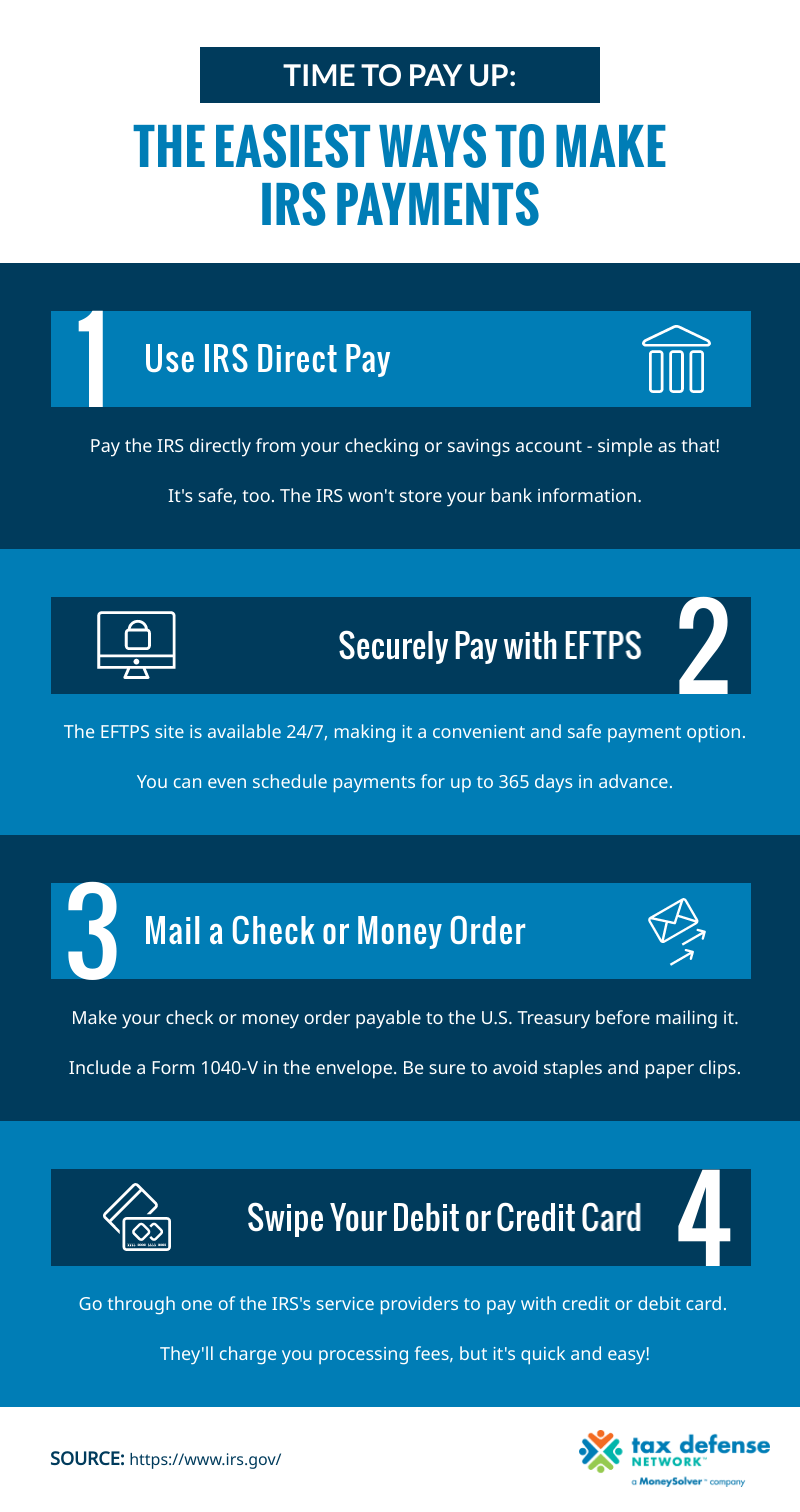
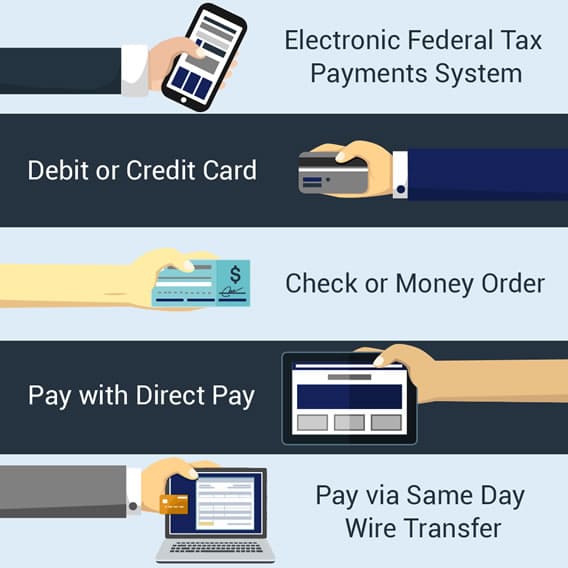
Once you understand what you owe, the next step is to choose the most convenient and secure method to pay the IRS. The IRS offers a variety of payment options to accommodate different taxpayer preferences and financial situations.
Paying Electronically: IRS Direct Pay, Debit/Credit Card, EFTPS
Electronic payment methods are generally the fastest and most secure ways to pay your federal tax bill.
-
IRS Direct Pay: This is a free service offered directly by the IRS, allowing you to pay your taxes directly from your checking or savings account. You can schedule payments up to 365 days in advance and receive immediate confirmation. It’s available for individual taxpayers to pay income tax, estimated tax, and other related payments.
-
Debit/Credit Card, Digital Wallet Options: You can pay your taxes using a debit card, credit card, or certain digital wallet options (e.g., PayPal, Click to Pay) through third-party payment processors. While convenient, these processors charge a fee, which varies depending on the service and the type of card used. This option can be appealing for those who want to earn rewards points on their credit cards or need to delay payment for a short period while benefiting from credit card float.
-
Electronic Federal Tax Payment System (EFTPS): This free service is primarily used by businesses and individuals who pay estimated taxes, allowing scheduled payments up to 365 days in advance directly from a bank account. It requires enrollment and provides a secure, reliable way to manage all federal tax payments.
Each electronic method offers the advantage of instant payment confirmation and eliminates the risk of mail delays or lost checks.
Paying by Mail: Check or Money Order
For those who prefer traditional methods or don’t have access to electronic payment options, paying by mail with a check or money order remains a viable choice. When mailing a payment, always make your check or money order payable to the “U.S. Treasury.” Include your name, address, daytime phone number, Social Security number (SSN), the tax year for which you’re paying, and the related tax form or notice number on the check. It’s crucial to also include the appropriate payment voucher (e.g., Form 1040-V for income tax payments) and mail it to the IRS address specified in your tax instructions or notice. Avoid sending cash through the mail. While reliable, this method requires sufficient mailing time to ensure the payment is received by the deadline and provides less immediate confirmation compared to electronic payments.
Cash Payments: Retail Partners
In an effort to expand payment accessibility, the IRS now allows taxpayers to pay their federal taxes with cash through retail partners. Services like PayNearMe or MoneyGram enable you to make a cash payment at participating retail stores (e.g., 7-Eleven, CVS, Walmart). You typically need to access a payment barcode through an IRS-authorized payment processor’s website, which you then present at the retail location. While offering a cash payment option, there might be transaction limits, and a fee may apply. This method provides an official receipt and is a convenient alternative for individuals who primarily deal in cash or prefer not to use electronic banking.
Payment Through Your Tax Preparer or Tax Software
Many tax preparation software programs and professional tax preparers offer the convenience of initiating a tax payment directly when you file your return. If you file electronically through tax software, you can often specify a direct debit from your bank account for the amount owed. Similarly, if a tax professional prepares your return, they can facilitate the payment process on your behalf, often through electronic funds withdrawal from your designated account. This integrated approach simplifies the process, ensuring that payment details are accurate and submitted along with your tax return.
Navigating Financial Hardship: When You Can’t Pay in Full
Life can throw unexpected curveballs, making it difficult or impossible to pay your tax bill by the due date. The IRS understands this and offers several options for taxpayers facing financial hardship, designed to help you get back on track without facing severe collection actions.
Short-Term Payment Plan (180 Days)
If you need a little extra time to gather the funds, you might qualify for a short-term payment plan. This option typically grants you up to an additional 180 days to pay your tax liability in full. You can request this directly with the IRS or through your tax software when you file. While this plan extends your deadline, penalties and interest will continue to accrue on the unpaid balance until it’s fully paid. It’s a temporary reprieve, not a waiver of your tax obligation, and it’s suitable for those who expect to have the funds available relatively soon.
Installment Agreement: Monthly Payments
For those who need more than 180 days, an Installment Agreement allows you to make monthly payments for up to 72 months (6 years). This is generally available if you owe a combined total of under $50,000 (for individuals) or $25,000 (for businesses) in tax, penalties, and interest. To request an installment agreement, you can use the IRS’s Online Payment Agreement application, call the IRS, or mail Form 9465, Installment Agreement Request. While an installment agreement is in effect, the failure-to-pay penalty rate is reduced, but interest continues to accrue. It provides a structured way to pay off your debt over time, preventing aggressive collection actions as long as you adhere to the payment schedule. The IRS may also require a financial statement to determine your ability to pay.
Offer in Compromise (OIC): Settling for Less
An Offer in Compromise (OIC) allows certain taxpayers to settle their tax debt with the IRS for a lower amount than what they originally owe. The IRS will accept an OIC if it believes there is “doubt as to collectibility” (you can’t pay the full amount), “doubt as to liability” (you don’t believe you owe the tax), or “effective tax administration” (paying the full amount would cause economic hardship or be unfair). The OIC process is rigorous and requires you to submit detailed financial information on Form 656, Offer in Compromise, along with supporting documents and a non-refundable application fee. The IRS will evaluate your ability to pay based on your income, expenses, assets, and future earning potential. An OIC is not a guarantee and is generally considered a last resort for taxpayers facing significant financial distress.
Temporary Delay in Collection: Financial Difficulty
In cases of extreme financial hardship, the IRS may determine that you cannot pay any of your tax debt. This is referred to as “currently not collectible” status. If granted, the IRS will temporarily delay collection efforts. However, your debt does not disappear; penalties and interest continue to accrue, and the IRS can restart collection activities if your financial situation improves. To qualify, you must demonstrate to the IRS that paying your taxes would leave you unable to meet basic living expenses. The IRS will require extensive documentation of your income, expenses, and assets to make this determination, typically through Form 433-F or Form 433-A. This option is a temporary measure for taxpayers in dire circumstances.
Strategies for Proactive Tax Planning and Prevention
The best way to deal with a tax bill is to avoid having one in the first place, or at least to minimize it. Proactive tax planning is a critical component of sound financial management, empowering you to manage your tax obligations throughout the year rather than facing a large lump sum payment at tax time.
Adjusting Your Withholding (Form W-4)
For most employees, federal income tax is withheld from each paycheck. If you consistently owe taxes at year-end, it likely means you’re not having enough tax withheld. You can adjust your withholding by submitting a new Form W-4 to your employer. The IRS Tax Withholding Estimator tool on their website is an invaluable resource that helps you determine the correct number of allowances to claim or additional withholding amount to request based on your household income, deductions, and credits. Reviewing and updating your W-4 annually, or whenever you experience significant life changes (e.g., marriage, birth of a child, new job, secondary income), can help ensure your withholding accurately reflects your tax liability. The goal is to have as close to zero owed or refunded as possible.
Making Estimated Tax Payments (Form 1040-ES)
If you have income that isn’t subject to withholding, such as self-employment income, interest, dividends, rental income, or capital gains, you’re generally required to pay estimated taxes throughout the year. These payments are made quarterly using Form 1040-ES, Estimated Tax for Individuals. Failing to pay enough estimated tax can result in underpayment penalties. To avoid this, it’s essential to estimate your annual income and deductions accurately and make timely payments. You can make these payments electronically via IRS Direct Pay, EFTPS, or by mail. Many self-employed individuals and small business owners find it helpful to set aside a percentage of their income for taxes to ensure they have the funds available for these quarterly payments.
Understanding Tax Credits and Deductions
Tax credits and deductions play a crucial role in reducing your overall tax liability. A deduction reduces your taxable income, effectively lowering the amount of income subject to tax. Common deductions include contributions to traditional IRAs, student loan interest, and health savings account contributions. A tax credit, on the other hand, directly reduces the amount of tax you owe, dollar for dollar. Credits like the Child Tax Credit, Earned Income Tax Credit, or education credits can significantly reduce or even eliminate a tax bill. Understanding which credits and deductions you qualify for and properly claiming them can make a substantial difference in your final tax outcome. Keeping meticulous records of eligible expenses and qualifying events is key to maximizing these benefits.
Seeking Professional Tax Advice
While many taxpayers can manage their own taxes, complex financial situations often benefit from the expertise of a qualified tax professional. A Certified Public Accountant (CPA) or Enrolled Agent (EA) can provide personalized advice on tax planning strategies, identify overlooked deductions and credits, and help navigate intricate tax laws. They can also assist with preparing and filing your return, representing you before the IRS if needed, and setting up payment plans. Investing in professional tax advice can not only help you minimize your tax liability but also provide peace of mind that your tax affairs are handled correctly and efficiently, preventing future surprises.
Essential Tips and Final Considerations
Beyond the specific payment methods and planning strategies, several overarching principles are crucial for managing your tax obligations effectively. Adhering to these guidelines can save you time, money, and stress in the long run.
Keep Meticulous Records
The IRS operates on documentation. Whether you’re claiming a deduction, disputing a notice, or proving your income, having thorough and organized records is paramount. This includes pay stubs, W-2s, 1099s, receipts for deductible expenses, bank statements, investment statements, and any correspondence with the IRS. Keep these records for at least three years from the date you filed your original return or two years from the date you paid the tax, whichever is later. Digital copies, securely backed up, can be just as effective as physical files and often easier to manage. Good record-keeping is your first line of defense and an essential tool for accurate tax preparation.
Be Aware of Scams
Tax season, and any time you might owe money, unfortunately, brings out scammers. Be vigilant for phishing emails, suspicious phone calls, or texts purporting to be from the IRS demanding immediate payment or threatening arrest. The IRS will typically initiate contact by mail, not by phone or email, especially for initial tax notices. They will never demand immediate payment via specific methods like gift cards or wire transfers, nor will they threaten to involve local police for non-payment. If you receive a suspicious communication, do not respond, click on links, or provide personal information. Report it to the IRS and protect yourself from fraud.
File On Time, Even if You Can’t Pay
This is a critical piece of advice: always file your tax return by the deadline, even if you can’t afford to pay the tax you owe. The failure-to-file penalty is often much steeper than the failure-to-pay penalty. By filing on time, you avoid the larger penalty, and you then have the opportunity to explore the various payment options and hardship programs discussed earlier. If you truly need more time to file, you can request an extension using Form 4868, which grants an automatic six-month extension to file, but not to pay.

Review Your Tax Situation Annually
Tax laws change, personal circumstances evolve, and financial goals shift. Making it a habit to review your tax situation annually, ideally before the year ends, can help you identify potential issues or opportunities. This proactive review allows you to adjust withholding, make estimated payments, maximize deductions, and plan for any significant tax events. It ensures that your tax strategy remains aligned with your financial reality, helping you to manage any taxes owed to the IRS effectively and confidently. By staying informed and prepared, you can transform the daunting task of paying taxes into a manageable and predictable aspect of your financial life.
aViewFromTheCave is a participant in the Amazon Services LLC Associates Program, an affiliate advertising program designed to provide a means for sites to earn advertising fees by advertising and linking to Amazon.com. Amazon, the Amazon logo, AmazonSupply, and the AmazonSupply logo are trademarks of Amazon.com, Inc. or its affiliates. As an Amazon Associate we earn affiliate commissions from qualifying purchases.