
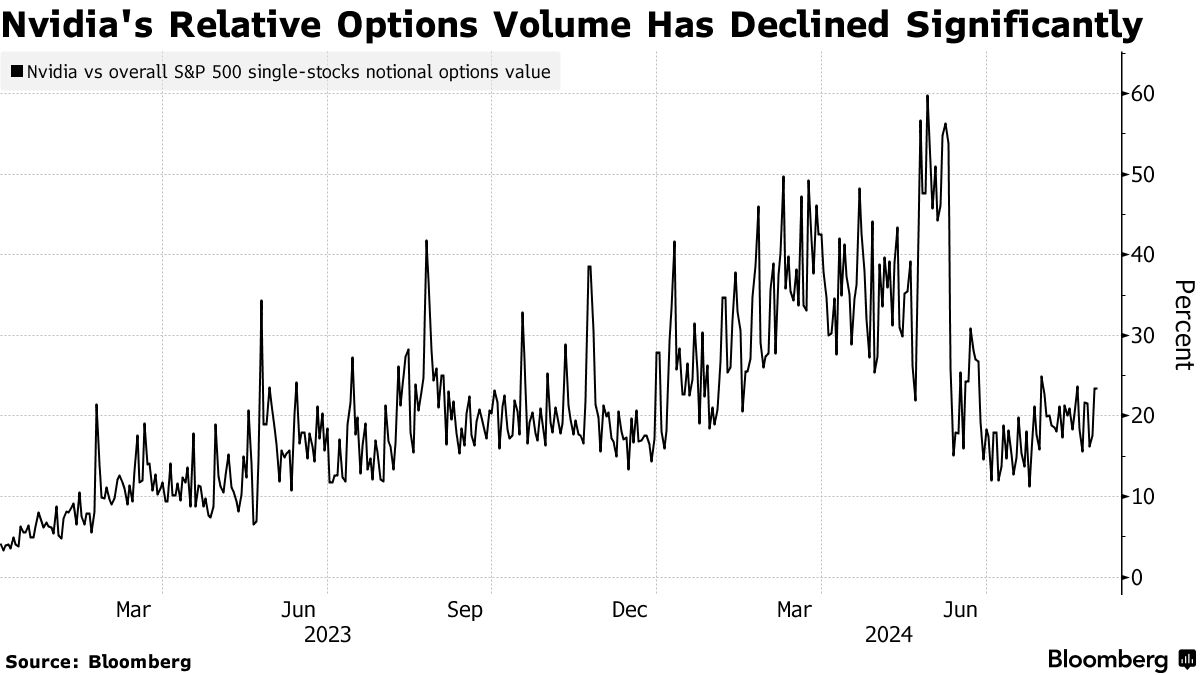
NVIDIA, a name synonymous with cutting-edge technology and, more recently, the Artificial Intelligence revolution, has enjoyed an unprecedented surge in its stock valuation over the past year. As the architect of the chips powering the global AI infrastructure, its market capitalization has swelled, captivating investors and analysts alike. Yet, even high-flying stocks are susceptible to the ebbs and flows of the broader market, and a sudden drop can send ripples of concern through portfolios. When a dominant player like NVIDIA experiences a significant intraday or daily decline, it’s rarely due to a single, isolated event. Instead, a confluence of macroeconomic forces, company-specific news, and shifts in investor sentiment often converge to create such a movement. Understanding these multifaceted drivers is crucial for both seasoned investors and those simply trying to make sense of the volatile financial landscape.
The Broader Market Context: A Macroeconomic Lens
Stock market movements are rarely isolated to individual companies. More often, they are influenced by prevailing macroeconomic conditions that dictate investor risk appetite and capital allocation across various sectors. A sudden drop in a bellwether stock like NVIDIA often reflects shifts in these larger currents.
Interest Rate Environment and Inflation Concerns
The specter of inflation and the Federal Reserve’s (or other central banks’) response to it profoundly impact growth stocks like NVIDIA. When inflation runs hot, central banks typically raise interest rates to cool down the economy. Higher interest rates make borrowing more expensive for companies and consumers, potentially slowing economic growth. More critically for tech stocks, higher rates increase the “discount rate” used to value future earnings. Since growth companies are valued heavily on their projected future profitability, higher discount rates make those future earnings less valuable in today’s dollars, putting downward pressure on their stock prices. Furthermore, a safer, higher-yielding bond market can draw capital away from riskier equity investments, especially those with stretched valuations. News or speculation about impending rate hikes or persistent inflation can therefore trigger broad market pullbacks that affect even robust companies like NVIDIA.
Geopolitical Tensions and Global Economic Slowdown
The interconnectedness of the global economy means that geopolitical events far from Wall Street can have immediate and dramatic effects on stock markets. Escalating trade disputes, regional conflicts, or even political instability in key manufacturing hubs or consumer markets can inject uncertainty into investor minds. NVIDIA, with its vast global supply chain and significant international sales, is particularly sensitive to such events. For instance, any concerns about the stability of the semiconductor supply chain in Asia or potential restrictions on technology exports to major markets could weigh heavily on its stock. Similarly, signs of a broader global economic slowdown – perhaps signaled by weakening manufacturing data from China or recession fears in Europe – can dampen investor enthusiasm for cyclical industries and growth stocks, leading to profit-taking and a general de-risking of portfolios.
Sector-Wide Pullbacks and Profit-Taking
Even without specific negative news, a sector that has experienced a meteoric rise is often ripe for a correction. The AI and semiconductor sectors, spearheaded by NVIDIA, have seen unprecedented growth in the past year. After such a significant bull run, it is natural for large institutional investors and hedge funds to take some profits off the table. This “profit-taking” can create downward pressure across an entire sector, not just the leading stock. When many large players decide to lock in gains simultaneously, it can trigger a ripple effect, leading to a noticeable drop even in fundamentally strong companies. This isn’t necessarily a sign of a company’s weakening fundamentals but rather a reflection of the cyclical nature of market corrections and the rebalancing of investor portfolios.
Specific Catalysts and Company-Related News
While macroeconomic factors set the stage, specific news or developments related to NVIDIA itself can often serve as the immediate trigger for a stock drop. These catalysts can range from analyst revisions to competitive pressures.
Analyst Ratings and Price Target Adjustments
Financial analysts play a significant role in influencing investor sentiment. Their reports, ratings (e.g., “buy,” “hold,” “sell”), and price targets are closely watched. If a prominent analyst or a large investment bank issues a downgrade for NVIDIA, or significantly lowers its price target, it can immediately cause the stock to drop. These downgrades might be based on revised expectations for future earnings, concerns about valuation, or a reassessment of competitive threats. While not always accurate, analyst reports carry weight, particularly for institutional investors who rely on expert opinions to guide their investment decisions. A flurry of negative analyst commentary can create a self-fulfilling prophecy, as investors react by selling shares.
Competitor Advancements and Market Share Concerns
NVIDIA’s dominance in the AI chip market is undeniable, but it operates in a highly competitive landscape. Companies like AMD, Intel, and even custom chip developers (e.g., Google’s TPUs, Amazon’s Trainium) are investing heavily in their own AI hardware and software solutions. Any significant announcement from a competitor — perhaps a new, more efficient chip architecture, a major contract win, or a breakthrough in AI software that reduces reliance on NVIDIA’s CUDA platform — can be perceived as a threat to NVIDIA’s market share or pricing power. Such news might lead investors to question NVIDIA’s long-term competitive moat, resulting in a sell-off as they re-evaluate the company’s future revenue streams and profitability. Even rumors of a large customer diversifying their chip suppliers can create nervousness.
Supply Chain Updates and Manufacturing Challenges
NVIDIA’s ability to meet the soaring demand for its GPUs, particularly its data center products, is critical to its revenue growth. The semiconductor industry has faced significant supply chain challenges in recent years, from component shortages to geopolitical tensions affecting manufacturing hubs. Any news suggesting potential disruptions to NVIDIA’s supply chain—such as production delays at its foundry partners (like TSMC), shortages of specific raw materials, or logistical bottlenecks—could trigger investor concern. Inability to meet demand directly translates to lost sales and slower growth, which can cause investors to shed shares in anticipation of lower future earnings. Conversely, a lack of new positive supply chain updates after a period of intense demand could also lead to disappointment.
Regulatory Scrutiny and Geopolitical Export Restrictions
Given NVIDIA’s strategic importance in advanced technology and its significant market presence, it is increasingly subject to regulatory scrutiny and geopolitical pressures. Governments around the world are increasingly focused on controlling the export of cutting-edge AI technologies, particularly to rival nations. News of new export restrictions (e.g., limitations on selling advanced AI chips to certain countries like China) can significantly impact NVIDIA’s potential market size and revenue projections. Similarly, antitrust investigations or other regulatory actions in major markets could introduce uncertainty about the company’s operational freedom or future business models. Such governmental interventions are material risks that can cause investors to re-evaluate the stock’s attractiveness and prompt a sell-off.
The Nuance of Valuation and Investor Sentiment
Beyond the concrete news and macroeconomic forces, the psychological aspect of the market and the inherent uncertainty in projecting future growth for high-flying stocks also play a crucial role in daily price movements.
The “AI Bubble” Narrative and Valuation Concerns
NVIDIA’s stock has surged dramatically, leading to its valuation metrics, such as its price-to-earnings (P/E) ratio, appearing significantly higher than the broader market or even its own historical averages. This has fueled a narrative among some analysts and investors that the AI sector, and NVIDIA in particular, might be experiencing a “bubble.” While NVIDIA’s growth prospects are robust, exceptionally high valuations imply that an immense amount of future growth is already priced into the stock. If the company’s earnings reports or forward guidance, even if positive, do not meet these sky-high expectations, or if there’s any perceived slowdown in the AI growth trajectory, investors might deem the stock overvalued. This can lead to a rapid re-evaluation and a corrective sell-off, as investors adjust their perception of its fair value.
Profit-Taking as a Natural Market Behavior
After a substantial period of appreciation, profit-taking is an entirely normal and healthy part of market behavior. Investors who have seen significant gains in their NVIDIA holdings might decide to cash out some of their profits, either to diversify their portfolios, fund other investments, or simply to realize their gains. This is particularly true for short-term traders or large institutional funds that manage risk by locking in profits after major rallies. While individual profit-taking might have a minor impact, a coordinated or widespread movement among large investors can create substantial selling pressure, causing the stock to drop. It’s important to distinguish this from selling due to deteriorating fundamentals; profit-taking often happens regardless of the company’s ongoing performance.
The Impact of Technical Indicators and Algorithmic Trading
Modern markets are heavily influenced by technical analysis and algorithmic trading. Technical analysts look for patterns and signals in price and volume charts to predict future movements. If NVIDIA’s stock price breaks below key support levels (e.g., a 50-day or 200-day moving average), it can trigger automated selling programs deployed by institutional investors and hedge funds. These algorithms are designed to execute trades rapidly based on pre-defined technical parameters, amplifying downward momentum once a certain threshold is crossed. For instance, if a stock drops below a psychological price point or a recognized support level, it can initiate a wave of selling from both human traders reacting to the “breakdown” and algorithmic systems programmed to act on such signals. This can create a cascading effect that exacerbates a drop even if the underlying fundamentals remain unchanged.
Beyond the Immediate Drop: What Investors Should Consider
While a single-day drop in a prominent stock like NVIDIA can be unsettling, it’s crucial for investors to maintain perspective and focus on long-term fundamentals rather than short-term volatility.
NVIDIA’s Long-Term Fundamentals Remain Strong
Despite daily fluctuations, NVIDIA’s strategic position in critical growth markets remains formidable. The company is not merely a chip manufacturer; it is a platform provider, with its CUDA software ecosystem creating a powerful moat around its hardware. Its dominance in AI training and inference, data centers, professional visualization, and high-end gaming means it is deeply embedded in multiple high-growth industries. The long-term trends driving AI adoption, cloud computing expansion, and metaverse development are still very much intact, and NVIDIA is at the forefront of these transformations. A daily drop, while potentially significant, does not inherently alter the company’s innovation pipeline, its market leadership, or its capacity for future earnings growth.
Diversification and Risk Management
A single-stock drop serves as a powerful reminder of the importance of diversification in an investment portfolio. Over-concentrating wealth in any single stock, no matter how promising, exposes an investor to undue risk. While NVIDIA has been a stellar performer, even the best companies experience periods of decline. A well-diversified portfolio, spread across various sectors, asset classes, and geographies, helps mitigate the impact of adverse movements in any one particular holding. This principle of risk management is fundamental to sound investing and protects against the emotional decisions that can arise during periods of volatility.
A Long-Term vs. Short-Term Perspective
The stock market is often described as a weighing machine in the long run but a voting machine in the short run. Daily stock movements are often influenced by temporary news cycles, technical trading, and immediate sentiment. Long-term investors, in contrast, focus on the underlying business, its competitive advantages, its growth trajectory, and its intrinsic value. For those with a multi-year investment horizon, a daily drop might be viewed as an opportunity to acquire shares at a more favorable price, assuming the long-term thesis for the company remains robust. Panicking over short-term volatility often leads to poor investment decisions, whereas a patient, disciplined approach tends to yield better results over time.
In conclusion, a drop in NVIDIA’s stock today is likely a complex interplay of broader macroeconomic concerns like interest rates and geopolitical risks, company-specific catalysts such as analyst revisions or competitive news, and the natural dynamics of valuation adjustment and profit-taking after a significant run. While unsettling in the moment, such movements are inherent to stock market investing. For those invested in NVIDIA, understanding these factors, maintaining a diversified portfolio, and adopting a long-term perspective are key to navigating the inevitable volatility.
aViewFromTheCave is a participant in the Amazon Services LLC Associates Program, an affiliate advertising program designed to provide a means for sites to earn advertising fees by advertising and linking to Amazon.com. Amazon, the Amazon logo, AmazonSupply, and the AmazonSupply logo are trademarks of Amazon.com, Inc. or its affiliates. As an Amazon Associate we earn affiliate commissions from qualifying purchases.