
Investing in the stock market can be a powerful way to build wealth over time, and for many, beginning with a familiar company like Costco Wholesale Corporation (COST) makes the process less intimidating. Understanding how to acquire shares of a company you know and appreciate is the first step on an engaging financial journey. This guide will walk you through the practical steps and crucial considerations for purchasing Costco stock, grounding your approach in sound investment principles.
Understanding What You’re Buying: Costco Wholesale Corporation
Before you even consider placing an order, it’s vital to understand the underlying business. Investing in a company’s stock means buying a tiny piece of that company. You become a part-owner, and your fortunes are, to some extent, tied to its performance.
A Glimpse into Costco’s Business Model
Costco Wholesale Corporation operates an international chain of membership warehouses, primarily under the “Costco Wholesale” brand. Its business model is distinct: members pay an annual fee to shop at warehouses that offer a wide array of products, from groceries and electronics to automotive supplies and optical services, often in bulk and at competitive prices. The company’s revenue streams come from product sales and, crucially, membership fees. This membership model provides a stable, recurring revenue base, which is attractive to many investors. It fosters customer loyalty and helps offset potentially thinner margins on product sales, allowing Costco to offer value to its members.
Why Consider Investing in Costco?
Investors often look at companies like Costco for several reasons:
-
Brand Recognition and Customer Loyalty: Costco has a strong brand identity and a highly loyal customer base, evidenced by its high membership renewal rates.
-
Consistent Performance: Historically, Costco has demonstrated relatively stable growth, even through various economic cycles, due to its staple product offerings and value proposition.
-
Dividend Payments: Costco is known to pay dividends, which are distributions of a company’s earnings to its shareholders. For income-focused investors, or those looking to reinvest, this can be an appealing characteristic.
-
Defensive Stock Characteristics: Retailers selling essential goods can sometimes be considered more “defensive” investments, meaning they may be less volatile during economic downturns compared to companies in more discretionary sectors.
However, it’s essential to remember that past performance is not indicative of future results, and every investment carries inherent risks.
The Essentials of Stock Investing: Setting Up Your Investment Journey
To buy any stock, including Costco’s, you need the right tools and knowledge. The primary gateway to the stock market for individual investors is a brokerage account.
Opening a Brokerage Account
A brokerage account is an investment account that allows you to buy and sell securities like stocks, bonds, and mutual funds. You can think of a broker as an intermediary between you and the stock exchange.
Types of Brokers
-
Full-Service Brokers: These firms offer a wide range of services, including personalized financial advice, portfolio management, tax planning, and retirement planning. They typically charge higher fees, often a percentage of assets under management or per-trade commissions. This option is generally suited for investors who prefer comprehensive guidance and are willing to pay for it.
-
Discount Brokers (Online Brokers): These platforms provide tools and access to the market, allowing you to make your own investment decisions. They charge significantly lower fees, often zero commissions on stock and ETF trades, making them popular for self-directed investors. Examples include Charles Schwab, Fidelity, Vanguard, E*TRADE, and Robinhood.
Choosing the Right Broker for You
When selecting a brokerage firm, consider:
-
Fees and Commissions: Look for transparent fee structures. Many brokers now offer commission-free trading for stocks and ETFs.
-
Investment Options: Ensure they offer access to the types of investments you’re interested in (e.g., individual stocks, ETFs, mutual funds).
-
Research and Tools: Evaluate the quality of their trading platforms, research reports, analytical tools, and educational resources.
-
Customer Service: Assess their responsiveness and availability, especially if you anticipate needing support.
-
Account Minimums: Some brokers require a minimum deposit to open an account, though many popular discount brokers have no minimums.
Once you’ve chosen a broker, the account opening process typically involves an online application where you provide personal information (like your Social Security number), employment details, and financial situation. Your identity will be verified, usually electronically.
Funding Your Account
After your brokerage account is opened and approved, you’ll need to deposit funds to begin investing. Common methods include:
-
ACH Transfer (Electronic Bank Transfer): This is the most common method, allowing you to link your bank account to your brokerage account for electronic transfers. It’s usually free but can take a few business days for funds to clear.
-
Wire Transfer: Faster than ACH, wire transfers are typically completed within the same business day but may incur a fee from your bank.
-
Check Deposit: You can mail a check to your brokerage firm. This is usually the slowest method.
-
Rollover from Another Retirement Account: If you’re transferring funds from an existing IRA or 401(k), your broker can guide you through the rollover process.
Ensure you have enough funds to cover the purchase price of the shares you intend to buy, plus any potential minor fees.
Understanding Order Types
When you buy a stock, you’re placing an order with your broker. There are different types of orders, and choosing the right one can impact the price you pay.
-
Market Order: This is an instruction to buy or sell a stock immediately at the best available current price. Market orders are executed quickly, but the exact price you pay may differ slightly from the quoted price due to market fluctuations (especially with volatile stocks). For most retail investors buying a highly liquid stock like Costco, a market order is often sufficient.
-
Limit Order: This order specifies the maximum price you’re willing to pay per share (for a buy order) or the minimum price you’re willing to accept (for a sell order). A buy limit order will only execute if the stock price falls to or below your specified limit price. Limit orders offer price control but carry the risk that your order may not be filled if the stock never reaches your desired price.
Executing Your Trade: How to Buy COST Stock
With your brokerage account funded and an understanding of order types, you’re ready to make your first purchase.
Locating Costco (Ticker Symbol: COST)
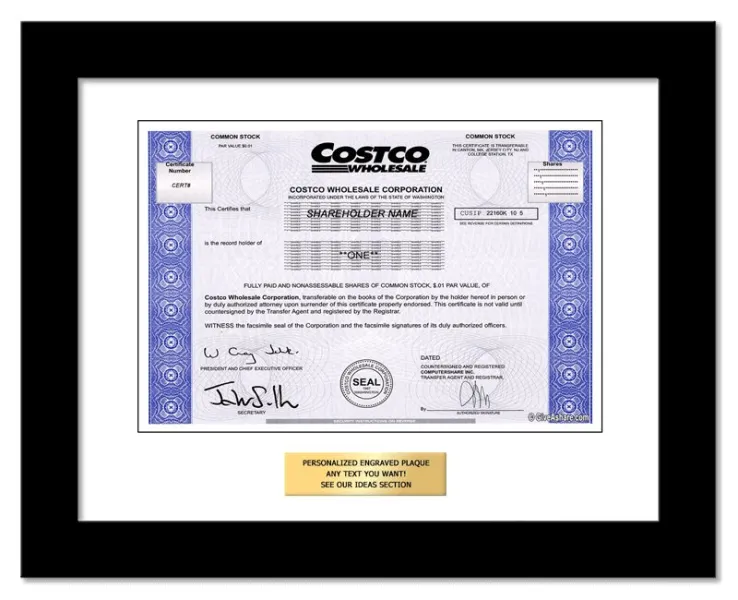
Every publicly traded company has a unique ticker symbol, which is a shorthand abbreviation used to identify its stock on exchanges. For Costco Wholesale Corporation, the ticker symbol is COST. When searching for the stock on your brokerage platform, you will use this symbol.
Deciding How Much to Invest
Before placing your order, decide how much capital you want to allocate to Costco stock.
-
Dollar-Cost Averaging (DCA): This strategy involves investing a fixed amount of money at regular intervals (e.g., $100 every month) regardless of the stock’s price. DCA helps mitigate risk by averaging out your purchase price over time, reducing the impact of short-term market volatility.
-
Lump Sum Investment: This involves investing your entire desired amount at once. If the market goes up, this can be advantageous; however, if the market declines shortly after, you might experience immediate paper losses.
The number of shares you can buy depends on the current stock price and the amount of money you’ve allocated. For example, if Costco stock is trading at $700 per share and you want to invest $3,500, you could buy 5 shares ($3,500 / $700 = 5). Some brokers also offer “fractional shares,” allowing you to invest a specific dollar amount and own a fraction of a share if your funds don’t cover a full share.
Placing the Buy Order Step-by-Step
While brokerage platforms vary slightly in their interface, the general steps for placing a buy order are similar:
-
Navigate to the Trading Section: On your broker’s website or app, look for a “Trade,” “Invest,” or “Buy/Sell” tab.
-
Enter Ticker Symbol: Type “COST” into the search bar and select “Costco Wholesale Corporation” from the results.
-
Specify Action: Select “Buy.”
-
Enter Quantity or Dollar Amount:
-
If buying full shares, enter the number of shares you wish to purchase (e.g., “5”).
-
If your broker supports fractional shares, you might be able to enter a specific dollar amount (e.g., “$3,500”).
-
-
Choose Order Type: Select “Market Order” for immediate execution at the current price, or “Limit Order” if you want to specify a maximum purchase price. If choosing a limit order, you’ll need to enter your desired price.
-
Review and Confirm: Carefully review all the details of your order – ticker symbol, number of shares/dollar amount, order type, estimated cost, and any fees.
-
Submit Order: Once you’re satisfied, click “Place Order” or “Submit Trade.”
You will receive a confirmation once your order is executed, and the purchased shares will appear in your brokerage account, typically within one to three business days (T+2 settlement).
Beyond the Purchase: Managing Your Investment
Buying stock is just the beginning. Effective investing involves ongoing management and understanding the broader implications of your holdings.
Monitoring Your Portfolio
Regularly check your brokerage account to see how your Costco shares are performing. While daily monitoring isn’t necessary, a weekly or monthly check can help you stay informed. Pay attention to company news, earnings reports, and broader market trends that could affect Costco’s stock price.
Reinvesting Dividends (DRIPs)
If Costco pays dividends, you’ll have the option to receive these as cash or to reinvest them. A Dividend Reinvestment Plan (DRIP) automatically uses your cash dividends to purchase additional shares or fractional shares of the same company. This is a powerful strategy for compounding your returns over the long term, as you buy more shares without incurring additional transaction costs.
Understanding Taxes on Investments
When you sell stock at a profit, or when you receive dividends, these are typically considered taxable events.
-
Capital Gains: If you sell shares for more than you paid for them, you realize a capital gain. Short-term capital gains (assets held for one year or less) are usually taxed at your ordinary income tax rate. Long-term capital gains (assets held for more than one year) are taxed at lower, preferential rates.
-
Dividends: Qualified dividends are often taxed at the same lower rates as long-term capital gains, while non-qualified dividends are taxed as ordinary income.
It’s crucial to keep accurate records of your purchases and sales for tax purposes. Consulting a tax professional is highly recommended.
Long-Term vs. Short-Term Strategy
Consider your investment horizon. Are you investing for the long term (many years, typically for retirement or major goals) or the short term (weeks or months)? Costco, as a mature and relatively stable company, is often considered a long-term holding. Short-term trading involves higher risk and often requires more active management and a deep understanding of market dynamics. For most beginner investors, a long-term, buy-and-hold strategy is often more suitable.
Important Considerations Before Investing
While buying Costco stock can be an exciting step, it’s paramount to approach investing with a comprehensive strategy and a clear understanding of the risks involved.
Diversification is Key
Never put all your investment eggs in one basket. Diversification means spreading your investments across different companies, industries, and asset classes (like stocks, bonds, and real estate) to reduce overall risk. While Costco may be a solid company, an unexpected event affecting the retail sector or the company specifically could impact your investment if it’s your only holding. Consider building a diversified portfolio that includes a variety of stocks, or look into exchange-traded funds (ETFs) or mutual funds that offer instant diversification.
Risk Tolerance and Financial Goals
Before investing, honestly assess your risk tolerance – how comfortable are you with the possibility of losing money? Also, clarify your financial goals: Are you saving for retirement, a down payment, or another specific objective? Your risk tolerance and goals will dictate the types of investments suitable for you and how aggressively you should invest.
Do Your Own Research (Due Diligence)
While this article provides a guide to buying Costco stock, it’s not financial advice. Always conduct your own thorough research (due diligence) before making any investment decision. Read Costco’s annual reports (10-K filings), quarterly reports (10-Q filings), and investor presentations. Understand the company’s financials, competitive landscape, growth prospects, and potential risks. Don’t rely solely on news headlines or tips.
The Importance of Professional Advice
If you’re unsure about any aspect of investing, consider consulting a qualified financial advisor. They can help you assess your financial situation, define your goals, understand your risk tolerance, and create a personalized investment plan that aligns with your objectives. Their expertise can be invaluable, especially for navigating complex financial landscapes.
Buying Costco stock, or any stock, is a journey that requires preparation, understanding, and ongoing attention. By following these steps and considering these essential factors, you can approach the stock market with confidence and make informed decisions that align with your financial aspirations.
aViewFromTheCave is a participant in the Amazon Services LLC Associates Program, an affiliate advertising program designed to provide a means for sites to earn advertising fees by advertising and linking to Amazon.com. Amazon, the Amazon logo, AmazonSupply, and the AmazonSupply logo are trademarks of Amazon.com, Inc. or its affiliates. As an Amazon Associate we earn affiliate commissions from qualifying purchases.