
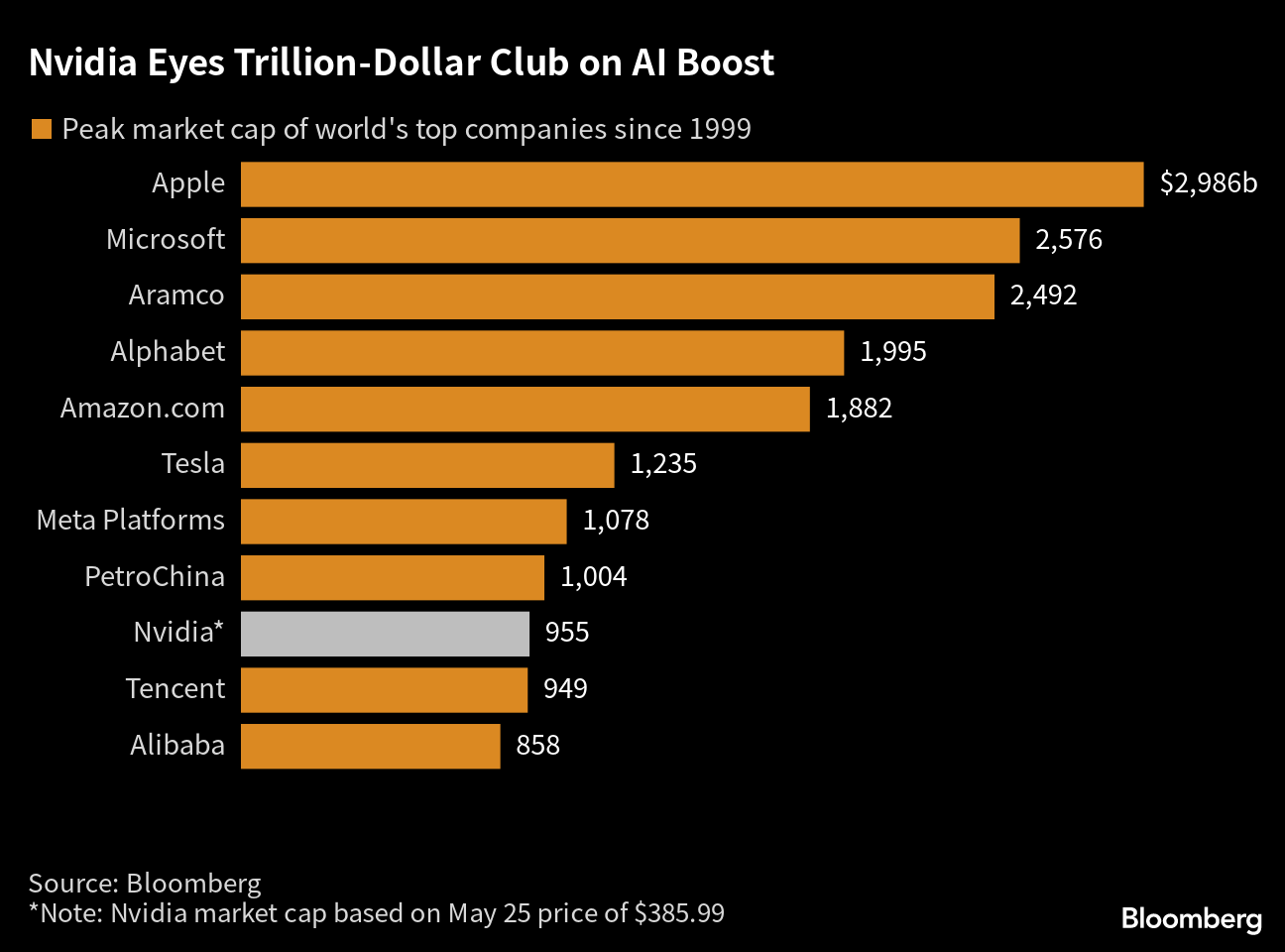
Nvidia, once primarily known for powering high-performance gaming PCs with its graphics processing units (GPUs), has transformed into a critical enabler of the artificial intelligence (AI) revolution. This pivot, coupled with sustained innovation, has propelled its market capitalization to staggering heights, making it one of the most closely watched companies on the global financial stage. For investors, understanding Nvidia’s market cap isn’t just about knowing a number; it’s about grasping the company’s perceived value, its influence within the tech industry, and its potential as an investment.
Market capitalization, often shortened to “market cap,” represents the total dollar value of a company’s outstanding shares. It’s calculated by multiplying the current share price by the total number of shares outstanding. This single figure serves as a snapshot of what the market believes a company is worth. For a behemoth like Nvidia, its market cap reflects not only its current financial health but also the market’s collective optimism (or pessimism) about its future growth prospects, particularly in burgeoning fields like AI, data centers, and advanced computing. This article will delve into what Nvidia’s market cap signifies, the drivers behind its valuation, and its implications for investors and the broader economy.

Understanding Market Capitalization: A Primer for Investors
At its core, market capitalization is a straightforward metric, yet its implications are profound for investors, analysts, and economists alike. It provides a quick way to gauge a company’s size, relative to others, and often correlates with its influence and stability within its industry.
Defining Market Cap: Beyond a Simple Number
Market capitalization is the aggregate value of a company’s entire stock. If a company has 100 million shares outstanding and each share trades at $100, its market cap is $10 billion. This simple calculation yields a powerful indicator because it reflects the current market sentiment about the company’s value. It’s important to differentiate market cap from a company’s book value (assets minus liabilities) or its revenue. While these are also crucial financial metrics, market cap is forward-looking, incorporating investor expectations about future earnings, growth, and industry trends.
Why Market Cap Matters: Size, Risk, and Investment Style
For investors, market cap is a fundamental classification tool. Companies are often grouped into categories based on their market cap:
-
Large-cap: Generally companies with market caps of $10 billion or more. These are typically established, well-known firms with stable earnings and a history of performance. Nvidia firmly sits in this category, often referred to as a “mega-cap” company due to its exceptionally high valuation.
-
Mid-cap: Companies with market caps between $2 billion and $10 billion. These are often growing companies with potential for significant expansion.
-
Small-cap: Companies with market caps between $300 million and $2 billion. These tend to be younger companies with higher growth potential but also higher risk and volatility.
The size category influences investment strategies. Large-cap stocks like Nvidia are often considered relatively less volatile than small-cap stocks, though specific industry dynamics can always introduce significant fluctuations. They are frequently included in broad market indices, making them popular choices for institutional investors and index funds. Investors seeking stability and consistent returns might lean towards large caps, while those chasing aggressive growth (and willing to accept more risk) might explore mid or small caps.
The Dynamics of Market Cap: Fluctuations and Factors
A company’s market cap is not static; it constantly changes with its share price. Various factors can influence these fluctuations:
-
Company Performance: Strong earnings reports, positive guidance, successful product launches, or strategic acquisitions can drive share prices up, increasing market cap. Conversely, missed earnings, product delays, or negative news can send it down.
-
Industry Trends: Nvidia’s market cap has been significantly boosted by the explosive growth in AI and data center demand. Favorable industry-wide trends can uplift all players, while downturns can suppress valuations.
-
Economic Conditions: Broader economic health, interest rates, inflation, and consumer spending can impact investor confidence and, by extension, stock valuations across the market.
-
Investor Sentiment: Market psychology plays a huge role. Hype cycles, fear, and herd mentality can lead to irrational exuberance or panic selling, irrespective of underlying fundamentals, albeit usually temporarily.
Nvidia’s Ascent: From Graphics Cards to AI Powerhouse
Nvidia’s journey from a niche graphics chip manufacturer to a multi-trillion-dollar behemoth is a testament to its relentless innovation and strategic foresight. Its market cap today is a direct reflection of this remarkable transformation.
A Legacy of Innovation: Early Foundations
Founded in 1993, Nvidia initially focused on developing graphics processors for the burgeoning PC gaming market. Its early innovations, such as the GeForce line, set new standards for 3D graphics, quickly establishing Nvidia as a leader in high-performance computing for visual applications. This dominance in gaming, however, laid the groundwork for a far more significant shift. The very architecture of its GPUs, designed to process thousands of calculations simultaneously for rendering graphics, proved to be incredibly well-suited for a different kind of intensive computation: parallel processing for scientific research and, crucially, artificial intelligence.
The AI Revolution: Nvidia’s Strategic Pivot
The real inflection point for Nvidia came with the realization that its GPUs could accelerate deep learning algorithms much more effectively than traditional CPUs. The introduction of CUDA (Compute Unified Device Architecture) in 2006, a platform for general-purpose computing on GPUs, was a pivotal moment. It opened the floodgates for researchers and developers to harness the power of Nvidia’s hardware for tasks beyond graphics, including scientific simulations, data analytics, and machine learning.
As AI began to gain traction in the 2010s, Nvidia strategically positioned itself at the forefront, developing specialized AI chips (like its Tensor Cores), powerful data center GPUs, and comprehensive software stacks. This aggressive expansion into the data center and AI markets proved to be a masterstroke, transforming Nvidia from a gaming hardware company into an indispensable partner for cloud providers, research institutions, and corporations building AI infrastructure.
Market Cap as a Reflection of Strategic Success
Nvidia’s market cap growth has mirrored its strategic success in identifying and capitalizing on megatrends. Its ability to pivot from gaming to professional visualization, then to data centers and AI, demonstrates incredible adaptability and vision. The market cap isn’t just a valuation of its current revenue streams; it’s an acknowledgment of its critical role in shaping the future of technology. Investors have rewarded Nvidia for its foresight, its robust ecosystem (hardware, software, developers), and its perceived insurmountable lead in AI chip development, leading to an exponential increase in its valuation over recent years.
Deconstructing Nvidia’s Valuation: Key Drivers and Metrics
Understanding Nvidia’s colossal market cap requires a deeper dive into the specific drivers that underpin its valuation. These are the elements that financial analysts scrutinize when assessing the company’s intrinsic worth and future potential.
Revenue Streams and Profitability: The Core Fundamentals
Nvidia’s financial strength is diversified across several key segments, though some contribute disproportionately to its current growth narrative:
-
Data Center: This segment is Nvidia’s primary growth engine, fueled by the insatiable demand for AI chips (GPUs, DPUs) and networking solutions from cloud service providers, enterprises, and governments building AI infrastructure. This segment consistently reports robust growth and high-profit margins.
-
Gaming: While no longer the primary growth driver, gaming remains a significant and highly profitable business for Nvidia, with its GeForce GPUs continuing to dominate the high-end gaming market.
-
Professional Visualization: This segment serves professional design and creative industries with high-performance graphics solutions for complex simulations, 3D modeling, and content creation.
-
Automotive: Nvidia is making inroads in the autonomous vehicle market with its DRIVE platform, providing AI computing power for self-driving cars. This segment holds significant long-term potential.
The combination of these high-margin businesses, particularly the data center division, contributes to Nvidia’s impressive profitability, which is a key factor supporting its high market cap. Analysts examine metrics like gross margin, operating margin, and net income to assess the efficiency and health of these revenue streams.
Innovation and IP: The Moat Around Nvidia’s Business
A significant portion of Nvidia’s valuation is tied to its relentless innovation and its vast intellectual property (IP) portfolio. The company holds thousands of patents related to GPU architecture, parallel processing, AI algorithms, and software. This intellectual moat makes it incredibly difficult for competitors to replicate Nvidia’s technology stack and performance benchmarks.
Key aspects include:
-
Chip Architecture: Advanced GPU designs that push the boundaries of computational power and efficiency.
-
CUDA Platform: A proprietary software platform that has fostered a massive developer ecosystem, creating a powerful network effect that locks in users and makes switching to alternative platforms costly and complex.
-
Full-Stack Approach: Nvidia doesn’t just sell chips; it provides a comprehensive platform including hardware, software (drivers, libraries, AI frameworks), and developer tools, offering a complete solution for its customers.
This technological leadership and ecosystem lock-in create a substantial competitive advantage, justifying a premium valuation in the eyes of investors.
Market Share and Competitive Landscape
While Nvidia enjoys a dominant position in the AI chip market, it operates within a competitive landscape. Rivals include:
-
AMD: A traditional competitor in both CPUs and GPUs, AMD is also developing its own data center and AI accelerators.
-
Intel: With its strong CPU dominance, Intel is aggressively pursuing AI chip development and foundry services.
-
Custom Silicon: Major tech companies like Google (TPU), Amazon (Inferentia/Trainium), and Microsoft are developing their own custom AI chips to reduce reliance on third-party vendors.
Despite this competition, Nvidia’s current market share in high-end AI accelerators is overwhelming, providing it with significant pricing power and economies of scale. Investors closely watch market share trends and the pace of competitive innovation to assess Nvidia’s long-term sustainability.
Future Growth Prospects: AI, Metaverse, and Beyond
Nvidia’s market cap also heavily reflects its future growth prospects. The AI revolution is still in its early stages, and Nvidia is poised to be a primary beneficiary. Potential growth catalysts include:
-
Generative AI: The explosion of large language models and other generative AI applications requires massive computational power, directly benefiting Nvidia’s data center business.
-
Enterprise AI Adoption: As more companies integrate AI into their operations, demand for Nvidia’s platforms will continue to grow.
-
Industrial Metaverse/Digital Twins: Nvidia’s Omniverse platform is positioning the company to be a key player in the creation and simulation of digital twins and the industrial metaverse, offering significant long-term potential.
-
Robotics and Autonomous Systems: As these technologies mature, the need for edge AI computing, often powered by Nvidia, will expand.
These future opportunities fuel investor optimism and contribute significantly to Nvidia’s high valuation.
The Investor’s Perspective: Interpreting Nvidia’s Market Cap
For individual and institutional investors, understanding Nvidia’s market cap is a starting point for deeper financial analysis. It’s not just about the absolute number, but how that number is interpreted in the context of valuation, risk, and future potential.
Comparing Nvidia: Peer Group Analysis and Industry Benchmarks
A high market cap often comes with high valuation multiples. Investors often compare Nvidia’s valuation metrics to those of its peers (e.g., AMD, Intel, even some cloud companies) and to historical industry benchmarks:
-
Price-to-Earnings (P/E) Ratio: Compares share price to earnings per share. A high P/E indicates investors are willing to pay a premium for future growth. Nvidia’s P/E has often been significantly higher than the market average.
-
Price/Earnings-to-Growth (PEG) Ratio: Divides the P/E ratio by the earnings growth rate. A PEG ratio around 1 typically suggests a fairly valued stock.
-
Enterprise Value-to-Sales (EV/Sales): Useful for valuing high-growth companies that may not yet have consistent earnings.
These metrics help determine if Nvidia’s market cap is justified by its financial performance and growth outlook, or if it might be overvalued. A very high valuation can imply that significant future growth is already “priced in,” leaving less room for upside if growth falters.
Risk Factors and Volatility: What Investors Should Consider
Despite its dominant position, Nvidia is not without risks that could impact its market cap:
-
Intense Competition: While leading, aggressive competition from AMD, Intel, and custom chip developers could erode market share or compress margins.
-
Geopolitical Risks: Significant manufacturing occurs in Taiwan, making the company susceptible to geopolitical tensions. Export controls and trade restrictions (e.g., with China) can also impact sales.
-
Supply Chain Disruptions: The semiconductor industry is prone to supply chain issues, which can impact production and delivery of chips.
-
Market Cycles: The semiconductor industry is cyclical, and periods of oversupply or reduced demand can affect profitability.
-
Valuation Bubble Concerns: Some analysts express concern that Nvidia’s rapid market cap appreciation might be indicative of a bubble, similar to previous tech booms, suggesting a potential for significant correction.
Investors must weigh these risks against the company’s growth potential to make informed decisions.
Long-Term Outlook: Growth vs. Value Investing
Nvidia is unequivocally a “growth stock.” Its market cap is propelled by expectations of future innovations and expanding markets. For growth investors, the focus is on the company’s ability to continue expanding its revenue and earnings at an above-average rate. For value investors, who seek stocks trading below their intrinsic value, Nvidia’s high valuation multiples might be a deterrent. However, strong long-term trends like AI adoption could continue to fuel its growth for years, potentially justifying its premium. The long-term outlook for Nvidia’s market cap hinges on its continued ability to innovate, maintain its competitive edge, and effectively monetize the expanding AI landscape.
Beyond the Number: The Broader Economic Impact of Giants Like Nvidia
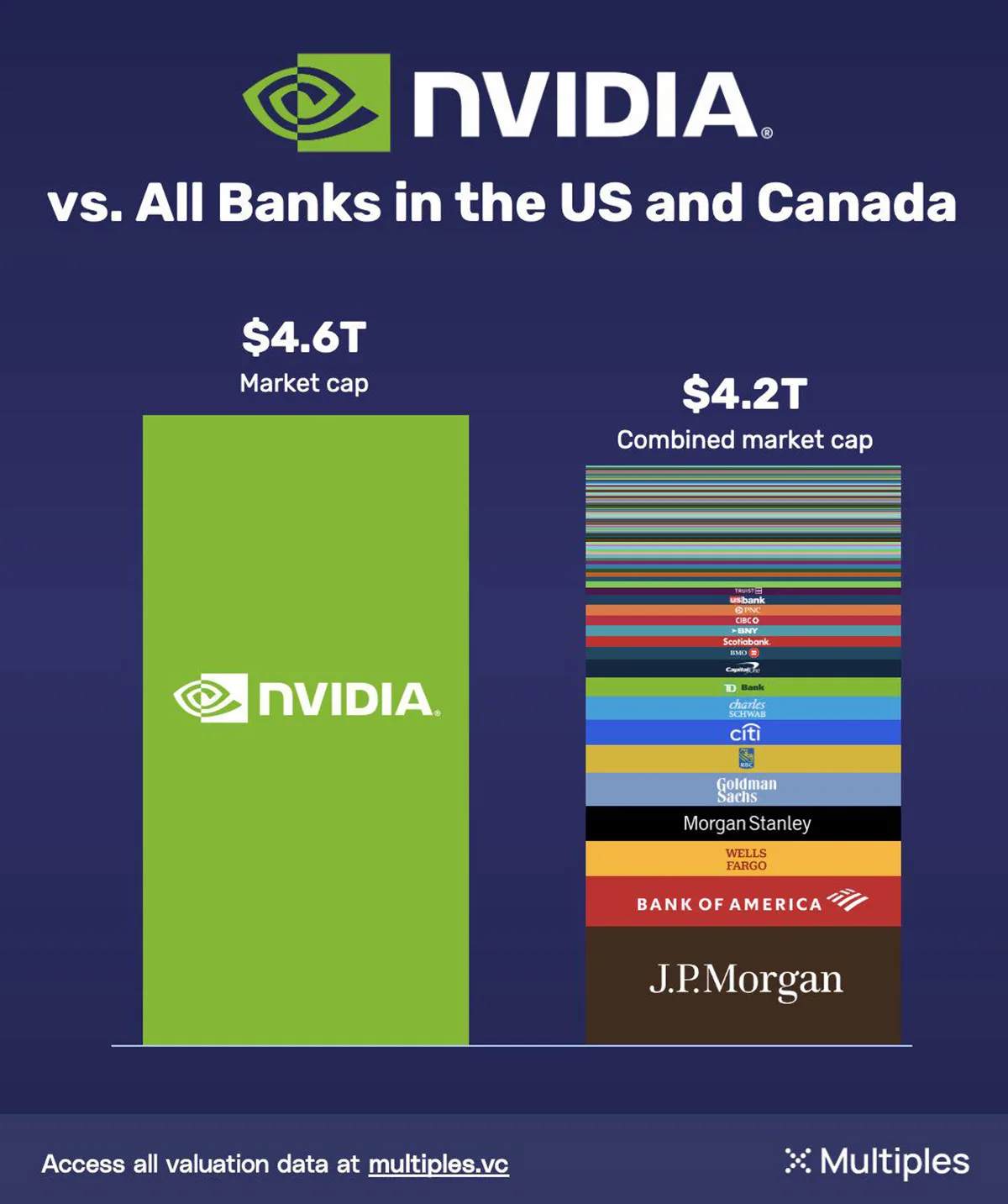
The sheer size of Nvidia’s market cap extends its influence far beyond its direct financial statements. Companies of this magnitude have a profound impact on market indices, economic indicators, and the broader technological ecosystem.
Influence on Indices and ETFs
As a mega-cap company, Nvidia holds a significant weighting in major market indices such as the S&P 500, Nasdaq 100, and various technology-focused exchange-traded funds (ETFs). Its stock performance can materially impact the overall performance of these indices. When Nvidia’s stock soars, it can lift the entire market, and conversely, a significant downturn can drag down major benchmarks. This makes Nvidia a bellwether for the technology sector and a critical component for passive investors holding index funds.
Economic Indicators and Bellwethers
Nvidia’s financial results and outlook are often seen as indicators of the health of the broader technology sector, particularly in areas like AI, data centers, and semiconductor demand. Strong guidance from Nvidia can signal robust spending in these critical growth areas, while any cautious outlook might suggest broader industry headwinds. It provides insights into capital expenditure trends by major cloud providers and enterprise clients, making it a valuable data point for economists and policymakers.
The Ecosystem Effect: Beneficiaries and Enablers
Nvidia’s success doesn’t happen in a vacuum; it creates an extensive ecosystem of beneficiaries. Its advanced chips and software enable innovation across various industries, from healthcare and automotive to scientific research and entertainment.
-
Foundries: Companies like TSMC, which manufactures Nvidia’s chips, benefit directly from increased orders.
-
Memory Suppliers: Demand for high-bandwidth memory (HBM) and other memory solutions rises with advanced GPUs.
-
Cloud Providers: While developing some custom chips, cloud giants still rely heavily on Nvidia for their AI infrastructure, serving as major customers.
-
Software Developers and Startups: The CUDA ecosystem empowers countless AI startups and developers, creating new applications and services that further drive demand for Nvidia’s hardware.
In essence, Nvidia’s high market cap reflects not just its own value, but its pivotal role as a foundational technology provider, enabling the next wave of digital transformation and economic growth.
In conclusion, Nvidia’s market cap is far more than a simple valuation figure. It encapsulates its journey of innovation, its strategic dominance in the AI revolution, its robust financial performance, and the market’s collective optimism about its future. For anyone engaged in finance and investing, understanding the intricacies behind this number provides profound insights into one of the most impactful companies of our time and the broader forces shaping the global economy.
aViewFromTheCave is a participant in the Amazon Services LLC Associates Program, an affiliate advertising program designed to provide a means for sites to earn advertising fees by advertising and linking to Amazon.com. Amazon, the Amazon logo, AmazonSupply, and the AmazonSupply logo are trademarks of Amazon.com, Inc. or its affiliates. As an Amazon Associate we earn affiliate commissions from qualifying purchases.