
In the complex ecosystem of global finance, few metrics hold as much weight for the average household as the prime mortgage rate. While the term is often used colloquially to refer to the lowest interest rates available for home loans, its technical definition and the forces that drive it are far more nuanced. To understand what the prime mortgage rate is today, one must look beyond the daily ticker tape and into the heart of central bank policy, investor sentiment, and individual creditworthiness.
For most prospective homebuyers, the “prime rate” represents a benchmark of affordability. It determines whether a dream home fits within a monthly budget or if a real estate investment provides a positive return on equity. However, the rates we see advertised by major banks are not arbitrary; they are the result of a delicate balance between inflation control, economic growth, and risk management.

The Foundation of Lending: Defining the Prime Rate
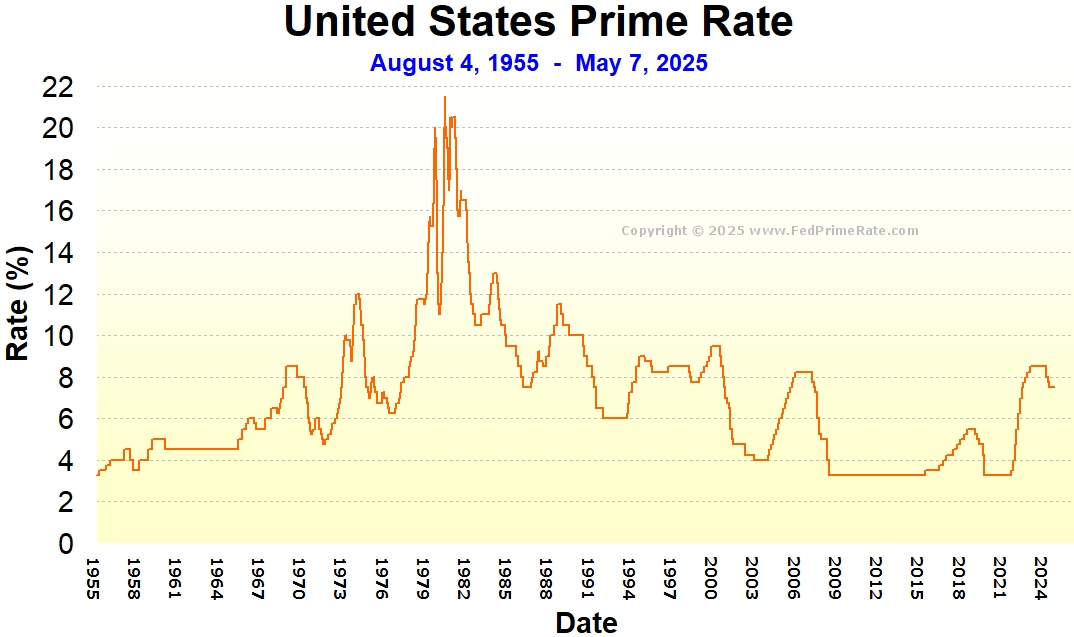
To navigate the current mortgage landscape, we must first distinguish between the Wall Street Journal Prime Rate and the mortgage rates offered to “prime” borrowers. Technically, the Prime Rate is the base interest rate that commercial banks charge their most creditworthy corporate customers. It serves as the fundamental engine for various consumer debt products, including credit cards, home equity lines of credit (HELOCs), and personal loans.
The Federal Funds Connection
The Prime Rate is intrinsically linked to the Federal Funds Rate, which is set by the Federal Open Market Committee (FOMC). As a rule of thumb, the Prime Rate typically sits exactly 3 percentage points above the federal funds target range. When the Federal Reserve raises or lowers the cost of interbank lending, the Prime Rate moves in lockstep, usually within 24 to 48 hours. This direct correlation makes the Fed’s meeting minutes essential reading for anyone tracking the cost of capital.
How Prime Borrowers Shape the Market
While the commercial Prime Rate provides a baseline, a “prime mortgage rate” refers to the interest rate available to borrowers with high credit scores (typically 740 or higher), stable income, and low debt-to-income ratios. These individuals represent the lowest risk to lenders, and as such, they are rewarded with the most competitive pricing in the market. Today’s prime mortgage rates are influenced by the yield on the 10-year Treasury note more than the Prime Rate itself, as mortgages are often bundled into securities and sold to investors who demand a premium over government debt.
Macroeconomic Drivers: Why Rates Shift Daily
If you track mortgage rates over a week, you will likely notice constant fluctuations. These movements are rarely random. They are the market’s reaction to a constant stream of economic data that signals whether the economy is heating up or cooling down.
Inflation and the Consumer Price Index (CPI)
Inflation is the primary enemy of fixed-income investments like mortgages. When inflation rises, the purchasing power of the future interest payments a lender receives is eroded. To compensate for this risk, lenders increase interest rates. Consequently, when the monthly CPI report shows higher-than-expected inflation, mortgage rates tend to spike. Conversely, signs of “disinflation” often lead to a cooling of rates, providing a window of opportunity for buyers to lock in a lower cost of borrowing.
The Role of the 10-Year Treasury Yield
While the Federal Reserve controls short-term interest rates, the market controls long-term rates through the bond market. The 10-year Treasury yield is widely considered the most accurate barometer for 30-year fixed-rate mortgages. Investors view mortgages and Treasury bonds as competing assets. If the yield on a “risk-free” government bond rises, lenders must raise mortgage rates to remain attractive to investors who buy Mortgage-Backed Securities (MBS). Understanding this relationship is key to predicting where prime mortgage rates are headed before the banks officially announce a change.
Global Geopolitical Stability
In times of international turmoil or economic uncertainty, investors often flee to the safety of U.S. Treasuries—a phenomenon known as the “flight to quality.” This surge in demand for bonds drives prices up and yields down. Paradoxically, global instability can sometimes result in lower mortgage rates domestically, as the influx of capital into the bond market lowers the benchmark yields that dictate home loan pricing.
The “Prime” Profile: Qualifying for the Best Rates
Knowing the daily market rate is only half the battle; the other half is ensuring your financial profile allows you to access it. Lenders reserve their “prime” rates for a specific tier of borrowers who demonstrate a high probability of repayment.
The Importance of the Credit Score
In the world of personal finance, your FICO score is your most powerful tool. For a borrower to receive the “prime” rate today, they generally need a score above 740. Borrowers with scores in the 600s may still qualify for a mortgage, but they will be hit with Loan Level Price Adjustments (LLPAs). These are additional fees or higher interest rates that compensate the lender for the increased risk of default. Over a 30-year loan, the difference between a 7.0% rate for a prime borrower and a 7.75% rate for a subprime borrower can amount to hundreds of thousands of dollars in interest.
Debt-to-Income (DTI) and Loan-to-Value (LTV) Ratios
Lenders also look at the “back-end” DTI ratio, which measures how much of your gross monthly income goes toward debt payments. A DTI below 36% is usually required for the most competitive prime rates. Similarly, the LTV ratio—the size of the loan relative to the value of the home—plays a massive role. A 20% down payment (80% LTV) is the traditional gold standard. While low-down-payment programs exist, they often come with Private Mortgage Insurance (PMI) or slightly higher interest rates, moving the borrower away from the “true” prime rate.
Mortgage Products and Rate Variability
Not all mortgages are created equal, and the “prime” rate can vary significantly depending on the structure of the loan. Borrowers must decide which product aligns with their long-term financial goals and risk tolerance.
Fixed-Rate Mortgages: Stability as a Premium
The 30-year fixed-rate mortgage remains the most popular choice for American homeowners. It offers the security of a consistent monthly payment for three decades. However, because the lender is taking on the risk that inflation might rise significantly over those 30 years, fixed rates are typically higher than the initial rates on adjustable products. Today, the 15-year fixed rate is a popular alternative for those who can afford higher monthly payments, as it usually carries a rate significantly lower than the 30-year option.
Adjustable-Rate Mortgages (ARMs)
ARMs offer a lower “teaser” rate for an initial period—usually five, seven, or ten years—after which the rate adjusts annually based on a market index (often the SOFR). In a high-interest-rate environment, ARMs can be a strategic tool for borrowers who plan to sell or refinance before the adjustment period begins. However, they carry the inherent risk of future rate hikes, making them a “prime” choice only for those with a sophisticated understanding of their future cash flow.
HELOCs and Variable Prime Rates
Home Equity Lines of Credit are unique because they are often tied directly to the Wall Street Journal Prime Rate. Unlike a fixed-rate mortgage, the interest rate on a HELOC can change every time the Federal Reserve moves the federal funds rate. For homeowners looking to tap into their equity for renovations or debt consolidation, understanding the current Prime Rate is vital, as it dictates the immediate cost of their revolving credit.
Strategic Financial Planning in the Current Market
Navigating today’s mortgage rates requires more than just watching the news; it requires a proactive strategy to optimize one’s financial position. Whether you are a first-time buyer or a seasoned real estate investor, the way you interact with interest rates will define your net worth over the coming decades.
Timing the Market vs. Time in the Market
Many prospective buyers wait for rates to drop before entering the market. While this seems logical, it can be a double-edged sword. Often, when mortgage rates drop, buyer demand surges, leading to higher home prices and bidding wars. In many cases, it is more financially sound to “marry the house and date the rate.” This strategy involves buying the property when you find the right fit and refinancing later if the prime mortgage rate decreases.
The Power of Mortgage Points
Borrowers can effectively “buy down” their interest rate by paying discount points at closing. One point typically costs 1% of the loan amount and reduces the interest rate by approximately 0.25%. For those who plan to stay in their home for a long time, paying for a lower prime rate upfront can lead to significant long-term savings. Calculating the “break-even point”—the moment when the monthly savings exceed the initial cost of the points—is a critical exercise in financial literacy.

Refinancing as a Wealth-Building Tool
For current homeowners, monitoring the prime mortgage rate is about more than just curiosity; it is about identifying refinancing opportunities. A general rule of thumb is that if you can lower your rate by at least 0.75% to 1%, refinancing may be worth the closing costs. Beyond just lowering payments, “cash-out” refinances allow homeowners to leverage their home’s appreciation to invest in other assets, potentially earning a higher return than the interest cost of the loan.
The prime mortgage rate of today is a reflection of the broader economy’s health, challenges, and expectations. By understanding the underlying mechanisms—from the Fed’s influence to the nuances of credit scoring—individuals can move from being passive observers to active strategists in their own financial lives. While we cannot control the fluctuations of the market, we can control our preparation, ensuring that when the right opportunity arises, we are positioned to secure the best possible terms.
aViewFromTheCave is a participant in the Amazon Services LLC Associates Program, an affiliate advertising program designed to provide a means for sites to earn advertising fees by advertising and linking to Amazon.com. Amazon, the Amazon logo, AmazonSupply, and the AmazonSupply logo are trademarks of Amazon.com, Inc. or its affiliates. As an Amazon Associate we earn affiliate commissions from qualifying purchases.