
The story of Microsoft is not just one of corporate ambition and market dominance; it is a foundational narrative in the annals of computing, a tale of visionary individuals who saw the immense potential of software at a time when hardware still reigned supreme. To understand “where Microsoft started” is to journey back to the nascent days of personal computing, to an era defined by hobbyists, groundbreaking microprocessors, and an unwavering belief in the power of code. It’s a journey from a shared passion in a dorm room to an initial setup in a relatively obscure corner of America, laying the groundwork for a global empire built on operating systems, productivity software, and cloud infrastructure.
This exploration will delve exclusively into the technological genesis and evolution of Microsoft, examining the critical junctures, product innovations, and strategic decisions that cemented its place as an undisputed tech titan. We will navigate its early technical triumphs, the establishment of pivotal software standards, and its relentless pursuit of technological advancement that propelled it from a fledgling startup to a ubiquitous presence in homes and enterprises worldwide.
The Formative Years: A Shared Vision in the Desert
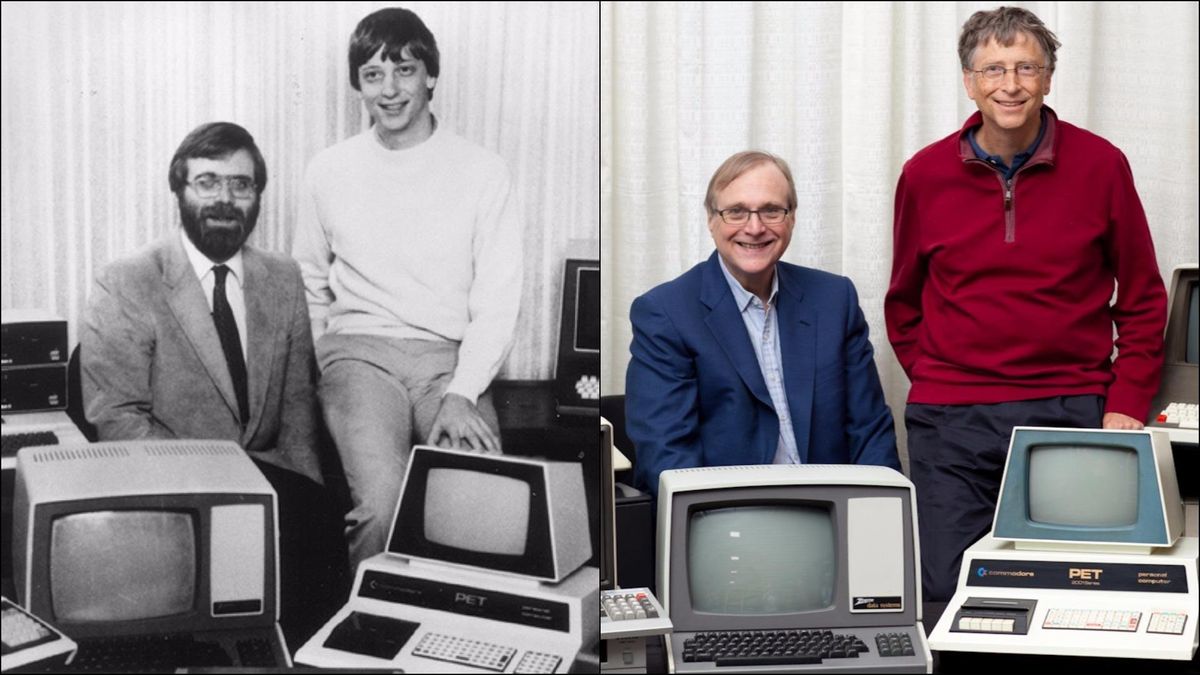
The genesis of Microsoft is rooted in a shared technological fascination between two childhood friends: Bill Gates and Paul Allen. Their bond, forged over shared access to a teletype terminal at Lakeside School in Seattle, was defined by an insatiable curiosity for computing and an uncanny ability to translate complex logic into functional code. This early partnership, characterized by countless hours spent coding and dreaming of a future where computers would be accessible to everyone, set the stage for one of the most impactful companies in history.
From Harvard Dorms to Albuquerque’s Sun-Kissed Sands
The immediate catalyst for Microsoft’s formation was the January 1975 issue of Popular Electronics, which prominently featured the MITS Altair 8800. This relatively crude microcomputer, built around Intel’s 8080 microprocessor, was a revelation. Allen saw the article first and immediately recognized the “start of the revolution,” showing it to Gates, then a student at Harvard. They realized that for the Altair, and indeed for any personal computer, to be truly useful, it needed accessible software. Specifically, it needed a high-level programming language that would allow hobbyists and developers to write applications without having to delve into complex machine code.
Within weeks, Gates and Allen embarked on an audacious project: developing a BASIC interpreter for the Altair. Gates, still a Harvard student, famously called MITS, claiming they had a working BASIC interpreter, a bluff that compelled them to frantically code day and night. Paul Allen flew to Albuquerque, New Mexico, where MITS was based, to demonstrate their creation. Against all odds, the BASIC interpreter worked, albeit with a few minor bugs. This achievement was monumental; it provided a crucial software layer that unlocked the Altair’s potential, making it programmable for a wider audience.
It was in Albuquerque, amidst the desert landscape and the budding microcomputer industry, that Microsoft was officially founded on April 4, 1975. The location was chosen primarily because of its proximity to MITS, their initial and most significant customer. This desert city, far from the established tech hubs, became the unlikely birthplace of a company that would redefine the digital age.
The Entrepreneurial Spirit of the 1970s
The 1970s were a period of immense technological ferment, particularly in the nascent field of personal computing. The invention of the microprocessor in the early 70s had laid the silicon foundation, but the true revolution required a bridge between the complex hardware and the end-user. This is precisely the gap Microsoft sought to fill. At a time when computer manufacturers often supplied only the hardware and rudimentary firmware, Microsoft positioned itself as a dedicated software provider.
Gates and Allen, along with their small but dedicated team, were operating in an environment dominated by hobbyists and hardware tinkerers. Early computers were expensive and complex, often sold as kits. Microsoft’s focus on creating accessible software, particularly programming languages, was a bold move. They understood that the future of computing lay not just in faster processors, but in software that could harness that power and make it accessible. Their early days were characterized by intense coding, direct engagement with the developer community, and a relentless drive to port their BASIC interpreter to various emerging microprocessors and platforms, establishing a crucial foundation for software standardization.
The DOS Era: A Pivotal Partnership and Rapid Expansion
While Microsoft’s early success with BASIC was significant, it was a fateful encounter with IBM that truly propelled the company into the stratosphere, establishing it as a dominant force in the burgeoning personal computer industry. This period marked the company’s shift from a respected software supplier to a platform enabler, fundamentally altering the trajectory of personal computing.
IBM’s Call and the Birth of MS-DOS
In 1980, IBM, then the undisputed titan of mainframe computing, decided to enter the personal computer market. Their ambitious project, codenamed “Project Chess,” aimed to quickly develop a PC that could compete with the likes of Apple. A critical component was an operating system (OS). IBM initially approached Digital Research, creator of CP/M, the dominant OS for 8-bit microcomputers. However, negotiations stalled.
In a now-legendary twist of fate, IBM turned to the small, relatively unknown Microsoft in July 1980. They asked Gates if he could provide an operating system for their upcoming IBM Personal Computer (IBM PC). Gates, recognizing the enormous opportunity but lacking an OS of their own, famously recommended CP/M. When IBM pressed further, Gates and Allen quickly acquired a disk operating system called QDOS (Quick and Dirty Operating System) from Seattle Computer Products for a reported $50,000. Microsoft then adapted and rebranded QDOS as PC-DOS for IBM, and crucially, retained the rights to license it to other hardware manufacturers.
The IBM PC, launched in August 1981, became an unprecedented success. With PC-DOS as its operating system, it rapidly set a new standard for personal computers. Because Microsoft had retained the licensing rights, they were able to offer what they called MS-DOS to other manufacturers who wanted to create “IBM PC compatible” machines. This shrewd technological and business decision allowed MS-DOS to become the industry-standard operating system, creating a vast ecosystem of hardware and software that propelled Microsoft’s growth exponentially.
Setting the Software Standard
The widespread adoption of MS-DOS had profound implications for the tech industry and cemented Microsoft’s technological dominance. For the first time, a single operating system provided a common platform across a multitude of hardware vendors. This standardization streamlined software development and fostered a thriving ecosystem. Developers could write applications once, knowing they would run on any MS-DOS compatible machine. This dramatically lowered the barriers to entry for software creation, leading to an explosion of applications for tasks ranging from word processing (e.g., WordPerfect, Microsoft Word) to spreadsheets (Lotus 1-2-3, Microsoft Excel).
Microsoft actively encouraged this ecosystem, releasing developer tools and documentation. MS-DOS, though a command-line interface, provided the fundamental services – file management, memory allocation, input/output operations – that applications relied upon. It became the technological backbone of the personal computing revolution, an invisible but indispensable layer that connected hardware to the user experience. This era established Microsoft not just as a company selling software, but as the orchestrator of a burgeoning technological platform.
Redmond Beckons: The Windows Revolution and a New Home
While MS-DOS was incredibly successful, its command-line interface, requiring users to memorize commands, was far from intuitive. Microsoft, ever vigilant about the next technological leap, began to envision a more user-friendly paradigm: the Graphical User Interface (GUI). This ambition would lead to the development of Windows and a crucial geographic relocation.
A Vision for Graphical User Interfaces (GUIs)
The concept of a GUI was not new. Pioneering work had been done at Xerox PARC in the 1970s, which inspired Apple’s Lisa and Macintosh computers in the early 1980s. These systems demonstrated the power of a visual interface with icons, menus, and a mouse, making computers more accessible to non-technical users. Gates and Allen recognized that while DOS provided the underlying power, a GUI was essential for personal computing to reach its full potential and penetrate mainstream markets.
Microsoft’s vision was to bring this graphical user experience to the vast ecosystem of IBM PC compatibles that MS-DOS had established. This wasn’t about reinventing the wheel entirely; it was about building a graphical shell that could run on top of DOS, leveraging the existing hardware base while providing a dramatically improved user experience. This strategic decision was critical: instead of creating an entirely new OS and demanding new hardware, they aimed for compatibility and evolution.
The Long Road to Windows 1.0 and Beyond
The development of Windows was a protracted and challenging endeavor. Microsoft first announced “Interface Manager,” later renamed Windows, in November 1983, promising a revolutionary graphical environment. However, the initial release, Windows 1.0, didn’t materialize until November 1985, two years behind schedule. It was rudimentary, often slow, and limited in its capabilities, struggling to gain widespread adoption. It required DOS, ran as a shell, and was often seen more as a curiosity than a necessity.
Microsoft persisted, iteratively improving the technology. Windows 2.0 (1987) introduced overlapping windows and better memory management. However, the real breakthrough came with Windows 3.0 in 1990. This version offered significantly better performance, a more refined interface, and crucial memory management capabilities that allowed applications to run more efficiently. It sold millions of copies, proving that the market was ready for a GUI on PC compatibles. Windows 3.1 (1992) refined this further, becoming incredibly popular.
The ultimate triumph, however, was Windows 95. Launched in August 1995, it was a technological and cultural phenomenon. Windows 95 was no longer just a shell; it integrated the OS and GUI more tightly, introduced the Start button and taskbar, and significantly improved ease of use. It brought true multitasking and a plug-and-play experience to the masses, making computing accessible to millions who had previously found it too intimidating. This era also saw Microsoft’s physical headquarters shift. Starting in Albuquerque, the company moved to Bellevue, Washington, in 1979, and eventually to its sprawling campus in Redmond, Washington, in 1986, where it has remained ever since, becoming synonymous with the city.
Building the Software Empire: Innovation Beyond the OS
With Windows firmly establishing Microsoft’s dominance in operating systems, the company turned its attention to building a robust ecosystem of applications and services that would run on its platform, further entrenching its technological lead and utility for users.
Office Suite Dominance: Word, Excel, PowerPoint
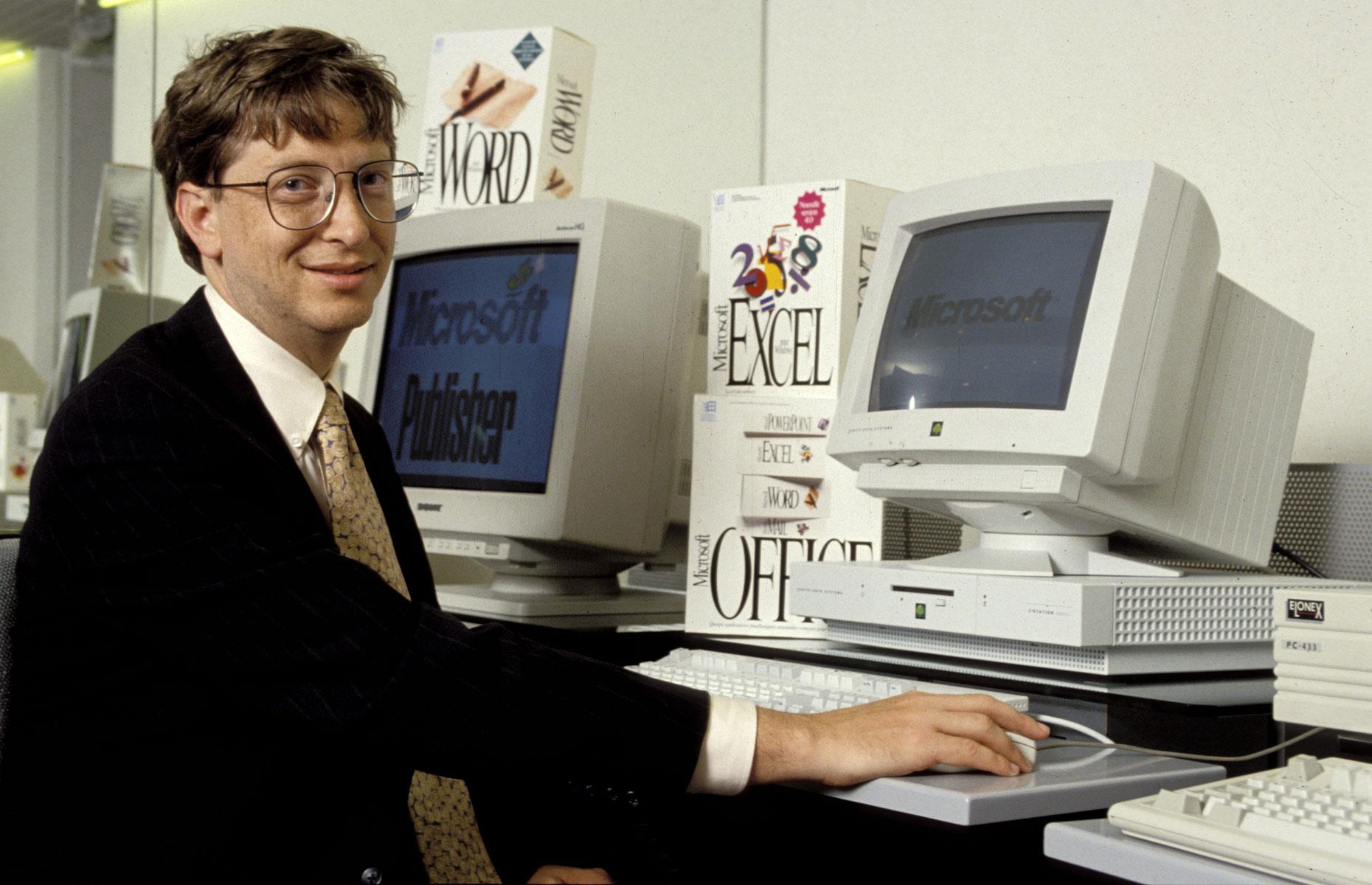
Even before Windows achieved widespread adoption, Microsoft was strategically investing in application software. Microsoft Word, initially developed for Xenix (a Unix variant) and MS-DOS in the early 1980s, offered powerful word processing capabilities. Excel, launched first for the Macintosh in 1985 and then for Windows, quickly surpassed Lotus 1-2-3 to become the leading spreadsheet program due to its graphical interface and superior features. PowerPoint, acquired in 1987, completed the core trio.
The brilliance of Microsoft Office, first bundled as a suite in 1990, lay in its seamless integration. These applications were designed to work together, sharing common interfaces and data exchange formats, creating an immensely powerful and user-friendly productivity environment. For businesses and individuals, the Microsoft Office suite became an indispensable tool, driving the sales of Windows and solidifying Microsoft’s position as the go-to provider for essential software. This established a critical technological feedback loop: better Windows meant better Office, and better Office drove Windows adoption.
Diversification and Early Internet Forays
Microsoft’s technological ambition extended beyond client-side operating systems and productivity applications. Recognizing the need for more robust, stable, and secure operating systems for corporate networks and high-end workstations, Microsoft invested heavily in Windows NT (New Technology), first released in 1993. NT was a complete rewrite, not built on DOS, offering true 32-bit architecture, multiprocessing capabilities, and advanced security features, forming the technological foundation for server operating systems and enterprise computing for decades to come.
As the 1990s progressed, the internet began its rapid ascent. Initially, Microsoft was slow to recognize its full potential, focusing primarily on standalone software. However, under Bill Gates’s leadership, the company quickly reoriented its strategy, declaring “The Internet Tidal Wave” in 1995. This led to the aggressive integration of Internet Explorer into Windows, igniting the “browser wars” with Netscape Navigator. Microsoft also ventured into online services (MSN), development tools for web applications, and began laying the groundwork for future cloud services, recognizing that connectivity would be the next frontier for software. These early forays, though sometimes controversial, demonstrated Microsoft’s adaptability and commitment to staying at the forefront of technological change.
The Legacy of Beginnings: Microsoft’s Enduring Tech Impact
The journey of Microsoft, from a two-man operation in Albuquerque to a global tech giant headquartered in Redmond, is a testament to foresight, relentless innovation, and a profound understanding of the evolving technological landscape. The seeds sown in its early days continue to influence its direction and impact today.
From Startup to Global Innovator
Microsoft’s beginning was fundamentally rooted in software-centricity. Gates and Allen believed that software would be the key to unlocking the potential of hardware, a vision that proved to be remarkably prescient. Their early success with BASIC, followed by the strategic licensing of MS-DOS, established Microsoft as the critical platform provider, creating vast ecosystems for developers and users alike. This foundational principle – creating powerful platforms and enabling developer communities – remains central to Microsoft’s strategy, visible in Azure (its cloud computing platform), Visual Studio development tools, and its commitment to open-source initiatives.
The company’s ability to identify emerging trends, whether it was the graphical user interface with Windows or the internet revolution, and then aggressively innovate or acquire to address those trends, has been a consistent hallmark. From the early days of writing code directly for hobbyists to today’s expansive portfolio spanning cloud computing, artificial intelligence, gaming (Xbox), and hardware (Surface), Microsoft has consistently leveraged its technological heritage to adapt and grow. The core ambition to “put a computer on every desk and in every home” evolved into empowering every person and every organization on the planet to achieve more, still driven by software and intelligent services.
Lessons in Tech Evolution and Disruption
Microsoft’s origin story offers invaluable lessons in the dynamics of the tech industry. It underscores the importance of foundational technological decisions, like the retention of MS-DOS licensing rights, which can have ripple effects for decades. It highlights the power of platform creation, which fosters developer ecosystems and locks in users. Furthermore, it exemplifies the necessity of both vision and execution; without the technical prowess to deliver the software, the vision would have remained just a dream.
The company’s journey also showcases the relentless pace of technological evolution and the constant need for disruption, even of one’s own successful products. From the command-line interface of DOS to the graphical richness of Windows, and now to cloud-native and AI-powered experiences, Microsoft has repeatedly reinvented itself by embracing new technologies and paradigms. Its beginnings in a small office in Albuquerque, driven by two young men with an extraordinary technical vision, laid the blueprint for a company that would not only define the personal computer era but continue to shape the future of technology globally.
aViewFromTheCave is a participant in the Amazon Services LLC Associates Program, an affiliate advertising program designed to provide a means for sites to earn advertising fees by advertising and linking to Amazon.com. Amazon, the Amazon logo, AmazonSupply, and the AmazonSupply logo are trademarks of Amazon.com, Inc. or its affiliates. As an Amazon Associate we earn affiliate commissions from qualifying purchases.