
MicroStrategy, Inc. (NASDAQ: MSTR) is a name that has become synonymous with audacious corporate financial strategy, particularly in the realm of digital assets. While originally founded as a pioneering business intelligence software company, its recent transformation into a de facto corporate treasury vehicle for Bitcoin has thrust it into the spotlight of global finance and investment discussions. To truly understand “What is MicroStrategy?” today, one must look beyond its enterprise software roots and delve deep into its extraordinary pivot towards becoming a leading institutional holder of the world’s foremost cryptocurrency.
From Data Analytics Innovator to Bitcoin Standard Bearer
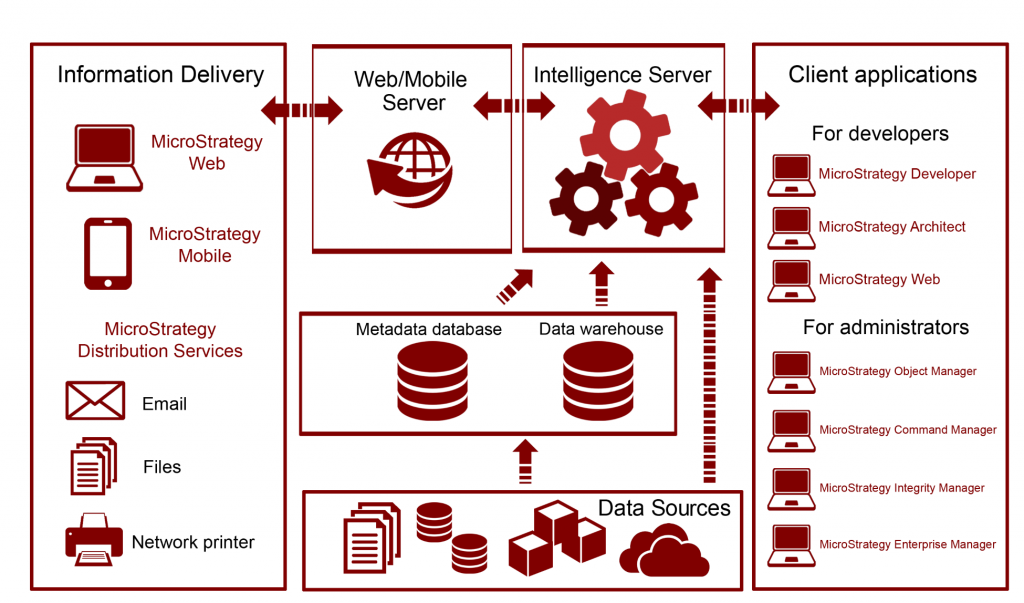
MicroStrategy’s journey began far from the volatile world of cryptocurrency. Founded in 1989 by Michael Saylor, the company quickly established itself as a significant player in the burgeoning field of business intelligence (BI) software. Its mission was to help large organizations analyze vast amounts of data to make informed business decisions, providing tools for reporting, dashboards, scorecards, and predictive analytics. For decades, MicroStrategy was recognized as a reputable, albeit specialized, enterprise software vendor, competing with giants like Oracle, SAP, and IBM.

The Origins of a Data Giant
In its formative years, MicroStrategy focused on developing sophisticated analytics platforms that allowed businesses to harness their data for competitive advantage. Its software empowered corporations to identify trends, optimize operations, and enhance customer understanding. This period saw the company build a robust client base, establish a strong technological foundation, and carve out a niche in a highly competitive enterprise software market. Throughout the late 20th and early 21st centuries, MicroStrategy remained committed to innovating within the BI space, adapting to new technologies like cloud computing and mobile analytics. Its consistent focus on data-driven decision-making kept it relevant, albeit away from mainstream financial headlines.
A Strategic Shift Towards Digital Gold
The profound shift in MicroStrategy’s corporate identity began in mid-2020. Faced with macroeconomic uncertainties, including unprecedented monetary expansion and rising inflation concerns, CEO Michael Saylor and the company’s board made a monumental decision: to adopt Bitcoin as its primary treasury reserve asset. This move was not merely an opportunistic investment but a fundamental philosophical re-evaluation of corporate finance in a rapidly changing global economy. Saylor articulated a vision where Bitcoin represented a superior store of value compared to traditional fiat currencies, offering a hedge against inflation and a long-term appreciation potential that conventional assets could not match. This marked MicroStrategy’s dramatic transformation from a pure-play tech company to a pioneering entity advocating for and accumulating a significant portion of the world’s most decentralized digital asset.
MicroStrategy’s Bold Bitcoin Treasury Strategy
The decision to convert a substantial portion of the company’s cash reserves and, subsequently, to raise capital specifically for Bitcoin purchases, marked an unprecedented move for a publicly traded corporation. MicroStrategy’s strategy was not about dabbling in crypto; it was about committing to a “Bitcoin Standard” for its corporate treasury.
The Rationale Behind the Bet
Michael Saylor’s articulate and passionate advocacy for Bitcoin provided the intellectual and strategic underpinning for this radical shift. He posited that traditional cash holdings were depreciating assets due to inflation and quantitative easing, effectively penalizing companies for holding liquid capital. Bitcoin, in contrast, with its fixed supply and decentralized nature, was presented as a technologically superior form of money – a digital gold offering long-term value preservation and growth potential. For MicroStrategy, this wasn’t speculative trading but a strategic imperative to protect and grow shareholder value by shifting away from what Saylor termed “fiat money debasement.” The strategy aimed to leverage Bitcoin’s potential appreciation while serving as a hedge against global economic instability.
Funding the Bitcoin Accumulation
MicroStrategy’s accumulation of Bitcoin has been systematic and aggressive. Initially, the company used its existing cash reserves. However, as its commitment deepened and Bitcoin’s price continued to fluctuate, MicroStrategy embarked on a series of innovative financial maneuvers to fund its purchases. These included:
-
Issuing Convertible Senior Notes: Selling debt instruments that can be converted into company stock under certain conditions, primarily to institutional investors, with the explicit purpose of using the proceeds to buy Bitcoin.
-
Issuing Secured Notes: Offering bonds collateralized by some of its existing Bitcoin holdings, again with the stated intention of using the funds for further Bitcoin acquisition.
-
Leveraging Existing Equity: While not directly issuing equity solely for Bitcoin, the company’s stock often trades as a proxy for Bitcoin, reflecting investor sentiment on its crypto holdings.
This multifaceted fundraising approach allowed MicroStrategy to accumulate a vast quantity of Bitcoin, making it one of the largest corporate holders globally. Each capital raise was a clear signal to the market about the company’s unwavering commitment to its Bitcoin strategy, further cementing its identity as a Bitcoin-centric investment vehicle.
Impact on Corporate Finance and Valuation
MicroStrategy’s Bitcoin strategy has profoundly reshaped its financial profile and market valuation. The company’s balance sheet is now heavily influenced by the volatile price movements of Bitcoin. This has introduced a new level of risk and opportunity for investors. When Bitcoin prices surge, MicroStrategy’s reported assets increase significantly, often leading to substantial gains in its stock price. Conversely, downturns in the crypto market can result in impairment charges on its balance sheet (as per current accounting rules, cryptocurrencies are treated as indefinite-lived intangible assets, meaning they must be marked down if their value drops below the acquisition cost, but cannot be marked up until sold).
For many investors, MSTR stock has become an attractive, albeit leveraged, way to gain exposure to Bitcoin through a publicly traded company. Its valuation often reflects not just its underlying software business but also a significant premium for its Bitcoin holdings, sometimes trading at a higher implied value than the sum of its parts. This creates a unique investment proposition, blending the traditional enterprise software business with the speculative, high-growth potential of digital assets.
The Vision of Michael Saylor and the Bitcoin Standard
At the heart of MicroStrategy’s transformation is Michael Saylor, a polarizing yet undeniably influential figure who has become one of Bitcoin’s most fervent and articulate proponents. His unwavering conviction has shaped MicroStrategy’s direction and elevated its profile within both traditional finance and the crypto community.
A Proponent of Bitcoin Adoption
Saylor’s public appearances, interviews, and social media presence are characterized by a deep understanding and passionate defense of Bitcoin’s monetary principles. He frequently argues for Bitcoin as a “decentralized monetary network,” an “asset for the long-term,” and a hedge against the “inflationary monetary policies” of central banks worldwide. His ability to distill complex economic and technological concepts into understandable arguments has made him a leading voice in the institutional adoption of Bitcoin. He views MicroStrategy’s strategy as a blueprint for other corporations to follow, advocating for a broader shift towards a “Bitcoin standard” for corporate treasuries globally.
MicroStrategy as a Bitcoin Proxy Play
For many investors, buying MSTR shares is a strategic decision to gain indirect exposure to Bitcoin. Because MicroStrategy holds such a large proportion of its assets in Bitcoin, and actively uses capital markets to acquire more, its stock often moves in tandem with the price of Bitcoin, sometimes with added volatility due to its leveraged position. This makes MSTR a “Bitcoin proxy play,” appealing to institutional investors who might have restrictions on direct cryptocurrency investments, or to retail investors seeking a publicly traded vehicle with a dedicated Bitcoin strategy. However, this also means that investors are exposed to the operational risks of MicroStrategy’s software business, its debt obligations, and the premiums or discounts at which its shares trade relative to its net asset value of Bitcoin.
Implications for Investors and the Broader Market
MicroStrategy’s pioneering Bitcoin strategy has had far-reaching implications, challenging traditional corporate finance norms and influencing the broader investment landscape.
Evaluating MSTR Stock
Investing in MicroStrategy stock (MSTR) requires a dual perspective. On one hand, investors must assess the health and future prospects of its core business intelligence software segment. This involves evaluating its competitive position, revenue growth, profitability, and innovation pipeline. On the other hand, and arguably more dominantly, investors must analyze MicroStrategy through the lens of a Bitcoin investment vehicle. This means understanding Bitcoin’s market dynamics, price volatility, regulatory environment, and long-term potential. The stock’s valuation often reflects a complex interplay between these two components, with the Bitcoin holdings frequently dictating the lion’s share of its market cap. Investors must consider the company’s debt levels, which are substantial due to its financing activities for Bitcoin, and how these affect its risk profile.
Influence on Institutional Bitcoin Adoption
MicroStrategy’s early and aggressive move into Bitcoin has served as a critical case study for other corporations and institutional investors. By demonstrating a viable (though high-risk) model for integrating Bitcoin into a corporate treasury, it has helped de-risk and legitimize the asset class for mainstream finance. Its actions opened the door for discussions around Bitcoin’s role as an inflation hedge, a treasury reserve asset, and an alternative investment. While not all companies will replicate MicroStrategy’s exact strategy, its pioneering efforts have undoubtedly contributed to the broader trend of institutional interest and investment in Bitcoin, paving the way for products like Bitcoin ETFs and increasing corporate awareness.
Risks and Opportunities of a Concentrated Strategy
MicroStrategy’s concentrated Bitcoin strategy presents both significant opportunities and considerable risks. The opportunity lies in Bitcoin’s potential for substantial long-term appreciation, which could translate into exponential growth in shareholder value. As a first mover and highly vocal advocate, MicroStrategy stands to benefit from increasing institutional adoption and a rise in Bitcoin’s global prominence.
However, the risks are equally pronounced. Bitcoin’s extreme price volatility means that MicroStrategy’s balance sheet and stock price are subject to dramatic swings. A prolonged bear market in Bitcoin could lead to significant impairment charges, erode shareholder value, and potentially strain the company’s ability to service its debt. Regulatory uncertainty surrounding cryptocurrencies also poses a risk, as do potential changes in accounting standards that could further complicate its financial reporting. Furthermore, the reliance on debt to acquire Bitcoin adds a layer of financial leverage, amplifying both gains and losses. For investors, understanding these intertwined risks and opportunities is paramount.
Beyond Bitcoin: The Enduring Business of Enterprise Analytics
While its Bitcoin strategy dominates headlines, it is crucial to remember that MicroStrategy remains a functioning enterprise software company. Its core business intelligence platform continues to generate revenue and serve a global client base.
Sustaining the Core Business
MicroStrategy’s BI platform offers robust capabilities for data discovery, mobile analytics, embedded analytics, and hyperintelligence. This software helps organizations transform data into actionable insights, driving efficiency and competitiveness. The company continues to invest in its product suite, adapting to evolving market demands for cloud-native solutions, artificial intelligence, and machine learning integrations. While the revenue from its software business is more stable than its Bitcoin-driven valuation, it remains a vital component of its overall financial health, providing the operational cash flow that, in part, supports its treasury strategy.

Synergies Between Software and Bitcoin Strategy
Interestingly, there’s an emerging narrative around potential synergies between MicroStrategy’s software business and its Bitcoin strategy. As the world increasingly moves towards digital assets and decentralized finance, MicroStrategy’s expertise in data analytics could be leveraged to build tools and platforms relevant to the crypto economy. While this potential remains largely untapped or unarticulated in detail, it presents a long-term strategic angle where the company’s analytical prowess could intersect with the burgeoning demand for insights within the digital asset space, potentially creating new revenue streams and reinforcing its unique position at the nexus of technology and finance.
In essence, MicroStrategy today is a fascinating hybrid: an enterprise software company with a bold, almost evangelical, commitment to Bitcoin as its primary treasury reserve asset. Its story is a vivid illustration of how traditional corporate finance is being challenged and redefined in the age of digital transformation and decentralized assets, making it a critical entity to watch for anyone interested in the evolving landscape of money, technology, and investment.
aViewFromTheCave is a participant in the Amazon Services LLC Associates Program, an affiliate advertising program designed to provide a means for sites to earn advertising fees by advertising and linking to Amazon.com. Amazon, the Amazon logo, AmazonSupply, and the AmazonSupply logo are trademarks of Amazon.com, Inc. or its affiliates. As an Amazon Associate we earn affiliate commissions from qualifying purchases.