
Navigating the landscape of home financing can often feel like deciphering a complex financial puzzle. Among the various terms and conditions you’ll encounter, “points” frequently emerge as a significant, yet sometimes misunderstood, component of a mortgage. Far from being loyalty rewards or abstract metrics, points in home loans are a tangible financial mechanism that can profoundly impact both your upfront costs and your long-term repayment obligations. For any prospective homeowner or those considering refinancing, a clear understanding of what points are, how they function, and when they might be beneficial is absolutely crucial for making informed financial decisions.
At its core, a “point” in the context of a home loan represents 1% of the total loan amount. These aren’t an arbitrary fee; rather, they are a form of prepaid interest or a charge for the origination of the loan itself. The decision to pay points—or to accept a loan that includes them—is a strategic one, requiring careful consideration of your financial situation, the loan’s specifics, and your long-term housing plans. In an environment where every fraction of a percentage point on an interest rate can translate into thousands of dollars over the life of a loan, understanding points isn’t just academic; it’s a vital step in optimizing your personal finance strategy when securing one of life’s largest investments. This article will demystify loan points, breaking down their types, mechanics, and the scenarios where they either represent a savvy financial move or a potentially unnecessary expense.
Decoding Loan Points: Discount vs. Origination
When lenders speak of “points,” they are generally referring to one of two distinct types: discount points or origination points. While both are calculated as a percentage of the loan amount and are paid at closing, their purpose and financial implications differ significantly. Understanding this distinction is fundamental to evaluating any mortgage offer.
Understanding Discount Points
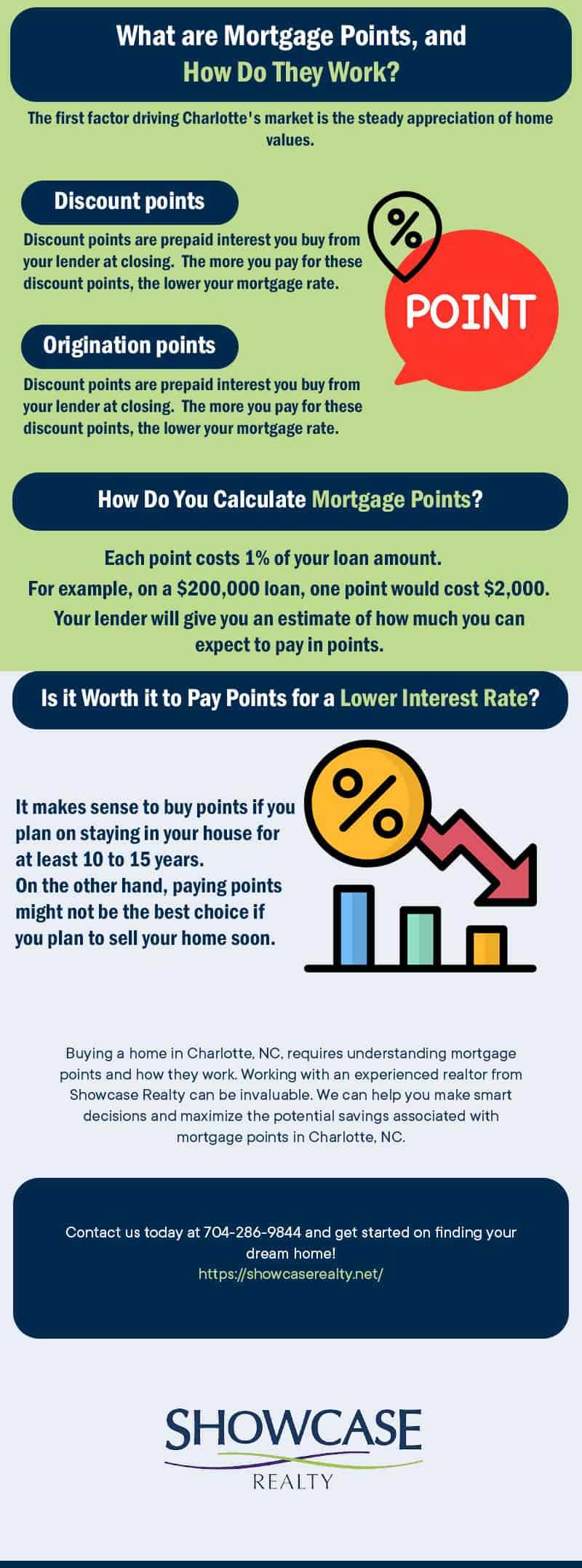
Discount points are essentially a way for you, the borrower, to prepay a portion of the interest on your home loan in exchange for a lower interest rate over the life of the loan. Think of them as buying down your interest rate. Each discount point typically costs 1% of your total loan amount, and in return, the lender reduces the advertised interest rate on your mortgage. For example, if you’re taking out a $300,000 loan, one discount point would cost you $3,000. This $3,000 would be paid at closing, and in exchange, your annual interest rate might drop from, say, 7.0% to 6.75%.
The primary benefit of discount points is the potential for long-term savings. By paying more upfront, your monthly mortgage payments will be lower because less interest accrues each month. Over 15, 20, or 30 years, these seemingly small reductions in your interest rate can add up to tens of thousands of dollars in savings. However, this strategy is most advantageous for borrowers who plan to stay in their home for an extended period, allowing enough time for the cumulative savings on monthly interest to surpass the initial cost of the points.
Grasping Origination Points
In contrast to discount points, origination points are a fee charged by the lender for processing your loan application, underwriting the loan, and generally covering the administrative costs associated with creating the mortgage. While they are also calculated as a percentage of the loan amount (e.g., 1% of a $300,000 loan would be $3,000), they do not directly lower your interest rate. Instead, they are part of the lender’s profit or cost recovery for initiating the loan.
Origination points are often viewed as a standard part of closing costs. Some lenders might itemize them clearly as “origination fees” or “underwriting fees,” while others might bundle various charges under the umbrella of “origination points.” It’s crucial to understand that these fees are typically non-negotiable in the sense that they are the cost for the lender to do business with you. While you might be able to negotiate the amount of origination points or compare offers from different lenders, their purpose remains to cover the lender’s operational expenses. Unlike discount points, paying origination points doesn’t yield a direct financial return in the form of a lower interest rate, though a loan without origination points might simply have a slightly higher interest rate to compensate the lender.
How Loan Points Work and Are Calculated
The operational mechanics of loan points are relatively straightforward once you grasp the underlying principle that a point equals one percent of the loan amount. However, their impact on your overall loan cost, particularly in relation to your Annual Percentage Rate (APR), requires a closer look.
The Cost of a Point
As established, the cost of a single point is always 1% of your total loan amount. This applies universally, whether it’s a discount point or an origination point. For example:
-
On a $200,000 home loan, one point costs $2,000.
-
On a $450,000 home loan, one point costs $4,500.
-
If a lender charges 1.5 points on a $300,000 loan, the cost would be $4,500 (1.5% of $300,000).
These costs are typically paid upfront at closing, meaning they add to the total cash you need to bring to the table on settlement day, alongside your down payment, other closing costs, and escrow funds. In some cases, especially if you’re refinancing or have sufficient equity, lenders might allow you to roll these points into your loan amount, but this means you’ll be paying interest on the points themselves over the life of the loan, increasing your total interest paid.
Impact on Your Mortgage Rate and APR
The most significant impact of discount points is their direct effect on your mortgage’s nominal interest rate. When you “buy down” the rate with discount points, you are effectively pre-paying interest, which results in a lower contractual interest rate for your loan. This reduces your monthly principal and interest payment.
However, it’s essential to distinguish between the nominal interest rate and the Annual Percentage Rate (APR). The interest rate is solely the cost of borrowing the principal amount. The APR, on the other hand, provides a more comprehensive measure of the total cost of the loan over its term, as it includes not only the interest rate but also most of the other fees and charges associated with the loan, including discount points and origination points.
When you pay discount points, your nominal interest rate goes down. However, because you’ve paid an upfront fee (the points), your APR might not decrease as much as the interest rate, or in some cases, might even be higher if the benefits of the lower rate don’t outweigh the upfront cost over a shorter period. The APR is a standardized calculation designed to help borrowers compare the true cost of different loan offers. By including points in the APR calculation, it gives you a better sense of the overall expense. When comparing loan offers, always look at the APR alongside the interest rate and the total closing costs to get the clearest picture of what you’re truly paying. A lower interest rate with points might result in a higher APR than a slightly higher interest rate without points if you don’t keep the loan long enough to recoup the initial investment.
The Strategic Decision: When Do Points Make Sense?
Deciding whether to pay points on a home loan is a critical financial strategy that hinges on a careful analysis of your personal circumstances, financial goals, and the specifics of the loan offer. It’s not a one-size-fits-all answer; what makes sense for one borrower might be a poor choice for another.
Weighing the Upfront Cost Against Long-Term Savings
The core of this decision lies in calculating your “break-even point.” This is the moment in time when the cumulative savings from your lower monthly payments—achieved by paying discount points—equals the upfront cost of those points. If you plan to keep the loan beyond this break-even point, paying points will likely save you money in the long run. If you sell the home or refinance before reaching that point, you will have essentially lost money on the points.
To calculate the break-even point, you take the total cost of the discount points and divide it by the monthly savings achieved by the lower interest rate.
For example:
-
Loan Amount: $300,000
-
Option A: 7.0% interest, no points, monthly payment (P&I) ~$1,996
-
Option B: 6.75% interest, 1 point ($3,000), monthly payment (P&I) ~$1,947
-
Monthly Savings: $1,996 – $1,947 = $49
-
Cost of Points: $3,000
-
Break-Even Point: $3,000 / $49 per month ≈ 61 months (or just over 5 years)
In this scenario, if you plan to stay in the home and keep that mortgage for more than 5 years, paying the $3,000 in points would be a financially beneficial move. If you anticipate moving or refinancing sooner, it would not be.
Considering Your Loan Term and Future Plans
Your intended tenure in the home is a major factor. Borrowers who foresee living in their home for many years (e.g., 10+ years) are prime candidates for paying discount points, as they will have ample time to realize the full savings potential. Conversely, if you’re buying a starter home with plans to upgrade in 3-5 years, or if you anticipate significant life changes that might necessitate a move or refinancing, paying points might not be wise.
Refinancing trends also play a role. In a volatile interest rate environment, if rates drop significantly, you might be tempted to refinance. If you’ve just paid points to lock in a rate that’s now substantially higher than market rates, you’ve essentially paid for a benefit you’re abandoning. Consider the stability of interest rates and your financial forecasting when making this decision.
Your Financial Position and Goals

Your current cash flow and overall financial strategy also inform the decision. Do you have readily available cash to cover the points without straining your emergency fund or delaying other important financial goals? If paying points means depleting your savings or taking on more debt elsewhere, it might not be the best choice.
Sometimes, that upfront cash could be better utilized for other investments, home improvements, or simply retained for liquidity. The “opportunity cost” of paying points means you’re foregoing other uses for that money. If you can earn a higher return on those funds elsewhere (e.g., in a well-performing investment account) than the savings you get from the lower interest rate, it might be better to opt for a loan with fewer or no points. Your risk tolerance and investment philosophy should align with your point-paying strategy.
Are Points Always a Good Idea? Potential Downsides and Alternatives
While points can offer significant advantages, particularly discount points that lower your interest rate, they are not universally beneficial. There are several scenarios and factors where paying points might not be the optimal financial move, and alternative loan structures can be more appealing.
High Upfront Costs
The most immediate downside of paying points is the increase in your upfront closing costs. As points are paid at settlement, they directly add to the total cash required to close on your loan. For many first-time homebuyers or those with limited liquid assets, accumulating enough funds for a down payment, standard closing costs (such as appraisal fees, title insurance, attorney fees), and then adding thousands more for points can be a significant hurdle.
If paying points stretches your budget thin or forces you to dip into your emergency savings, it might create financial stress at a time when you should be settling into your new home. Moreover, if your loan-to-value (LTV) ratio is already high, rolling points into the loan to avoid upfront payment means you’re essentially borrowing more money, and thus paying interest on those points over the entire loan term, negating some of the savings they were intended to provide.
Opportunity Cost of Funds
Every dollar spent on points is a dollar that cannot be used elsewhere. This concept is known as opportunity cost. Could the money spent on points be better invested in a retirement account, a college fund, or a diversified portfolio that historically yields a higher return than the interest savings on your mortgage? For example, if you pay $4,000 in points to save $50 a month (equating to $600 a year), and you could have invested that $4,000 in a vehicle yielding 8% annually ($320 a year), the decision becomes complex.
Furthermore, that cash could be allocated to home repairs, renovations, or building a more robust emergency fund. Having readily accessible cash for unforeseen expenses can often be more valuable than a slightly lower mortgage payment, especially in the initial years of homeownership when unexpected costs tend to arise. The prudent financial decision considers not just the direct benefit of points but also the potential returns or benefits of alternative uses for those funds.
“No-Point” Loans and Higher Rates
Many lenders offer “no-point” loans, which means you pay zero discount points or origination points. In such scenarios, the lender typically compensates for the lack of upfront fees by charging a slightly higher interest rate. This higher rate ensures the lender still achieves their desired profit margin over the life of the loan.
No-point loans are particularly attractive to borrowers who:
-
Have limited cash for closing: They reduce the upfront financial burden, making homeownership more accessible.
-
Anticipate a short stay: If you know you’ll be moving or refinancing within a few years, a no-point loan avoids the risk of paying for points you won’t recoup.
-
Prefer simplicity: Some borrowers simply prefer a straightforward loan with fewer upfront complexities.
While the monthly payments on a no-point loan will be higher due to the elevated interest rate, the benefit is that you retain your cash, which can be crucial for settling into a new home or maintaining financial flexibility. It’s a trade-off: lower upfront costs for higher long-term costs (if you keep the loan for its full term), versus higher upfront costs for lower long-term costs.
Navigating Loan Points: Key Questions to Ask Your Lender
The process of obtaining a home loan is inherently complex, and the nuances of points can add another layer of intricacy. To ensure you’re making the best financial decision, it’s imperative to engage actively with your lender and ask pointed questions. Transparency and clarity are your allies.
Transparency in Loan Estimates
The first and most critical step is to thoroughly review your Loan Estimate (LE), a standardized form that all lenders are required to provide within three business days of receiving your loan application. The LE clearly outlines all the costs associated with your loan.
-
Section A: Origination Charges: This is where you’ll find “origination points” or specific fees like “loan origination fee,” “underwriting fee,” or “processing fee.” These are the lender’s charges for setting up the loan.
-
Section B: Services You Cannot Shop For: This section might list additional fees, but importantly, “discount points” specifically intended to lower your interest rate are usually itemized either in Section A or clearly noted in the “Lender Credits” section if the lender is offering to cover some closing costs in exchange for a higher rate. Ensure you understand what each charge represents. Is it truly a discount point lowering your rate, or is it an origination fee?
-
Compare the APR: The LE also prominently displays the Annual Percentage Rate (APR). As discussed, the APR provides a more holistic view of the loan’s cost by including most fees, including points. Compare the APR across different offers, not just the interest rate.
Don’t hesitate to ask your lender to walk you through each line item, especially those related to points. Request a clear explanation of what each point is for and how it impacts your interest rate and total costs.
Comparing Lender Offers
It’s always advisable to shop around and get Loan Estimates from multiple lenders. This allows you to directly compare not just interest rates, but also the points being charged and their impact.
When comparing, ask each lender for options with varying point structures:
-
Option 1: No points: What is the interest rate with zero discount points?
-
Option 2: With points: What is the interest rate if I pay 1 point? What about 2 points?
-
Option 3: Lender Credits: Can you offer a higher interest rate in exchange for a “lender credit” that covers some or all of my closing costs (effectively “negative points”)?
By comparing these different scenarios, you can clearly see the trade-offs between upfront costs and monthly payments across different lenders. Pay close attention to the total cash needed at closing for each option and how it aligns with your financial capacity.
Negotiating Points and Rates
While some fees are fixed, many aspects of a mortgage, including points and interest rates, can be negotiable. Lenders want your business, and they often have some flexibility within their pricing models.
-
Ask if points are negotiable: Can the lender reduce the origination points? Can they offer a slightly lower interest rate for the same number of discount points, or fewer points for the same rate?
-
Inquire about fractional points: Sometimes, paying half a point might make sense for a marginal rate reduction without the full cost of a whole point. Lenders may offer 0.5 or 0.25 points.
-
Leverage competing offers: If one lender offers a better rate or fewer points, use that information to see if another preferred lender can match or beat it.
Remember, the goal is to find the loan that best fits your financial situation, minimizes your long-term costs, and aligns with your anticipated time in the home. By asking informed questions and comparing diligently, you empower yourself to make a wise decision regarding points in your home loan.
In conclusion, “points” in home loans are a fundamental element of mortgage financing that demand careful attention from any borrower. Whether they manifest as discount points, designed to lower your interest rate over time, or origination points, covering the lender’s administrative costs, their impact on your upfront expenses and long-term financial commitments is substantial.
The decision to pay points is not one to be taken lightly. It requires a thorough understanding of your break-even point—the moment at which the cumulative savings from a lower interest rate outweigh the initial cost of the points. This calculation, combined with an honest assessment of how long you anticipate staying in your home and your overall financial liquidity, forms the bedrock of an informed choice. While paying points can unlock significant savings for those committed to a long-term mortgage, a “no-point” loan might be the more prudent option for borrowers with limited cash at closing or those expecting to move or refinance within a few years.
Ultimately, successfully navigating the complexities of loan points hinges on proactivity. Engage critically with your Loan Estimate, compare offers from multiple lenders, and don’t shy away from asking detailed questions about every fee and its purpose. By understanding the strategic implications of discount and origination points, you empower yourself to secure a home loan that not only facilitates your homeownership dreams but also aligns perfectly with your personal financial strategy, ensuring a more stable and cost-effective journey into your new home.
aViewFromTheCave is a participant in the Amazon Services LLC Associates Program, an affiliate advertising program designed to provide a means for sites to earn advertising fees by advertising and linking to Amazon.com. Amazon, the Amazon logo, AmazonSupply, and the AmazonSupply logo are trademarks of Amazon.com, Inc. or its affiliates. As an Amazon Associate we earn affiliate commissions from qualifying purchases.