
Interest rates are the unseen conductors of the global economy, their subtle movements orchestrating significant shifts across financial markets, personal budgets, and business strategies. Far from being an abstract economic concept, their current trajectory and future outlook directly impact everything from the cost of your mortgage and the returns on your savings to the viability of a startup’s expansion plans. Understanding “what interest rates are doing” is not just for economists or investors; it’s a fundamental piece of knowledge for anyone navigating the financial landscape.
In recent years, we’ve witnessed periods of unprecedented low rates designed to stimulate growth, followed by rapid hikes aimed at taming inflation. These dramatic shifts underscore the dynamic nature of monetary policy and its profound implications. This article delves into the current state of interest rates, exploring the mechanisms behind their movements, their widespread effects, and practical strategies for individuals and businesses to adapt and thrive in any rate environment.

The Central Bank’s Lever: Understanding Monetary Policy
At the core of interest rate movements lies the formidable power of central banks. Institutions like the Federal Reserve in the United States, the European Central Bank, or the Bank of England serve as the primary architects of monetary policy, wielding control over the benchmark interest rates that cascade throughout the financial system. Their mandate is typically dual: to maintain price stability (controlling inflation) and foster maximum sustainable employment.
The Role of the Federal Reserve (or equivalent central bank)
The Federal Reserve, often referred to as “the Fed,” stands as a prime example of a central bank’s influence. It operates independently of political pressures to make decisions that best serve the economic interests of the nation. Its principal tool is the federal funds rate, which is the target rate for overnight borrowing between banks. While the Fed doesn’t directly set your mortgage or savings account rates, changes to the federal funds rate act as a powerful signal, influencing every other interest rate in the economy. When the Fed raises its target rate, borrowing becomes more expensive for banks, which in turn passes those higher costs onto consumers and businesses. Conversely, a cut makes borrowing cheaper, encouraging spending and investment.
Key Interest Rate Mechanisms
Beyond the policy rate, central banks employ various tools to manage the money supply and influence economic activity. Open market operations, such as buying or selling government securities, directly inject or withdraw liquidity from the banking system, affecting short-term interest rates. During times of crisis, central banks might resort to unconventional measures like quantitative easing (QE), where they purchase large quantities of long-term assets to push down long-term interest rates and stimulate lending. The reverse, quantitative tightening (QT), involves reducing these holdings, which can put upward pressure on rates. Understanding these mechanisms is crucial to deciphering the central bank’s strategy and anticipating future rate movements.
Economic Indicators Guiding Decisions
Central bank decisions are not arbitrary; they are meticulously informed by a vast array of economic data. Inflation figures, such as the Consumer Price Index (CPI) and the Personal Consumption Expenditures (PCE) price index, are paramount, as controlling price increases is a core mandate. Labor market statistics, including unemployment rates, job growth figures, and wage inflation, provide insights into the health of the employment sector. Gross Domestic Product (GDP) growth, consumer confidence surveys, manufacturing output, and global economic conditions also play a significant role. By carefully analyzing these indicators, central banks aim to steer the economy toward its mandates, often resulting in complex trade-offs between managing inflation and supporting growth.
The Ripple Effect: How Rates Impact Your Personal Finances
The abstract concept of “interest rates” becomes profoundly real when it touches your personal finances. Every adjustment, whether up or down, has tangible consequences for your savings, debt, and investment portfolio, shaping your financial decisions and long-term wealth accumulation.
Borrowing Costs
One of the most immediate impacts of changing interest rates is on the cost of borrowing.
-
Mortgages: For homeowners or prospective buyers, interest rates are a critical determinant. In a rising rate environment, new fixed-rate mortgages become more expensive, increasing monthly payments and reducing purchasing power. Adjustable-rate mortgages (ARMs) see their rates reset, potentially leading to higher payments for existing borrowers. Conversely, falling rates can create opportunities for refinancing, allowing homeowners to secure lower monthly payments or shorter loan terms.
-
Consumer Loans: Credit card interest rates, often variable, tend to climb quickly when the central bank raises its policy rate, making revolving debt more expensive. Auto loans and personal loans also see their rates adjust, increasing the total cost of financing big-ticket items. Understanding these dynamics is crucial for managing household budgets and avoiding unnecessary interest expenses.
Savings and Investments
While higher rates make borrowing more expensive, they can be a boon for savers and certain types of investors.
-
Savings Accounts & CDs: When interest rates rise, banks typically offer higher yields on savings accounts, money market accounts, and certificates of deposit (CDs). This provides a valuable opportunity for individuals to earn more on their idle cash, encouraging saving.
-
Bonds: The relationship between interest rates and bond prices is inverse: as rates rise, the value of existing bonds with lower fixed coupon payments falls, and vice versa. This is because newly issued bonds offer more attractive yields. However, for investors seeking income, rising rates mean new bond issues will offer better returns.
-
Stocks: The impact on the stock market is more nuanced. Higher interest rates can increase the cost of capital for companies, reducing their profitability and making future earnings less valuable when discounted back to the present. This can put downward pressure on stock prices, especially for growth companies that rely heavily on future earnings projections. However, some sectors, like banking, may benefit from higher net interest margins.
Debt Management Strategies
In a rising rate environment, proactive debt management becomes paramount. Prioritizing the repayment of high-interest, variable-rate debt like credit card balances is crucial. Consolidating debt into a lower-interest fixed-rate loan, if available, can lock in costs before further increases. Conversely, in a falling rate environment, assessing refinancing opportunities for mortgages or other significant loans can lead to substantial long-term savings. The key is to regularly review your debt portfolio and adjust your strategy to align with the prevailing interest rate landscape.
Business and Economic Implications of Rate Changes
Beyond personal finances, the ebb and flow of interest rates send powerful currents through the business world and the broader economy, influencing corporate strategy, investment decisions, and overall market stability.
Corporate Borrowing and Expansion
Businesses, regardless of size, rely heavily on financing for operations, expansion, and innovation. When interest rates rise, the cost of borrowing for corporations increases, making it more expensive to take out loans for capital expenditures, research and development, or mergers and acquisitions. This can lead to a slowdown in business investment, reduced hiring, and a more cautious approach to expansion plans. Smaller businesses, with less access to diverse financing options, can be particularly vulnerable to rising borrowing costs. Conversely, lower rates encourage businesses to invest, innovate, and grow, spurring economic activity and job creation.
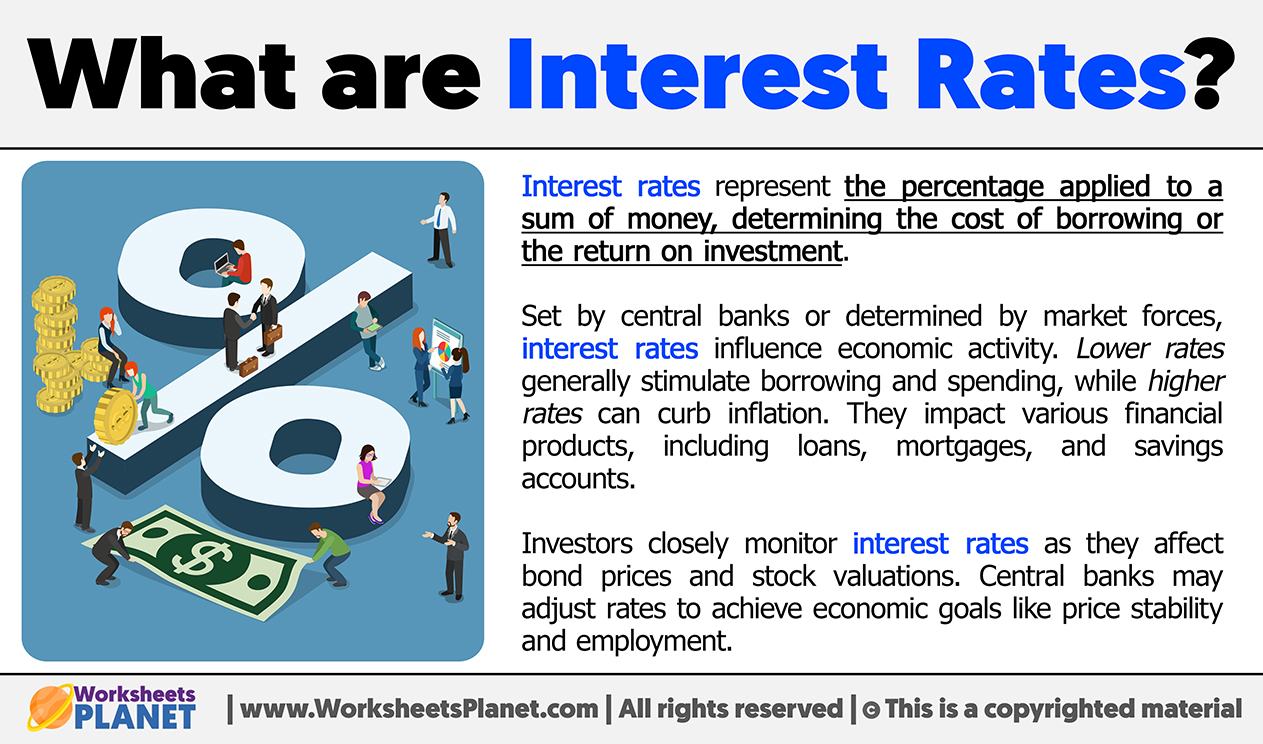
Consumer Spending and Demand
Interest rates play a critical role in shaping consumer behavior, which in turn drives a significant portion of economic activity. Higher rates tend to dampen consumer demand by making big-ticket purchases, such as homes and cars, more expensive due to higher loan costs. They also encourage saving over spending, as the returns on deposits become more attractive. This reduction in overall consumer spending can lead to slower economic growth, potentially contributing to a recession if the slowdown is severe. Lower rates, on the other hand, stimulate spending by making borrowing cheaper and discouraging saving, thereby boosting aggregate demand.
Global Economic Spillovers
The interconnectedness of the global economy means that interest rate decisions in one major economy can have significant spillovers worldwide. For instance, when the Federal Reserve raises interest rates, it can attract foreign capital seeking higher returns, strengthening the U.S. dollar. A stronger dollar makes U.S. exports more expensive and imports cheaper, affecting trade balances. For emerging markets, rising U.S. rates can make dollar-denominated debt more expensive to service and can lead to capital outflows, creating financial instability. Conversely, coordinated rate cuts or expansions in monetary policy across major economies can provide a global stimulus, aiding recovery from downturns.
Navigating the Current Rate Environment: Strategies for Individuals and Businesses
Understanding “what interest rates are doing” is only the first step; the crucial next step is to formulate strategies to effectively navigate the current and anticipated rate environment. Both individuals and businesses must be proactive in adjusting their financial plans.
For Savers
In a rising rate environment, savers have an opportunity to significantly boost their returns.
-
Maximizing Returns: Actively seek out high-yield savings accounts, money market accounts, and certificates of deposit (CDs) offered by online banks or credit unions, which often provide better rates than traditional brick-and-mortar banks.
-
Laddering CDs: Consider a CD ladder strategy, where you invest in multiple CDs with staggered maturity dates. As one CD matures, you can reinvest the funds into a new, higher-rate CD if rates have continued to climb, providing both liquidity and optimized returns.
-
Short-Term Instruments: Focus on short-term fixed-income investments like Treasury bills or short-duration bond funds, as they are less sensitive to interest rate fluctuations than long-term bonds.
For Borrowers
For those with existing debt or planning to borrow, strategic moves can mitigate the impact of rate changes.
-
Refinancing Opportunities (if rates fall): If rates are falling or have recently dropped, explore refinancing mortgages or other significant loans to secure lower interest rates and reduce monthly payments.
-
Debt Consolidation: Consider consolidating high-interest, variable-rate debt (like credit card balances) into a personal loan with a lower, fixed interest rate, especially in a rising rate environment, to lock in costs and simplify payments.
-
Locking in Rates: When taking on new debt, especially for a home, consider fixed-rate options over adjustable-rate mortgages if rates are expected to rise, to ensure payment predictability.
-
Paying Down High-Interest Debt: Prioritize aggressively paying down variable-rate debt as interest costs climb, freeing up cash flow.
For Investors
Investors must adapt their portfolios to the prevailing rate environment to optimize returns and manage risk.
-
Portfolio Adjustments: Review your asset allocation. In a rising rate environment, consider reducing exposure to long-duration bonds and potentially reallocating towards value stocks, dividend-paying stocks, or sectors that benefit from inflation (e.g., energy, real estate).
-
Diversification: Maintain a diversified portfolio across various asset classes (stocks, bonds, real estate, commodities) to hedge against specific risks associated with rate changes.
-
Long-Term vs. Short-Term Considerations: For long-term investors, market fluctuations due to rate changes might be less concerning than for short-term traders. Stick to your long-term plan, but be open to tactical adjustments.
-
Inflation-Protected Securities: Consider Treasury Inflation-Protected Securities (TIPS) which adjust in value with inflation, offering a hedge in environments where inflation and interest rates are both rising.
For Small Businesses
Small businesses face unique challenges and opportunities amidst interest rate fluctuations.
-
Managing Cash Flow: Tightly manage cash flow to reduce reliance on short-term borrowing, which is often highly sensitive to rate changes.
-
Securing Favorable Financing: If rates are low or expected to rise, consider locking in fixed-rate loans for expansion or capital expenditures. Explore government-backed loan programs, which may offer more favorable terms.
-
Hedging Strategies: Larger businesses might employ hedging strategies using derivatives to protect against adverse interest rate movements, though this is often complex and more suitable for sophisticated operations.
-
Customer Impact Analysis: Understand how rate changes impact your customers’ purchasing power and adjust pricing or marketing strategies accordingly.
The Outlook: What to Expect Next (A Forward-Looking Perspective)
The future trajectory of interest rates remains a subject of intense debate among economists and policymakers. While no one possesses a crystal ball, understanding the factors that will likely influence future decisions can help individuals and businesses prepare.
Factors Influencing Future Decisions
Central banks will continue to be guided by key economic indicators. The persistent battle against inflation will likely remain a primary concern, with policymakers closely monitoring how quickly price pressures ease. The strength of the labor market, including wage growth and employment figures, will also be critical. Geopolitical events, global supply chain dynamics, and shifts in consumer and business sentiment can all introduce unforeseen variables that necessitate a recalibration of monetary policy. The balancing act between controlling inflation without tipping the economy into a deep recession is a delicate and ongoing challenge.
Expert Predictions and Market Sentiment
Financial markets constantly price in expectations for future interest rate movements. Bond yields, particularly those on government bonds, often reflect market sentiment about where rates are headed. Economists and financial analysts offer a range of predictions, from continued hikes to eventual cuts, depending on their interpretation of current data and future trends. While these predictions are valuable, they underscore the inherent uncertainty. Investors and businesses should pay attention to the consensus but also understand the diversity of views and the potential for unexpected shifts.

The Importance of Staying Informed
In an environment of fluctuating interest rates, the most effective strategy is continuous monitoring and adaptability. Regularly review your personal and business financial health, keep an eye on economic news, and understand the implications of central bank communications. Proactive financial planning, diversification, and a willingness to adjust strategies based on new information will be key to weathering periods of volatility and capitalizing on emerging opportunities.
Conclusion
Interest rates are far more than mere numbers; they are powerful economic levers that shape our financial realities. Understanding “what interest rates are doing”—from the central bank’s policy decisions to their direct impact on mortgages, savings, business investments, and global markets—is essential for informed financial decision-making. By staying vigilant, adapting strategies, and maintaining a forward-looking perspective, individuals and businesses can not only navigate the complexities of varying rate environments but also position themselves for sustained financial success. The current landscape demands prudence and strategic planning, making knowledge about interest rate dynamics an invaluable asset in anyone’s financial toolkit.
aViewFromTheCave is a participant in the Amazon Services LLC Associates Program, an affiliate advertising program designed to provide a means for sites to earn advertising fees by advertising and linking to Amazon.com. Amazon, the Amazon logo, AmazonSupply, and the AmazonSupply logo are trademarks of Amazon.com, Inc. or its affiliates. As an Amazon Associate we earn affiliate commissions from qualifying purchases.