
In the dynamic world of finance, understanding how to calculate and interpret price increases is a fundamental skill, vital for both astute business management and prudent personal financial planning. From the rising cost of raw materials impacting a company’s bottom line to the increasing expenses that squeeze a household budget, price increases are an undeniable reality. This article delves into the methodologies for calculating price increases, explores the underlying reasons for these shifts, and provides strategic insights for navigating their implications within the realm of money and finance.
Understanding the Fundamentals of Price Increases
Price increases are more than just numbers; they are indicators of economic shifts, market forces, and changing value perceptions. Grasping the core concepts behind these increases is the first step toward effective financial decision-making.
Why Prices Go Up: Key Drivers
The reasons behind a price increase are multifaceted, often stemming from a confluence of economic factors:
-
Inflation: Perhaps the most pervasive driver, inflation refers to the general increase in prices and fall in the purchasing value of money. Measured by indices like the Consumer Price Index (CPI) for consumers and Producer Price Index (PPI) for businesses, inflation erodes purchasing power, making goods and services more expensive over time. Central banks often aim for a stable, low rate of inflation to stimulate economic growth without causing hyperinflation.
-
Increased Production Costs: For businesses, a primary reason to raise prices is a rise in their own input costs. This can include:
-
Raw Materials: Fluctuations in global commodity markets (e.g., oil, metals, agricultural products) directly impact manufacturing costs.
-
Labor: Wage increases, benefits, and training costs contribute to higher operational expenses.
-
Shipping and Logistics: Fuel prices, transportation infrastructure challenges, and supply chain disruptions can significantly inflate delivery costs.
-
Utilities: Rising electricity, water, and gas prices add to overhead.
-
-
Supply and Demand Dynamics: Basic economics dictates that when demand for a product or service outstrips its supply, prices tend to rise. Conversely, an oversupply can lead to price reductions. Factors like natural disasters, geopolitical events, or sudden shifts in consumer preferences can create imbalances.
-
Value Perception and Market Positioning: Companies may strategically increase prices if they believe their product or service offers enhanced value, quality, or brand prestige that justifies a premium. This can be part of a broader marketing and brand strategy, but its financial implications (profit margins, revenue) are central to the Money category.
-
Regulatory Changes and Taxes: New government regulations, tariffs, or increased sales/excise taxes can directly lead to higher prices as businesses pass these costs onto consumers.
The Importance of Accurate Calculation
Accurate calculation of price increases is not merely an academic exercise; it has tangible financial consequences for both enterprises and individuals.
-
For Businesses: Precise calculations are critical for:
-
Maintaining Profitability: Understanding the new cost structure allows businesses to set prices that ensure healthy profit margins, rather than inadvertently selling at a loss or with insufficient returns.
-
Competitive Positioning: Knowing how much to increase prices without alienating customers or losing market share to competitors is a delicate balance. It requires benchmarking and understanding price elasticity.
-
Financial Forecasting and Budgeting: Accurate projections of future revenues and costs depend on correctly anticipating and calculating price changes.
-
Investor Relations: Publicly traded companies must justify pricing strategies to shareholders, demonstrating how they maintain value and growth.
-
-
For Individuals: Understanding price increases is essential for:
-
Effective Budgeting: Knowing how much more everyday goods and services will cost helps individuals adjust their budgets and avoid financial shortfalls.
-
Financial Planning: Long-term goals like retirement savings, education funds, and major purchases need to account for the eroding effect of inflation and rising prices.
-
Understanding Purchasing Power: It helps individuals gauge whether their income growth is keeping pace with the cost of living, providing a realistic view of their financial well-being.
-
Core Methods for Calculating a Price Increase
Calculating a price increase is a straightforward process once you understand the basic formulas. The method you choose often depends on whether you’re looking for an absolute change or a percentage change.
Percentage Increase Method (Most Common)
This is the most widely used method, as it expresses the price change as a proportion of the original price, making it easy to compare across different items or time periods.
-
Formula:
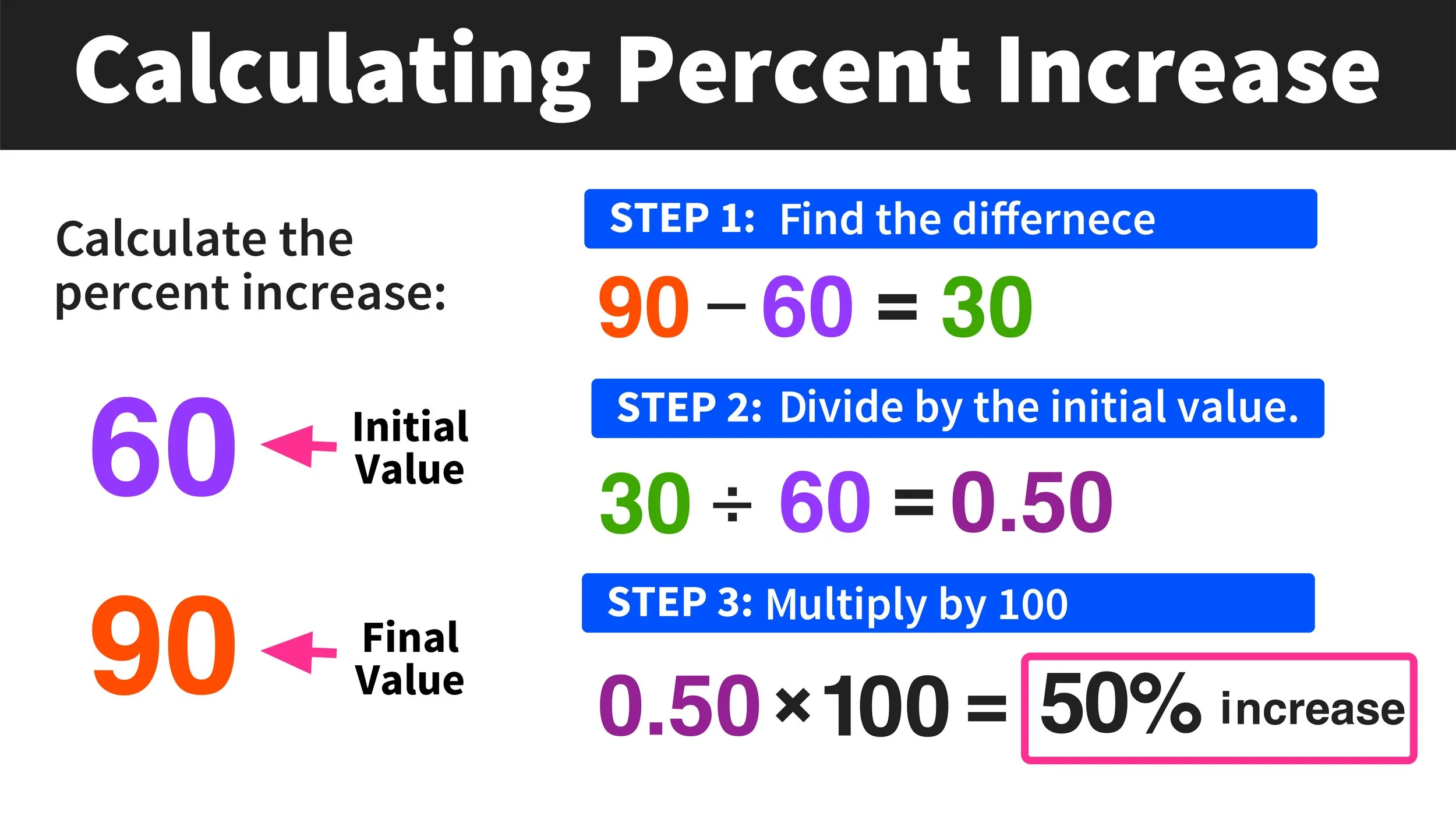
Percentage Increase = ((New Price - Old Price) / Old Price) * 100% -
Step-by-step Example:
Let’s say a gallon of milk cost $3.00 last year (Old Price) and now costs $3.30 (New Price).
-
Find the absolute increase: $3.30 – $3.00 = $0.30
-
Divide the absolute increase by the old price: $0.30 / $3.00 = 0.10
-
Multiply by 100 to get the percentage: 0.10 * 100 = 10%
Therefore, the price of milk increased by 10%.
-
-
When to Use It: This method is ideal when you want to understand the relative magnitude of a price change, compare inflation rates, or determine how much a specific product’s cost has risen in proportion to its initial value. Businesses use it to calculate margin percentage increases, while individuals use it to understand cost of living adjustments.
Absolute Increase Method
This method simply tells you the raw dollar amount of the price change, without reference to the original price.
-
Formula:
Absolute Increase = New Price - Old Price -
Step-by-step Example:
Using the same milk example: Old Price = $3.00, New Price = $3.30.
- Subtract the old price from the new price: $3.30 – $3.00 = $0.30
The absolute increase is $0.30.
-
When It’s Useful: While less informative for comparisons than the percentage method, the absolute increase is useful for quick calculations of how much more you’ll pay in real dollars or for understanding the direct cost difference in specific financial scenarios, such as the additional cost on a single invoice.
Calculating the New Price After a Percentage Increase
Sometimes, you know the old price and the desired percentage increase, and you need to determine what the new price will be.
-
Formula:
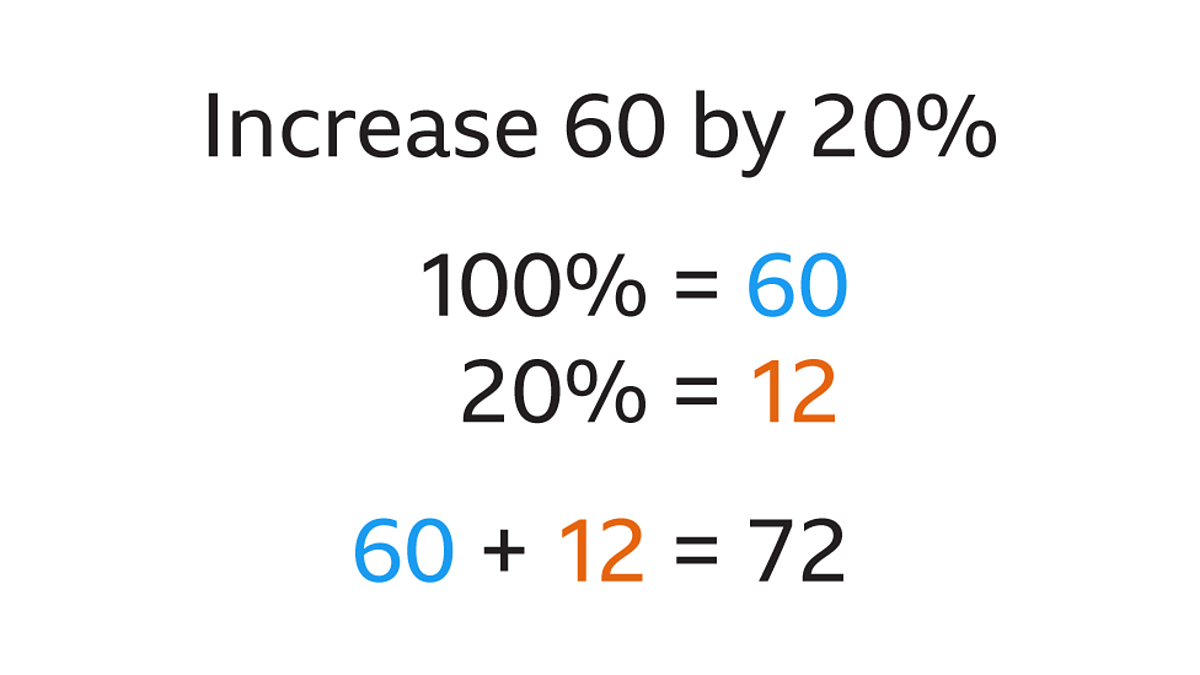
New Price = Old Price * (1 + (Percentage Increase / 100))Alternatively, for a more intuitive approach:
New Price = Old Price + (Old Price * (Percentage Increase / 100)) -
Step-by-step Example:
A product currently sells for $50.00 (Old Price), and the business plans a 15% price increase.
-
Convert the percentage to a decimal: 15% / 100 = 0.15
-
Add 1 to the decimal: 1 + 0.15 = 1.15
-
Multiply the old price by this factor: $50.00 * 1.15 = $57.50
The new price will be $57.50.
-
- When to Use It: This formula is invaluable for businesses planning price adjustments, for financial analysts forecasting future revenues, and for consumers estimating future costs.
Strategic Considerations for Businesses Implementing Price Increases
For businesses, implementing a price increase is a strategic decision with significant financial implications. It’s not just about the calculation, but about its impact on customers, competitors, and overall profitability.
Market Analysis and Competitive Pricing
Before raising prices, businesses must conduct thorough market analysis. This involves:
-
Benchmarking: How do your prices compare to competitors for similar products or services? A significant increase above market norms without clear justification can lead to customer defection.
-
Perceived Value: Do customers believe your product or service offers enough value to justify a higher price? Premium pricing often works when a brand has a strong reputation for quality, exclusivity, or superior features.
-
Competitive Landscape: Are competitors likely to follow suit, or will they hold their prices, potentially gaining market share? Understanding their cost structures and strategic objectives is key.
Communicating Price Changes to Customers
How a price increase is communicated can be as important as the increase itself. Poor communication can lead to customer dissatisfaction and churn, impacting future revenue.
-
Transparency and Justification: Clearly explain the reasons for the increase (e.g., rising input costs, enhanced features, improved service). Avoid vague explanations.
-
Timing: Announce increases with sufficient notice, allowing customers to adjust their budgets or make final purchases at the old price.
-
Value Reinforcement: Remind customers of the benefits they receive and the value your product or service provides, reinforcing why the higher price is still worthwhile.
-
Customer Loyalty Programs: Consider offering special deals or loyalty perks to long-standing customers to soften the blow of a price hike.
Impact on Profit Margins and Sales Volume
A price increase directly impacts revenue, but its effect on profit depends on sales volume and cost structures.
-
Price Elasticity of Demand: This economic concept measures how sensitive consumer demand is to price changes. If demand is highly elastic, a small price increase can lead to a large drop in sales, potentially reducing overall revenue and profit. If demand is inelastic (e.g., for essential goods), a price increase might not significantly deter sales, leading to higher revenue.
-
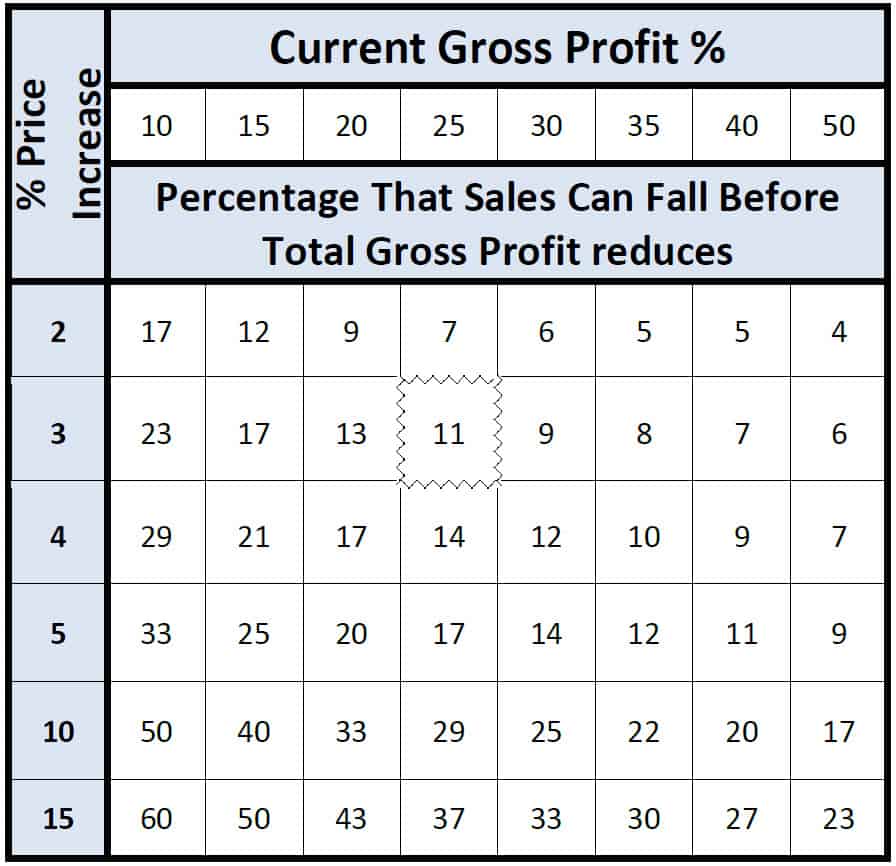
Break-Even Analysis: Businesses must understand the new break-even point with increased prices. Will the higher revenue per unit compensate for potentially lower sales volume, or will it lead to higher overall profitability?
-
Gross vs. Net Margins: Calculate how the price increase affects both gross profit (revenue minus cost of goods sold) and net profit (gross profit minus operating expenses).
Dynamic Pricing and Revenue Management
In some industries (e.g., airlines, hospitality, e-commerce), businesses employ sophisticated dynamic pricing models. These involve continuously adjusting prices based on real-time market conditions, demand fluctuations, competitor pricing, and inventory levels. While complex, these strategies aim to maximize revenue and profitability by intelligently managing price increases and decreases.
Price Increases in Personal Finance: What It Means for You
For individuals, price increases directly translate into a higher cost of living and can significantly impact personal financial health. Understanding and responding to these changes is crucial for maintaining financial stability.
Impact on Household Budgets
Everyday price increases directly affect a household’s financial viability.
-
Cost of Living: Essentials like groceries, housing, utilities, transportation, and healthcare are often subject to consistent price hikes. These increases mean a larger portion of income is allocated to necessities, leaving less for savings or discretionary spending.
-
Discretionary Spending: Non-essential items and services, from entertainment to dining out, also see price increases. This requires individuals to make choices and potentially reduce consumption in certain areas to stay within budget.
-
Fixed vs. Variable Expenses: While some expenses (like mortgage payments) might be fixed for a period, variable expenses (like groceries or fuel) are highly susceptible to immediate price changes, necessitating flexible budgeting.
Understanding Inflation and Purchasing Power
Inflation is the overarching economic phenomenon driving many price increases.
-
Real vs. Nominal Income: When prices rise, the purchasing power of money decreases. If your salary increases by 3% but inflation is 5%, your “real income” (what your money can actually buy) has effectively decreased, even though your “nominal income” (the dollar amount you receive) has gone up.
-
Long-Term Financial Planning: For goals like retirement, understanding the long-term effects of inflation is critical. A sum that seems adequate today might be insufficient in 20 or 30 years due to eroded purchasing power. Investing strategies must aim for returns that outpace inflation to preserve and grow wealth.
Strategies to Mitigate the Impact
Individuals are not powerless against price increases; several strategies can help manage their effects:
-
Budgeting and Tracking Expenses: Meticulously tracking income and expenditures helps identify where money is going and where adjustments can be made. Regularly reviewing and updating your budget is essential in an inflationary environment.
-
Finding Alternatives and Bulk Buying: Seeking out cheaper brands, buying in bulk when appropriate, or opting for generic products can offset some price increases.
-
Negotiating and Shopping Around: For services like insurance, internet, or even large purchases, negotiating or comparing prices from multiple providers can yield significant savings.
-
Increasing Income: Seeking a raise, taking on a side hustle, or investing in skills that lead to higher-paying jobs are direct ways to counteract the erosion of purchasing power.
-
Strategic Investing: Investing in assets that historically outperform inflation (e.g., certain stocks, real estate, inflation-protected securities) can help maintain and grow wealth over time.
Conclusion
Calculating a price increase is a fundamental financial skill with far-reaching implications. For businesses, it’s about sustaining profitability, making strategic market decisions, and effectively communicating value. For individuals, it’s about managing household budgets, understanding the true cost of living, and making informed financial plans to preserve purchasing power. By mastering the calculation methods and comprehending the underlying drivers and strategic considerations, both businesses and individuals can navigate the complex financial landscape with greater confidence and make more insightful monetary decisions.
aViewFromTheCave is a participant in the Amazon Services LLC Associates Program, an affiliate advertising program designed to provide a means for sites to earn advertising fees by advertising and linking to Amazon.com. Amazon, the Amazon logo, AmazonSupply, and the AmazonSupply logo are trademarks of Amazon.com, Inc. or its affiliates. As an Amazon Associate we earn affiliate commissions from qualifying purchases.