
The digital asset landscape has evolved from a niche interest for cryptographers into a cornerstone of modern financial portfolios. As Bitcoin (BTC) continues to solidify its position as “digital gold,” the methods for acquiring it have become increasingly streamlined. Among the most popular and accessible methods for the everyday investor is the use of a credit card. While the convenience of using plastic to enter the crypto market is undeniable, it requires a sophisticated understanding of the financial mechanics, fee structures, and strategic risks involved. This guide explores the intricacies of purchasing Bitcoin with a credit card, ensuring you can navigate the process with professional insight and financial prudence.
The Financial Mechanics of Buying Bitcoin with a Credit Card
Using a credit card to purchase Bitcoin is fundamentally different from using a debit card or a bank transfer (ACH). It involves a multi-layered interaction between your card issuer, the payment processor, and the cryptocurrency exchange. To make an informed decision, an investor must first understand how these transactions are classified in the eyes of financial institutions.
Cash Advances vs. Standard Purchases
The most critical distinction in this process is how your bank treats the transaction. Many credit card issuers categorize cryptocurrency purchases as “cash advances” rather than standard retail purchases. This classification has significant financial implications. Unlike a standard purchase, which often has a grace period before interest begins to accrue, cash advances usually trigger interest charges immediately. Furthermore, the Annual Percentage Rate (APR) for cash advances is typically much higher than the standard purchase APR.
Before initiating a transaction, investors should review their cardholder agreement. If the transaction is treated as a cash advance, you may also face a flat fee or a percentage-based fee (often around 3% to 5%) from the bank on top of the exchange’s fees. Understanding this distinction is the difference between a calculated investment and an expensive oversight.
Navigating the Fee Structure
The convenience of speed comes at a price. When buying Bitcoin with a credit card, you are essentially paying for the immediacy of the transaction. The fee structure generally includes:
-
Exchange Fees: Cryptocurrency exchanges charge a premium for credit card processing, often ranging from 1.5% to 4.5%.
-
Processing Fees: Middle-tier payment processors (like Simplex or MoonPay) may add their own service charges.
-
Foreign Transaction Fees: If the exchange is based in a different country, your card issuer may levy an additional 1% to 3% fee.
When these are aggregated, the total cost of acquisition can be significantly higher than using a wire transfer. A professional investor must weigh these costs against the potential for immediate market entry, especially during periods of high volatility where a delay of 3–5 days for a bank transfer could result in missing a favorable price point.
Choosing the Right Financial Platform
Selecting an exchange is perhaps the most important step in the security and efficiency of your purchase. Not all platforms are created equal, and for credit card transactions, you need a provider that balances ease of use with robust institutional security.
Centralized Exchanges (CEX)
Reputable centralized exchanges like Coinbase, Kraken, and Binance are the most common gateways for credit card purchases. These platforms offer a high degree of liquidity and user-friendly interfaces. From a financial perspective, these exchanges are preferred because they often have the most transparent fee schedules and the highest levels of regulatory compliance. Using a regulated exchange ensures that your transaction is recorded properly for tax purposes and that the platform adheres to strict anti-money laundering (AML) protocols.
Digital Wallets with Direct Integrations
For those who prefer a more streamlined experience, several “non-custodial” wallets (like Exodus or Trust Wallet) have integrated third-party payment processors directly into their apps. This allows you to buy Bitcoin and have it delivered directly to a wallet where you control the private keys. While this adds a layer of security regarding asset ownership, the fees are often slightly higher than those found on major centralized exchanges. The trade-off here is between cost-efficiency and sovereign control over your digital assets.
Verification and Compliance (KYC)
Regardless of the platform, buying Bitcoin with a credit card will require “Know Your Customer” (KYC) verification. This is a mandatory process where you must provide government-issued identification and, in some cases, proof of residence. From a personal finance standpoint, this verification is a safeguard. It protects the integrity of the financial system and provides a layer of security for the investor, ensuring that the account is tied to a verified identity, which can be crucial in the event of a dispute or account recovery.
Strategic Considerations for the Modern Investor
Integrating Bitcoin into a broader financial strategy requires more than just knowing how to click “buy.” It requires an assessment of how these transactions impact your overall financial health, particularly regarding your credit profile and risk management.

Impact on Credit Scores
A common concern for credit-savvy investors is how Bitcoin purchases affect their credit score. While the act of buying crypto itself isn’t reported to credit bureaus, the secondary effects are. If you use a significant portion of your credit limit to buy Bitcoin, your credit utilization ratio will increase. High utilization (typically above 30%) can negatively impact your credit score.
Furthermore, if the purchase is treated as a cash advance, it does not contribute to your “on-time payment” history in the same way a standard purchase might, and the lack of a grace period means the debt can compound quickly. Professional financial management dictates that credit card purchases of volatile assets should only be made if the investor has the liquidity to pay off the balance in full immediately.
Security and Fraud Protection
One of the few advantages of using a credit card over a bank transfer is the potential for fraud protection. Most credit cards offer robust security features. If your account information is compromised, you can often dispute unauthorized charges. However, it is vital to note that “friendly fraud” or attempting to charge back a Bitcoin purchase simply because the price went down is considered illegal and will result in being blacklisted from exchanges and potentially facing legal action from your bank.
To enhance security, investors should always enable Two-Factor Authentication (2FA) on their exchange accounts, preferably using a hardware-based security key or an authenticator app rather than SMS-based codes.
Step-by-Step Guide to the Transaction Process
Once you have selected a platform and understood the financial implications, the actual purchase process is relatively straightforward. Following a disciplined approach ensures that your transaction is executed smoothly.
Step 1: Account Setup and Verification
Register for an account on your chosen exchange. Complete the KYC process by uploading your ID. This process can take anywhere from a few minutes to a few days, depending on the platform’s volume and the clarity of your documents.
Step 2: Whitelisting and Card Addition
Navigate to the “Payment Methods” section of the exchange. Enter your credit card details. Some exchanges may perform a small “test” transaction—a temporary hold of a few cents—to verify the card is active. Ensure the billing address matches exactly what is on file with your bank to avoid automated declines.
Step 3: Executing the Trade
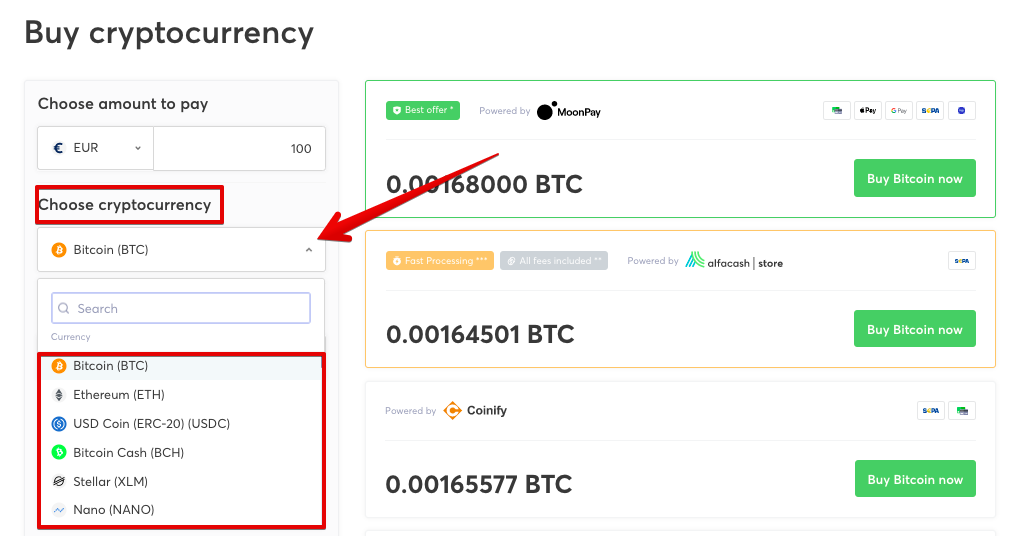
Go to the “Buy/Sell” tab and select Bitcoin (BTC). Enter the amount you wish to spend in your local currency. The exchange will show you a preview of the transaction, including the amount of BTC you will receive and the total fees. Review this carefully. If the exchange rate seems significantly higher than the current market price, it may include a “hidden” spread. Once satisfied, confirm the purchase. The BTC should appear in your exchange wallet almost instantly.
Managing Your Digital Assets for Long-Term Growth
The transaction doesn’t end once the Bitcoin is in your account. Effective financial management involves the secure storage and strategic oversight of your investment.
Storage Solutions: Moving Beyond the Exchange
While keeping your Bitcoin on an exchange is convenient for frequent trading, it is generally discouraged for long-term “HODLing.” In the world of digital finance, the adage “not your keys, not your coins” reigns supreme. To truly secure your investment, consider moving your BTC to a hardware wallet (cold storage). This removes the assets from the internet, making them immune to exchange hacks.
Tax Implications and Record Keeping
In many jurisdictions, Bitcoin is treated as property or a capital asset. Buying BTC with a credit card isn’t a taxable event, but selling it, exchanging it for another cryptocurrency, or using it to make a purchase is. It is essential to maintain meticulous records of your “cost basis”—the total price paid including all fees. Modern portfolio trackers and tax software can sync with your exchange via API to automate this process, ensuring you are prepared for tax season.
The Role of Bitcoin in a Diversified Portfolio
Finally, consider the “why” behind your purchase. As part of a sophisticated financial plan, Bitcoin often serves as a hedge against fiat currency inflation or as a high-growth speculative asset. Because of its volatility, most financial advisors suggest that cryptocurrency should represent a small percentage (e.g., 1% to 5%) of a total investment portfolio. Using a credit card can be a powerful tool for rapid accumulation, but it should be used within the boundaries of a disciplined, long-term wealth-building strategy.
By understanding the technical requirements and the financial consequences, you can utilize credit as a strategic lever to enter the Bitcoin market efficiently, securely, and profitably.
aViewFromTheCave is a participant in the Amazon Services LLC Associates Program, an affiliate advertising program designed to provide a means for sites to earn advertising fees by advertising and linking to Amazon.com. Amazon, the Amazon logo, AmazonSupply, and the AmazonSupply logo are trademarks of Amazon.com, Inc. or its affiliates. As an Amazon Associate we earn affiliate commissions from qualifying purchases.