
Navigating the financial landscape of higher education requires a delicate balance between academic commitments and fiscal responsibility. For many students, the pursuit of a degree is accompanied by a significant tightening of the belt, where every dollar saved contributes to long-term financial stability. Amazon, the global titan of e-commerce, offers one of the most robust financial incentive programs for those currently enrolled in post-secondary education: Amazon Prime Student. This program is not merely a convenience; it is a strategic tool for personal finance management, allowing students to reduce overhead costs on essentials while accessing a suite of digital services that would otherwise demand a premium.

Understanding how to leverage these discounts effectively is a cornerstone of modern student budgeting. By securing a student discount, individuals can halve their subscription costs and unlock exclusive financial perks that extend far beyond free shipping. This guide explores the systematic process of securing the Amazon Prime Student discount and analyzes how to integrate these savings into a broader financial strategy.
The Economics of Amazon Prime Student: A Cost-Benefit Analysis
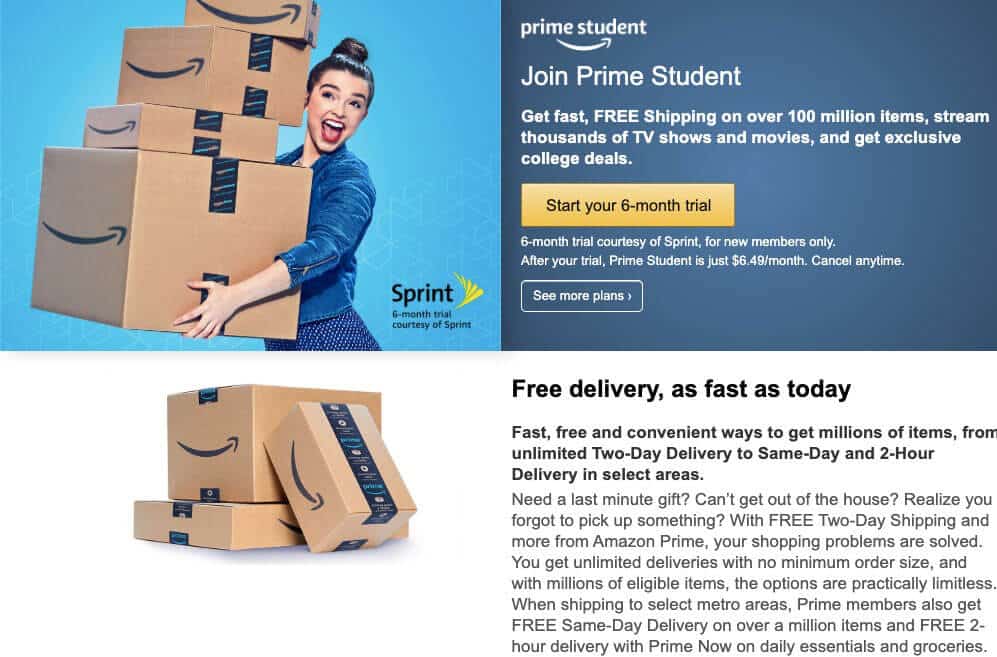
Before diving into the technicalities of registration, it is essential to evaluate the financial logic behind the Prime Student program. In a standard consumer environment, an Amazon Prime membership serves as a luxury convenience. For a student, however, it functions as a cost-reduction mechanism. The Prime Student program typically offers a six-month trial at no cost, followed by a subscription rate that is approximately 50% less than the standard Prime membership.
The Trial Period and Immediate Liquidity
The six-month trial is perhaps the most significant immediate financial benefit. For two academic quarters or a full semester, students can eliminate shipping fees on textbooks, school supplies, and groceries. In the context of personal finance, this “zero-cost” period allows students to reallocate funds that would have been spent on logistical overhead toward more pressing needs, such as tuition payments or emergency savings.
Long-Term ROI on Subscription Fees
Once the trial concludes, the discounted monthly or annual fee represents a high return on investment (ROI). If a student orders just two or three items a month, the savings on shipping alone often exceed the cost of the subscription. Furthermore, when factoring in the inclusion of Prime Video, Amazon Music, and Prime Reading, the student can potentially cancel other redundant subscriptions (like Netflix or Spotify), leading to a consolidated monthly “entertainment and utility” budget that saves hundreds of dollars annually.
Consolidating Digital Expenses
From a financial management perspective, consolidating digital services under one discounted umbrella is a hallmark of “smart spending.” Instead of managing multiple micro-transactions across different platforms, the Amazon student discount allows for a centralized expense. This simplifies monthly cash flow tracking and ensures that the student is not overpaying for overlapping services.
Eligibility Requirements and the Verification Process
Securing the student discount requires more than just an active interest in savings; it requires formal verification of one’s status as a student. Amazon employs rigorous checks to ensure that the financial benefits are directed toward the intended demographic. Understanding these requirements is the first step in the verification journey.
The Role of the .edu Email Address
The primary tool for verification is a valid .edu email address provided by a recognized higher education institution. This email serves as a digital credential that signals your active enrollment. When signing up, Amazon will send a verification link to this address. Successfully clicking this link is often the only step required to unlock the discount. From a digital security and financial identity standpoint, using your official institutional email ensures that your student profile is linked to a legitimate academic entity.
Alternative Documentation for Non-.edu Holders
Not every institution provides a .edu email address, particularly international universities or specialized vocational schools. In these instances, Amazon allows for manual verification. This requires the submission of financial or academic documents, such as:
-
A scanned copy of a current student ID card with an expiration date.
-
An official transcript or class list for the current term.
-
A tuition bill or a financial aid letter that clearly states the student’s name and the institution.
Providing these documents ensures that even non-traditional students can access the same financial advantages as those at larger universities.
The Four-Year Limitation and Graduation Transitions
It is important to note that the Amazon student discount is not indefinite. Amazon limits the discounted rate to a maximum of four years or until the student graduates—whichever comes first. This is a critical factor for long-term financial planning. Students should be aware of their “graduation date” in the Amazon system to avoid a sudden jump to the full-price membership, which could disrupt a carefully balanced monthly budget.
Maximizing Financial Benefits Beyond the Subscription
While the 50% discount on the membership fee is the headline feature, the true financial power of an Amazon student account lies in the peripheral benefits. To truly optimize one’s personal finances, a student must look at the exclusive “hidden” perks available only to this demographic.
Textbook Rentals and Buyback Strategies
Textbooks are notorious for being one of the most significant “hidden costs” of education. Amazon’s textbook rental program, integrated with Prime Student, can save an individual up to 90% compared to purchasing new books at a campus bookstore. Furthermore, the ability to sell back used books at the end of the semester provides a small “revenue stream,” which can be reinvested into the following semester’s materials. This cyclical approach to asset management (buying low, utilizing, and recouping value) is a practical exercise in micro-business finance.
Strategic Partner Discounts
Amazon frequently partners with other service providers to offer additional subsidies to Prime Student members. These often include:
-
Grubhub+: Many student memberships include a period of free food delivery. For a busy student, this reduces the “delivery fee” tax often associated with late-night study sessions.
-
LinkedIn Premium: At various times, Amazon has offered discounted or free trials for LinkedIn Premium. For a student looking to enter the job market, this is a high-value tool for personal branding and career networking that normally costs a significant monthly fee.
-
Travel Discounts: Partnerships with companies like StudentUniverse allow for discounted flights and hotels, enabling students to manage travel expenses for holidays or internships more effectively.
Exclusive “Student-Only” Coupons
Inside the “Student Hub” on Amazon, there are often category-specific coupons that are not available to the general public. These may include 20% to 30% off electronics, dorm decor, or off-brand essentials. For a student moving into a new apartment or upgrading their tech for a specific course (like graphic design or engineering), these targeted discounts can result in hundreds of dollars in immediate savings.
Strategic Shopping: Budgeting and Cash Flow Management
Accessing the discount is only the first half of the equation; the second half is using the platform in a way that supports, rather than hinders, financial health. The convenience of Amazon can sometimes lead to impulsive spending, which is the antithesis of sound personal finance.
Utilizing Subscribe & Save for Recurring Essentials
Students should use the “Subscribe & Save” feature for items they use consistently, such as toiletries, laundry detergent, or healthy snacks. When combined with the student discount, this creates an additional layer of savings (often an extra 5% to 15% off). By automating these purchases, students can also predict their monthly expenditures with greater accuracy, making it easier to stick to a strict budget.
Amazon Rewards and Credit Building
For students who have reached a level of financial maturity where they can manage a credit line, the Amazon Store Card or Amazon Visa can be used in tandem with the student discount. Using these cards responsibly—paying the balance in full every month—allows students to earn 5% back on purchases while simultaneously building a credit history. This is a vital step in financial literacy, as a strong credit score will lower the cost of future loans, such as car financing or a mortgage after graduation.
Avoiding Lifestyle Creep
The “Prime Effect”—the tendency to buy more because shipping is free—can be a financial pitfall. Students must remain disciplined. The goal of the Amazon student discount is to reduce the cost of necessary expenditures, not to facilitate a higher volume of unnecessary ones. A professional approach to this involves setting a strict “Amazon Budget” each month and utilizing the “Wish List” feature to let items sit for 24–48 hours before purchasing to eliminate impulse buys.
Long-Term Financial Health and Student Smart-Spending
The transition from a student budget to a professional income is a pivotal moment in one’s financial life. The Amazon Prime Student program serves as a training ground for these broader financial habits. By actively seeking out discounts, verifying eligibility, and strategically managing a subscription, students develop a “value-first” mindset.
Reviewing Subscription ROI Annually
At the end of each academic year, students should perform a “subscription audit.” Are the savings on shipping and exclusive deals outweighing the cost of the membership? For most students, the answer is a resounding yes, but the practice of auditing one’s financial commitments is a habit that will serve them well long after they have traded their student ID for a professional salary.

The Graduation Transition
As graduation approaches, the final step in this financial journey is preparing for the transition to a standard Prime account. Amazon usually provides a grace period, but students should be ready to adjust their budgets for the increased cost or decide if the service still fits their post-grad financial goals.
In conclusion, the Amazon student discount is more than just a lower price tag; it is a comprehensive financial tool. When used correctly, it allows students to minimize the cost of living and learning, providing more breathing room in a budget often characterized by scarcity. By following the verification steps and embracing the broader ecosystem of partner discounts and strategic shopping tools, students can turn a simple e-commerce membership into a cornerstone of their personal financial strategy.
aViewFromTheCave is a participant in the Amazon Services LLC Associates Program, an affiliate advertising program designed to provide a means for sites to earn advertising fees by advertising and linking to Amazon.com. Amazon, the Amazon logo, AmazonSupply, and the AmazonSupply logo are trademarks of Amazon.com, Inc. or its affiliates. As an Amazon Associate we earn affiliate commissions from qualifying purchases.