
Securing a loan from a major financial institution like Bank of America requires more than just a passing interest in credit; it demands a strategic approach to personal finance, a clear understanding of your own creditworthiness, and a granular knowledge of the bank’s specific lending ecosystem. As one of the “Big Four” banks in the United States, Bank of America offers a vast array of lending products, ranging from personal loans and auto financing to mortgages and small business lines of credit.
Navigating this landscape can be complex. The bank maintains rigorous underwriting standards, yet it also provides unique advantages for existing customers through its integrated banking rewards programs. To successfully secure a loan, an applicant must align their financial profile with the bank’s risk appetite while leveraging the technological and relationship-based tools the institution provides.
Understanding the Landscape of Bank of America Loan Products
Before initiating an application, it is critical to identify which specific financial vehicle meets your objectives. Bank of America does not offer a “one size fits all” loan; rather, its products are specialized based on the intended use of the funds and the collateral involved.
Personal Loans and Lines of Credit
Unlike many of its competitors, Bank of America has historically focused its personal lending on existing customers. These are typically unsecured loans, meaning they do not require collateral like a house or a car. They are frequently used for debt consolidation, home improvements, or significant life events. The bank values stability, often looking for individuals with established banking histories and consistent cash flow.
Home Equity Lines of Credit (HELOC)
For homeowners, Bank of America is a prominent provider of HELOCs. This product allows you to borrow against the equity in your home. It functions similarly to a credit card in that it is a revolving line of credit with a draw period followed by a repayment period. Because these loans are secured by real estate, the interest rates are generally much lower than unsecured personal loans, though the risk is higher as the home serves as collateral.
Auto and Vehicle Financing
Bank of America is a leader in direct auto lending. Whether you are purchasing a new car from a dealership, buying a used vehicle from a private party, or looking to refinance an existing auto loan to a lower rate, the process is highly streamlined. They often provide competitive rates that can be locked in via a pre-approval, giving the borrower significant leverage during dealership negotiations.
Small Business Lending
For entrepreneurs, the bank offers specialized business loans and lines of credit. These require a different set of documentation, including business tax returns, profit and loss statements, and a clear business plan. The bank’s “Small Business Advantage” suite provides tailored solutions for companies looking to expand, manage inventory, or bridge seasonal gaps in revenue.
Essential Requirements and Eligibility Criteria
The underwriting process at Bank of America is designed to mitigate risk while ensuring the borrower has the capacity to repay. To move past the initial screening, applicants must meet several core criteria.
Credit Score Thresholds
While the bank does not always publish a “minimum” score for every product, a FICO score in the “Good” to “Excellent” range (typically 670 and above) is generally required for favorable terms. Applicants with scores above 740 will access the lowest advertised interest rates. The bank looks not just at the number, but at the depth of the credit history—specifically, your history with revolving credit and any previous installment loans.
Debt-to-Income (DTI) Ratio
Your DTI ratio is a critical metric that measures your monthly debt obligations against your gross monthly income. Bank of America typically prefers a DTI ratio of 36% or lower, although they may go higher for certain mortgage products depending on the size of the down payment. To calculate this, add up your monthly rent or mortgage, car payments, student loans, and minimum credit card payments, then divide by your monthly pre-tax income.
Income Verification and Employment Stability
The bank requires proof of a steady income stream to ensure you can meet the monthly repayment schedule. For W-2 employees, this usually involves providing the two most recent pay stubs and W-2 forms from the last two years. For self-employed individuals or business owners, the documentation is more rigorous, usually requiring two years of comprehensive federal tax returns and occasionally a year-to-date profit and loss statement.
The Step-by-Step Application Roadmap
Once you have identified the right product and verified your eligibility, the application process involves a series of logical steps designed to move from inquiry to funding.
Step 1: Pre-Qualification and Research
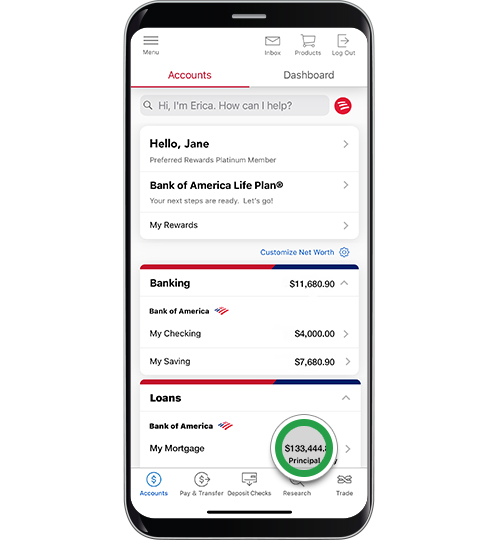
Before a “hard” credit pull—which can slightly lower your credit score—utilize the bank’s online tools to see if you pre-qualify. Pre-qualification uses a “soft” inquiry to give you an estimate of the loan amount and interest rate you might receive. This is the stage where you should compare Bank of America’s rates with other institutions to ensure you are getting a competitive deal.
Step 2: Gathering Documentation
Efficiency is key in the loan process. Create a digital folder containing:
-
Government-issued ID (Driver’s license or passport).
-
Social Security Number.
-
Recent bank statements (even if you bank with BoA, have these ready).
-
Tax returns and proof of income.
-
Information regarding the collateral (e.g., vehicle VIN or property address).
Step 3: Submitting the Formal Application
You can apply online, through the mobile app, or in person at a local financial center. The digital application is often faster, using automated systems to verify information. However, for complex loans like mortgages or business lines of credit, speaking with a dedicated loan officer can be beneficial to explain any nuances in your financial situation.
Step 4: The Underwriting Phase
After submission, your application moves to underwriting. This is where a human or an advanced algorithm verifies all your data. During this time, the bank may ask for “letters of explanation” regarding certain credit inquiries or specific deposits in your bank account. Prompt responses to these requests are vital to keep the process moving.
Step 5: Approval and Closing
If approved, you will receive a loan agreement detailing the interest rate, monthly payment, total interest paid over the life of the loan, and any origination fees. Review these documents carefully. Once signed, the funds are typically disbursed via direct deposit into your Bank of America account or sent via check/wire to the relevant party (such as a car seller or a title company).
Strategies for Boosting Approval Odds and Securing Better Rates
The goal is not just to get a loan, but to get the most affordable loan possible. There are specific strategies that can tilt the scales in your favor.
Leveraging the Preferred Rewards Program
One of the greatest advantages of borrowing from Bank of America is the “Preferred Rewards” program. If you have an existing banking relationship and maintain a certain balance in your accounts (including Merrill investment accounts), you can qualify for significant interest rate discounts. Depending on your tier (Gold, Platinum, or Platinum Honors), you could receive a reduction of 0.25% to 0.50% on certain loan products.
Timing and Credit Optimization
If your credit score is on the cusp of a higher bracket, it may be worth waiting 30 to 60 days to apply. During this time, focus on “credit utilization”—paying down credit card balances to below 10% of their limits. This can result in a rapid boost to your FICO score, potentially saving you thousands of dollars in interest charges over the life of the loan.
The Role of a Co-Signer
If your income is sufficient but your credit history is thin, adding a co-signer with excellent credit can improve your approval odds. However, this is a significant responsibility for the co-signer, as they become equally liable for the debt. Bank of America allows co-applicants on several of their loan products, which can also help in meeting income requirements.
Life After Approval: Managing Your Loan and Building Your Financial Future
Securing the loan is only the beginning. Proper management of the debt is essential for maintaining your financial health and ensuring that your next interaction with the bank is even more successful.
Automating the Repayment Process
Bank of America offers “AutoPay” features that ensure you never miss a payment. Beyond the convenience, some loan products offer a small interest rate discount (often 0.25%) just for setting up automatic deductions from a Bank of America checking or savings account.
Monitoring Impact on Credit
An installment loan is a powerful tool for “credit mix,” which accounts for 10% of your FICO score. By making consistent, on-time payments, you demonstrate to the credit bureaus that you can handle long-term debt responsibly. Over time, this will increase your creditworthiness, making future borrowing—such as a mortgage—much easier.
Early Repayment Strategies
Always check if your loan has a “prepayment penalty.” Most of Bank of America’s standard consumer loans do not. If your goal is to save on interest, making extra payments toward the principal can significantly shorten the life of the loan. Even an extra $50 or $100 a month can have a compounding effect on debt reduction.
By approaching Bank of America with a clear plan, a verified financial profile, and an understanding of their internal rewards structures, you transform the lending process from a hurdle into a strategic financial move. Whether you are consolidating debt or investing in a new asset, professional preparation is the key to unlocking the bank’s capital on the most favorable terms.
aViewFromTheCave is a participant in the Amazon Services LLC Associates Program, an affiliate advertising program designed to provide a means for sites to earn advertising fees by advertising and linking to Amazon.com. Amazon, the Amazon logo, AmazonSupply, and the AmazonSupply logo are trademarks of Amazon.com, Inc. or its affiliates. As an Amazon Associate we earn affiliate commissions from qualifying purchases.