
For many consumers, the dream of a new car often involves a pragmatic look at the financing options available. In recent years, that glance has increasingly been met with elevated auto loan interest rates, creating a significant hurdle for buyers and a question mark over their budgets. The era of historically low interest rates appears to be a fading memory, leaving many to wonder: when, if ever, will auto interest rates go down? Understanding the intricate web of economic factors that influence these rates is crucial for anyone planning a vehicle purchase or seeking to refinance an existing loan. This article delves into the forces at play, examines the current landscape, forecasts future movements, and offers strategic advice for navigating the dynamic world of auto financing.
Understanding the Driving Forces Behind Auto Loan Rates
Auto loan interest rates are not determined in a vacuum. They are a direct reflection of broader economic conditions, monetary policy, and the specific risk assessment conducted by lenders. Pinpointing the exact moment rates will decline requires an appreciation of these foundational elements.
The Federal Reserve’s Influence
At the heart of interest rate movements in the United States lies the Federal Reserve. The Fed’s primary tool for influencing the economy is the federal funds rate, a target rate for overnight lending between banks. While the federal funds rate doesn’t directly dictate auto loan rates, it serves as a benchmark for the prime rate, which in turn influences other lending rates, including those for auto loans, mortgages, and credit cards. When the Fed raises the federal funds rate, it generally makes borrowing more expensive across the board, pushing auto loan rates upward. Conversely, a reduction in the federal funds rate typically signals a loosening of monetary policy, making credit cheaper and potentially lowering auto loan rates. The Fed’s decisions are primarily driven by its dual mandate: maximizing employment and maintaining stable prices (i.e., controlling inflation).
Economic Indicators at Play
Beyond the Federal Reserve’s actions, a host of economic indicators shape the lending environment. Inflation is perhaps the most significant in the current climate. When inflation is high, lenders demand higher interest rates to compensate for the eroding purchasing power of future repayments. If the money they get back is worth less, they need to charge more initially to ensure a real return on their investment. Unemployment rates and GDP growth also play a role; a robust economy with low unemployment and strong growth generally implies greater consumer confidence and ability to repay, which can lead to more favorable lending terms. Conversely, a weakening economy might prompt the Fed to cut rates to stimulate activity, but lenders might also become more cautious, potentially offsetting some of those gains for riskier borrowers. Consumer confidence is another subtle yet powerful factor; when consumers feel secure about their financial future, they are more likely to take on debt, influencing demand and competitive pricing among lenders.
Lender-Specific Factors
While macroeconomics sets the stage, individual lenders introduce their own variables. Your credit score is paramount; a higher credit score signals lower risk to lenders, qualifying you for the most competitive rates. Lenders also consider the loan-to-value (LTV) ratio, which compares the loan amount to the car’s value – a larger down payment reduces LTV and risk. The loan term, whether 36, 60, or 84 months, also impacts the rate, with longer terms often carrying slightly higher rates due to increased risk over time. Finally, competition among lenders can sometimes drive rates down as banks, credit unions, and online lenders vie for market share, especially for well-qualified borrowers.
The Current Landscape of Auto Loan Rates
The past few years have seen a dramatic shift in the auto loan market, moving from a period of unprecedented affordability to one where financing has become a significant consideration in vehicle purchase decisions.
A Period of Elevated Rates
Following a prolonged period of near-zero interest rates, central banks globally, including the U.S. Federal Reserve, embarked on an aggressive campaign of rate hikes to combat surging inflation. This swift tightening of monetary policy effectively ended the era of cheap borrowing. Auto loan rates, which had hovered at historic lows for years, climbed steadily. For instance, average interest rates for new car loans for borrowers with excellent credit jumped from around 3-4% to well over 6-7%, and for used cars, rates could often exceed 8-10%, sometimes significantly higher for those with less-than-perfect credit. This rise was a direct consequence of the Fed’s efforts to cool down an overheating economy by making money more expensive to borrow, thereby dampening demand.
Impact on Car Buyers
The immediate and most palpable effect of elevated rates has been on consumer affordability. Higher interest rates translate directly into larger monthly payments for the same vehicle, or force buyers to consider less expensive cars or longer loan terms to keep payments manageable. For a $30,000 car loan, an increase from 3% to 7% over 60 months can add over $50 to the monthly payment and thousands of dollars to the total interest paid over the life of the loan. This has put a squeeze on household budgets, especially when combined with high car prices and persistent inflation in other sectors. Consequently, some potential buyers have delayed purchases, opted for used vehicles over new, or even chosen to maintain their current cars for longer, contributing to shifts in automotive market dynamics.
Disparity Across Credit Tiers
While average rates provide a general picture, it’s crucial to acknowledge the significant disparity across credit tiers. Borrowers with excellent credit (typically FICO scores of 720+) still qualify for the most favorable rates, even in a high-interest environment. However, those with good, fair, or subprime credit have experienced a much more pronounced increase in their borrowing costs. Lenders view these borrowers as higher risk, and in times of economic uncertainty or higher base rates, that risk premium expands considerably. For instance, a borrower with a subprime credit score might face auto loan rates in the double digits, sometimes exceeding 15% or even 20%, making vehicle ownership prohibitively expensive for a significant portion of the population. This widening gap underscores the importance of credit health in the current lending landscape.
Forecasting Future Rate Movements: When to Expect a Downturn
The burning question for many is not just why rates are high, but when they will finally come down. Predicting future rate movements requires careful analysis of central bank rhetoric, economic data, and market sentiment.
The Federal Reserve’s Stance and Future Projections
The key to predicting auto loan rate declines lies with the Federal Reserve. The Fed has consistently stated its commitment to bringing inflation down to its 2% target. Until there is clear and convincing evidence that inflation is sustainably moving towards this target, the Fed is likely to maintain a cautious stance. However, once inflation is perceived to be under control, and potentially showing signs of disinflation, the Fed may begin to consider cutting the federal funds rate. Market projections often point to potential rate cuts in the latter half of the year or early next year, but these are subject to change based on incoming economic data. The phrase “higher for longer” has been a consistent theme from the Fed, indicating that while rate cuts are on the horizon, they may not be as aggressive or as soon as some initially hoped.
Taming Inflation’s Role
The primary catalyst for a downward shift in interest rates will be a sustained decline in inflation. As consumer price index (CPI) and personal consumption expenditures (PCE) inflation figures consistently trend downwards and approach the Fed’s 2% target, the pressure on the Fed to maintain restrictive monetary policy will diminish. Lower inflation means the real return on loans becomes more stable for lenders, allowing them to offer lower nominal interest rates without eroding their profits. Until inflation is firmly in check, significant rate cuts, and thus significant auto loan rate reductions, are unlikely.
Economic Softening or Recession Fears
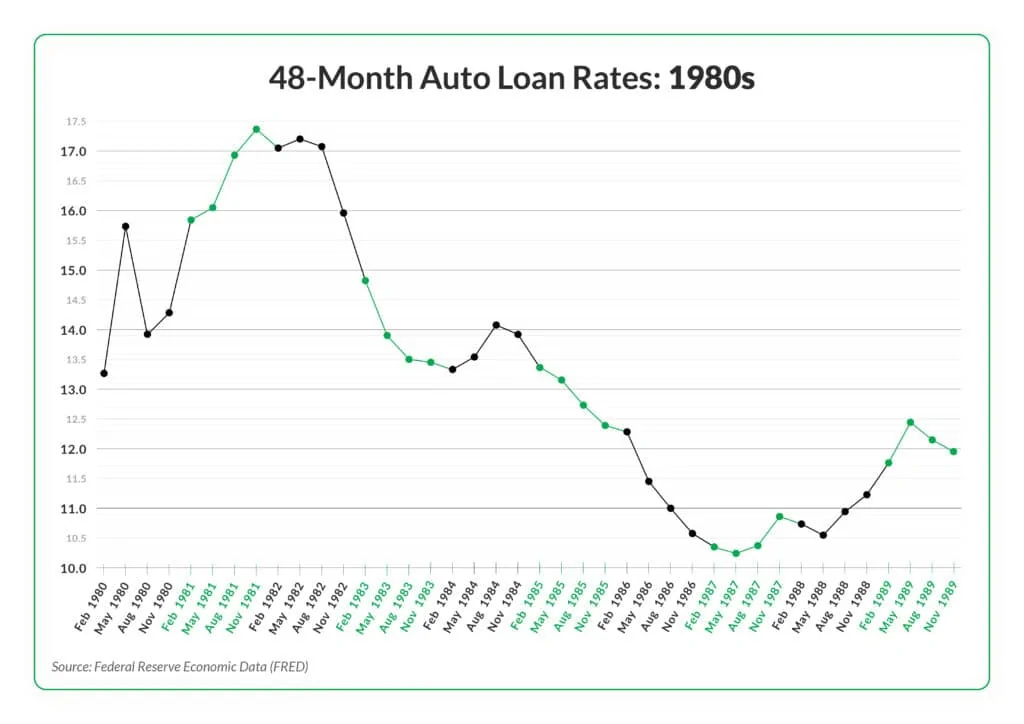
Another factor that could prompt the Fed to cut rates, even if inflation isn’t fully at target, is a significant weakening of the economy. If unemployment rates begin to climb sharply, or if GDP growth stalls or turns negative, leading to recession fears, the Fed might pivot to an accommodative stance to stimulate economic activity. Such a scenario would likely involve rate cuts, which would filter down to auto loan rates. However, this often comes with its own set of challenges for consumers, such as job insecurity, which might outweigh the benefit of lower borrowing costs. The Fed aims for a “soft landing,” where inflation comes down without triggering a severe recession, which complicates the timing of rate cuts.
Expert Consensus and Market Predictions
Financial institutions and economic analysts constantly model future rate trajectories. While there’s never perfect consensus, many expect a gradual easing of monetary policy once inflation is demonstrably under control. The futures market often reflects these expectations, pricing in potential rate cuts at upcoming Fed meetings. However, these predictions are dynamic and can shift rapidly based on new data releases, geopolitical events, or unexpected economic developments. Generally, the broad expectation is for a moderate decrease in auto loan rates following any Fed rate cuts, though they are unlikely to return to the ultra-low levels seen during the pandemic.
Strategies for Navigating a High-Interest Rate Environment
While we await potential rate declines, consumers are not powerless. Several proactive strategies can help mitigate the impact of high auto loan rates and secure more favorable financing terms.
Boosting Your Credit Score
Your credit score is the single most important factor determining the interest rate you’ll be offered. A higher score signifies lower risk to lenders, making you eligible for their best rates. Take steps to improve your credit before applying for an auto loan: pay bills on time, reduce existing debt, and avoid opening too many new credit accounts. Even a small increase in your credit score can translate into significant savings over the life of an auto loan, especially when rates are elevated.
Shopping Around for the Best Rates
Never settle for the first loan offer, particularly from the dealership. Instead, shop around aggressively. Contact multiple lenders, including national banks, local credit unions, and online lenders. Credit unions, in particular, are often known for offering competitive rates to their members. Most lenders offer pre-qualification that allows you to see potential rates without impacting your credit score. Gathering several offers within a short window (typically 14-45 days, depending on the credit bureau) will count as a single inquiry, minimizing the impact on your credit. This competitive shopping can yield substantial savings.
Increasing Your Down Payment
A larger down payment directly reduces the amount you need to borrow, which can lower your monthly payments and the total interest paid. Additionally, a substantial down payment signals greater financial stability to lenders, potentially qualifying you for a lower interest rate, as it reduces their risk. Aim for at least 10-20% of the vehicle’s price, if feasible. This also helps avoid being “upside down” on your loan, where you owe more than the car is worth, a common problem with smaller down payments and depreciation.
Considering Shorter Loan Terms
While longer loan terms (e.g., 72 or 84 months) offer lower monthly payments, they often come with higher interest rates and mean you pay significantly more in total interest over time. If your budget allows, opt for the shortest loan term you can comfortably afford. A 36- or 48-month loan, while having higher monthly payments, will save you thousands in interest compared to a 60- or 72-month loan, especially when rates are high.
Exploring Refinancing Options
If you’ve already financed a car at a high interest rate, you’re not necessarily stuck. Keep an eye on the market. If interest rates start to decline in the future, or if your credit score significantly improves, refinancing your auto loan could be a smart move. Refinancing replaces your existing loan with a new one, ideally at a lower interest rate or with more favorable terms. Use online calculators to assess potential savings and compare offers from various lenders. This strategy can be particularly effective if you purchased your vehicle during a peak rate period.
The Long-Term Outlook for Auto Financing
Looking beyond the immediate question of when rates will drop, it’s worth considering the broader trajectory of auto financing. The market is constantly evolving, influenced by technological advancements, environmental concerns, and shifts in consumer behavior.
Normalization vs. New Norm
The period of ultra-low interest rates witnessed after the 2008 financial crisis and during the COVID-19 pandemic was an anomaly, not the norm. Economists generally agree that “normal” interest rates are higher than what we experienced for much of the last decade. Therefore, even when rates do come down, it’s unlikely they will return to those historic lows. Consumers should mentally adjust to a “new normal” where rates in the 4-6% range for excellent credit might be considered good, rather than expecting 2-3%. This recalibration of expectations is crucial for long-term financial planning.
The Role of Technology in Auto Lending
Technology continues to reshape the auto lending landscape. Online platforms and digital lenders have streamlined the application and approval process, often providing quick decisions and competitive rates. Artificial intelligence and machine learning are increasingly used for more sophisticated credit risk assessments, potentially leading to more personalized rates. This competition from tech-driven lenders can ultimately benefit consumers by fostering greater transparency and efficiency in the market.
Sustainability and EV Financing Trends
The growing emphasis on sustainability and the rapid adoption of electric vehicles (EVs) are also influencing financing trends. Some lenders are beginning to offer specialized “green loans” or more favorable terms for EVs, recognizing their environmental benefits and potentially lower operating costs. As governments push for electrification, we might see more innovative financing products tailored to electric and hybrid vehicles, potentially with incentives tied to environmental performance.

Consumer Behavior Shifts
Finally, consumer behavior itself is undergoing changes. The rising cost of vehicle ownership (due to high prices, insurance, and interest rates) is prompting some to consider alternatives like long-term car rentals, subscription services, or even increased reliance on public transport and ride-sharing. This could lead to a future where traditional auto ownership, and thus traditional auto financing, plays a slightly different role in the broader mobility landscape.
In conclusion, while the precise timing remains uncertain, auto interest rates are widely expected to decline once the Federal Reserve is confident that inflation is under control and sustainably moving towards its 2% target. This process will likely be gradual, and rates are unlikely to return to the historically low levels seen in the recent past. In the interim, prospective car buyers can empower themselves by focusing on credit score improvement, diligent rate shopping, larger down payments, and shorter loan terms, ensuring they secure the most advantageous financing possible in a dynamic and ever-evolving market.
aViewFromTheCave is a participant in the Amazon Services LLC Associates Program, an affiliate advertising program designed to provide a means for sites to earn advertising fees by advertising and linking to Amazon.com. Amazon, the Amazon logo, AmazonSupply, and the AmazonSupply logo are trademarks of Amazon.com, Inc. or its affiliates. As an Amazon Associate we earn affiliate commissions from qualifying purchases.