
Bitcoin, the world’s first decentralized digital currency, has captivated investors, technologists, and economists alike since its inception in 2009. While its innovative blockchain technology underpins its functionality, a fundamental characteristic driving much of its financial appeal and debate is its strictly limited supply. Unlike traditional fiat currencies that central banks can print at will, Bitcoin operates under a predefined, immutable supply cap, making it a unique asset in the global financial landscape. The question of “how many bitcoins are there?” delves far deeper than a simple numerical answer; it unlocks crucial insights into its economic model, its potential as a store of value, and its implications for personal and business finance.
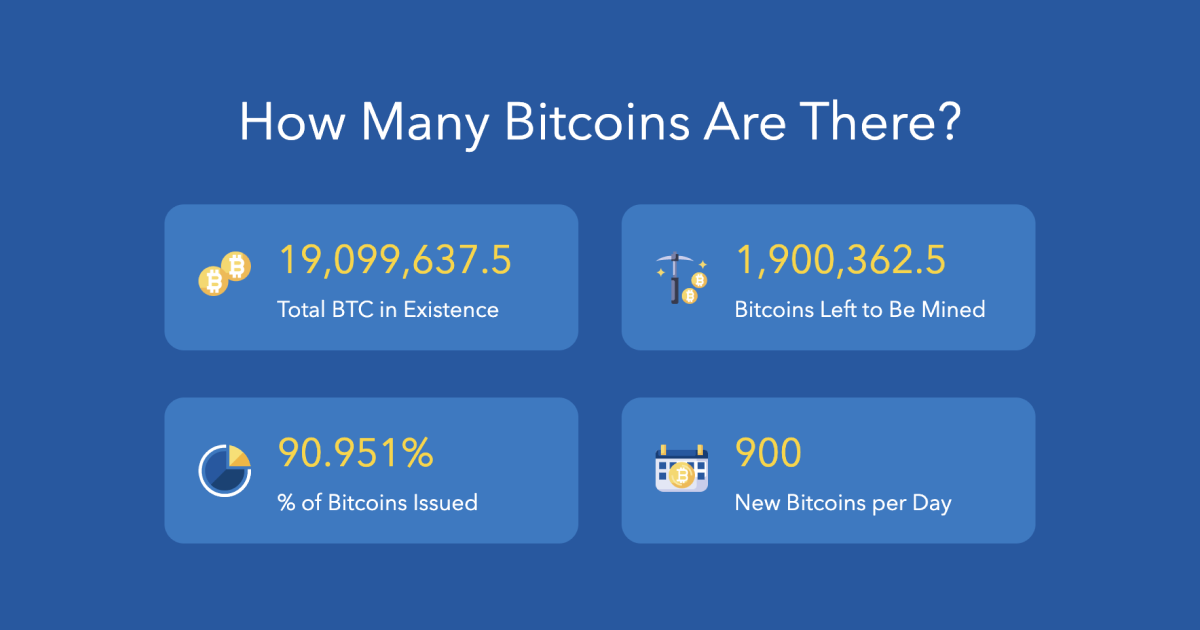
Understanding Bitcoin’s supply mechanics is paramount for anyone looking to comprehend its value proposition, its market dynamics, and its role within an investment portfolio. This article will explore the definitive limits of Bitcoin’s existence, the processes by which new coins enter circulation, the fascinating phenomenon of lost bitcoins, and the profound economic implications of its digital scarcity, all from the perspective of financial insight and investment understanding.
The Fixed Supply Cap: Bitcoin’s Defining Characteristic
At the heart of Bitcoin’s design lies a concept almost antithetical to modern monetary systems: a predetermined and unalterable maximum supply. This scarcity principle is not merely an incidental feature but a foundational element meticulously coded into its protocol by its pseudonymous creator, Satoshi Nakamoto. It is this fixed limit that differentiates Bitcoin from conventional currencies and underpins its long-term investment narrative.
Satoshi Nakamoto’s Vision: Digital Scarcity
Satoshi Nakamoto introduced Bitcoin as “A Peer-to-Peer Electronic Cash System” in 2008, aiming to create a digital currency independent of government control and susceptible to inflation through unlimited printing. Central to this vision was the idea of digital scarcity, mirroring the properties of precious metals like gold. Just as there’s a finite amount of gold on Earth, Satoshi designed Bitcoin to have an ultimate limit, preventing arbitrary supply expansion and protecting its purchasing power over time. This design choice was a direct response to the perceived flaws of fractional reserve banking and the inflationary pressures inherent in fiat money systems. By baking scarcity into its DNA, Bitcoin sought to offer a sounder, more predictable monetary alternative.
The 21 Million Limit: An Unbreakable Rule
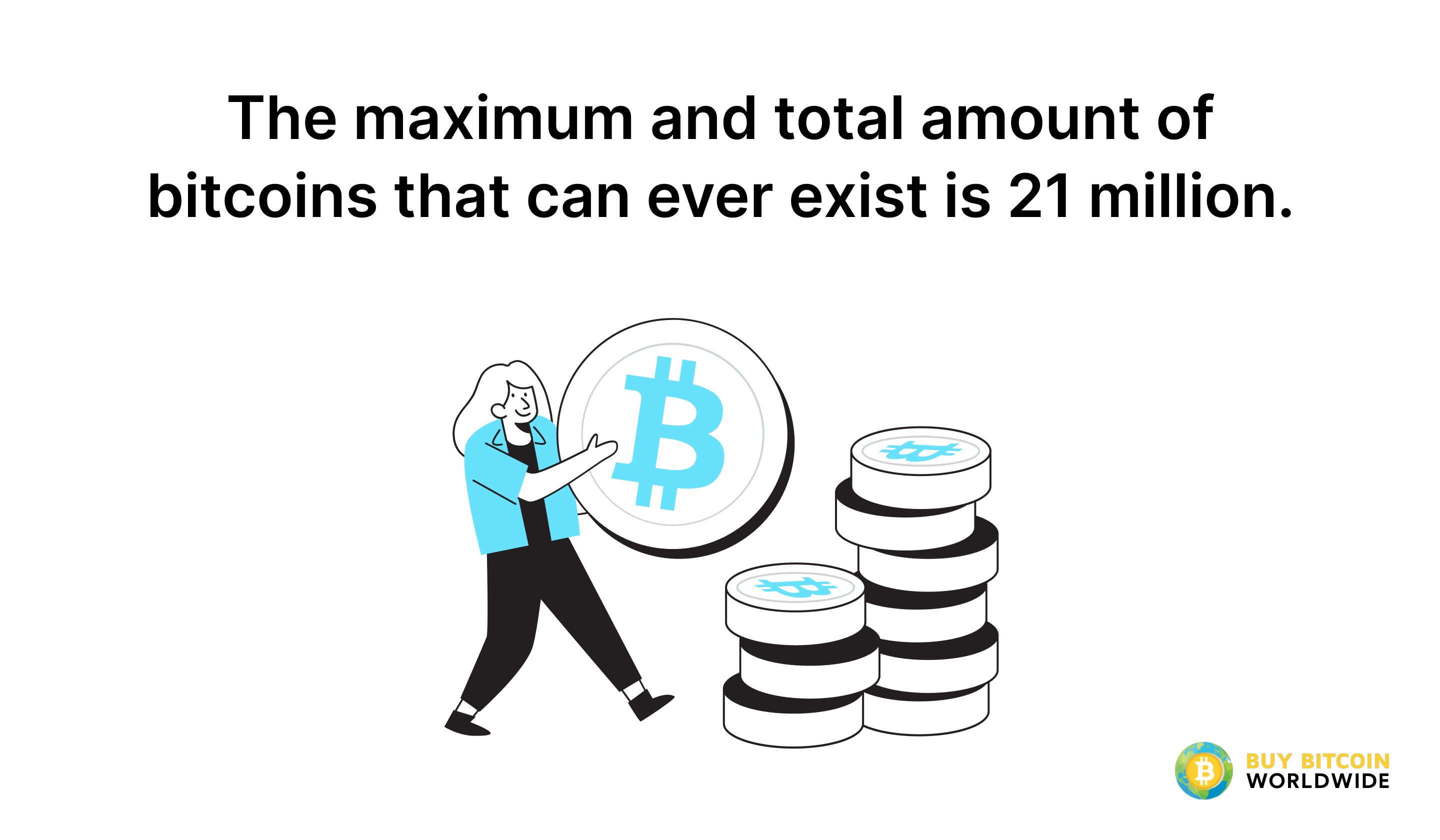
The exact number of bitcoins that will ever exist is precisely 21 million. This figure is hard-coded into Bitcoin’s protocol and is not subject to change by any single entity, government, or mining pool. This absolute cap is enforced by the decentralized network of computers running the Bitcoin software. For any change to occur, a vast majority of network participants would need to agree and upgrade their software, a scenario that is highly unlikely given the fundamental nature of this rule to Bitcoin’s value proposition. This fixed supply contrasts sharply with the elastic supply of fiat currencies, which can be increased or decreased by central banks to manage economic conditions, often leading to inflation and erosion of purchasing power. The predictability of Bitcoin’s ultimate supply is a key differentiator, offering a transparent and verifiable monetary policy.
Why Scarcity Matters in a Digital Age
In an age where digital assets can be copied infinitely with zero cost, Bitcoin’s enforced scarcity is revolutionary. It imbues the digital currency with characteristics traditionally associated with valuable physical commodities. For investors, scarcity implies that demand, when it outstrips supply, can drive up value. If Bitcoin were infinitely replicable, its economic value would approach zero. Therefore, the 21 million cap is not just a technical detail; it’s the cornerstone of Bitcoin’s financial viability. It fosters a deflationary environment, meaning each unit theoretically gains purchasing power over time as demand grows relative to a fixed or decreasing effective supply. This makes Bitcoin an attractive proposition for those seeking a hedge against inflation and a long-term store of value in an increasingly digital world.
The Mechanics of Bitcoin Supply Creation
While the ultimate limit is 21 million, not all bitcoins have been created yet. The process by which new bitcoins come into existence is intricately linked to the network’s security mechanism, known as mining, and is governed by a predictable schedule that ensures a gradual and controlled release of new coins into the market. This scheduled issuance is another critical component of Bitcoin’s monetary policy, contributing to its scarcity model.
Mining New Bitcoins: Proof-of-Work Explained
New bitcoins are introduced into circulation through a process called “mining.” Bitcoin miners are specialized computers that compete to solve complex computational puzzles. The first miner to solve the puzzle gets to add the next block of verified transactions to the blockchain and is rewarded with a set number of new bitcoins, along with transaction fees. This mechanism, known as “Proof-of-Work,” not only creates new coins but also secures the entire network by validating transactions and preventing double-spending. Without miners, the Bitcoin network would cease to function and new coins would not be generated. This energy-intensive process ensures the integrity and decentralization of the network, making it incredibly difficult and costly to tamper with.
The Halving Events: Ensuring Gradual Release
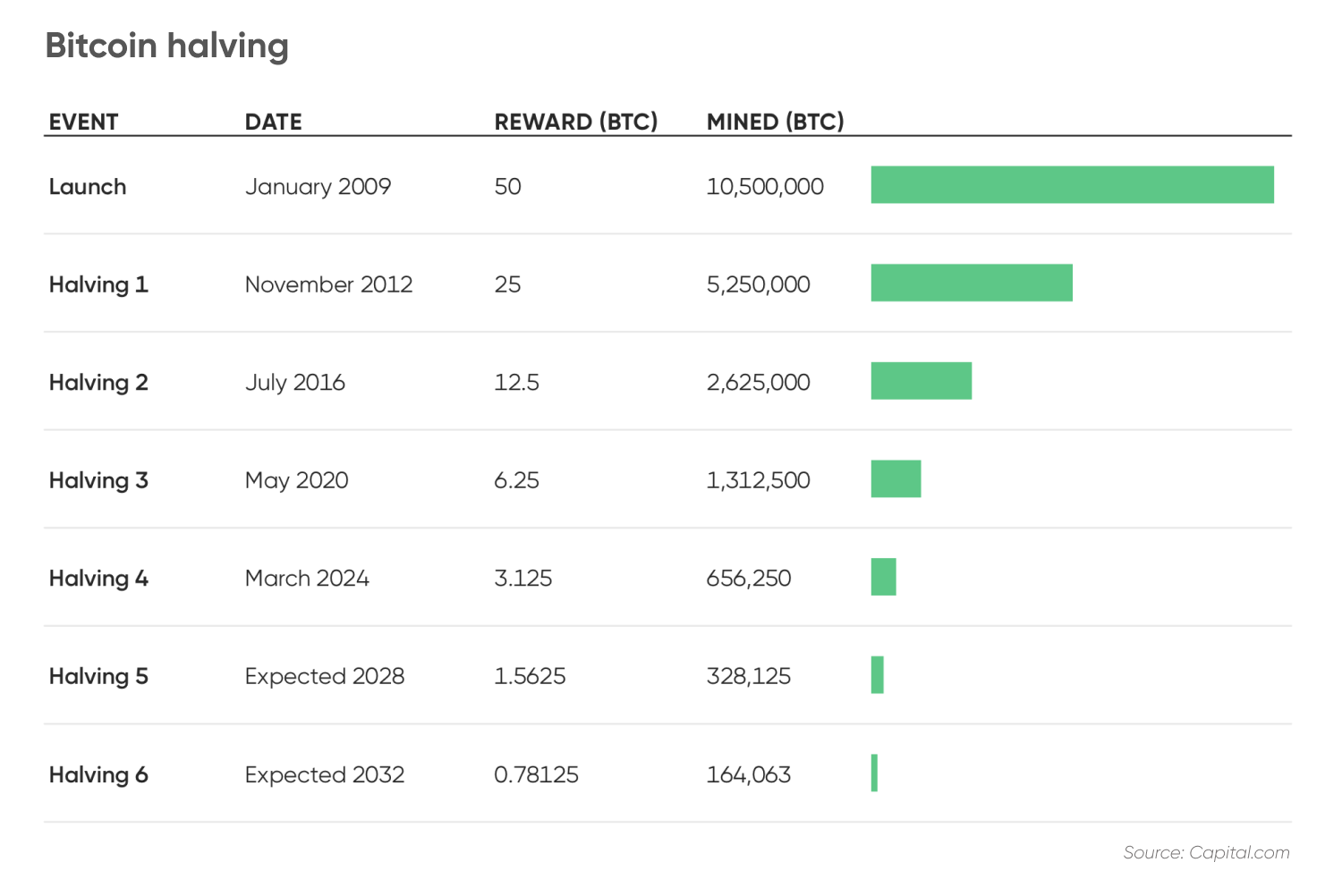
The reward for mining a block is not constant; it is periodically cut in half in an event known as a “halving.” Approximately every four years, or every 210,000 blocks, the block reward is halved. Initially, in 2009, the reward was 50 bitcoins per block. In 2012, it halved to 25 BTC. In 2016, it halved again to 12.5 BTC, and in 2020, it dropped to 6.25 BTC. The next halving, expected around 2024, will reduce the reward to 3.125 BTC per block. This programmatic reduction in the rate of new supply creation is crucial for maintaining Bitcoin’s scarcity. It ensures that the issuance rate diminishes over time, gradually approaching the 21 million cap. The halvings are built into the protocol and are entirely predictable, creating supply shocks that historically have been followed by significant price movements, making them key events for investors to monitor.
Current Supply vs. Total Supply: What’s Circulating Now
As of late 2023, approximately 19.5 million bitcoins have already been mined and are currently in circulation. This means that roughly 92-93% of the total 21 million bitcoins have already been issued. The remaining bitcoins will continue to be mined over the coming decades, with the final bitcoin expected to be mined around the year 2140. Due to the halving schedule, the rate of new supply introduction is increasingly slow. For investors, understanding the current circulating supply versus the ultimate total supply is vital for assessing market capitalization and gauging the remaining supply-side pressure on the market. The ever-decreasing new supply, combined with increasing demand, is a powerful economic force influencing Bitcoin’s long-term valuation potential.
Lost Bitcoins: The Impact on Effective Supply
While the protocol specifies a maximum of 21 million bitcoins, the actual number of available bitcoins for transaction and investment is significantly lower. This discrepancy arises from the irreversible loss of bitcoins over the years, a unique phenomenon that further enhances Bitcoin’s effective scarcity. The digital nature of Bitcoin, coupled with the responsibility it places on individual users for their own security, means that mistakes can lead to permanent loss.
Irrecoverable Wallets: Keys to the Kingdom
Bitcoin ownership is determined by possessing the private keys that control a bitcoin address. If these private keys are lost, forgotten, or destroyed, the bitcoins associated with that address become inaccessible forever. This is akin to losing a bearer bond without any record; there’s no central authority to appeal to for recovery. Early adopters, in particular, often did not fully grasp the long-term value or the critical importance of securely backing up their private keys. Hard drives were discarded, paper wallets were lost, and complex passwords were forgotten. These incidents, while unfortunate for the individuals involved, effectively remove those bitcoins from the circulating supply, permanently locking them away on the blockchain.
Early Adopter Fortunes and Misfortunes
Many of the most significant losses occurred in Bitcoin’s early days. The famous story of James Howells, who mistakenly threw away a hard drive containing 7,500 bitcoins in 2013, or the numerous instances of users who simply forgot about their modest bitcoin holdings from a decade ago, illustrate this point. While some early adopters became millionaires or billionaires, others lost fortunes due to negligence or lack of foresight. These anecdotes underscore the self-sovereign nature of Bitcoin ownership – with great power comes great responsibility. The inability to recover lost funds means that the lost bitcoins effectively become a form of “digital dead weight,” reducing the real number of bitcoins available for exchange.
Estimating Lost Coins: A Perpetual Mystery
Estimating the exact number of lost bitcoins is challenging, as there’s no definitive way to distinguish between bitcoins held in dormant wallets and those that are truly irrecoverable. However, various analyses and academic studies have attempted to approximate this figure. Some estimates suggest that anywhere from 20% to 30% of all mined bitcoins might be permanently lost. This could mean that out of the roughly 19.5 million bitcoins mined, between 3.9 million and 5.85 million are effectively out of circulation. This further reinforces Bitcoin’s scarcity, as the “true” effective supply is considerably less than the headline circulating supply. For investors, this reduction in effective supply adds another layer to Bitcoin’s deflationary narrative, potentially increasing the value of the remaining accessible coins as demand grows.
Bitcoin’s Economic Implications and Future Outlook
The unique supply dynamics of Bitcoin have profound economic implications, influencing its perception as an asset class, its role in the global financial system, and its long-term investment prospects. Understanding these implications is crucial for anyone considering Bitcoin as part of a diversified financial strategy.
Deflationary Asset vs. Fiat Currency
Bitcoin is often described as a deflationary or disinflationary asset due to its fixed supply and decreasing issuance rate. This stands in stark contrast to fiat currencies like the US dollar or Euro, which are inherently inflationary because central banks can increase their supply. Over time, inflation erodes the purchasing power of fiat money. Bitcoin, by design, aims to counteract this, providing a store of value that should, in theory, appreciate against inflationary currencies over the long term, assuming sustained demand. This fundamental economic difference makes Bitcoin an attractive hedge for investors concerned about monetary debasement and rising living costs. It represents a shift from an elastic, centrally controlled money supply to a transparent, algorithmically controlled one.
The Store of Value Narrative: Digital Gold
The combination of its fixed supply, security, and decentralized nature has led to Bitcoin being dubbed “digital gold.” Like gold, it is scarce, durable, divisible, and difficult to confiscate. In times of economic uncertainty or geopolitical instability, investors have historically flocked to safe-haven assets like gold. Bitcoin’s emerging role as digital gold suggests it could fulfill a similar function in the digital age. Its uncorrelated nature with traditional financial markets, coupled with its verifiable scarcity, positions it as a potential diversifier in a portfolio, offering a hedge against systemic risks. For savvy investors, the narrative of Bitcoin as a long-term store of value is a significant driver of its adoption and continued price appreciation.
Supply Dynamics and Price Discovery
The interplay between Bitcoin’s predictable supply schedule (especially the halvings) and market demand is a critical factor in its price discovery mechanism. As new supply creation slows, any sustained increase in demand can lead to significant price movements. The halvings, by sharply reducing the influx of new bitcoins, act as supply shocks that have historically preceded bull markets. This predictable supply-side pressure, combined with unpredictable demand drivers (institutional adoption, regulatory clarity, macroeconomic factors), creates a dynamic market where scarcity plays a dominant role. Understanding this relationship helps investors anticipate potential market cycles and make informed decisions about entry and exit points.
Beyond 21 Million: What Happens Then?
When the final bitcoin is mined around 2140, the block reward for miners will effectively become zero. At this point, miners will rely solely on transaction fees for their revenue. This transition is expected to further solidify Bitcoin’s long-term stability and security. As the network matures and transaction volume potentially increases, transaction fees are expected to become sufficient to incentivize miners to continue securing the network. The finite supply means that the economic model shifts from new coin issuance to a transaction fee market, ensuring the network remains robust and decentralized even without new bitcoins entering circulation. This future state underscores the long-term vision of Bitcoin as a self-sustaining, secure financial system.
Investing in Bitcoin: Navigating Supply and Demand
For investors, understanding Bitcoin’s supply is not merely an academic exercise; it’s a fundamental aspect of assessing its investment potential and managing risk. The unique supply schedule, coupled with various demand drivers, creates a complex but fascinating market.
Understanding Market Capitalization
Market capitalization (circulating supply x current price) is a key metric for evaluating any asset. For Bitcoin, knowing the current circulating supply is essential for calculating its market cap and comparing it to other assets. A higher market cap generally indicates greater stability and adoption. However, it’s also important to consider the effective circulating supply, factoring in lost coins, which can make the available market even smaller and potentially amplify price movements when demand shifts. Investors should always look beyond the simple price and consider the broader supply context.
The Role of Demand Drivers
While supply is fixed and predictable, demand is volatile and influenced by a multitude of factors. Institutional investment, regulatory developments, technological advancements (e.g., Lightning Network), macroeconomic conditions, and retail adoption all play a role in driving demand for Bitcoin. As more individuals and institutions recognize Bitcoin’s value proposition as a hedge against inflation, a store of value, or a speculative asset, demand is likely to increase. This increasing demand, set against a backdrop of finite and diminishing supply, is the primary mechanism through which Bitcoin’s value is expected to appreciate over the long term.
Diversification and Risk Management in Crypto
Given Bitcoin’s volatility and the nascent stage of the cryptocurrency market, a diversified investment approach is often recommended. While Bitcoin’s supply mechanics present a compelling case for its long-term value, its price can experience significant swings. Investors should assess their risk tolerance, allocate only what they can afford to lose, and consider a long-term horizon for Bitcoin investments. Incorporating Bitcoin into a broader investment portfolio alongside traditional assets, as well as potentially other cryptocurrencies, can help mitigate risk while still allowing participation in the digital asset revolution. Understanding the unique supply characteristics of Bitcoin is a cornerstone of responsible and informed crypto investing.
In conclusion, the question “how many bitcoins are there in the world?” reveals a sophisticated economic design built on the principle of verifiable scarcity. The fixed limit of 21 million, the controlled release through mining and halvings, and the permanent loss of a significant portion of coins all contribute to a unique digital asset class. For investors, these supply dynamics are not just technical details; they are the bedrock of Bitcoin’s store-of-value proposition, its potential as an inflation hedge, and its long-term financial trajectory. As the world continues its digital transformation, Bitcoin’s scarcity will remain its most compelling economic feature, shaping its future as a pivotal asset in the global financial landscape.
aViewFromTheCave is a participant in the Amazon Services LLC Associates Program, an affiliate advertising program designed to provide a means for sites to earn advertising fees by advertising and linking to Amazon.com. Amazon, the Amazon logo, AmazonSupply, and the AmazonSupply logo are trademarks of Amazon.com, Inc. or its affiliates. As an Amazon Associate we earn affiliate commissions from qualifying purchases.