
The landscape of home entertainment has undergone a seismic shift over the last decade. The era of the expensive, bundled cable subscription is rapidly being eclipsed by a decentralized ecosystem of digital delivery. For the tech-savvy consumer, “watching free TV” no longer means settling for grainy reception or limited options. Instead, it involves navigating a sophisticated matrix of Free Ad-Supported Streaming Television (FAST) platforms, Over-the-Air (OTA) hardware, and software aggregators that deliver high-definition content at zero monthly cost. To effectively transition to a free-to-view model, one must understand the interplay between hardware capabilities, software ecosystems, and the underlying protocols that power modern broadcasting.
The Evolution of Free Ad-Supported Streaming Television (FAST)
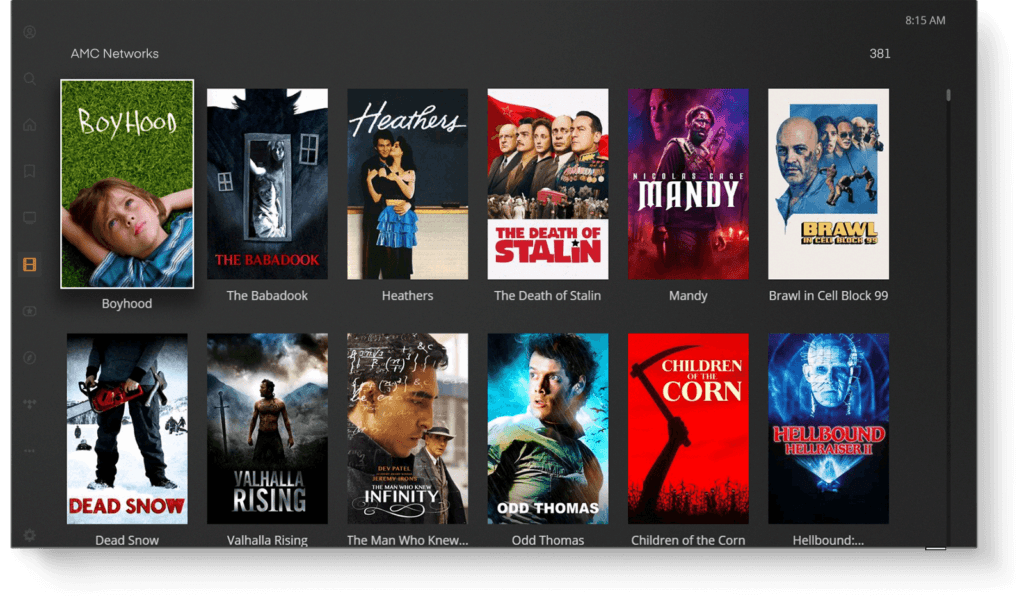
The most significant trend in the digital media space is the rise of FAST services. Unlike traditional Subscription Video on Demand (SVOD) like Netflix or Disney+, FAST platforms utilize a linear broadcasting model delivered over the internet. This technology replicates the “channel surfing” experience of traditional cable but operates entirely within an app-based environment.
The Architecture of FAST Platforms
FAST services like Pluto TV, Tubi, and Amazon’s Freevee rely on server-side ad insertion (SSAI) technology to provide a seamless viewing experience. By stitching advertisements directly into the video stream, these platforms minimize the buffering often associated with client-side ad calls. From a user perspective, this results in a professional, broadcast-quality stream that feels indistinguishable from premium cable.
Pluto TV, owned by Paramount, is a prime example of content curation. It utilizes a vast library of “evergreen” content—shows and movies that have finished their primary runs—and organizes them into thematic channels. Tubi, conversely, leans heavily into a massive Video on Demand (VOD) library, utilizing advanced recommendation algorithms to surface niche content to users based on their viewing history. For the user, the “tech stack” required to access these is minimal: a stable internet connection and a compatible operating system (iOS, Android, Fire OS, or Roku OS).
Manufacturer-Integrated Ecosystems
A notable development in the tech sector is the integration of free content directly into the television’s firmware. Samsung TV Plus, Vizio WatchFree+, and LG Channels are proprietary services built into the hardware. These manufacturers have recognized that the user interface (UI) is the new battleground for consumer loyalty. By aggregating hundreds of live channels directly into the “Live TV” input of the television, they remove the friction of downloading third-party apps. This integration relies on deep software hooks within the smart TV’s operating system, often utilizing a unified electronic program guide (EPG) that merges local antenna signals with streaming channels.
Over-the-Air (OTA) Technology: The Original Free TV
While streaming dominates the conversation, the most reliable method for accessing high-quality, uncompressed local broadcasts remains the digital antenna. This is not the “rabbit ears” technology of the 1970s; modern OTA TV utilizes sophisticated digital tuners and signal processing to deliver 1080i and 4K content that often surpasses the visual quality of compressed cable feeds.
Understanding ATSC 1.0 vs. ATSC 3.0 (NextGen TV)
The technical backbone of North American broadcasting is moving from the ATSC 1.0 standard to ATSC 3.0, commercially known as NextGen TV. This is a pivotal upgrade for cord-cutters. ATSC 3.0 is an IP-based standard, meaning it blends broadcast signals with internet capabilities. It supports 4K HDR resolution, Dolby Atmos audio, and improved signal penetration through walls and obstacles.
To leverage this, users need a television with a built-in ATSC 3.0 tuner or a standalone converter box like the SiliconDust HDHomeRun. These devices act as a gateway; they take the signal from the antenna and distribute it across a home network. This allow users to watch “live antenna TV” on a tablet, smartphone, or a smart TV in another room without a dedicated coaxial connection to every screen.
Hardware Optimization and Signal Analysis
Maximizing free TV reception requires an understanding of radio frequency (RF) physics. Modern antennas come in two primary varieties: passive and amplified. Passive antennas are ideal for urban environments with high signal density, while amplified antennas use an internal pre-amplifier to boost weak signals in suburban or rural areas.
Advanced users often utilize web-based signal mapping tools (such as FCC reception maps or RabbitEars.info) to identify the exact coordinates and height of local broadcast towers. By aligning a high-gain directional antenna toward these towers and using low-loss RG6 coaxial cabling, viewers can unlock dozens of local networks—including ABC, CBS, NBC, Fox, and PBS—entirely for free.
Essential Software and Media Server Integration
For those who want to bridge the gap between “free streaming” and a “premium experience,” software plays a critical role. Managing multiple free apps can be cumbersome, leading to the rise of content aggregators and personal media servers.
The Role of Plex and Kodi
Plex has evolved from a simple home media server into a comprehensive “cord-cutting” hub. It offers its own curated FAST channels and VOD content, but its real power lies in its ability to integrate with OTA tuners. By connecting a digital antenna to a Plex Media Server, users can create their own “Personal DVR.” This allows for the recording of free over-the-air broadcasts to a local hard drive, enabling the skipping of commercials and the ability to watch local news or sports on the go.
Kodi remains a popular open-source alternative for power users. It provides a highly customizable interface where users can install “add-ons” to access various free legal repositories of content. Because Kodi is open-source, it allows for deep level-tweaking of the UI and playback engines, making it a favorite for those using hardware like the Nvidia Shield TV or Raspberry Pi.
Unified Search and Operating Systems
The technical challenge of free TV is often “content discovery.” With content spread across Tubi, Pluto, Freevee, and local channels, finding a specific movie can be difficult. High-end streaming devices like the Apple TV 4K or Chromecast with Google TV solve this through unified search. These devices use metadata scrapers to search across all installed free apps simultaneously. If you search for a film, the OS will tell you it is available for free on Tubi, preventing you from accidentally paying for it on a rental service.
Optimizing the Tech Stack for Performance and Privacy
Watching free TV is not without its technical overhead. Because these services rely on advertising and high-bandwidth data streams, users must optimize their home network and consider the implications of digital tracking.
Bandwidth Management and Quality of Service (QoS)
Streaming high-definition video requires a consistent bitrate. While a single 1080p stream may only require 5-8 Mbps, a household with multiple users can quickly saturate a standard connection. Users can optimize their experience by utilizing Wi-Fi 6 (802.11ax) routers, which handle multiple device connections more efficiently than older standards. For the most stable experience, “hardwiring” streaming devices via Ethernet is recommended to eliminate the latency and interference inherent in wireless signals.
Privacy and Ad-Tracking Considerations
The “cost” of free TV is often data. FAST services track viewing habits to serve targeted advertisements. From a digital security perspective, users may want to manage their privacy settings within their smart TV’s OS—limiting “Interest-Based Advertising” or “Automatic Content Recognition” (ACR). Some advanced users implement network-level ad blocking (such as Pi-hole), though this can sometimes interfere with the playback of ad-supported streams, as the “ad-call” is often a prerequisite for the video to load. A balanced approach involves using a dedicated streaming account and managing app permissions to maintain a level of digital hygiene while enjoying free content.

The Future of Free Content: AI and Personalization
The trajectory of free TV is moving toward hyper-personalization. As AI and machine learning become more integrated into streaming backends, we are seeing the rise of “virtual linear channels.” Instead of a static schedule, these channels are generated in real-time based on the user’s specific interests, effectively creating a “free TV” station tailored to an individual viewer.
Furthermore, the expansion of 5G home internet and the continued rollout of ATSC 3.0 will likely merge the worlds of broadcast and broadband. We are approaching a point where the source of the signal—be it a satellite, a broadcast tower, or an uncurated internet stream—will be invisible to the end user. The technology will simply present a unified, high-quality, and, most importantly, free interface for global entertainment. By mastering these hardware and software tools today, consumers can stay ahead of the curve and enjoy a premium television experience without the burden of recurring costs.
aViewFromTheCave is a participant in the Amazon Services LLC Associates Program, an affiliate advertising program designed to provide a means for sites to earn advertising fees by advertising and linking to Amazon.com. Amazon, the Amazon logo, AmazonSupply, and the AmazonSupply logo are trademarks of Amazon.com, Inc. or its affiliates. As an Amazon Associate we earn affiliate commissions from qualifying purchases.