
Navigating the landscape of personal finance often requires looking backward to move forward. Whether you are applying for a mortgage, verifying income for a business loan, or simply organizing your financial life for the upcoming year, knowing exactly how to retrieve your tax returns is a fundamental skill. Tax returns are more than just annual obligations; they are comprehensive financial snapshots that serve as the gold standard for income verification in the modern economy.
Retrieving these documents can range from a simple login to a formal written request involving government agencies. This guide explores the multi-faceted approach to obtaining your federal and state tax records, the nuances between different types of documentation, and the best practices for maintaining a secure financial archive.
Understanding the Importance of Your Tax Records
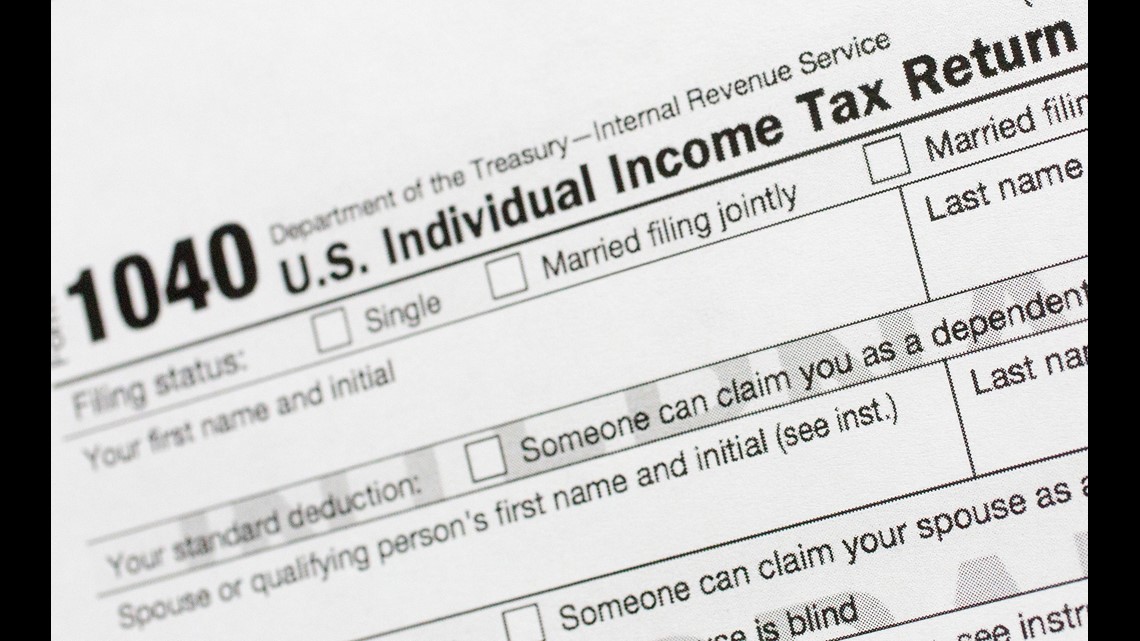
Before diving into the “how,” it is essential to understand why these documents are so vital to your personal financial health. Your tax return (Form 1040) is the ultimate proof of your economic activity for a given calendar year.
Mortgage Applications and Personal Loans
When you approach a lender for a significant sum of money, their primary concern is your ability to repay. While pay stubs show current income, tax returns provide historical context. Lenders typically require at least two years of signed tax returns to verify that your income is stable and consistent. For the self-employed, tax returns are the only credible way to demonstrate the profitability of a business and the resulting personal draw.
Financial Planning and Budgeting
Tax returns offer a bird’s-eye view of your financial progress. By comparing returns over a five-year period, you can track the growth of your adjusted gross income (AGI), the fluctuations in your investment income, and the impact of your charitable contributions. This historical data is invaluable when working with a financial advisor to build long-term wealth strategies or retirement plans.
Disaster Recovery and Legal Compliance
In the event of a natural disaster where physical records are lost, having a pathway to retrieve tax documents from the IRS or your state’s department of revenue is a critical step in rebuilding. Furthermore, if you are ever the subject of an audit or a legal dispute regarding income, having immediate access to your filed returns is your first line of defense.
Primary Methods to Access Your Tax Returns
The Internal Revenue Service (IRS) offers several ways to access your records, ranging from instantaneous digital downloads to formal paper requests. Understanding the difference between a “transcript” and a “copy” is the first step in this process.
Using the IRS Online Account Portal
The fastest and most efficient way to get information from your tax return is through the IRS Online Account. Over the last several years, the IRS has significantly upgraded its digital infrastructure, allowing taxpayers to view, print, and download their tax transcripts immediately.
To use this service, you must verify your identity through ID.me, a third-party identity verification service. Once authenticated, you can access your “Tax Return Transcript,” which shows most line items from your original return. This is usually sufficient for mortgage lenders and educational institutions (FAFSA).
Requesting a Tax Transcript via Mail
If you are unable to use the online portal due to verification issues or a lack of high-speed internet, you can request a transcript by mail using the “Get Transcript by Mail” feature on the IRS website or by calling their automated phone line. While this method is free, it typically takes 5 to 10 business days for the document to arrive at the address the IRS has on file for you.
Utilizing Form 4506 for Exact Copies
It is crucial to distinguish between a transcript and a copy. A transcript is a computer-generated summary of your return, while a copy is an actual photocopy of the original document you filed, including all attachments and W-2s.
If you need an exact copy—perhaps for a complex legal proceeding or because you need to see exactly how you filled out a specific schedule years ago—you must file IRS Form 4506, “Request for Copy of Tax Return.” Unlike transcripts, obtaining an actual copy costs $43 per return requested and can take up to 75 calendar days to process. For most financial needs, a transcript is the preferred and more cost-effective option.
Leveraging Digital Financial Tools for Tax Management
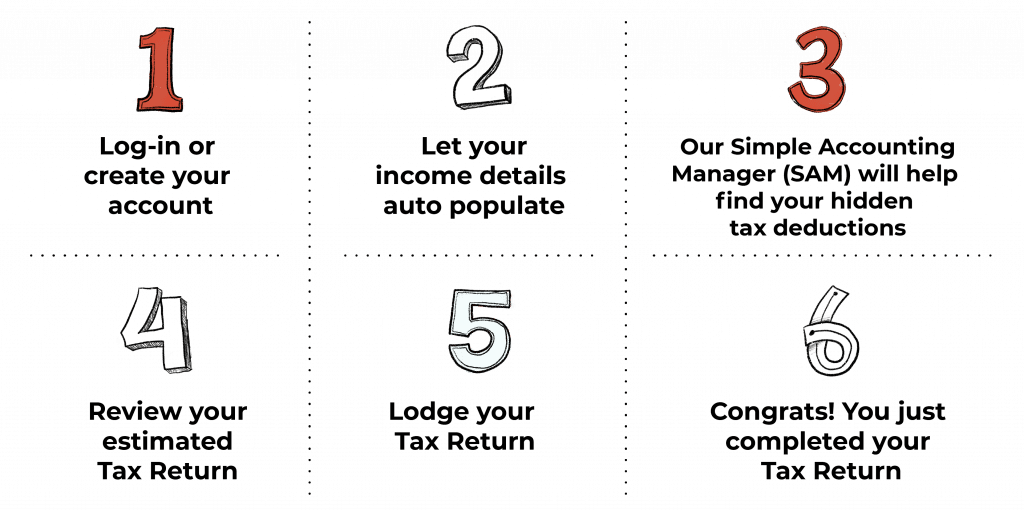
In the age of digital finance, your tax returns are often stored in places other than government servers. If you used technology to file your taxes, that same technology can be your quickest route to recovery.
Tax Preparation Software Archives
If you used popular software like TurboTax, H&R Block, or FreeTaxUSA, these platforms are required by law to maintain your data for a certain period. Most major providers offer a “Tax Vault” or a similar feature where you can log in and download PDF versions of your returns from the last seven years.
This is often the most convenient method because these PDFs are identical to what you filed, including all the supplemental schedules (like Schedule C for business income or Schedule D for capital gains) that might be truncated in a standard IRS transcript.
Cloud-Based Accounting and Document Management
For those who take a proactive approach to personal finance, using cloud-based storage solutions like OneDrive, Google Drive, or specialized financial “vaults” can eliminate the need to ever “request” a return from a third party.
By adopting a “digital-first” mindset, you should save a PDF copy of your return the moment it is filed. Modern financial apps now offer encrypted folders specifically designed for sensitive documents like tax returns, ensuring that your data is both accessible and protected by multi-factor authentication.
Dealing with Special Circumstances and State Returns
Tax obligations in the United States are dual-layered, involving both the federal government and individual state governments. Retrieving your federal return does not automatically give you access to your state return.
Retrieving State Tax Returns
Each state has its own Department of Revenue (or equivalent agency), and the process for retrieving state returns varies significantly. Most states, such as California (FTB) or New York (DTF), have online portals similar to the IRS. You will likely need to create a state-specific account to download past returns. If an online option is unavailable, you will generally need to mail a state-specific request form and, in some cases, pay a small processing fee.
What to Do If You Didn’t File
Sometimes, the reason you can’t “get” your tax return is that it was never filed. If you are trying to catch up on back taxes, you can still request a “Wage and Income Transcript” from the IRS. This document shows all the data reported to the IRS under your Social Security Number by employers, banks, and brokerage firms. This allows you to reconstruct your financial history and file an accurate delinquent return, which is a vital step in restoring your financial standing.
Identity Theft and Fraudulent Returns
If you attempt to access your return and find that one has already been filed in your name that you didn’t authorize, you are likely a victim of tax-related identity theft. In this scenario, the recovery process involves filing Form 14039 (Identity Theft Affidavit) and working with the IRS Identity Protection Specialized Unit. Getting your actual return in this case involves a much more rigorous verification process to ensure the fraudulent data is purged from your record.
Best Practices for Future Tax Organization
The stress of hunting for old tax returns can be avoided by implementing a robust financial record-keeping system. This is a hallmark of sophisticated personal financial management.
The Retention Timelines: How Long Should You Keep Records?
The general rule of thumb in personal finance is to keep your tax returns and supporting documentation for at least three years. This is the standard period during which the IRS can audit your return. However, there are exceptions:
-
6 Years: If you underreported your income by more than 25%.
-
7 Years: If you claim a loss from worthless securities or bad debt deduction.
-
Indefinitely: If you did not file a return or if you filed a fraudulent return.
Most financial experts recommend keeping the actual Form 1040 indefinitely, as it takes up very little digital space and provides a lifelong record of your earnings and tax history.
Creating a Digital Vault Strategy
To ensure you never have to search for “how to get my tax returns” again, follow these steps every April:
-
Download the “Filing Copy”: Immediately after filing, download the full PDF version provided by your software.
-
Password Protect: Use a PDF editor to add a password to the document.
-
Encrypted Cloud Storage: Upload the document to an encrypted cloud service.
-
Physical Backup: Store a copy on a dedicated, encrypted USB drive kept in a fireproof safe.

The Role of Professional Help
If your financial situation is complex—involving K-1s from partnerships, international assets, or intricate corporate structures—your best resource for tax returns is your Certified Public Accountant (CPA) or Enrolled Agent (EA). Tax professionals are required to keep copies of client returns for a specific number of years (varying by state). A simple email to your accountant can often yield the documents you need within minutes, often accompanied by the professional advice necessary to interpret them for your current financial goals.
By mastering the retrieval and storage of your tax returns, you take a significant step toward financial literacy and security. These documents are the blueprints of your economic past and the foundation for your financial future. Whether through the IRS online portal, software archives, or professional assistance, ensuring you have ready access to these records is an essential component of modern money management.
aViewFromTheCave is a participant in the Amazon Services LLC Associates Program, an affiliate advertising program designed to provide a means for sites to earn advertising fees by advertising and linking to Amazon.com. Amazon, the Amazon logo, AmazonSupply, and the AmazonSupply logo are trademarks of Amazon.com, Inc. or its affiliates. As an Amazon Associate we earn affiliate commissions from qualifying purchases.