
In the fast-paced world of global finance, few indicators are watched as closely as Dow Jones futures. Long before the opening bell rings on Wall Street, institutional investors, day traders, and financial news networks are already glued to these fluctuating numbers. But for many individual investors, the concept of futures remains shrouded in complexity. Simply put, Dow Jones futures are legally binding agreements to buy or sell the value of the Dow Jones Industrial Average (DJIA) at a specific date in the future at a pre-determined price. They serve as a vital barometer for market sentiment, a tool for risk management, and a high-leverage instrument for speculation.
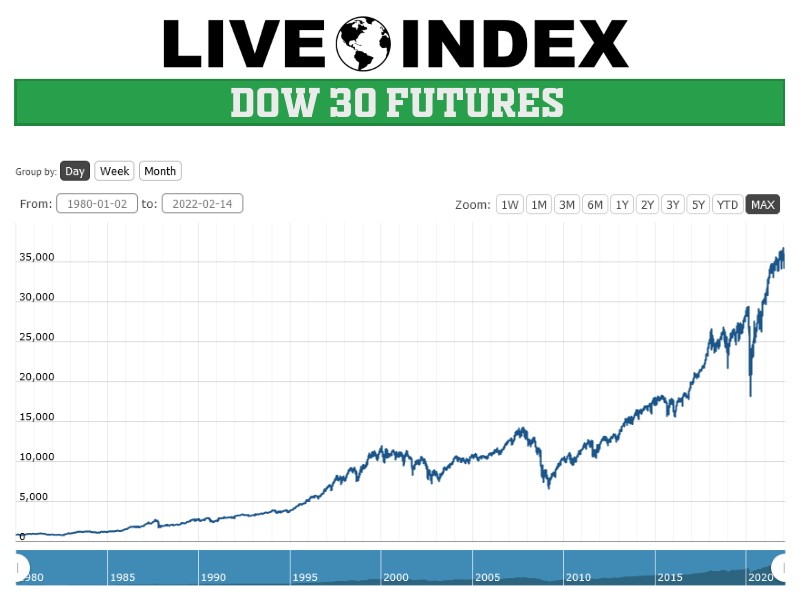
Understanding Dow Jones futures requires a foundational grasp of the underlying index. The Dow Jones Industrial Average is a price-weighted index composed of 30 prominent, “blue-chip” companies listed on stock exchanges in the United States. Because these companies represent diverse sectors—from technology and healthcare to retail and energy—the index is often viewed as a proxy for the health of the broader U.S. economy. Futures allow participants to trade the “direction” of this index without having to purchase the individual stocks of all 30 companies.
Understanding the Mechanics of Dow Jones Futures
Unlike the physical stock market, which operates during set business hours, the futures market operates nearly 24 hours a day, five days a week. This continuous trading allows investors to react to global events, such as economic data releases from Asia or geopolitical shifts in Europe, long before the New York Stock Exchange (NYSE) opens its doors.
The Role of the Chicago Mercantile Exchange (CME)
Dow Jones futures are traded on the Chicago Mercantile Exchange (CME) through its electronic platform, Globex. These are standardized contracts, meaning every participant is trading the same specifications. When you enter a futures contract, you are not taking physical delivery of a “share” of the Dow; instead, these contracts are cash-settled. This means that at the contract’s expiration, the difference between the agreed-upon price and the actual market price is settled through a cash transfer between the buyer and the seller.
E-mini and Micro E-mini Contracts
In the past, futures trading was largely the domain of massive institutional players due to the high costs involved. However, the introduction of “E-mini” and “Micro E-mini” contracts has democratized access to these markets.
-
E-mini Dow ($5): The standard E-mini Dow Jones contract has a multiplier of $5. This means that for every one-point move in the Dow, the value of the contract changes by $5. If the Dow is trading at 38,000, the notional value of one E-mini contract is $190,000.
-
Micro E-mini Dow ($0.50): Designed for individual retail traders, the Micro E-mini is one-tenth the size of the E-mini. With a multiplier of $0.50 per point, a 38,000 Dow equates to a notional value of $19,000. This smaller size allows traders to participate with significantly less capital and finer control over their risk exposure.
The Power and Peril of Leverage
The defining characteristic of Dow Jones futures is leverage. To trade a contract, you do not need to put up the full notional value (e.g., $190,000 for an E-mini). Instead, you deposit “initial margin,” which is typically a small fraction of the total value—often ranging from 3% to 10%. While this allows for outsized gains on relatively small price movements, it equally magnifies losses. If the market moves against a trader’s position, they may face a “margin call,” requiring them to deposit more funds immediately or see their position liquidated.
Why Investors and Analysts Watch Futures Around the Clock
If you have ever turned on a financial news program at 6:00 AM, you have likely seen a ticker showing “Dow Futures” in green or red. This is because futures provide the first glimpse into how the market will “open.”
Pre-Market Sentiment and Price Discovery
Because the futures market is open while the stock market is closed, it acts as a venue for “price discovery.” If a major tech giant in the Dow reports disappointing earnings at 4:30 PM, the stock market cannot react until the next morning. However, the futures market reacts instantly. Investors sell Dow futures in anticipation of a lower open, and by the time 9:30 AM rolls around, the “gap” in the stock market’s opening price is usually predicted with high accuracy by where the futures are trading.
Hedging Against Downside Risk
For institutional fund managers who hold billions of dollars in blue-chip stocks, Dow futures are a primary tool for “hedging.” If a manager believes a temporary economic downturn is coming but does not want to sell their long-term stock holdings (which would trigger capital gains taxes and transaction costs), they can “short” Dow futures. If the market drops, the profit made on the short futures position offsets the losses in their physical stock portfolio. This allows for a level of portfolio protection that is difficult to achieve through traditional stock trading alone.
Fair Value and the “Spread”
Traders often compare the price of Dow futures to the “Fair Value” of the index. Fair value is a calculation that accounts for the difference between the interest rate paid to hold a position and the dividends expected from the stocks in the index. If the futures are trading significantly above the fair value, it suggests a bullish opening for the cash market. Conversely, trading below fair value indicates a bearish start.

Key Economic Drivers of Dow Jones Futures
The price of Dow Jones futures does not move in a vacuum. It is a reflection of the collective expectations of thousands of global participants regarding the future of the U.S. economy. Several recurring factors act as catalysts for volatility in the futures market.
Federal Reserve Policy and Interest Rates
The Federal Reserve is perhaps the single most influential entity for Dow futures. Decisions regarding the federal funds rate directly impact corporate borrowing costs and consumer spending. When the Fed signals a “hawkish” stance (inclined to raise rates to fight inflation), Dow futures typically fall because higher rates can cool economic growth and reduce corporate profitability. Conversely, a “dovish” stance (keeping rates low or cutting them) usually sends futures higher as investors anticipate cheaper capital and higher equity valuations.
Inflation and Employment Data
Monthly reports such as the Consumer Price Index (CPI) and the Non-Farm Payrolls (NFP) report are high-volatility events for futures traders. Since the Dow is comprised of industrial and consumer-facing giants, data that suggests the consumer is struggling (high inflation) or that the labor market is tightening too much (potentially leading to wage-push inflation) can cause rapid swings in futures prices within seconds of the data release.
Corporate Earnings Season
Four times a year, the components of the Dow—companies like Apple, Goldman Sachs, and Caterpillar—release their quarterly financial results. Because the Dow is price-weighted, a massive move in a high-priced stock like UnitedHealth Group can single-handedly shift the direction of Dow futures. Traders watch these “earnings beats” or “misses” to gauge whether the premium currently baked into the index is justified.
Strategic Considerations for Trading Dow Futures
Trading futures is fundamentally different from buying and holding stocks. It requires a different psychological approach and a rigorous commitment to risk management.
Speculation vs. Portfolio Insurance
Most retail participants in the futures market are speculators. They are looking to profit from short-term price movements, often holding positions for only a few minutes or hours. Because of the leverage involved, even a 1% move in the Dow can result in a 20% or 30% return on the margin deposited. However, the professional application of futures is often more focused on insurance. Using futures to lock in a price or protect a portfolio is a sophisticated strategy used to navigate periods of high uncertainty.
Technical Analysis in Futures
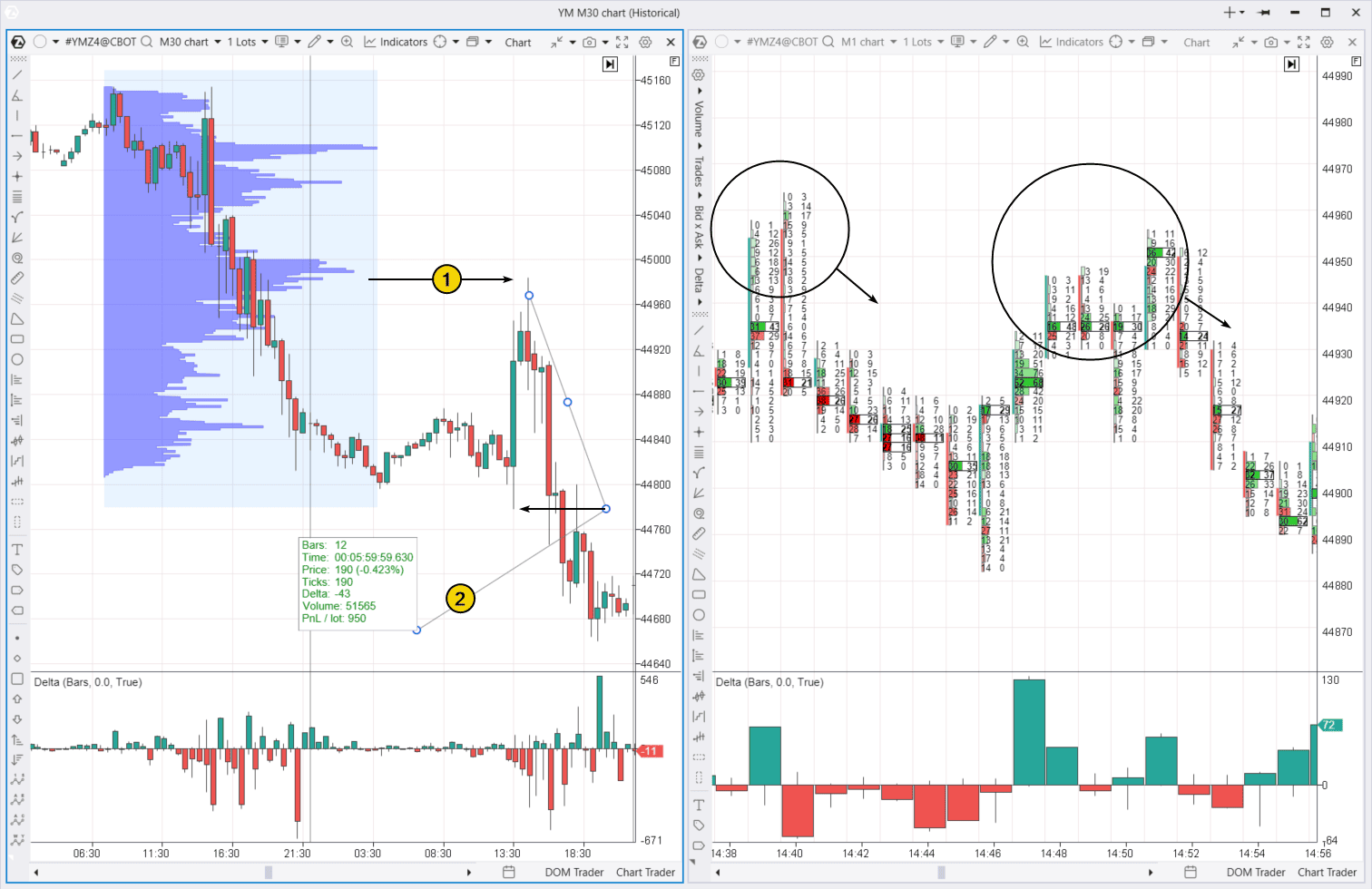
Because Dow futures are highly liquid and traded by algorithms and institutional desks, they often adhere to technical patterns. Support and resistance levels, moving averages, and Fibonacci retracements are heavily utilized by futures traders. Unlike individual stocks, which can be manipulated by low volume, the Dow Jones futures market is so large and liquid that it is generally considered difficult for any single entity to manipulate, making technical analysis a popular tool for participants.
The Risks of Overnight Volatility
One of the most significant risks in Dow futures is “overnight” or “weekend” risk. Because the market is open nearly 24/5, a major event on a Sunday night can cause a massive “gap” in prices. If a trader is holding a leveraged position and a geopolitical crisis erupts while they are asleep, they could wake up to a loss that exceeds their initial investment. This is why many professional futures traders rarely hold high-leverage positions overnight, preferring to close their books at the end of each daily session.
The Future of Index Trading
As financial technology continues to evolve, the barrier to entry for Dow Jones futures continues to fall. With the rise of sophisticated mobile trading apps and the continued popularity of the Micro E-mini contracts, more individual investors are incorporating futures into their broader financial strategies.
However, the core essence of Dow Jones futures remains unchanged: they are a forward-looking mirror of the world’s largest economy. Whether used as a hedging tool to protect a retirement account or a speculative instrument to capitalize on market volatility, understanding Dow Jones futures is essential for anyone looking to master the complexities of modern investing. They provide the liquidity, transparency, and 24-hour access necessary to navigate a globalized economy where news never sleeps and markets never truly close. By keeping an eye on these futures, an investor is not just looking at numbers on a screen; they are looking at the heartbeat of global commerce.
aViewFromTheCave is a participant in the Amazon Services LLC Associates Program, an affiliate advertising program designed to provide a means for sites to earn advertising fees by advertising and linking to Amazon.com. Amazon, the Amazon logo, AmazonSupply, and the AmazonSupply logo are trademarks of Amazon.com, Inc. or its affiliates. As an Amazon Associate we earn affiliate commissions from qualifying purchases.