
Tesla (TSLA) has long been one of the most watched and debated companies in the global financial markets. Known for its rapid innovation in electric vehicles (EVs), energy storage, and autonomous driving technology, the company’s share price has historically reflected its high-growth trajectory. For investors, particularly those in the retail sector, the price of a single share of Tesla once reached levels that made it difficult for smaller portfolios to acquire. To address this, Tesla has utilized stock splits as a strategic financial tool.
Understanding when and why Tesla split its stock is essential for any investor looking to track the company’s historical performance and valuation. In its history as a public company, Tesla has executed two significant stock splits. These events were designed to increase liquidity, make shares more accessible to employees and retail investors, and manage the psychological barriers associated with high-priced equities.
Tesla’s Stock Split History: A Timeline of Growth
Tesla’s journey from a niche EV manufacturer to a multi-billion dollar behemoth is mirrored in its stock split history. Since its initial public offering (IPO) in 2010, the company has undergone two primary splits that fundamentally reshaped its share structure without altering its total market capitalization.
The 5-for-1 Split in August 2020
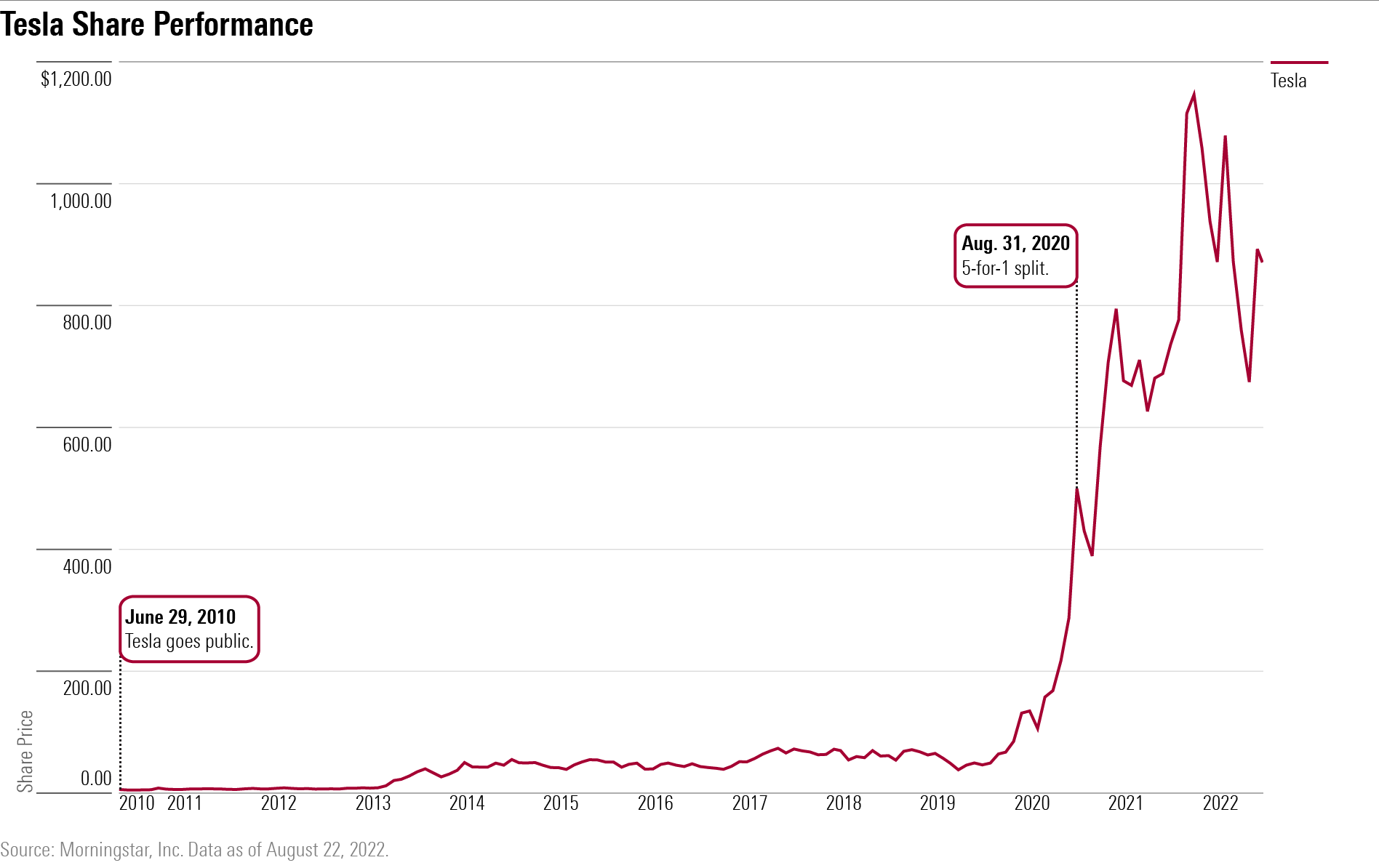
The first stock split in Tesla’s history occurred in the summer of 2020. On August 11, 2020, Tesla announced a 5-for-1 stock split. At the time, the share price was surging, often trading above $1,500 and even reaching toward $2,000 per share. Such a high price point was seen as a barrier for many retail investors who wanted to participate in the company’s growth but did not have access to fractional share trading through their brokerages.
The split took effect on August 31, 2020. For every share an investor held at the close of business on the record date, they received four additional shares. While the number of shares increased fivefold, the price per share was divided by five, keeping the total value of the investor’s holding identical. This move signaled Tesla’s transition into a more mature phase of its corporate life, coinciding with its eventual inclusion in the S&P 500 later that year.
The 3-for-1 Split in August 2022
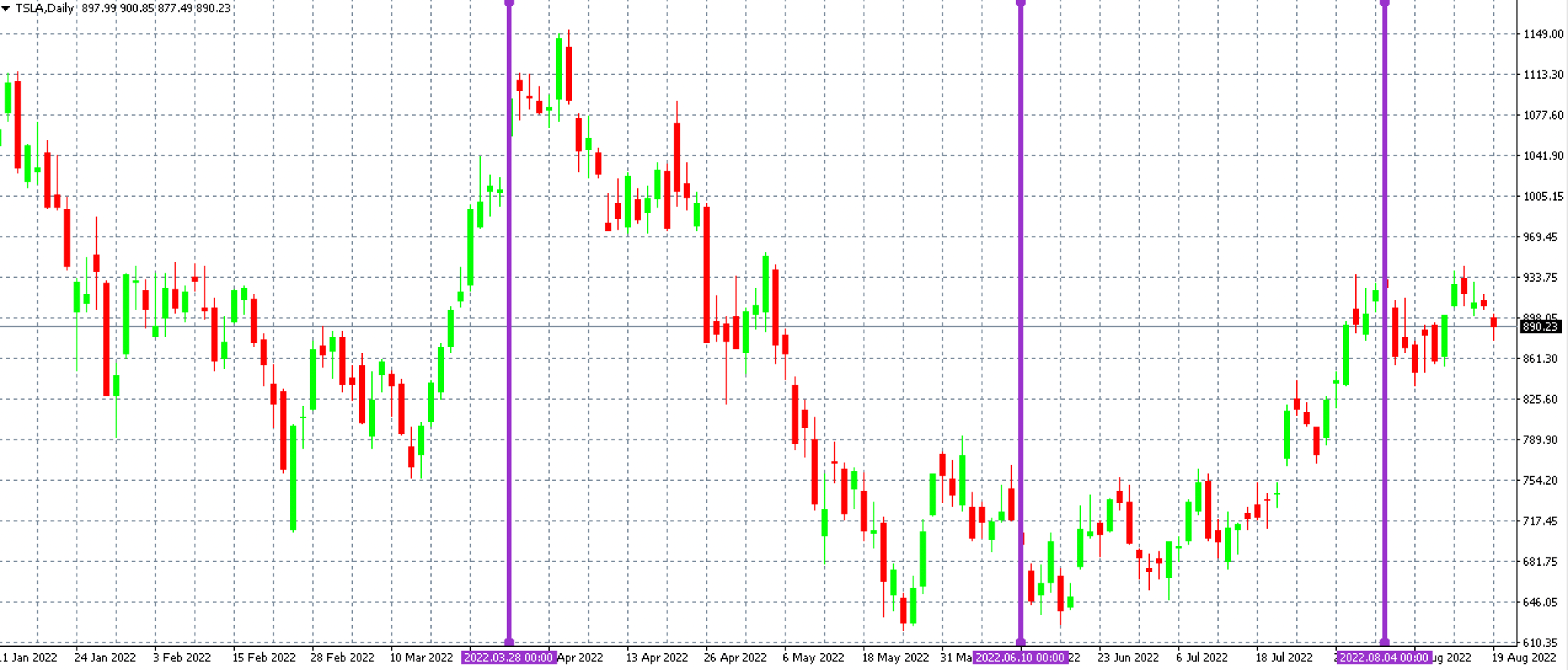
Nearly two years later, Tesla initiated its second stock split. On June 10, 2022, the company filed its annual proxy statement with the SEC, proposing a 3-for-1 split. Following approval by shareholders at the 2022 Annual Meeting, the split was implemented on August 25, 2022.
Prior to this second split, Tesla’s stock was once again trading in the high hundreds, often exceeding $900 per share. By executing a 3-for-1 split, the price was brought down to the $300 range. This split occurred during a more volatile period for the broader tech market, as rising interest rates and inflationary pressures began to weigh on growth stocks. However, the move was consistent with Tesla’s stated goal of ensuring its employees—many of whom are compensated in stock—and its massive retail following could continue to manage their holdings effectively.
The Mechanics and Motivations Behind a Stock Split
To the uninitiated, a stock split might seem like a way for a company to create value out of thin air. In reality, a stock split is a “cosmetic” accounting change. If a pizza is cut into eight slices instead of four, you still have the same amount of pizza. In the world of business finance, however, the “way” you cut the pizza matters immensely for market dynamics.
Maintaining Accessibility for Retail Investors
The primary driver for Tesla’s splits has been accessibility. In the modern era of finance, retail investors—non-professional individuals trading on platforms like Robinhood, Charles Schwab, or Fidelity—account for a significant portion of daily trading volume. When a stock price exceeds $1,000, it becomes “heavy.” A retail investor with $500 to invest cannot buy a single share without fractional trading. By lowering the share price through a split, Tesla ensures that its stock remains a viable option for the widest possible range of investors.
Furthermore, Tesla has a unique corporate culture that emphasizes employee stock ownership. For factory workers and engineers whose compensation packages include restricted stock units (RSUs) or options, a lower share price allows for more granular management of their personal wealth. It is much easier for an employee to sell $5,000 worth of stock to cover an expense if the share price is $200 than if it is $1,000.
Enhancing Liquidity and Reducing Volatility
In financial terms, liquidity refers to how easily an asset can be bought or sold in the market without affecting its price. Stocks with very high prices often have lower trading volumes or wider “bid-ask spreads” (the difference between what a buyer is willing to pay and what a seller is willing to accept).
By increasing the number of shares outstanding, a split generally improves liquidity. More shares are moving through the market, which can lead to smoother price discovery. For a stock as volatile as Tesla, which is often subject to intense speculation and news-driven swings, higher liquidity can theoretically help dampen some of the extreme price gaps that occur during low-volume periods.
Analyzing the Financial Impact on Shareholders
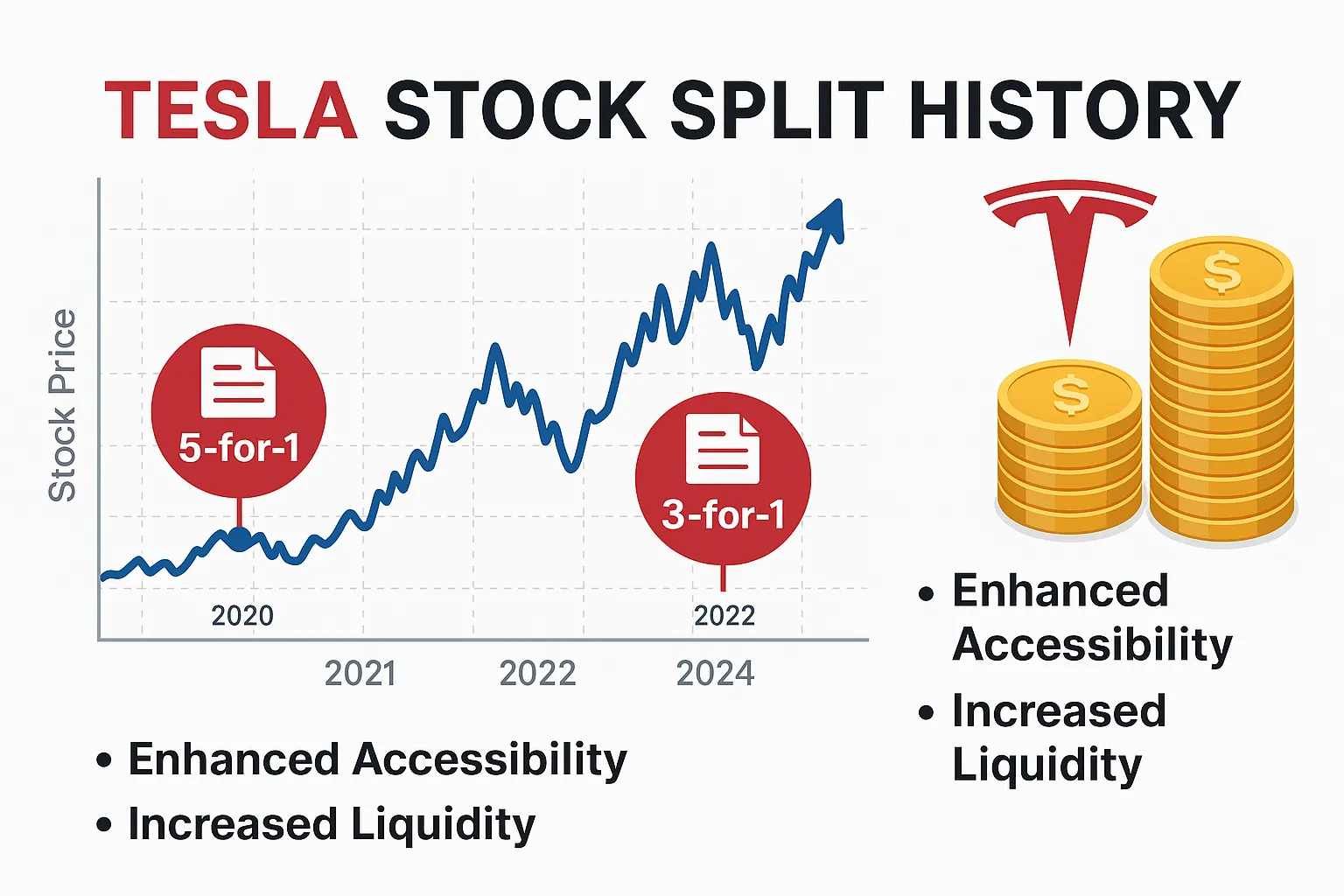
When a stock split is announced, the market often reacts with a “split rally.” While the split itself does not change the company’s fundamentals—its revenue, profit margins, or debt levels remain the same—the psychological impact on the market is measurable.
Price Performance Pre- and Post-Split
Historically, companies that announce stock splits tend to outperform the broader market in the months leading up to the event. This was certainly true for Tesla in 2020. Between the announcement of the 5-for-1 split and the actual execution date, the stock price surged by over 60%. Investors rushed in, anticipating that the lower post-split price would attract even more buyers, creating a self-fulfilling prophecy of upward momentum.
However, the post-split performance is often more dependent on the macro-economic environment. After the 2022 split, Tesla, like much of the Nasdaq, faced headwinds from the Federal Reserve’s aggressive interest rate hikes. This serves as a crucial lesson for investors: while a split can act as a short-term catalyst, long-term returns are driven by the company’s ability to deliver vehicles, maintain margins, and innovate in the AI and energy sectors.
Impact on Options Trading
For sophisticated investors and traders, stock splits have a profound impact on the options market. Standardized options contracts represent 100 shares of the underlying stock. When Tesla was trading at $1,200 per share, a single “at-the-money” call option contract would control $120,000 worth of stock, requiring a significant premium (cost) to purchase.
By splitting the stock, the cost of these contracts is reduced proportionally. A 3-for-1 split reduces the capital requirement for an options contract by two-thirds. This opens the door for more retail participation in hedging and speculative strategies. Increased activity in the options market can, in turn, influence the volatility and price action of the underlying stock through “gamma” effects, where market makers must buy or sell shares to hedge the options they have written.
Tesla’s Position in the Broader Market Cycle
Tesla’s decision to split its stock twice in three years was not happening in a vacuum. It was part of a broader trend among “Mega-Cap” technology companies. During the 2020–2022 period, several other giants, including Apple, Amazon, and Alphabet (Google), also executed splits.
Comparison with Big Tech Peers
Apple’s 4-for-1 split in 2020 occurred almost simultaneously with Tesla’s first split. Similarly, Amazon and Google waited until 2022 to execute 20-for-1 splits. The motivation across these firms was universal: share prices had reached levels (often over $2,000 or $3,000) that made them look “expensive” to the average observer, despite their actual valuations.
Tesla’s splits, however, were often seen as more aggressive. While a 20-for-1 split is a massive adjustment designed to last for a decade or more, Tesla’s 3-for-1 and 5-for-1 splits suggest a management team that is comfortable performing these adjustments more frequently to keep the stock in a specific “sweet spot” of pricing—usually between $150 and $400.
Future Outlook: Will Tesla Split Again?
The question of “when will Tesla split again” is a common topic in investment forums. Generally, boards of directors consider a split when the share price consistently stays above a certain threshold, such as $500 or $700. As of recent market cycles, Tesla’s price has fluctuated significantly based on interest rate cycles and EV demand.
If Tesla’s “Full Self-Driving” (FSD) technology achieves wide-scale regulatory approval or if the “Robotaxi” fleet begins generating significant high-margin revenue, the resulting surge in valuation could easily push the share price back toward the $1,000 mark. In such a scenario, another 3-for-1 or 5-for-1 split would be highly probable, as the company remains committed to its retail-friendly image.
Strategic Considerations for Long-Term Investors
For the long-term investor, the date of a stock split is less important than the reason the split was possible in the first place. A company only splits its stock because the price has gone up significantly—which is a sign of underlying business success.
Valuation Metrics vs. Share Price
It is vital to distinguish between “share price” and “valuation.” A stock split changes the share price, but it does not make the stock “cheaper” in terms of valuation. To determine if Tesla is a good investment, one must look at the Price-to-Earnings (P/E) ratio, the Price-to-Sales (P/S) ratio, and the company’s free cash flow.
If Tesla is trading at $200 after a split, but its P/E ratio is still 60x, it is fundamentally the same investment as when it was $600 with a 60x P/E ratio. Investors should avoid the “unit bias” trap—the psychological tendency to feel that a $200 stock is a better deal than a $600 stock without looking at the underlying earnings power of each share.
Managing Volatility in a High-Growth Tech Stock
Tesla remains one of the most volatile stocks in the S&P 500. Stock splits can increase this volatility by inviting more short-term speculative trading. For those building a retirement portfolio or a long-term wealth strategy, the best approach to Tesla’s splits is to view them as administrative updates.
The historical dates—August 2020 and August 2022—serve as milestones in the company’s expansion. They mark periods where the company’s value grew so rapidly that the existing share structure could no longer support the demand from all levels of the investing public. By keeping an eye on these cycles, investors can better understand the ebb and flow of market sentiment and the strategic moves of one of the 21st century’s most influential corporations.
aViewFromTheCave is a participant in the Amazon Services LLC Associates Program, an affiliate advertising program designed to provide a means for sites to earn advertising fees by advertising and linking to Amazon.com. Amazon, the Amazon logo, AmazonSupply, and the AmazonSupply logo are trademarks of Amazon.com, Inc. or its affiliates. As an Amazon Associate we earn affiliate commissions from qualifying purchases.