
When investors ask “how much is the stock for Facebook,” they are entering the complex and high-stakes world of Meta Platforms, Inc. (NASDAQ: META). Since its initial public offering in 2012, the company has transformed from a collegiate social networking site into a global conglomerate that dictates the flow of digital information. To understand the value of a single share of Meta, one must look beyond a simple price quote on a ticker and analyze the underlying financial machinery, market sentiment, and macroeconomic factors that drive its valuation.
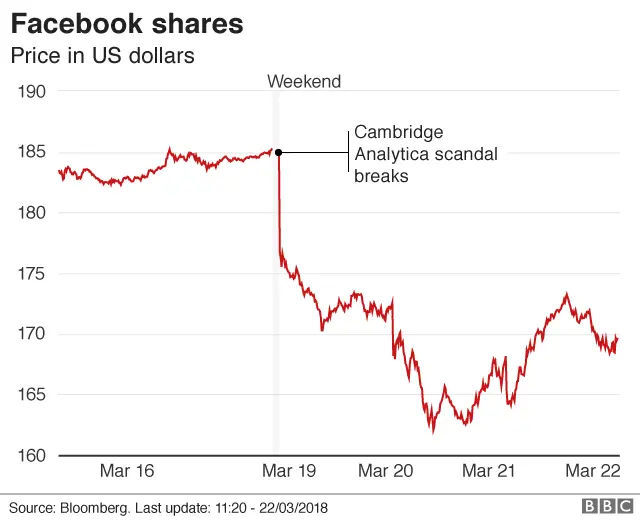
The stock price of Meta is a real-time reflection of the market’s confidence in Mark Zuckerberg’s vision. Whether the price is hovering near its all-time highs or recovering from a cyclical trough, the “cost” of the stock is relative to its earnings, growth prospects, and its role within the broader “Magnificent Seven” group of tech giants. For the modern investor, determining whether the stock is “expensive” or “cheap” requires a deep dive into fundamental analysis and market positioning.
The Evolution from Facebook to Meta: Impact on Shareholder Value
In late 2021, Facebook rebranded to Meta Platforms to signal a pivot toward the “metaverse.” This change was more than cosmetic; it represented a fundamental shift in how the company allocated its capital. For investors, this meant a transition from a high-margin social media company to a venture-style bet on future hardware and spatial computing.
The Ticker Symbol and Market Identity
While many retail investors still search for “Facebook stock,” the official ticker moved from FB to META in 2022. This rebrand coincided with one of the most volatile periods in the company’s history. As the company poured billions into Reality Labs—the division responsible for VR and AR—the stock price initially suffered. However, the subsequent “Year of Efficiency” in 2023, characterized by rigorous cost-cutting and a refocus on core advertising profitability, sent the stock price on a historic recovery trajectory.
Market Capitalization and Index Weighting
Meta is a trillion-dollar company, placing it in an elite bracket of global entities. Its stock price heavily influences the performance of major indices like the S&P 500 and the Nasdaq-100. When you buy a share of Meta, you are not just buying a piece of a social media app; you are buying into a massive engine of digital advertising that captures a significant percentage of all global ad spend. Its market cap is a testament to its scale, but for investors, the question remains: is there still room for growth at these levels?
Fundamental Analysis: The Metrics That Move the Needle
To determine if the current price of Meta stock is justified, investors look at specific financial metrics. Unlike speculative startups, Meta has a robust balance sheet and generates massive amounts of free cash flow, which provides a floor for its valuation.
Price-to-Earnings (P/E) Ratio
The P/E ratio is the most common metric used to value Meta. It tells investors how much they are paying for every dollar of the company’s profit. Historically, Meta has traded at a premium compared to the broader market but often at a discount compared to other high-growth tech peers like Nvidia or Amazon. When Meta’s P/E ratio dips below its historical average, value investors often see it as an entry point, assuming the company’s long-term growth remains intact.
Revenue Growth and Advertising ARPU
Meta’s primary revenue stream is advertising across Facebook, Instagram, Messenger, and WhatsApp. Investors closely monitor the Average Revenue Per User (ARPU). As Meta leverages Artificial Intelligence (AI) to improve ad targeting and “Reels” monetization, its ability to squeeze more value out of each user directly impacts the stock price. Even if user growth plateaus in developed markets, the ability to increase ARPU allows the stock price to climb.
The Introduction of Dividends and Buybacks
In a landmark move in early 2024, Meta announced its first-ever quarterly dividend. For a “growth” company to start paying a dividend is a signal of corporate maturity. It attracts a new class of institutional investors—those focused on income and stability. Coupled with aggressive share buyback programs, these financial maneuvers serve to reduce the supply of shares and increase the earnings per share (EPS), often providing a bullish catalyst for the stock price.
Macroeconomic Factors and Market Sentiment

No stock exists in a vacuum, and Meta is particularly sensitive to the broader economic environment. Because its revenue is tied to advertising, the stock price often acts as a barometer for the global economy.
Interest Rates and the Discount Rate
As a tech company with significant future growth expectations, Meta’s valuation is sensitive to interest rates. When the Federal Reserve raises rates, the “discount rate” used by analysts to value future cash flows increases, which can put downward pressure on the stock price. Conversely, in a stable or declining rate environment, high-growth tech stocks like Meta tend to flourish as investors seek higher returns in equity markets.
The Role of Artificial Intelligence in Valuation
Currently, the “price” of Meta stock includes a significant “AI premium.” Investors are betting that Meta’s Llama LLM (Large Language Model) and its AI-integrated ad tools will lead to a new era of efficiency and dominance. The market’s excitement over generative AI has fundamentally shifted how analysts view Meta’s cost structure; what was once seen as “expensive R&D” is now viewed as “essential infrastructure” for the next decade of digital commerce.
Regulatory Risks and Privacy Concerns
One cannot discuss the price of Meta stock without mentioning the “regulatory discount.” Ongoing antitrust lawsuits, privacy regulations like GDPR and CCPA, and potential legislation regarding child safety on social media create a cloud of uncertainty. Whenever news breaks regarding a multi-billion dollar fine or a new restrictive privacy law (such as Apple’s App Tracking Transparency), the stock price typically reacts with volatility. Long-term investors must weigh these systemic risks against the company’s operational resilience.
Investment Strategies: How to Approach Meta Stock
Deciding how much to pay for a stock requires a strategy. Investors generally fall into two camps: those looking for growth and those looking for a “GARP” (Growth at a Reasonable Price) opportunity.
Long-Term Buy and Hold
For many, Meta is a “core” holding. Given its dominance in the social landscape—with billions of daily active users—the company possesses a significant “moat.” A long-term strategy involves ignoring daily price fluctuations and focusing on the company’s ability to innovate and maintain its profit margins over 5 to 10 years.
Technical Analysis and Entry Points
Traders often look at moving averages (such as the 50-day and 200-day) to determine the best time to buy. If Meta’s stock price pulls back to a major support level during a market correction, it is often viewed as a “buy the dip” opportunity. Technical analysis helps investors avoid buying at the absolute peak of a hype cycle.
Dollar-Cost Averaging (DCA)
Given the volatility of the tech sector, many financial advisors recommend dollar-cost averaging. Instead of trying to time “how much” the stock is today, an investor commits a fixed dollar amount at regular intervals. This strategy mitigates the risk of a single poorly timed entry and allows the investor to accumulate more shares when the price is low and fewer when the price is high.
The Future Outlook: What Will Drive the Price Next?
Looking ahead, the price of Meta stock will be determined by three main pillars: the successful integration of AI, the monetization of WhatsApp, and the eventual ROI on the metaverse.
The WhatsApp Frontier
While Facebook and Instagram are mature platforms, WhatsApp remains an under-monetized goldmine. As Meta introduces business messaging and payment features within WhatsApp, analysts expect a new multi-billion dollar revenue stream to emerge. If successful, this could provide the next major leg up for the stock price, as it diversifies the company’s income beyond traditional display ads.
Reality Labs: From Money Pit to Profit Center?
The market is currently skeptical of the metaverse’s immediate profitability. However, if Meta’s Quest headsets and Ray-Ban smart glasses gain mass-market adoption, the “Metaverse” segment could flip from a drag on earnings to a growth engine. The stock price will likely react violently—in either direction—as the company provides updates on its hardware sales and developer ecosystem.

Final Financial Considerations
Investing in Meta requires an understanding that you are investing in a company that is constantly reinventing itself. The “price” of the stock today is a calculation of its current massive ad profits weighed against its future as an AI and hardware leader. For the disciplined investor, Meta represents a unique blend of a cash-flow powerhouse and a speculative tech pioneer. Whether the stock is at $300, $500, or $700, its value is ultimately found in its ability to remain the central hub of human connection in the digital age.
aViewFromTheCave is a participant in the Amazon Services LLC Associates Program, an affiliate advertising program designed to provide a means for sites to earn advertising fees by advertising and linking to Amazon.com. Amazon, the Amazon logo, AmazonSupply, and the AmazonSupply logo are trademarks of Amazon.com, Inc. or its affiliates. As an Amazon Associate we earn affiliate commissions from qualifying purchases.