
For both seasoned investors and curious newcomers, understanding the precise operating hours of the stock market is far more than a trivial detail; it’s a foundational piece of knowledge that shapes trading strategies, impacts decision-making, and defines market access. The rhythmic opening and closing bells dictate the flow of capital, the timing of news dissemination, and the overall landscape of financial activity. While the question “what time do the stock market open?” seems straightforward, the answer unfolds into a complex, dynamic environment that includes pre-market sessions, after-hours trading, global markets, and various holidays.
Delving into the specifics of market hours provides a strategic advantage, allowing investors to capitalize on opportunities, manage risks effectively, and navigate the intricate world of equities with greater confidence. This guide will demystify the stock market’s schedule, offering insights into its various phases and the broader implications for your investment journey.
The Standard Operating Hours of U.S. Stock Exchanges
The United States boasts two of the world’s largest and most influential stock exchanges: the New York Stock Exchange (NYSE) and the Nasdaq Stock Market. These twin pillars of American capitalism set the pace for daily trading, influencing global markets with their activity. While they operate under slightly different models—the NYSE being an auction market and Nasdaq a dealer market—their core trading hours largely align.
NYSE and NASDAQ: The Core Trading Day
The primary trading session for both the New York Stock Exchange (NYSE) and the Nasdaq Stock Market runs from 9:30 AM Eastern Time (ET) to 4:00 PM Eastern Time (ET), Monday through Friday. This seven-and-a-half-hour window is often referred to as the “standard trading session” or “regular market hours.” During this period, the vast majority of trading volume occurs, and prices are typically most liquid and reflective of broad market sentiment.
The opening bell ceremony, a time-honored tradition at the NYSE, marks the official start of trading each day, often featuring prominent figures or company executives. Similarly, the closing bell signifies the end of the regular session. These bells are not just ceremonial; they represent the precise moments when orders are aggregated and executed based on the day’s supply and demand dynamics.
Understanding Eastern Time (ET) and Its Relevance
It is critical for investors across different time zones to remember that all official U.S. stock market hours are quoted in Eastern Time (ET). This applies whether you are on the West Coast, in Europe, or anywhere else in the world. Failing to account for time zone differences can lead to missed opportunities, untimely trades, or even unintended positions.
For example, if you are based in California (Pacific Time, PT), the market opens at 6:30 AM PT and closes at 1:00 PM PT. For someone in London (Greenwich Mean Time, GMT), the market opens at 2:30 PM GMT and closes at 9:00 PM GMT (assuming no daylight saving differences between regions). Always convert ET to your local time zone to ensure you have an accurate understanding of market availability. Financial platforms and trading software often automatically display times in your local zone, but it’s always wise to double-check.
What Happens During the Standard Session?
The standard trading session is characterized by high liquidity and efficiency. Orders are filled rapidly, bid-ask spreads are generally tight, and market-moving news often elicits immediate price reactions. This period is when institutional investors, hedge funds, and individual traders are most active, contributing to robust price discovery. Earnings reports, economic data releases, and major corporate announcements that occur during these hours can cause significant volatility and rapid price movements. For most investors, this is the safest and most transparent time to execute trades, benefiting from the depth and breadth of the market.
Beyond the Bell: Pre-Market and After-Hours Trading
While 9:30 AM to 4:00 PM ET defines the core trading day, the stock market doesn’t entirely shut down outside these hours. Modern electronic communication networks (ECNs) and alternative trading systems (ATSs) facilitate trading sessions that extend beyond the regular market hours, known as pre-market and after-hours trading. These extended sessions offer opportunities but also come with distinct characteristics and risks.
Pre-Market Trading: Getting an Early Start
Pre-market trading typically begins as early as 4:00 AM ET and runs until the market opens at 9:30 AM ET. This period allows investors to react to news released overnight or before the regular session begins. For instance, if a company announces its quarterly earnings at 7:00 AM ET, investors can buy or sell shares in the pre-market session before the opening bell.
Access to pre-market trading is usually provided through your brokerage firm, though not all brokers offer the full 4:00 AM start time, with many beginning closer to 7:00 AM or 8:00 AM ET. This early window can be crucial for investors seeking to position themselves ahead of the day’s official start, particularly in response to breaking news or analyst upgrades/downgrades.
After-Hours Trading: Extending the Day
Conversely, after-hours trading commences immediately after the regular session closes at 4:00 PM ET and can extend until 8:00 PM ET. Similar to pre-market, this period allows investors to react to news released post-market closure, such as late-day earnings calls, executive departures, or significant industry developments.
After-hours trading provides a critical window for companies to release information without the immediate, intense scrutiny of the regular session, giving analysts and investors more time to digest complex reports. For individual investors, it offers flexibility to adjust portfolios based on these late-breaking developments, or to exit/enter positions without waiting for the next trading day.
The Nuances and Risks of Extended Hours Trading
While pre-market and after-hours trading offer flexibility, they are not without their caveats:
-
Lower Liquidity: Fewer participants typically mean lower trading volumes. This can lead to wider bid-ask spreads, making it harder to execute trades at desired prices.
-
Higher Volatility: Due to lower liquidity, a relatively small number of trades can have a disproportionately large impact on a stock’s price, leading to increased volatility.
-
Price Discrepancies: Prices in extended hours may not always reflect the opening price of the next regular session. Significant price gaps can occur between the after-hours close and the next morning’s open.
-
Order Types: Not all order types may be available during extended hours. Market orders, for example, are generally ill-advised due to potential price swings; limit orders are typically preferred to control execution price.
-
Institutional Dominance: Extended hours are often dominated by institutional investors and professional traders with sophisticated tools and faster information access, which can put individual investors at a disadvantage.
Understanding these risks is paramount for anyone considering trading outside the standard 9:30 AM to 4:00 PM window.
Global Perspectives: A World of Trading Hours
The financial world is interconnected, and while U.S. market hours are central for American investors, understanding major international markets provides crucial context, especially for those investing in global companies or ETFs with international exposure. The concept of “the stock market” is a mosaic of exchanges operating across different time zones, creating a continuous global trading cycle.
Major International Markets and Their Schedules
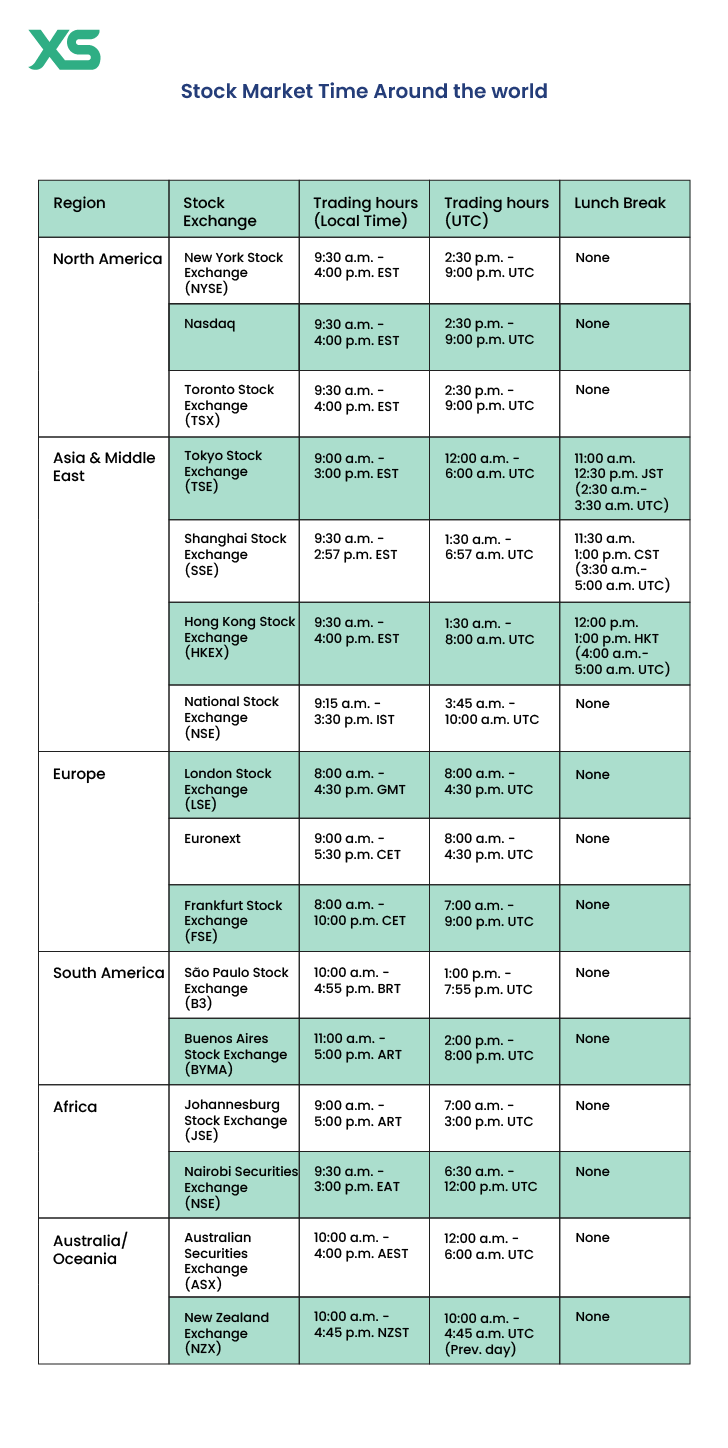
Different global markets have their own distinct trading hours, often overlapping with or preceding U.S. market activity:
-
London Stock Exchange (LSE): Generally 8:00 AM to 4:30 PM GMT (or BST during daylight saving). London is a significant financial hub, and its opening can influence European and U.S. futures markets.
-
Tokyo Stock Exchange (TSE): Typically 9:00 AM to 3:00 PM JST (Japan Standard Time), with a lunch break from 11:30 AM to 12:30 PM JST. Tokyo’s market is the first major Asian market to open, setting an early tone for the trading day.
-
Shanghai Stock Exchange (SSE) / Shenzhen Stock Exchange (SZSE): Similar to Tokyo, 9:30 AM to 3:00 PM CST (China Standard Time), with a lunch break from 11:30 AM to 1:00 PM CST. These exchanges are crucial for understanding the Chinese economy.
-
Euronext (Paris, Amsterdam, Brussels, etc.): Often 9:00 AM to 5:30 PM CET (Central European Time). Euronext is a pan-European exchange group.
-
Frankfurt Stock Exchange (Xetra): 9:00 AM to 5:30 PM CET. The German market is Europe’s largest.
-
Australian Securities Exchange (ASX): 10:00 AM to 4:00 PM AEST (Australian Eastern Standard Time) or AEDT (Australian Eastern Daylight Time).
These are just a few examples; every country has its primary exchange with unique operating hours, reflecting local customs and economic rhythms.

Time Zones and Their Impact on Global Investors
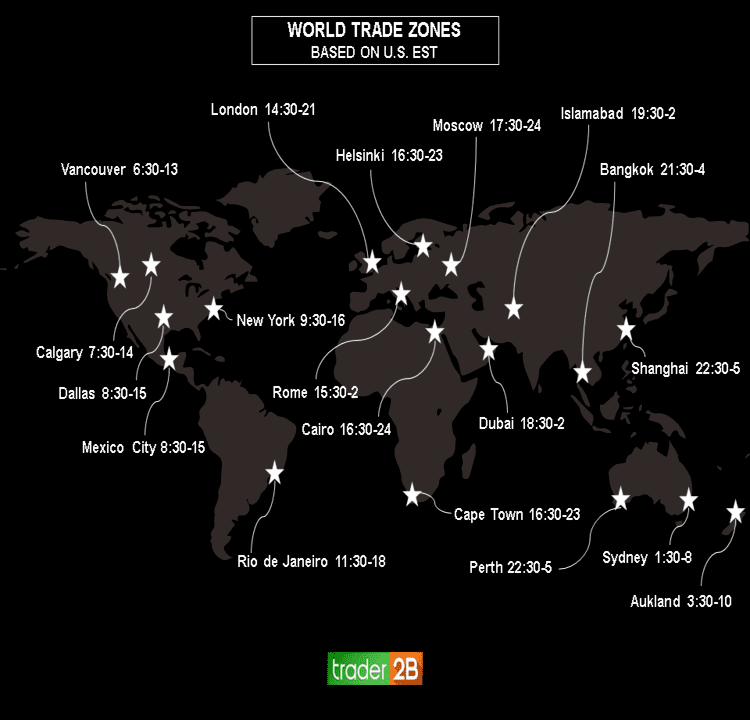
The interplay of different time zones means that somewhere in the world, a major stock exchange is almost always open. When the U.S. market closes, Asian markets might be preparing to open or already in full swing. This continuous cycle means that global news, economic reports, and geopolitical events can impact market sentiment across different regions, with ripple effects carrying over to the next trading session in another part of the world.
For an investor in New York, the closing hours of the London market might be relevant for understanding the overnight sentiment that will affect U.S. stocks. Similarly, the performance of Asian markets overnight can provide clues about how U.S. futures are likely to perform before the NYSE and Nasdaq open.
Why Global Market Hours Matter for U.S. Investors
Even if you primarily invest in U.S.-listed stocks, keeping an eye on global market hours and performance is crucial for several reasons:
-
Interconnectedness: Major global events (e.g., a central bank decision in Europe, an economic report from China) can significantly impact U.S. company shares, particularly those with international operations.
-
Futures Markets: U.S. stock index futures (e.g., S&P 500 futures) trade almost 24/5. Their movements during off-hours can indicate how the main U.S. market might open.
-
Currency and Commodity Markets: These markets also operate globally around the clock and can influence stock prices.
-
Diversification: For those with diversified international portfolios, understanding the local trading hours is essential for managing those holdings directly.
Monitoring the global calendar of market hours and key economic releases is a valuable habit for any investor seeking a comprehensive understanding of market dynamics.
Market Holidays and Special Closures
Just like any other business, stock exchanges observe holidays. These closures are pre-scheduled and often align with national federal holidays, providing investors with predictable breaks from trading. However, there can also be unexpected closures or early finishes.
Federal Holidays: When the Markets Rest
Both the NYSE and Nasdaq generally observe the following U.S. federal holidays, during which the markets are completely closed:
-
New Year’s Day
-
Martin Luther King, Jr. Day
-
Presidents’ Day
-
Good Friday (though not a federal holiday, observed by markets)
-
Memorial Day
-
Juneteenth National Independence Day
-
Independence Day
-
Labor Day
-
Thanksgiving Day
-
Christmas Day
It’s important to note that if a holiday falls on a weekend, the market typically observes it on the preceding Friday or the following Monday. For instance, if Christmas Day falls on a Saturday, the market might close on Friday, December 24th.
Early Closures and Unscheduled Events
In addition to full-day holidays, markets sometimes have early closures. The most common early close is at 1:00 PM ET on the day after Thanksgiving (Black Friday) and on Christmas Eve (if it falls on a weekday and is not a full holiday). These shorter sessions still count as official trading days but with reduced hours.
Less commonly, markets can experience unscheduled closures due to unforeseen circumstances, such as severe weather emergencies (e.g., hurricanes that directly impact New York City) or significant national security events. While rare, such closures highlight the physical and logistical infrastructure behind financial markets. The exchanges communicate these changes well in advance whenever possible.
Planning Your Trading Around Market Interruptions
Knowing the holiday schedule is vital for several reasons:
-
Trade Planning: Avoid placing orders on days the market is closed, as they won’t be executed until the next trading day.
-
Settlement Dates: Understand that settlement cycles (the time it takes for a trade to finalize and funds/securities to transfer) will be extended by market holidays.
-
Portfolio Management: Adjust your rebalancing, cash withdrawals, or new investment strategies to account for non-trading days.
-
Information Flow: Be mindful that less news and economic data are typically released on market holidays, potentially leading to subdued market activity immediately before and after the break.
Most brokerage firms and financial news outlets publish the upcoming holiday schedule at the beginning of each year, and it’s always prudent to consult these calendars.
Why Understanding Market Hours is Crucial for Investors
The seemingly simple question of “what time do the stock market open?” unravels into a tapestry of essential knowledge for any engaged investor. Beyond mere scheduling, a deep understanding of market hours influences strategy, risk management, and overall investment success.
Strategic Trading and Execution
Knowing market hours allows investors to:
-
Time Trades Optimally: Recognize periods of high liquidity (standard hours) for larger trades and potential volatility (extended hours) for strategic plays.
-
React to News: Position themselves to respond to market-moving news, whether it’s released before, during, or after regular trading hours.
-
Avoid Suboptimal Trades: Prevent placing market orders during illiquid extended hours, where prices can be significantly unfavorable.
-
Plan Day Trading: For short-term traders, the opening and closing hours are critical for identifying trends, executing rapid trades, and managing positions within a single day.
Risk Management and Volatility
Market hours are directly linked to market risk and volatility:
-
Liquidity Risk: Low liquidity in extended hours or around holidays can make it difficult to buy or sell at desired prices, increasing potential losses.
-
Price Gaps: Gaps between extended-hours closing prices and regular-hours opening prices can lead to unexpected gains or losses.
-
Overnight Risk: Understanding how global markets operate can help assess “overnight risk” – the risk that significant news or events while U.S. markets are closed will impact U.S. stock prices the next day.
-
Holiday Impact: Markets can sometimes be more volatile or less liquid in the days immediately surrounding major holidays.
Staying Informed: Beyond Just the Clock
Ultimately, the market clock is a framework within which financial decisions are made. A comprehensive understanding of “what time the stock market opens” encourages investors to:
-
Be Proactive: Anticipate when key information will be released and how market participants might react.
-
Use Appropriate Tools: Leverage limit orders for precision, especially outside standard hours, and understand the capabilities of their brokerage platforms.
-
Consider Global Factors: Recognize that domestic market performance is often influenced by global economic and geopolitical events that unfold across different time zones.
-
Develop Discipline: Avoid impulsive decisions during volatile periods and stick to a well-thought-out trading plan that accounts for market availability.
In conclusion, knowing the stock market’s schedule is not just about showing up on time; it’s about mastering the rhythm of financial markets, understanding the interplay of different trading phases, and using this knowledge to make more informed, strategic, and ultimately, more successful investment decisions. The market clock is a powerful tool in an investor’s arsenal, one that, when understood deeply, can significantly enhance one’s ability to navigate the complex world of investing.
aViewFromTheCave is a participant in the Amazon Services LLC Associates Program, an affiliate advertising program designed to provide a means for sites to earn advertising fees by advertising and linking to Amazon.com. Amazon, the Amazon logo, AmazonSupply, and the AmazonSupply logo are trademarks of Amazon.com, Inc. or its affiliates. As an Amazon Associate we earn affiliate commissions from qualifying purchases.