
Navigating the intricacies of federal tax compliance can be one of the most demanding aspects of running a business. Among the various forms and obligations, the IRS Form 941, “Employer’s Quarterly Federal Tax Return,” stands as a cornerstone for virtually every employer in the United States. This form dictates how businesses report income taxes, Social Security tax, and Medicare tax withheld from employee wages, as well as the employer’s share of Social Security and Medicare tax. The question of “where do I mail 941 payments” is more than just about an address; it’s about understanding a critical financial process, ensuring compliance, and avoiding costly penalties.
While the traditional act of mailing a check might come to mind, the landscape of federal tax payments has significantly evolved. The IRS strongly encourages and, in many cases, mandates electronic payments, especially for larger businesses. However, specific scenarios still permit or even necessitate physical mail. This comprehensive guide will demystify Form 941 payments, exploring the primary electronic methods, detailing the circumstances for mailing, and providing crucial insights to keep your business financially compliant and secure. By the end, you’ll not only know where to send your payments but also how to make the most informed decision for your business’s financial health.
Decoding Form 941: Your Employer’s Quarterly Federal Tax Responsibility
Understanding Form 941 is the foundational step in ensuring your business meets its federal tax obligations. It’s not just a form; it’s a critical mechanism for the IRS to track and collect employment taxes that fund Social Security and Medicare, among other things. For many businesses, especially small to medium-sized enterprises (SMEs), getting this right is paramount to operational stability and avoiding legal pitfalls.
What is Form 941 and Who Files It?
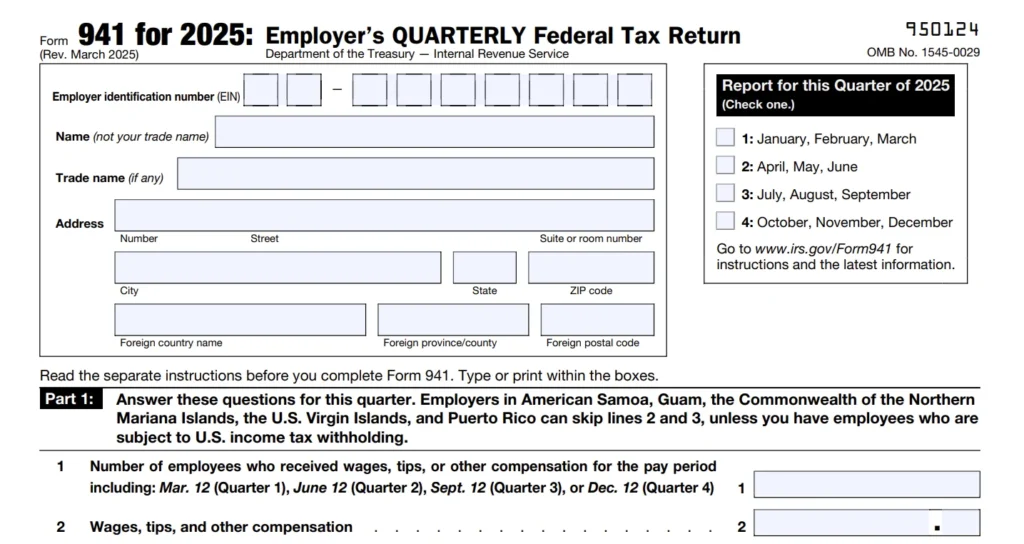
Form 941, titled “Employer’s Quarterly Federal Tax Return,” is used by employers to report:
-
Wages paid to employees.
-
Federal income tax withheld from those wages.
-
Social Security and Medicare taxes withheld from employees’ wages.
-
The employer’s share of Social Security and Medicare taxes.
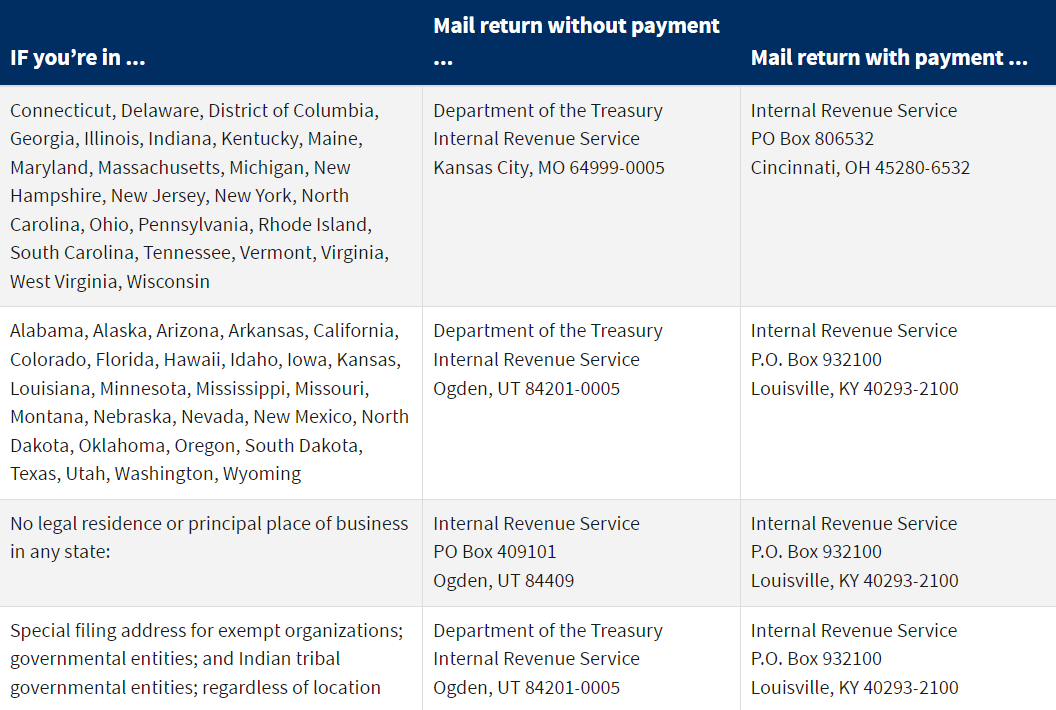
Virtually every employer who pays wages subject to income tax withholding, Social Security, or Medicare taxes must file Form 941 quarterly. This includes corporations, partnerships, and sole proprietors who have employees. The only exceptions are employers who file Form 944 (annual filers for small businesses with annual liability of $1,000 or less), employers of household employees (who may use Schedule H, Form 1040), and employers of farm employees (who may use Form 943). If your business operates in most standard capacities with employees, Form 941 is your quarterly obligation.
Components of Your Federal Tax Deposit Obligation
The total amount due on Form 941 isn’t a single lump sum but rather a combination of several components. These include:
-
Employee Withholdings: Federal income tax, Social Security, and Medicare taxes that you subtract from your employees’ paychecks. As an employer, you are merely a collection agent for the government for these amounts.
-
Employer Contributions: Your business is also responsible for paying its own share of Social Security and Medicare taxes, which typically matches the employee’s contribution.
These amounts must be deposited with the IRS on either a monthly or semi-weekly schedule, depending on the total tax liability your business incurred during a lookback period. The Form 941 itself summarizes these liabilities and payments for the entire quarter, reconciling what was deposited with what was due. Understanding this distinction between deposit schedules and the quarterly filing of Form 941 is crucial for compliance.
The Importance of Timely and Accurate Filings
The IRS takes employment tax compliance very seriously because these taxes fund vital social programs. Late filings, incorrect payments, or failure to pay employment taxes can result in severe penalties, including:
-
Failure-to-File Penalties: A percentage of the unpaid tax for each month or part of a month the return is late.
-
Failure-to-Pay Penalties: A percentage of the unpaid tax for each month or part of a month the tax remains unpaid.
-
Failure-to-Deposit Penalties: Penalties for not making tax deposits on time, in the correct amount, or in the required manner (e.g., electronically when mandated).
These penalties can accumulate rapidly, significantly impacting a business’s cash flow and financial stability. Beyond monetary penalties, consistent non-compliance can lead to more serious legal actions. Therefore, understanding the filing requirements, adhering to deadlines, and utilizing accurate payment methods are not just administrative tasks but fundamental financial responsibilities.
The Preferred Pathway: Electronic Federal Tax Payment System (EFTPS)
In the modern financial landscape, electronic payment systems have become the gold standard for virtually all government transactions. For federal tax payments, including those associated with Form 941, the Electronic Federal Tax Payment System (EFTPS) is the IRS’s preferred and often mandated method. Embracing EFTPS is not just about convenience; it’s about security, efficiency, and ensuring robust compliance.
Why EFTPS Reigns Supreme for 941 Payments
EFTPS offers a multitude of advantages that make it the superior choice for employers:
-
Mandatory for Many: If your business has a total federal tax deposit liability exceeding a certain threshold (currently $2,500), you are generally required to use EFTPS. Even if you’re below this threshold, using it is highly recommended.
-
Security: EFTPS provides a secure online platform, reducing the risks associated with mailing sensitive financial information.
-
Proof of Payment: Every transaction generates a confirmation number, serving as undeniable proof of payment and the date it was initiated. This is invaluable for record-keeping and dispute resolution.
-
Convenience and Speed: Payments can be scheduled 24/7 from anywhere with internet access. Funds are typically debited from your bank account on the settlement date you specify, which can be up to 365 days in advance.
-
Accuracy: Reduces the chance of errors common with manual checks, such as incorrect amounts, wrong addresses, or lost mail.
-
Free Service: EFTPS is a free service provided by the U.S. Department of the Treasury.
Setting Up Your EFTPS Account
Before you can make payments, you’ll need to enroll in EFTPS. The process is straightforward but requires some patience:
-
Visit the EFTPS Website: Go to www.eftps.gov.
-
Enroll Online: Click on “Enroll” and follow the prompts. You’ll need your Employer Identification Number (EIN), business name, address, and bank account information (routing and account numbers).
-
Receive Your PIN: After enrollment, the IRS will mail you a Personal Identification Number (PIN) to the address associated with your EIN. This can take 5-7 business days. This PIN is crucial for logging in and authorizing payments.
-
Receive Your Internet Password: Once you have your PIN, you can create an internet password online to complete your setup.
It’s highly advisable to enroll in EFTPS as soon as you establish your business and hire employees, even if you don’t anticipate immediate electronic payment requirements. This proactive step ensures you’re ready when the time comes.
Making Payments Through EFTPS: A Step-by-Step Guide
Once enrolled and logged in, making a payment is intuitive:
-
Select “Make a Payment”: Choose the type of tax you are paying (e.g., 941).
-
Enter Payment Information: Input the tax amount, the tax period (e.g., Q1 for January-March), and the payment effective date. The effective date is when you want the funds to be withdrawn from your bank account.
-
Review and Confirm: Carefully review all details before submitting.
-
Receive Confirmation Number: Upon submission, you’ll receive an EFTPS confirmation number. Save this number! It is your proof of payment. You can also print a confirmation page for your records.
Remember, payments must be initiated by 8:00 PM ET the day before the due date to be considered timely. It’s always a good practice to schedule payments well in advance of the deadline.
EFTPS Payment Deadlines and Confirmation
While Form 941 is filed quarterly, employment tax deposits are made either monthly or semi-weekly. EFTPS accommodates both schedules.
-
Monthly Depositors: If your total tax liability for the previous calendar year was $50,000 or less, you’re generally a monthly depositor. Deposits are due by the 15th day of the next month for taxes accumulated in the current month.
-
Semi-Weekly Depositors: If your total tax liability for the previous calendar year was over $50,000, you’re generally a semi-weekly depositor. Deposits for payments made on Wednesday, Thursday, or Friday are due the following Wednesday. Deposits for payments made on Saturday, Sunday, Monday, or Tuesday are due the following Friday.
Always consult IRS Publication 15 (Circular E), Employer’s Tax Guide, for the most current and detailed deposit rules. The EFTPS system will provide a real-time status update, confirming when your payment has been processed and funds transferred. This digital trail is far more reliable than relying on postal services for proof of payment.
Navigating the Mail Option: When and How to Send Paper Payments
While EFTPS is the primary and preferred method for most Form 941 payments, there are specific, limited circumstances where mailing a paper check or money order is permissible. Understanding these situations and the precise procedures for mailing is critical to avoid misdirected payments or processing delays that could lead to penalties.
Specific Scenarios for Mailing 941 Payments
The IRS generally requires electronic payments for Form 941 if your business’s total federal tax deposits were $2,500 or more in a previous lookback period, or if you had a total tax liability of $50,000 or more. However, exceptions and specific situations where mailing is acceptable include:
-
Small Businesses with Low Liability: If your business has a quarterly tax liability of less than $2,500, you may pay the tax by mail with your Form 941. However, if your cumulative tax liability reaches $2,500 by the end of any quarter, you must deposit it by the end of the next day using EFTPS.
-
Final Returns with Small Balances: When filing a final Form 941 and you have a small remaining balance due after making all required deposits, you might be able to mail a check with the final return.
-
Corrected Returns (Form 941-X) with Payment: If you are filing Form 941-X to correct a previously filed Form 941 and you owe additional tax, you may mail a check or money order with the Form 941-X.
-
First-Time Filers and Enrollment Lag: In rare cases, if you are a new employer and have not yet received your EFTPS PIN, you might be allowed to make your first payment by mail while awaiting activation. However, this is an infrequent scenario and should be avoided by enrolling in EFTPS well in advance.
It’s crucial to stress that mailing should be considered a secondary option, used only when explicitly permitted or when electronic payment is genuinely unfeasible. The IRS continually updates its guidelines, so always refer to the latest Form 941 instructions and Publication 15.
Locating the Correct IRS Mailing Address for Form 941
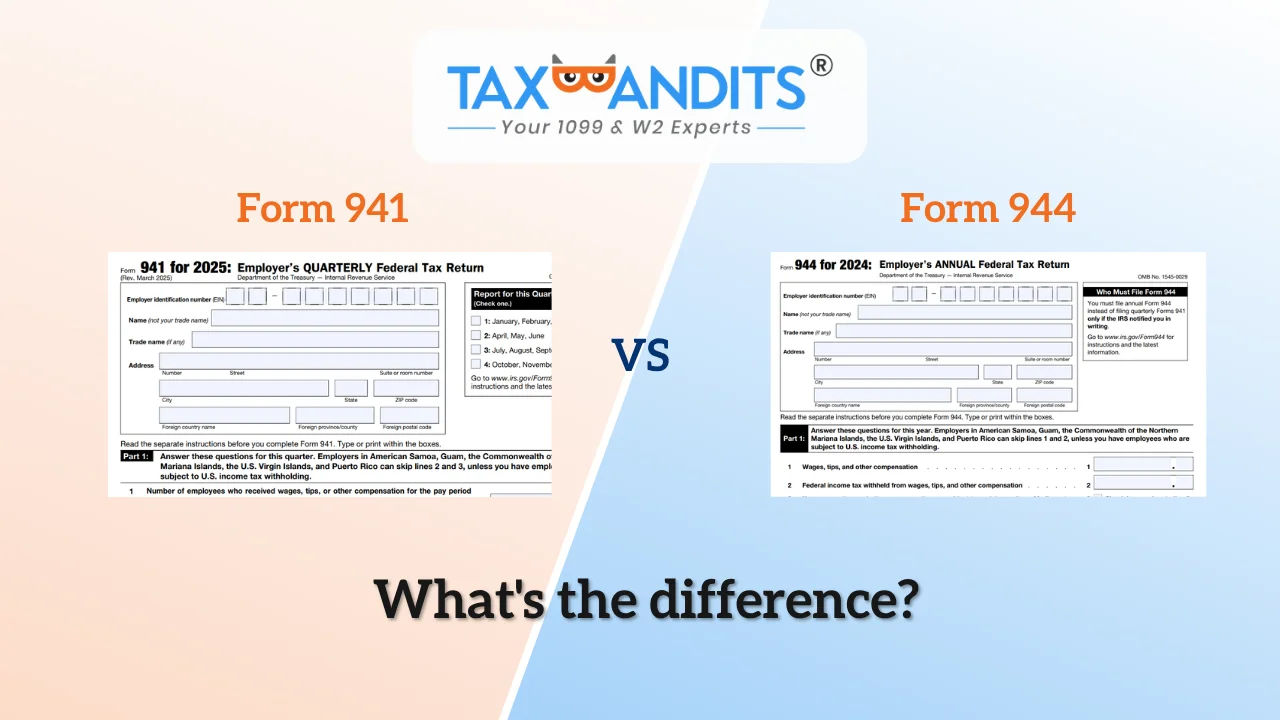
This is where the “where do I mail 941 payments” question truly becomes specific. The correct mailing address for Form 941 depends on two main factors:
-
The State where your Business is Located: The IRS uses different service centers based on geographic regions.
-
Whether you are Enclosing a Payment with the Form: There are separate addresses for forms with payments and forms without payments. Sending a form with a payment to the “no payment” address will cause delays.
General Guidance on Finding the Correct Address:
-
Always Consult the Official Form 941 Instructions: The most reliable source for current mailing addresses is the “Where To File” section within the official IRS instructions for Form 941 for the relevant tax year. These instructions are updated annually.
-
IRS Website: You can find the latest Form 941 instructions directly on the IRS website (www.irs.gov). Search for “Form 941 instructions.”
-
Examples of Address Categories (Illustrative, do NOT use these without verifying current instructions):
-
With Payment: Often involves an address like “Internal Revenue Service, P.O. Box [Specific Box Number], [City], [State] [ZIP Code].” The specific box number and city/state will vary by your business’s state.
-
Without Payment: Usually directs to a different P.O. Box or physical address for processing returns only.
-
Example Scenario (Highly Illustrative, verify for current year):
-
If your principal business, office, or agency is located in Connecticut, Delaware, District of Columbia, Florida, Georgia, Maine, Maryland, Massachusetts, New Hampshire, New Jersey, New York, North Carolina, Pennsylvania, Puerto Rico, Rhode Island, South Carolina, Vermont, Virginia, or West Virginia:
-
With payment: Internal Revenue Service, P.O. Box 8010, Andover, MA 01810-0810
-
Without payment: Department of the Treasury, Internal Revenue Service, Ogden, UT 84201-0005 (This is an example for forms filed without payments, which typically go to centralized processing centers regardless of origin state for efficiency).
-
Crucially, always double-check the instructions for the specific quarter and year you are filing. Addresses can change, and sending to the wrong location can lead to delays in processing and potential penalties.
Crafting Your Mailed Payment: Checks, Money Orders, and Required Information
If you must mail your payment, ensure it is prepared correctly to avoid processing issues:
-
Payment Instrument:
-
Checks: Make your check or money order payable to the “United States Treasury.”
-
Money Orders: Purchase from a post office, bank, or other authorized vendor.
-
-
Required Information on the Payment:
-
EIN: Write your Employer Identification Number (EIN) clearly on the check or money order.
-
Tax Form Number: Write “Form 941” on the payment.
-
Tax Period: Indicate the quarter to which the payment applies (e.g., “2024 Q1”). This links the payment to your return.
-
Signature: Ensure your check is signed by an authorized individual.
-
-
Do NOT Send Cash: Never send cash through the mail.
-
Staple (Lightly): It’s a good practice to lightly staple your check or money order to the front of Form 941, but ensure it doesn’t obstruct any critical information on the form.
Best Practices for Mailed Payments: Proof and Timing
Mailing tax payments carries inherent risks not present with electronic systems. Mitigate these risks with these practices:
-
Mail Early: Postmark your payment several days before the due date to ensure it arrives on time. Postmark date is generally considered the payment date for timely filing purposes.
-
Certified Mail with Return Receipt: For crucial payments, consider sending your Form 941 and payment via Certified Mail with Return Receipt. This provides irrefutable proof of mailing and delivery, including the date and who signed for it. While an extra cost, it’s invaluable for peace of mind and defense against late payment claims.
-
Keep Records: Always make a copy of your completed Form 941 and the check (front and back) before mailing. Keep these records for at least three years, preferably longer.
-
Accurate Postage: Ensure you have sufficient postage. Undelivered mail due to insufficient postage is your responsibility.
Understanding Payment Deadlines and Avoiding Penalties
Timeliness is a non-negotiable aspect of federal tax compliance. The IRS strictly adheres to its due dates for both filing Form 941 and making associated tax deposits. Missing these deadlines can trigger a cascade of penalties that can quickly erode a business’s financial health. A clear understanding of these dates and the consequences of non-compliance is essential for every employer.
Quarterly Filing and Payment Due Dates for Form 941
Form 941 is a quarterly return, meaning it covers a three-month period and has specific filing and payment deadlines:
-
First Quarter (January 1 – March 31): Due by April 30
-
Second Quarter (April 1 – June 30): Due by July 31
-
Third Quarter (July 1 – September 30): Due by October 31
-
Fourth Quarter (October 1 – December 31): Due by January 31 of the next year
Important Note: If any of these due dates fall on a Saturday, Sunday, or legal holiday, the due date shifts to the next business day.
Extension for Timely Deposits: There is a grace period for filing Form 941 if you have made all your required tax deposits on time. In such cases, you have an additional 10 calendar days beyond the standard due date to file Form 941. For example, for the first quarter, if all deposits were made timely, Form 941 is due by May 10 instead of April 30. This extension applies only to the filing of the form, not the payment of the taxes.
The Perils of Late or Incorrect Payments
The IRS levies penalties for various forms of non-compliance related to Form 941:
-
Failure to File: Generally 5% of the unpaid tax for each month or part of a month a return is late, capped at 25% of your unpaid tax.
-
Failure to Pay: Generally 0.5% of the unpaid taxes for each month or part of a month the taxes remain unpaid, also capped at 25%. This penalty applies if you don’t pay by the due date (or extended due date).
-
Failure to Deposit: This is often the most significant penalty for employers. It can range from 2% to 15% of the underpayment, depending on how late the deposit is. For instance, a 2% penalty if the deposit is one to five days late, 5% if six to 15 days late, and 10% if more than 15 days late. If the deposit is not made within 10 days of the first notice, the penalty jumps to 15%. This penalty is separate from failure-to-file and failure-to-pay penalties.
-
Accuracy-Related Penalties: If the IRS determines there was an intentional disregard of rules or regulations, or substantial understatement of income tax, additional penalties can apply.
These penalties are cumulative, meaning multiple penalties can be applied to the same unpaid tax. Furthermore, interest may be charged on underpayments from the due date until the payment is received. The IRS has robust systems to track these obligations, and a failure to comply will almost certainly lead to notices and financial repercussions.
Strategies for Ensuring Compliance and Avoiding Pitfalls
Proactive measures are your best defense against penalties:
-
Automate Deposits: If eligible, set up EFTPS to automatically schedule your deposits well in advance. This eliminates manual errors and missed deadlines.
-
Use Payroll Software: Most modern payroll software (e.g., QuickBooks Payroll, Gusto, ADP) can calculate, deposit, and file Form 941 for you, significantly streamlining the process and reducing errors.
-
Maintain Accurate Records: Keep meticulous records of all wages paid, taxes withheld, and deposits made. This includes copies of all filed Forms 941 and deposit confirmations.
-
Reconcile Regularly: Reconcile your payroll records with your general ledger and bank statements frequently to catch discrepancies early.
-
Stay Informed: Tax laws and regulations change. Regularly consult IRS publications like Publication 15 (Circular E) and the specific instructions for Form 941 for the current tax year.
-
Seek Professional Help: If your business is growing or your payroll becomes complex, consider engaging a qualified tax professional or payroll service provider. Their expertise can be invaluable in ensuring compliance and navigating complex situations.
By diligently adhering to these strategies, businesses can confidently meet their Form 941 obligations, avoid costly penalties, and maintain a healthy financial standing with the IRS.
Beyond Payments: Leveraging Financial Tools for 941 Compliance
While knowing where and how to make your Form 941 payments is crucial, effective financial management extends beyond simply sending money to the IRS. In today’s digital age, a suite of financial tools and professional expertise can transform the often-daunting task of employment tax compliance into a seamless and stress-free process. Leveraging these resources not only minimizes errors and penalties but also frees up valuable time for business owners to focus on growth and strategy.
Payroll Software Integration for Seamless Reporting
One of the most impactful tools for 941 compliance is integrated payroll software. Modern payroll systems are designed to automate nearly every aspect of employment tax management:
-
Automated Calculations: They accurately calculate federal income tax, Social Security, and Medicare withholdings for each employee, as well as the employer’s contributions. This eliminates manual calculation errors.
-
Scheduled Deposits: Many payroll platforms integrate directly with EFTPS, allowing you to schedule and even automate your federal tax deposits according to your monthly or semi-weekly schedule. They handle the submission of funds on your behalf, providing digital confirmation.
-
Form 941 Generation and E-filing: At the end of each quarter, these systems can automatically generate a pre-filled Form 941 based on your payroll data. Many services also offer electronic filing (e-filing) directly to the IRS, further streamlining the process and providing immediate confirmation of submission.
-
Record-Keeping: Payroll software maintains comprehensive records of all payroll transactions, tax withholdings, and payments, making it easy to access historical data for audits or reconciliation.
-
Compliance Updates: Reputable payroll software providers regularly update their systems to reflect changes in tax laws and rates, ensuring your business remains compliant without you having to constantly monitor IRS guidelines.
For most businesses with employees, investing in a robust payroll software solution (e.g., Gusto, ADP, QuickBooks Payroll, Paychex) is not an expense but a critical investment in efficiency and compliance.
Working with a Trusted Tax Professional
While payroll software automates much of the process, complex situations, changes in business structure, or simply the desire for expert oversight can necessitate the involvement of a qualified tax professional.
-
Expert Guidance: A Certified Public Accountant (CPA) or Enrolled Agent (EA) specializes in tax law and can provide tailored advice for your specific business situation. They can clarify ambiguous regulations and ensure you are taking advantage of all legitimate tax strategies.
-
Error Review and Audit Support: A tax professional can review your Form 941 before submission, catching potential errors. In the unfortunate event of an IRS audit, they can represent your business, navigate the audit process, and help mitigate potential penalties.
-
Strategic Planning: Beyond compliance, a tax professional can offer strategic insights into managing your payroll and tax obligations in a way that aligns with your broader financial goals, such as managing cash flow or planning for future growth.
-
Problem Resolution: If you encounter issues with the IRS, such as receiving a penalty notice, a tax professional can assist in understanding the notice, responding appropriately, and negotiating on your behalf.
For businesses that prefer to outsource their compliance burden or face unique payroll challenges, partnering with a knowledgeable tax professional provides an invaluable layer of security and expertise.
Maintaining Impeccable Records and Documentation
Regardless of whether you use payroll software or a tax professional, maintaining impeccable records is a non-negotiable aspect of Form 941 compliance. These records serve as your defense in case of an IRS inquiry or audit.
-
Essential Documents: Keep copies of all filed Forms 941, all IRS correspondence related to employment taxes, payroll reports generated by your software, bank statements showing tax deposits, and any EFTPS confirmation numbers.
-
Organized Storage: Store these documents systematically, whether digitally in secure cloud storage or physically in clearly labeled files. Ensure they are easily retrievable.
-
Retention Period: The IRS generally requires employers to keep employment tax records for at least four years after the date the tax becomes due or is paid, whichever is later. However, maintaining records for longer periods, especially for critical documents, is often a prudent business practice.
-
Backup Procedures: Implement robust backup procedures for all digital records to prevent data loss due to system failures, cyberattacks, or other unforeseen events.
By combining the automation capabilities of modern payroll software, the expert guidance of tax professionals, and diligent record-keeping practices, businesses can move beyond merely answering “where do I mail 941 payments?” to establishing a comprehensive and resilient system for employment tax compliance, safeguarding their financial future.
aViewFromTheCave is a participant in the Amazon Services LLC Associates Program, an affiliate advertising program designed to provide a means for sites to earn advertising fees by advertising and linking to Amazon.com. Amazon, the Amazon logo, AmazonSupply, and the AmazonSupply logo are trademarks of Amazon.com, Inc. or its affiliates. As an Amazon Associate we earn affiliate commissions from qualifying purchases.