
Moving homes is a significant life event, often bringing a whirlwind of logistical challenges. Amidst the packing, unpacking, and settling in, one crucial task frequently overlooked or postponed is updating your financial institutions with your new address. For Chase Bank customers, ensuring your address is current is not just a matter of convenience; it’s a cornerstone of sound personal finance, impacting everything from account security to the timely receipt of vital financial documents. Neglecting this simple update can lead to a cascade of problems, making it a priority for anyone managing their money effectively.

The Financial Imperative of an Updated Address
An accurate address linked to your bank accounts is far more important than many realize. It forms a critical layer of financial security, compliance, and effective communication between you and your bank.
Why Your Address Matters to Your Money
Firstly, your address is a primary identifier. Banks, like Chase, use it to verify your identity, especially for sensitive transactions or when you interact with customer service. An outdated address can complicate these verification processes, potentially delaying access to your own funds or services when you need them most. From a regulatory perspective, banks are legally obligated to maintain accurate customer records under Know Your Customer (KYC) and Anti-Money Laundering (AML) regulations. This means they need to know where you reside to comply with government oversight and prevent financial crime.
Beyond compliance, your address dictates where your physical financial correspondence is sent. This includes monthly statements, annual tax forms (like 1099s), new credit cards, debit card renewals, checks, and important account notifications. Missing these documents can have serious repercussions. An unreceived tax form, for instance, could lead to issues with your tax filings, while a new credit card sent to an old address could fall into the wrong hands, escalating fraud risk.
Preventing Financial Disruptions
An outdated address can also lead to direct financial disruptions. If Chase attempts to send you an important notice about potential fraud on your account, an overdraft warning, or changes to your account terms, and it goes to an old address, you might miss critical information that could save you money or prevent financial losses. Imagine a situation where your debit card is compromised, and the replacement card is sent to your old address, leaving you without access to funds for an extended period. Such scenarios highlight why proactively updating your address is a fundamental aspect of vigilant personal finance management. It’s a preventive measure that safeguards your financial well-being and ensures continuity of banking services.
Step-by-Step: Changing Your Address with Chase
Chase Bank, recognizing the importance of convenience, offers several channels for customers to update their address, catering to different preferences and needs.
Online Via Chase.com
The most common and often quickest method is to change your address through Chase’s secure online banking portal.
Navigating to the Profile & Settings
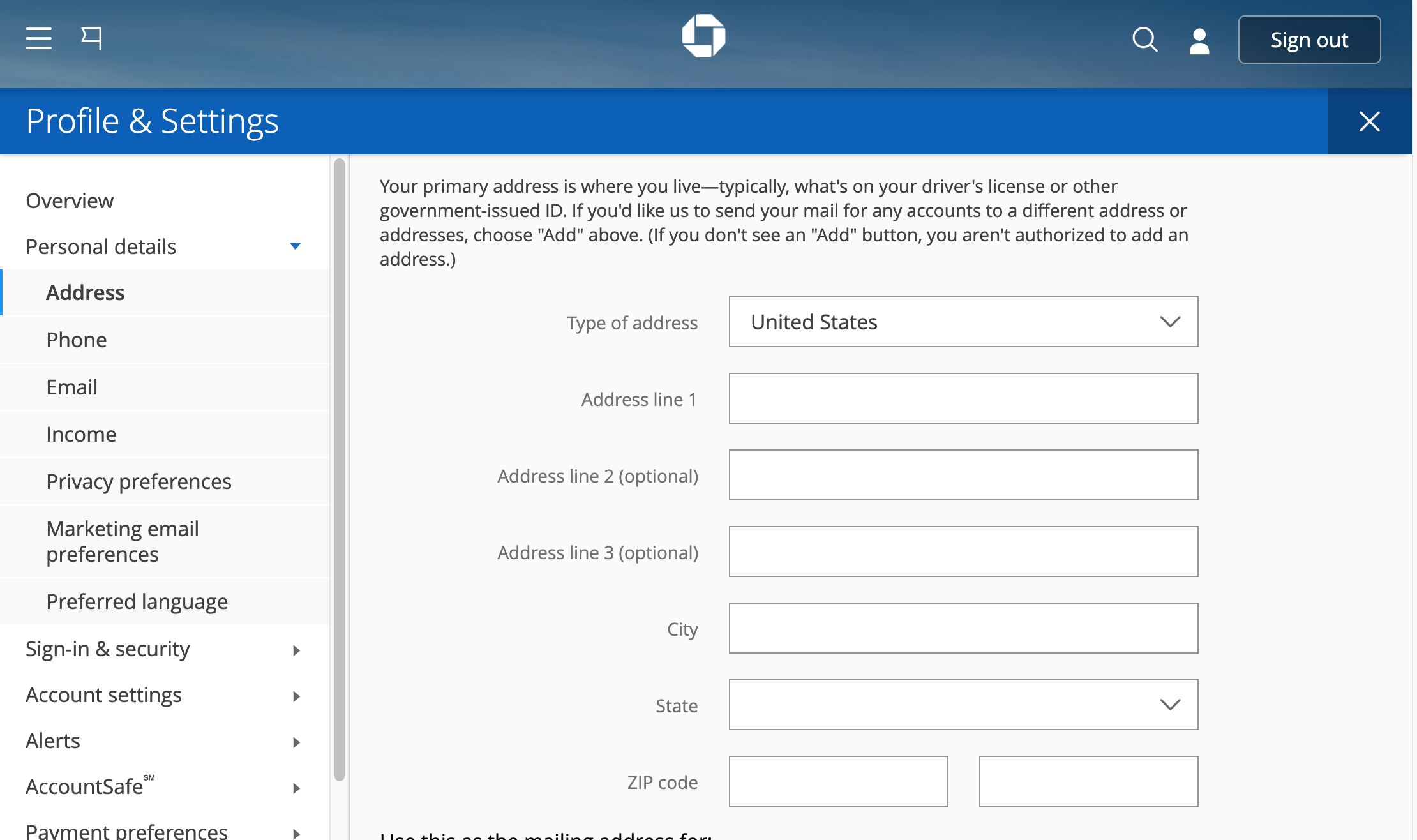
After logging into your Chase Online account, look for a section typically labeled “Profile & Settings,” “Account Services,” or “Customer Center.” This area is designed for managing your personal information and account preferences.
Verifying Your Identity
To protect your financial information, Chase will likely require additional verification steps. This might involve entering a one-time passcode sent to your registered phone number or email, answering security questions, or using biometric authentication if available. These measures ensure that only you can make changes to your account.
Updating Contact Information
Once verified, you’ll find an option to “Change Address” or “Update Contact Information.” Carefully input your new street address, city, state, and ZIP code. Double-check all entries for accuracy before submitting. The system will usually provide a confirmation message, and you might also receive an email confirming the change. It’s prudent to keep this confirmation for your records.
Through the Chase Mobile App
For those who prefer banking on the go, the Chase Mobile App offers a similar, streamlined process.
Accessing Settings
Open the Chase Mobile App and log in. Navigate to the menu, often found in the top-left or top-right corner, typically represented by three lines or dots. Look for “Profile & Settings” or “Account Services.”
Locating Personal Details
Within the settings, you should find a section dedicated to “Personal Details” or “Contact Information.” Follow the prompts to update your address, which will likely include identity verification steps similar to the online portal. Confirm your changes and keep an eye out for any in-app or email notifications confirming the update.
By Phone: Calling Chase Customer Service
If you prefer speaking directly with a representative or encounter issues online, calling Chase customer service is an effective option.
What Information You’ll Need
Before calling, have your Chase account numbers ready, along with your old and new addresses. Be prepared to provide personal identifying information such as your full name, date of birth, Social Security Number, and possibly answers to security questions to verify your identity.
Security Protocols
The Chase representative will guide you through the verification process. Once your identity is confirmed, they will update your address across all applicable accounts. It’s a good practice to ask for a confirmation number for the address change and inquire about when you can expect the change to be fully processed and reflected on your accounts.
In-Person at a Chase Branch
For those who prefer face-to-face interaction or need assistance, visiting a Chase branch is a viable method.
Required Identification
When visiting a branch, bring a valid government-issued photo ID (like a driver’s license or passport) and proof of your new address (e.g., a utility bill, lease agreement, or mail with your new address). Your Chase debit card or account statements can also be helpful.
Speaking with a Banker

A personal banker will assist you with the address change, ensuring all necessary forms are completed accurately. This method provides the advantage of direct assistance and the opportunity to ask any specific questions you might have about how the change impacts your various Chase accounts. Be sure to request a printed confirmation of the address update for your records.
Beyond the Basics: Important Financial Considerations
Changing your address at Chase is often just the first step. Understanding the broader implications for your financial landscape is crucial for comprehensive money management.
Impact on All Your Chase Accounts (Checking, Savings, Credit Cards, Investments, Mortgages)
When you update your address with Chase, it’s vital to confirm that the change applies across all your relationships with the bank. This includes your checking accounts, savings accounts, credit cards, investment accounts (Chase Private Client, J.P. Morgan Self-Directed Investing), and any mortgage or loan accounts you hold with them. While a single update usually propagates across most consumer accounts, it’s always wise to verify this explicitly, especially for specialized accounts like mortgages or investments which might have distinct communication protocols.
Joint Accounts and Authorized Users
For joint accounts, both account holders typically need to be aware of and potentially authorize the address change, depending on Chase’s specific policy. Similarly, if you have authorized users on your credit cards, while their physical address might not change, ensuring the primary account holder’s address is updated is paramount for the card’s billing and statement delivery. Communicating these changes with all involved parties is a key element of effective shared financial management.
What to Expect Post-Update (Confirmations, New Cards, Statements)
After successfully updating your address, Chase should send you a confirmation, either by email, postal mail, or both. Keep an eye out for this. If you are expecting new debit cards, credit cards, or checks, they will now be mailed to your new address. Be mindful of the typical shipping times and monitor your mail. Your subsequent statements will also reflect your new address. It’s a good practice to check your first statement post-move to ensure the change was correctly applied.
Security Measures and Fraud Prevention During a Move
Moving can unfortunately be a vulnerable time for identity theft. Ensure that you formally set up mail forwarding with the postal service (e.g., USPS in the US) to catch any lingering mail going to your old address. Shred any sensitive documents you no longer need before discarding them. Be wary of unsolicited calls or emails claiming to be from Chase asking for personal information related to your address change – always initiate contact yourself if you have doubts. Promptly update your address to minimize the window where critical financial documents could be misdirected.
The Pitfalls of an Outdated Address
Ignoring the task of updating your address with Chase can lead to a range of financial headaches, from minor inconveniences to significant security risks.
Missed Statements and Critical Communications
The most immediate consequence is the failure to receive physical statements, annual summaries, or important notices. Missing a statement might mean you miss a payment due date on a credit card, incurring late fees and potentially damaging your credit score. Missing critical communications about account changes, security alerts, or even product offers can leave you uninformed and potentially disadvantaged.
Vulnerability to Identity Theft and Fraud
Perhaps the most severe risk is identity theft. If your financial mail continues to be sent to your old address, it could be intercepted by new residents or unauthorized individuals. These documents often contain sensitive personal and financial information that fraudsters can exploit to open new accounts in your name, access existing ones, or commit other forms of identity fraud. The longer your mail goes astray, the higher the risk.
Delays in Receiving Financial Documents (Tax Forms, New Cards)
Tax season underscores the importance of an updated address. Missing your 1099 forms from Chase for interest earned or investment activities can complicate your tax filing process, potentially leading to delays or errors with the IRS. Similarly, delays in receiving new or replacement debit/credit cards can disrupt your ability to make purchases or access cash, causing significant inconvenience and potentially leaving you without essential payment methods.
Potential Account Freezes or Restrictions
In rare but serious cases, if a bank is unable to reliably contact you due to an outdated address, especially in conjunction with other suspicious activity, it could potentially lead to temporary restrictions or freezes on your account. This is a measure banks take to protect your assets and comply with regulations, but it can be extremely disruptive to your financial liquidity and daily life.
A Holistic Approach: Updating All Financial Touchpoints After a Move
Updating Chase Bank is just one piece of the puzzle. A truly comprehensive approach to managing your finances during a move involves notifying all relevant institutions and entities.
Other Banks and Credit Unions
Any other checking, savings, or credit card accounts you hold with different financial institutions should be updated promptly. Each bank will have its own process, similar to Chase, involving online, phone, or in-person options.
Investment Firms and Brokerages
Don’t forget your investment accounts. Whether you have a Roth IRA, 401(k) with a former employer, or a self-directed brokerage account, ensuring your address is current is vital for receiving statements, tax documents, and critical investment communications.
Loan Servicers (Student Loans, Auto Loans)
For student loans, auto loans, personal loans, or any other credit facilities, make sure the respective servicers have your current address. This ensures you receive payment reminders, statements, and any notices regarding changes to your loan terms.
Employers and Payroll
Your employer needs your new address for payroll purposes, W-2 forms, and any benefits-related mail. Update this with your HR or payroll department as soon as possible to avoid issues with your paychecks or tax documents.
Government Agencies (IRS, Social Security)
Notify the IRS of your address change, especially if you expect a tax refund or other correspondence. The Social Security Administration also needs an updated address for benefits and other important communications.
Subscription Services Linked to Financial Accounts
For any online subscription services, utilities, or other regular payments linked to your credit cards or bank accounts, update your billing address directly with those merchants. While the credit card company handles the core change, individual merchants sometimes retain old billing information, which could lead to declined transactions.
By systematically addressing your address change across all these financial touchpoints, you build a robust shield against financial disruptions and identity fraud, ensuring a smoother transition into your new home and maintaining pristine financial health.
aViewFromTheCave is a participant in the Amazon Services LLC Associates Program, an affiliate advertising program designed to provide a means for sites to earn advertising fees by advertising and linking to Amazon.com. Amazon, the Amazon logo, AmazonSupply, and the AmazonSupply logo are trademarks of Amazon.com, Inc. or its affiliates. As an Amazon Associate we earn affiliate commissions from qualifying purchases.