
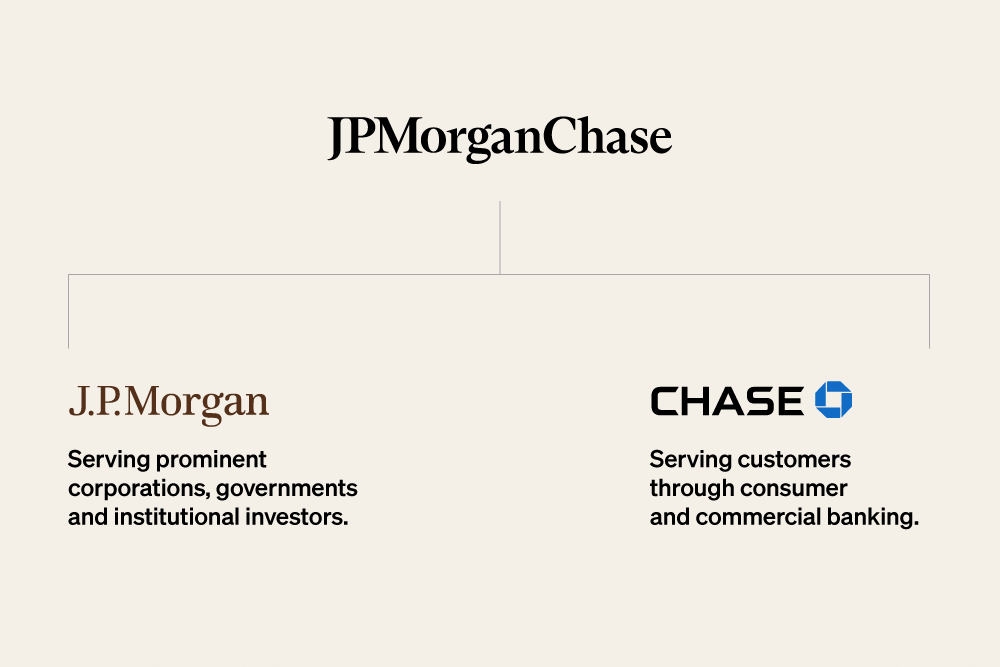
JP Morgan Chase & Co. stands as a towering pillar in the global financial landscape, a multinational investment bank and financial services holding company with operations spanning nearly every aspect of the money ecosystem. Far from being a mere bank, it functions as a complex network of integrated financial services, serving individuals, businesses of all sizes, institutions, and governments across the globe. Understanding “what JP Morgan Chase does” requires dissecting its diverse business segments, each contributing to its immense influence on capital flow, economic stability, and wealth generation. Its activities are fundamentally rooted in the efficient allocation and management of capital, providing the very arteries through which money circulates within modern economies.
A Global Financial Behemoth: Overview of Services
A Legacy of Financial Innovation and Scale
JP Morgan Chase’s origins trace back to the early 19th century, evolving through mergers and acquisitions of some of America’s most historically significant financial institutions, including J.P. Morgan & Co., Chase Manhattan Bank, Bank One, Bear Stearns, and Washington Mutual. This rich lineage has forged a firm with unparalleled experience in navigating economic cycles, pioneering financial instruments, and adapting to ever-changing market dynamics. Today, it commands trillions in assets, operates in over 100 markets, and employs hundreds of thousands, making it a systemically important financial institution (SIFI) whose health and operations are critical to the stability of the global financial system. Its scale allows it to undertake projects and provide services that few other institutions can match, from financing mega-mergers to offering basic banking services in countless communities.
The Breadth of Its Operations
At its core, JP Morgan Chase’s business model is diversified across four major segments: Consumer & Community Banking (CCB), Corporate & Investment Bank (CIB), Commercial Banking (CB), and Asset & Wealth Management (AWM). Each segment caters to distinct client bases with specialized financial products and services, yet all are interconnected by the overarching goal of facilitating money management, investment, and capital formation. This diversification not only spreads risk but also allows the firm to capture opportunities across the entire spectrum of financial activity, from a consumer opening a checking account to a sovereign wealth fund investing billions.
Core Pillars of JP Morgan Chase’s Financial Empire
Consumer & Community Banking (CCB): Serving Individuals and Small Businesses
The CCB segment is the most visible face of JP Morgan Chase to the general public, encompassing its vast retail banking network under the Chase brand. This division is focused on delivering a comprehensive suite of financial products and services to consumers and small businesses, directly impacting personal finance and local economies.
-
Retail Banking: This includes everyday banking essentials like checking and savings accounts, enabling individuals to manage their daily finances, receive payments, and save for future goals. It also extends to services like online and mobile banking, ATM networks, and branch operations, making financial access convenient and widespread.
-
Mortgage Banking: Chase is a significant player in the housing market, providing residential mortgages and home equity loans. These products allow individuals to purchase homes, refinance existing loans, or access equity for other financial needs, thus fueling the real estate market and contributing to individual wealth building.
-
Credit Card Services: As one of the largest credit card issuers globally, Chase offers a wide array of credit cards designed for various consumer needs, from rewards cards to those offering balance transfer options. These products provide consumers with purchasing power, credit building opportunities, and short-term financing, while also generating revenue through interest and transaction fees.
-
Auto Lending: The bank also extends financing for vehicle purchases, making car ownership more accessible for many consumers. This segment supports the automotive industry and facilitates individual mobility, representing a substantial portion of consumer debt.
-
Small Business Banking: Recognizing the vital role small businesses play in the economy, CCB provides tailored financial solutions such as business checking accounts, lines of credit, term loans, and merchant services. These offerings help small businesses manage cash flow, invest in growth, and process customer payments, serving as a critical engine for local economic development.
Corporate & Investment Bank (CIB): The Backbone of Global Markets
The CIB is the powerhouse behind JP Morgan Chase’s institutional presence, serving corporations, financial institutions, governments, and institutional investors worldwide. This segment is central to global finance, facilitating complex transactions and providing access to capital markets.
-
Investment Banking: This critical area involves advising corporations on strategic financial matters. It includes Mergers & Acquisitions (M&A) advisory, where the bank guides companies through the process of buying, selling, or merging with other entities, shaping corporate landscapes. It also encompasses equity and debt underwriting, where the bank helps companies raise capital by issuing new stocks (Initial Public Offerings – IPOs, secondary offerings) or bonds to investors, effectively connecting issuers with global capital.
-
Treasury Services: CIB provides sophisticated cash management, payment processing, and trade finance solutions for corporations and institutions. These services enable businesses to efficiently manage their global cash flows, make and receive payments securely, and mitigate risks associated with international trade, underscoring the vital role of seamless financial plumbing.
-
Markets: This segment is at the heart of global trading, offering clients access to liquidity and execution services across a vast range of asset classes. This includes sales, trading, and prime brokerage in fixed income (bonds, derivatives), equities (stocks, equity derivatives), currencies (foreign exchange), and commodities. These activities facilitate price discovery, risk transfer, and investment strategies for institutional clients.
-
Securities Services: JP Morgan Chase acts as a custodian for client assets, providing services like safekeeping, fund accounting, and administration for institutional investors, including pension funds, asset managers, and insurance companies. This ensures the integrity and efficiency of the back-office operations for trillions of dollars in global assets.
Commercial Banking (CB): Supporting Mid-Sized Businesses
The Commercial Banking segment focuses on meeting the financial needs of mid-sized corporations, large private companies, and public sector entities. It serves as a bridge between the retail-focused CCB and the institutional CIB.
-
Lending Solutions: CB provides a full range of lending products, including term loans, revolving credit facilities, and real estate financing, tailored to support the growth, working capital needs, and capital expenditures of its clients. These loans are crucial for businesses expanding operations, acquiring assets, or managing seasonal fluctuations in cash flow.
-
Treasury and Payment Services: Similar to CIB but scaled for commercial clients, this includes sophisticated cash management, payment processing, and liquidity solutions. It helps businesses optimize their cash positions, streamline payables and receivables, and manage international transactions efficiently.
-
International Banking Solutions: For businesses with global ambitions, CB offers cross-border banking services, including foreign exchange, trade finance, and international payment processing, enabling clients to operate seamlessly across different jurisdictions.
-
Industry-Specific Expertise: The Commercial Bank often deploys teams with deep knowledge in particular industries (e.g., healthcare, technology, real estate) to provide specialized advice and financial solutions that cater to the unique challenges and opportunities within those sectors.

Asset & Wealth Management (AWM): Stewarding Capital for the Affluent and Institutions
AWM is dedicated to managing investments and providing comprehensive financial advice for high-net-worth individuals, foundations, endowments, and institutional clients. This segment focuses on long-term capital preservation and growth.
-
Private Bank: Serving ultra-high-net-worth individuals and families, the Private Bank offers bespoke financial planning, investment management, trust and estate planning, and specialized lending solutions. The focus is on holistic wealth management, addressing complex financial needs and intergenerational wealth transfer.
-
Asset Management: This division offers a broad spectrum of investment products and strategies across various asset classes (equities, fixed income, alternatives, multi-asset solutions) to institutional investors and individual clients through mutual funds, exchange-traded funds (ETFs), and separately managed accounts. It leverages extensive research and global investment capabilities to deliver competitive returns.
-
Retirement Solutions: AWM also provides comprehensive retirement planning and investment solutions for individuals and institutional clients, including 401(k) plans and other defined contribution schemes, helping clients build secure financial futures.
The Economic Impact and Role in the Global Financial System
Facilitating Capital Flow and Economic Growth
JP Morgan Chase’s multifaceted operations are integral to the functioning and growth of the global economy. By connecting savers with borrowers, investors with companies seeking capital, and buyers with sellers across markets, it facilitates the efficient allocation of resources. Its lending activities fund businesses, mortgages enable homeownership, and investment banking underpins corporate expansion and job creation. The sheer volume of transactions and capital it handles daily means it acts as a critical intermediary, ensuring liquidity and market functionality that drives economic progress.
Risk Management and Financial Stability
As a SIFI, JP Morgan Chase plays a crucial role in maintaining financial stability. Its sophisticated risk management frameworks are designed to identify, measure, monitor, and control financial and operational risks across its vast enterprise. This includes managing credit risk from loans, market risk from trading activities, operational risk from its extensive systems, and liquidity risk to ensure it can meet its obligations. Robust capital reserves and adherence to stringent regulatory requirements further bolster its capacity to absorb shocks, thereby contributing to the resilience of the wider financial system and safeguarding client assets.
Innovation in Financial Services
While its core business is money, JP Morgan Chase continually invests in technology and innovation to enhance its financial services. This isn’t about creating tech products for tech’s sake, but about leveraging digital advancements to improve financial outcomes: enhancing payment systems efficiency, introducing digital banking tools for personal finance management, utilizing data analytics to refine credit scoring and investment strategies, and employing algorithmic trading to optimize execution in capital markets. These innovations aim to make financial services faster, more secure, more accessible, and more personalized, ultimately benefiting both clients and the broader financial ecosystem.
Navigating the Future of Finance
Adapting to Regulatory Landscapes
The financial industry is one of the most heavily regulated sectors globally, and JP Morgan Chase constantly adapts to evolving regulatory requirements. Post-2008 financial crisis regulations, such as Basel III and Dodd-Frank, have significantly impacted capital requirements, trading activities, and consumer protection. The firm dedicates substantial resources to compliance, ensuring its operations meet these rigorous standards, which in turn influences its business models and strategic decisions in pursuit of responsible financial stewardship.
Responding to Digital Transformation
The rapid pace of digital transformation presents both challenges and opportunities. JP Morgan Chase is at the forefront of investing in fintech solutions, modernizing its payment infrastructure, and leveraging big data and artificial intelligence to enhance client experiences and operational efficiency. This includes developing advanced mobile banking apps, integrating blockchain technology for certain payment and settlement processes, and employing AI for fraud detection and personalized financial advice. These efforts ensure the bank remains competitive and relevant in an increasingly digital financial world, continually improving how individuals and businesses interact with their money.

ESG and Sustainable Finance Initiatives
Increasingly, JP Morgan Chase integrates Environmental, Social, and Governance (ESG) factors into its lending, investing, and corporate strategy. This involves financing green energy projects, offering sustainable investment products, and promoting diversity and inclusion within its workforce and supply chain. The firm recognizes its responsibility to contribute to a more sustainable and equitable future, aligning its financial prowess with global efforts to address climate change and social inequality, thereby demonstrating that its role extends beyond pure profit generation to encompass broader societal impact.
In essence, JP Morgan Chase is a multi-tentacled financial institution that touches virtually every aspect of the money economy, from the individual consumer to the largest global corporations and governments. Its expansive operations in banking, investing, and wealth management are fundamental to facilitating capital flow, fostering economic growth, and maintaining the stability of the international financial system.
aViewFromTheCave is a participant in the Amazon Services LLC Associates Program, an affiliate advertising program designed to provide a means for sites to earn advertising fees by advertising and linking to Amazon.com. Amazon, the Amazon logo, AmazonSupply, and the AmazonSupply logo are trademarks of Amazon.com, Inc. or its affiliates. As an Amazon Associate we earn affiliate commissions from qualifying purchases.