
In an era saturated with sophisticated technology—smartphones capable of running complex simulations, artificial intelligence drafting prose, and quantum computers pushing the boundaries of computation—the humble four-function calculator might seem like an anachronism. Yet, this unassuming device holds a singular and often underestimated place in the technological landscape. Far from being obsolete, the four-function calculator remains a ubiquitous and incredibly effective tool, a testament to the power of simplicity in design and function.
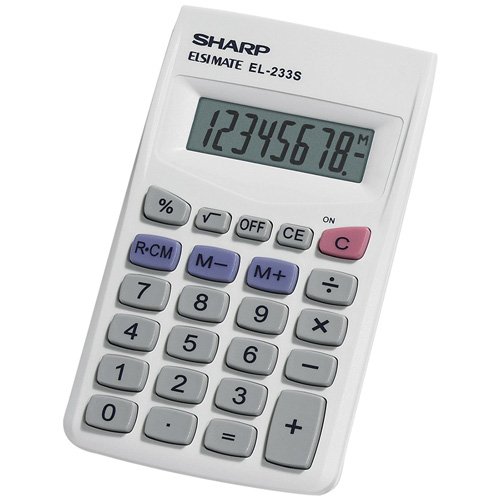
At its core, a four-function calculator is precisely what its name implies: an electronic device designed to perform the four fundamental arithmetic operations. It’s a specialized gadget built for a specific, foundational purpose, distinguishing itself from its more complex brethren like scientific, graphing, or financial calculators. Understanding what it is, its enduring utility, and its place in the history of calculation offers a fascinating glimpse into the evolution of digital tools and the enduring value of purpose-built technology.
The Core Mechanics: Simplicity in Design
The defining characteristic of a four-function calculator is its deliberate focus on a limited set of operations. This simplicity isn’t a limitation; rather, it’s its greatest strength, making it incredibly accessible, intuitive, and efficient for specific tasks.
Defining the Four Functions
The four fundamental arithmetic operations that these calculators are designed to handle are:
-
Addition (+): The process of combining two or more numbers to find their sum. This is perhaps the most basic and frequently used function, essential for everything from totaling grocery bills to summing up scores.
-
Subtraction (-): The inverse of addition, used to find the difference between two numbers, or to take one number away from another. It’s vital for calculating change, determining remaining quantities, or balancing simple budgets.
-
Multiplication (x or *): A shorthand for repeated addition, used to find the product of two numbers. This function is crucial for scaling quantities, calculating areas, or determining costs for multiple items.
-
Division (÷ or /): The inverse of multiplication, used to find how many times one number is contained within another, or to split a quantity into equal parts. Division is key for calculating averages, splitting costs, or determining rates.
These four operations form the bedrock of almost all quantitative analysis, and by mastering them, a four-function calculator provides a powerful foundation for everyday numerical tasks.
Beyond the Basics: What Isn’t There?
The inverse of understanding what a four-function calculator is capable of is recognizing what it isn’t. Its limited feature set is a deliberate design choice that distinguishes it from more advanced calculators:
-
No Scientific Functions: You won’t find buttons for trigonometry (sin, cos, tan), logarithms (log, ln), exponents (x^y), square roots (√), factorials (!), or constants like Pi (π) on a standard four-function model. These functions are reserved for scientific calculators, catering to engineering, physics, and higher mathematics.
-
No Graphing Capabilities: Unlike graphing calculators used in advanced high school and university mathematics, a four-function calculator cannot display plots of equations or visualize mathematical relationships. Its display is purely numeric.
-
Limited Memory and Programming: While many four-function calculators include basic memory functions (M+, M-, MR, MC) to temporarily store and recall a single number, they lack the multi-variable memory, programmability, or complex equation-solving capabilities found in more sophisticated devices. There’s no ability to input algebraic expressions or chain complex sequences of operations.
This stark distinction highlights its purpose: to provide quick, accurate results for elementary calculations without the complexity or cognitive load associated with specialized mathematical tools.
The Underlying Technology
The technology underpinning a modern four-function calculator, while simple compared to a smartphone, represents a significant leap from mechanical calculating devices. It typically involves:
-
Integrated Circuits (ICs): A tiny chip, often a micro-controller or a custom ASIC (Application-Specific Integrated Circuit), handles all the arithmetic logic, input processing from the keypad, and output to the display. These chips are designed for extremely low power consumption.
-
Liquid Crystal Displays (LCDs): Seven-segment LCDs are the standard for presenting numbers clearly and efficiently. They are energy-efficient and offer good readability in various lighting conditions.
-
Keypad: A simple membrane or mechanical keypad provides tactile input. The layout is standardized, making it intuitive to use globally.
-
Power Source: Most modern four-function calculators are powered by small button-cell batteries, often supplemented by a small solar panel to extend battery life, or even operate purely on ambient light. This combination provides exceptional longevity, sometimes lasting years without battery replacement.
The elegance of its design lies in its optimized components, stripped down to provide reliable performance for its specific function at a very low cost.
A Legacy of Utility: Why They Endure
Despite the omnipresence of computing devices that can effortlessly perform these basic functions (and much more), the four-function calculator has not faded into obscurity. Its enduring relevance speaks to fundamental human needs for quick, reliable, and accessible calculation.
Everyday Applications
The scenarios where a four-function calculator proves invaluable are countless and often go unnoticed due to their seamless integration into daily life:
-
Grocery Shopping: Quickly totaling items, comparing unit prices, or ensuring you stay within a budget while navigating aisles.
-
Restaurant Bill Splitting: Dividing a check evenly among friends, calculating individual contributions, or adding tips.
-
Home Calculations: Measuring for DIY projects, calculating paint coverage, figuring out simple proportions for cooking, or tracking household expenses.
-
Basic Budgeting: Summing up income and outgoings for simple personal finance tracking.
-
Retail and Service Industries: Cashiers and service staff often rely on dedicated calculators for quick transactions, especially when point-of-sale systems might be slow or offline.
-
Educational Tools for Young Learners: Providing a tangible tool for children to practice and verify basic arithmetic problems, fostering number sense without being overwhelmed by advanced features.
In these contexts, the dedicated device offers speed, focus, and a lack of distraction that a multi-purpose smartphone often cannot match.
Accessibility and Ease of Use
One of the most powerful advantages of the four-function calculator is its unparalleled ease of use:
-
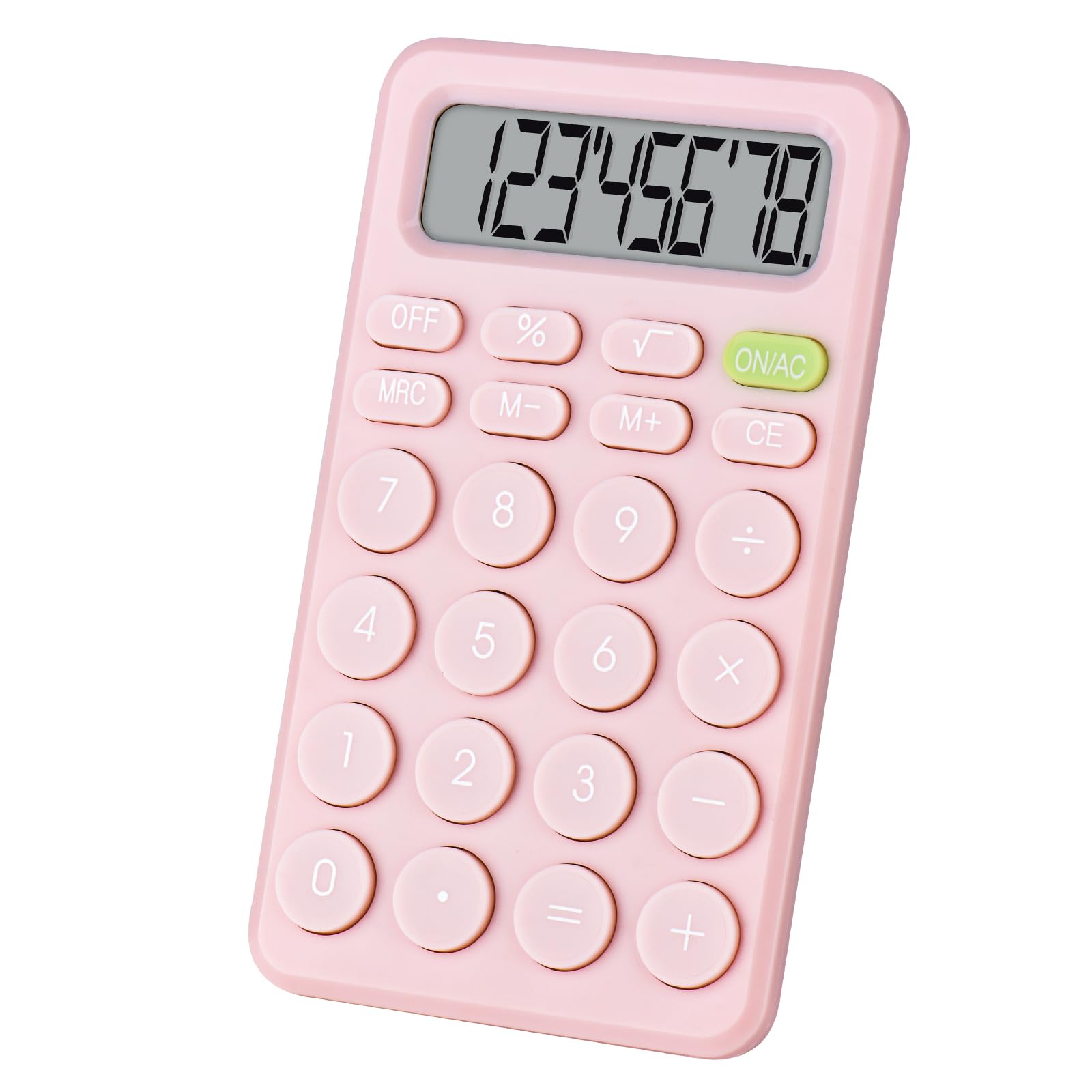
Intuitive Interface: The button layout is almost universally recognized, requiring virtually no learning curve. Users can pick up a calculator and immediately understand how to perform operations.
-
Clear Displays and Large Buttons: Many models feature large, legible digits and generously sized buttons, making them ideal for individuals with visual impairments, older adults, or those with dexterity challenges.
-
Low Cognitive Load: With only a few core functions, users aren’t bogged down by menus, modes, or complex function hierarchies. This reduces mental fatigue and speeds up problem-solving.
-
No Internet Required: Unlike many modern apps, it’s a standalone device, perfectly functional in areas without connectivity.
This simplicity ensures that anyone, regardless of technological proficiency, can leverage its capabilities effectively.
A Foundation for Mathematical Understanding
For students, particularly in primary and early secondary education, the four-function calculator serves as a critical educational aid:
-
Focus on Fundamentals: It reinforces the understanding of basic arithmetic operations without introducing the complexities of higher mathematics prematurely. This helps students build a solid foundation.
-
Checking Work: Students can use it to verify their manual calculations, helping them identify errors and understand where they went wrong, rather than just getting the answer.
-
Building Confidence: Successfully using the calculator for basic problems can build confidence in math, demystifying calculations that might otherwise seem daunting.
-
Understanding Place Value: While not directly teaching it, the display of results reinforces the concept of numerical value and magnitude.
It acts as a stepping stone, preparing students for more complex mathematical tools and concepts by first grounding them in the essentials.
The Evolution of Calculation Tools
The journey to the modern four-function calculator is a fascinating chapter in the history of technology, spanning millennia of human ingenuity aimed at simplifying computation.
From Abacus to Analog Computers
Before the digital age, humans devised numerous mechanical and analog tools to aid in calculations:
-
The Abacus: Dating back thousands of years, the abacus used beads on rods to perform addition, subtraction, multiplication, and division. It was an incredibly efficient manual tool.
-
Napier’s Bones (17th Century): Invented by John Napier, these were a set of numbered rods used to simplify multiplication and division.
-
The Slide Rule (17th Century onwards): Based on logarithms, the slide rule was a precision analog computer used by engineers and scientists for centuries to perform complex multiplication, division, roots, and trigonometric functions.
-
Mechanical Calculators (17th-20th Centuries): From Pascal’s “Pascaline” (1642) and Leibniz’s “Stepped Reckoner” (1673) to much later desk-sized machines, these devices used gears and levers to automate arithmetic, though they were large, complex, and expensive.
These early tools laid the conceptual groundwork for automated calculation, demonstrating the consistent human desire to augment mental arithmetic.
The Digital Revolution and the Rise of the Four-Function
The true revolution for the four-function calculator began with the advent of electronics:
-
Early Electronic Calculators (1960s): The first electronic calculators, like the ANITA MK VII (1961), were bulky, expensive, and used vacuum tubes. However, they signaled the beginning of the end for mechanical calculators.
-
Integrated Circuits and Miniaturization (1970s): The development of integrated circuits allowed for dramatic reductions in size, power consumption, and cost. Companies like Busicom, Canon, and Texas Instruments led the charge, making handheld electronic calculators affordable and widespread. The “Pocketronic” (1971) by TI was one of the first truly handheld electronic calculators.
-
The Proliferation of the Four-Function: As technology advanced, the cost of manufacturing dropped precipitously. By the mid-1970s, four-function calculators became a common household item, replacing slide rules and mechanical adding machines for everyday tasks. Their simplicity and low cost made them accessible to the masses.
This period marked the democratization of numerical computation, putting powerful (for their time) tools into the hands of ordinary people.
The Modern Landscape: Smartphones and Beyond
Today, the dedicated four-function calculator exists alongside a dizzying array of computing devices:
-
Built-in Calculator Apps: Every smartphone, tablet, and computer comes with a built-in calculator application, often defaulting to a four-function mode and offering a scientific mode as an option. This makes the basic calculator functionally omnipresent.
-
Specialized Calculators: Scientific, graphing, financial, and even programming calculators cater to niche professional and academic needs, each offering advanced functionality far beyond the four basics.
-
The Continued Place of the Dedicated Device: Despite the convenience of smartphone apps, dedicated four-function calculators continue to be produced and sold in vast quantities. Their long battery life, robustness, lack of distractions, and simple interface ensure their relevance in specific environments (e.g., schools, shops, workshops) where a phone might be inappropriate, too fragile, or simply overkill.
The survival of the four-function calculator in a world of advanced tech isn’t an oversight; it’s a testament to its enduring value proposition: perfect functionality for its intended purpose.
Choosing the Right Calculator: When Simple is Best
Deciding which calculator to use often comes down to the task at hand. While advanced calculators offer impressive capabilities, there are numerous scenarios where a four-function calculator is not just sufficient but actively superior.
For Basic Arithmetic Needs
When the task involves only addition, subtraction, multiplication, or division, a four-function calculator is often the most efficient choice:
-
Speed and Efficiency: Its straightforward interface means you can input numbers and operations faster, without navigating menus or dealing with extraneous buttons.
-
Reduced Distraction: Unlike a smartphone, a dedicated calculator doesn’t offer notifications, social media, or other apps that can pull your focus away from the task of calculation.
-
Clarity: The single-purpose design ensures that you’re less likely to make input errors due to accidentally hitting a scientific function button or misinterpreting a complex display.
For quick, routine calculations, simplicity translates directly to speed and accuracy.
For Educational Purposes (Early Learning)
In educational settings, particularly for primary school children, the four-function calculator is invaluable:
-
Encouraging Foundational Math Skills: It allows students to focus on understanding the core concepts of arithmetic without being overwhelmed by advanced features they don’t yet need.
-
Preventing Over-Reliance on Advanced Functions: Introducing complex calculators too early can sometimes hinder the development of mental math skills or a deep understanding of basic operations. A four-function calculator provides support without doing all the thinking for them.
-
Test Environments: In many standardized tests for younger students, only four-function calculators are permitted to ensure a level playing field and to test fundamental math competency.
It serves as a helpful tool rather than a crutch for elementary mathematics.
Portability and Durability
Dedicated four-function calculators are often designed with practicality in mind:
-
Robustness: Many models are built to withstand drops and spills better than a delicate smartphone, making them suitable for workshop environments, classrooms, or fieldwork.
-
Exceptional Battery Life: Thanks to their low power consumption, they can operate for months or even years on a single battery, often augmented by solar power, ensuring they’re always ready when needed.
-
Always On/Ready: There’s no boot-up time, no app to launch, just immediate calculation capability.
These physical attributes make them highly practical for situations where a smartphone might be too fragile, too distracting, or simply inconvenient.
Cost-Effectiveness
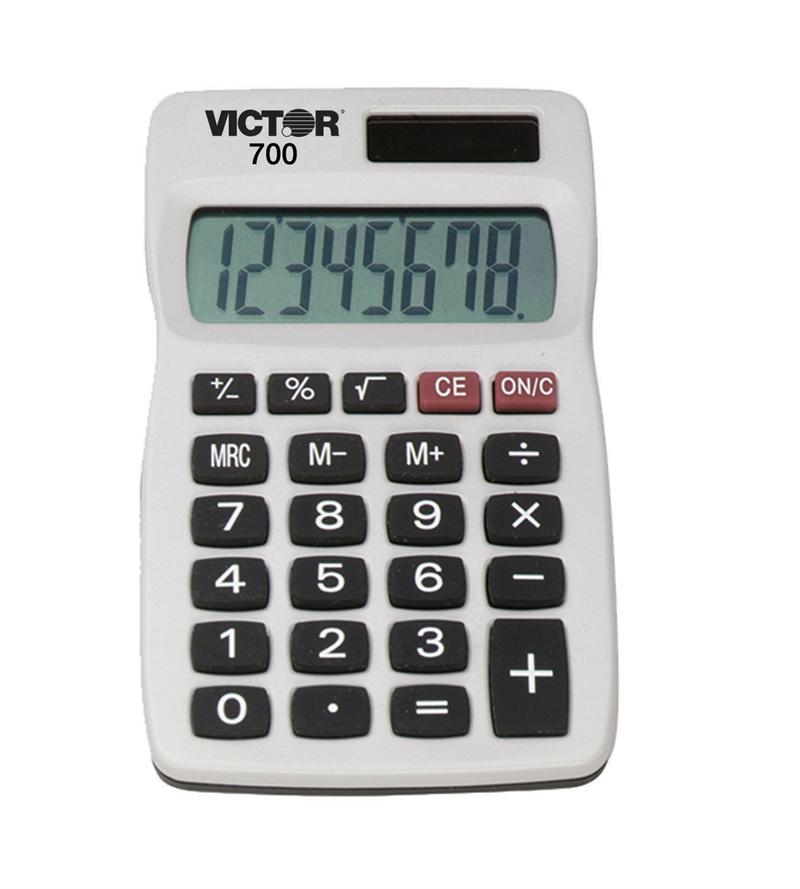
Perhaps one of the most compelling reasons for the four-function calculator’s continued existence is its unparalleled affordability. These devices are among the cheapest electronic gadgets available, making them accessible to everyone, everywhere. This low cost ensures that basic computation is not a luxury but a fundamental right.
In conclusion, the four-function calculator is far more than just a relic of simpler times. It represents a pinnacle of purposeful technology—a perfectly optimized tool for a set of universal and foundational tasks. Its enduring presence in our highly technological world is a powerful reminder that sometimes, the most effective solutions are the simplest ones. It’s a testament to good design, accessibility, and the timeless need for quick, reliable arithmetic.
aViewFromTheCave is a participant in the Amazon Services LLC Associates Program, an affiliate advertising program designed to provide a means for sites to earn advertising fees by advertising and linking to Amazon.com. Amazon, the Amazon logo, AmazonSupply, and the AmazonSupply logo are trademarks of Amazon.com, Inc. or its affiliates. As an Amazon Associate we earn affiliate commissions from qualifying purchases.