
Embarking on the entrepreneurial journey is an exhilarating prospect, but without a clear roadmap, even the most innovative ideas can falter. The business plan serves as this indispensable guide, a foundational document that translates your vision into a tangible strategy. More than just a bureaucratic hurdle for securing funding, it’s a dynamic financial blueprint that meticulously details your business’s objectives, strategies, operations, and, most critically, its financial projections. For anyone asking “how do I start a business plan,” the answer lies in a structured approach that prioritizes financial viability and sustainable growth from the outset. This document is not merely a formality; it’s a living instrument for financial analysis, strategic decision-making, and securing the capital necessary to transform ambition into profit.
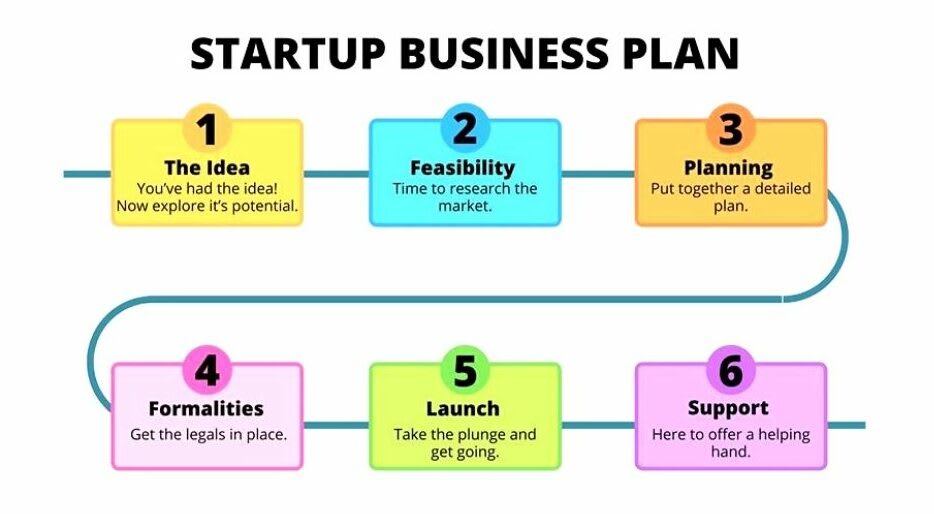
A well-crafted business plan, viewed through the lens of financial prudence, empowers you to critically assess market opportunities, anticipate challenges, and allocate resources efficiently. It forces a disciplined evaluation of your revenue streams, cost structures, and profitability potential, laying the groundwork for sound financial health. Whether you’re a budding startup or an established enterprise looking to pivot, understanding the financial implications of every strategic choice is paramount.
Laying the Financial Foundation: Understanding Your Business Idea
Before penning a single financial projection, the initial phase of developing a business plan involves a deep dive into the core of your business idea, always with an eye on its financial implications. This foundational work ensures that the subsequent financial models are built on realistic and well-researstood premises. It’s about translating a concept into a financially viable proposition.
Identifying Your Value Proposition and Target Market
Every successful business solves a problem or fulfills a need. Your value proposition is the unique benefit you offer that makes customers choose you over competitors. From a financial perspective, this directly impacts how much customers are willing to pay and, consequently, your potential revenue. Understanding who your target market is – their demographics, psychographics, and purchasing power – is crucial. Are they a niche market willing to pay a premium for specialized solutions, or a mass market requiring competitive pricing for volume sales? This distinction dictates your pricing strategy, sales forecasts, and ultimately, your revenue model. A clear understanding here prevents the fatal flaw of building a product or service that no one is willing to financially support.
Initial Market Research and Competitive Analysis
Thorough market research provides the data necessary to validate your financial assumptions. What is the size of your addressable market? What is its growth rate? These figures directly inform your potential market share and sales volume projections. More importantly, competitive analysis isn’t just about understanding what others do; it’s about understanding their pricing strategies, cost structures (where discoverable), and how their market position translates into financial performance. Can you compete on price, or will you differentiate to command a premium? Analyzing competitors’ financial health, even indirectly through market share and valuation, can offer insights into industry norms and potential profitability. This research helps you set realistic sales targets and allocate marketing budgets effectively to capture your desired share.
Defining Your Business Model and Revenue Streams
Your business model is the framework for how your company creates, delivers, and captures value – fundamentally, how it makes money. Will you sell products, services, subscriptions, licenses, or a combination? Each revenue stream has distinct characteristics regarding pricing, volume, and cost of acquisition, all of which directly impact your financial statements. For instance, a subscription model typically offers predictable recurring revenue but may require significant upfront investment in customer acquisition. A transactional model might have higher per-unit margins but less predictability. Clearly defining these streams and their interdependencies is critical for developing accurate sales forecasts, understanding cash flow patterns, and identifying the key drivers of your financial success. This clarity ensures your financial plan aligns with how your business intends to generate income.
Crafting the Financial Projections: The Core of Your Plan
The financial section is arguably the most critical component of your business plan, as it translates all your strategic and operational intentions into quantifiable figures. This is where your vision meets reality, providing a concrete assessment of your business’s financial viability and potential for profitability. It’s also the section that investors scrutinize most closely.
Startup Costs and Initial Investment
Before a single sale is made, there are costs associated with getting your business off the ground. These startup costs typically include legal fees, permits, equipment purchases, initial inventory, website development, office rent deposits, and pre-opening marketing expenses. Documenting these comprehensively is vital for determining the total initial capital required. This figure is the bedrock of your initial funding request and dictates how long your initial capital will last before revenue generation. Failing to accurately estimate these costs can lead to undercapitalization, a common reason for early business failure. A detailed breakdown demonstrates financial foresight and helps justify the initial investment needed.
Developing Sales Forecasts and Revenue Projections
Sales forecasts are estimates of your future sales, typically projected monthly for the first year, then quarterly or annually for the next 2-5 years. These are not arbitrary numbers; they should be grounded in your market research, pricing strategy, capacity, and marketing efforts. Break down your sales by product line, service, or customer segment if applicable. Justify your projections with assumptions: conversion rates from marketing efforts, average transaction value, repeat customer rates, and seasonal trends. Realistic and well-substantiated revenue projections are fundamental; overly optimistic forecasts can undermine the credibility of your entire financial plan and lead to poor financial decisions.
Projecting Operating Expenses and Profitability
Operating expenses are the costs incurred to run your business on an ongoing basis. These include fixed costs (rent, salaries, insurance) that remain constant regardless of sales volume, and variable costs (raw materials, sales commissions) that fluctuate with sales. Detailing these expenses for the same projection period as your sales forecast allows you to construct a projected Income Statement (Profit & Loss statement). This statement will show your projected revenue, cost of goods sold, gross profit, operating expenses, and ultimately, your net profit or loss. Analyzing this statement helps you understand your profit margins, identify areas for cost reduction, and assess the overall financial health and profitability of your venture.
Cash Flow Analysis and Break-Even Point
While the Income Statement shows profitability, the Cash Flow Statement is arguably even more important for startups, as it tracks the actual movement of money in and out of your business. A business can be profitable on paper but still run out of cash due to timing differences in revenue collection and expense payments. Projecting your cash flow helps you anticipate periods of cash surplus or deficit, allowing you to plan for working capital needs or additional financing.
The break-even point is the level of sales at which your total revenues equal your total costs, meaning your business generates zero profit but also zero loss. Calculating this gives you a critical target to aim for and helps in understanding the volume of sales needed to cover all expenses before generating profit. It’s a key indicator of financial risk and operational efficiency.

Funding Your Venture: Securing Capital for Growth
Once you have a robust set of financial projections, the next critical step is to determine how you will fund your business. This section of your business plan explicitly addresses your funding needs and outlines the strategies for acquiring the necessary capital, directly linking back to your financial forecasts and operational plans.
Determining Your Funding Needs
Based on your detailed startup costs, operating expenses, and cash flow projections, you can precisely quantify the total amount of funding required. This isn’t just about covering initial setup; it also includes working capital to sustain operations during the initial ramp-up phase until your business becomes self-sufficient. Consider a contingency fund (typically 10-20% of your total funding needs) to account for unforeseen expenses or delays. Clearly articulating how much money you need and for what specific purposes demonstrates financial acumen to potential investors. This breakdown should align directly with line items in your financial statements, justifying every dollar requested.
Exploring Funding Sources
The world of business finance offers various avenues for capital, each with its own implications for ownership, repayment, and risk. Your business plan should discuss the funding sources you intend to pursue and why they are a good fit for your specific venture.
-
Self-Funding/Bootstrapping: Using personal savings or revenue generated from early sales. This minimizes external control and debt but can limit growth speed.
-
Debt Financing: Loans from banks or financial institutions. Requires collateral and a solid credit history but doesn’t dilute ownership. Interest payments become an operating expense.
-
Equity Financing: Selling ownership stakes (shares) in your company to investors (e.g., angel investors, venture capitalists). Provides significant capital and often mentorship, but dilutes ownership and control.
-
Grants: Non-repayable funds, often from government agencies or foundations, for specific projects or industries. Highly competitive but invaluable if secured.
-
Crowdfunding: Raising small amounts of capital from a large number of people, often via online platforms. Can be equity-based, rewards-based, or donation-based.
Each option has different financial implications regarding repayment schedules, interest rates, equity dilution, and investor expectations, all of which must be reflected in your financial projections.
Crafting a Compelling Financial Ask
When presenting your business plan to potential investors or lenders, the financial ask must be clear, concise, and compelling. This section should clearly state the amount of funding you are seeking, how you intend to use the funds (e.g., “X% for product development, Y% for marketing, Z% for working capital”), and the expected return on investment for equity investors or your repayment plan for debt. Investors want to see a clear path to profitability and a robust exit strategy (e.g., acquisition, IPO) if they are equity partners. For lenders, it’s about your ability to generate sufficient cash flow to cover debt service. Provide a summary of your financial projections, highlighting key metrics like projected revenue, profit, cash flow, and ROI. This demonstrates confidence and a thorough understanding of your business’s financial trajectory.
Operationalizing Your Financial Strategy: Bringing the Plan to Life
A business plan isn’t a static document; it’s a living guide that requires ongoing management and adaptation. The operational aspects of your plan must be intrinsically linked to your financial strategy, ensuring that daily activities contribute to your overall financial goals. This involves translating your financial projections into actionable budgets and monitoring mechanisms.
Budgeting and Financial Controls
Your financial projections from the business plan serve as the foundation for your operational budget. A budget breaks down your projected income and expenses into granular, actionable targets for specific departments or periods. It’s a tool for allocating resources, controlling spending, and ensuring that expenditures align with revenue goals. Implementing strong financial controls—such as approval processes for expenses, regular reconciliation of accounts, and separation of duties—is crucial for preventing fraud, managing cash flow effectively, and maintaining financial discipline. This proactive approach ensures that your real-world financial performance stays as close as possible to your projected plan.
Key Performance Indicators (KPIs) and Financial Monitoring
To effectively manage your business’s financial health, you need to identify and track relevant Key Performance Indicators (KPIs). These are measurable values that demonstrate how effectively your company is achieving its financial and operational objectives. Financial KPIs might include gross profit margin, net profit margin, customer acquisition cost (CAC), customer lifetime value (CLTV), burn rate, average revenue per user (ARPU), or inventory turnover. Regularly monitoring these KPIs against your business plan’s projections allows you to quickly identify deviations, understand their causes, and make timely adjustments to your strategy. This ongoing financial monitoring is essential for responsive management and maintaining the financial viability outlined in your plan.
Risk Assessment and Mitigation Strategies
No business plan is complete without acknowledging potential financial risks and outlining strategies to mitigate them. These could include market downturns affecting sales, unexpected cost increases, supply chain disruptions, competitive pressures leading to price wars, or the inability to secure follow-on funding. For each identified risk, consider its potential financial impact and develop a contingency plan. For example, if a key supplier faces issues, do you have a secondary supplier? If sales fall short, how will you reduce variable costs or conserve cash? This proactive risk assessment, particularly from a financial perspective, demonstrates foresight and resilience, building confidence among stakeholders and providing a framework for navigating uncertainty without jeopardizing your financial stability.

Conclusion
Starting a business plan is far more than an administrative task; it is the definitive first step in establishing the financial backbone of your enterprise. By meticulously detailing your financial foundations, projections, funding strategies, and operational controls, you create a powerful tool that guides every strategic decision and underpins every growth initiative. This process not only clarifies your vision but also rigorously tests its financial viability, forcing a disciplined approach to resource allocation and risk management.
A comprehensive business plan, focused squarely on financial prudence, serves as your compass, navigating you through the complex waters of entrepreneurship. It’s a document that will evolve with your business, a continuous reference point for assessing financial performance, attracting crucial capital, and adapting to market dynamics. Embrace the challenge of crafting a robust business plan, and you will not only begin your entrepreneurial journey with clarity and confidence but also significantly enhance your prospects for lasting financial success.
aViewFromTheCave is a participant in the Amazon Services LLC Associates Program, an affiliate advertising program designed to provide a means for sites to earn advertising fees by advertising and linking to Amazon.com. Amazon, the Amazon logo, AmazonSupply, and the AmazonSupply logo are trademarks of Amazon.com, Inc. or its affiliates. As an Amazon Associate we earn affiliate commissions from qualifying purchases.