
Understanding your effective hourly wage is a fundamental cornerstone of personal finance, transcending the simple act of looking at a pay stub. While it might seem straightforward, especially for those paid an hourly rate, the reality often involves a tapestry of benefits, taxes, and uncompensated time that significantly alters the perception of your true earnings. Whether you’re a salaried employee, a freelancer, or a gig worker, accurately calculating your hourly income provides invaluable insights for financial planning, negotiation, and making informed decisions about your career and personal life.
In a world where time is increasingly equated with money, knowing your precise hourly value empowers you to assess job offers, evaluate the true cost of commitments, and ultimately, gain a deeper appreciation for your labor. This comprehensive guide will walk you through the various methodologies for calculating your hourly wage, delving into the nuances that transform a basic number into a powerful financial metric.

The Fundamentals of Calculating Your Hourly Wage
At its core, calculating your hourly wage involves dividing your total income by the total hours worked. However, the definition of “total income” and “total hours worked” can vary dramatically depending on your employment structure.
For Salaried Employees: From Annual to Hourly
Salaried positions often obscure the true hourly value of your work because income is typically presented as an annual or bi-weekly figure, regardless of the fluctuating hours put in. To derive your hourly rate, you’ll need two key pieces of information: your gross annual salary and your actual working hours per year.
The standard calculation begins with your annual gross salary. From there, you divide it by the number of working hours in a year. A common benchmark for full-time work is 40 hours per week.
-
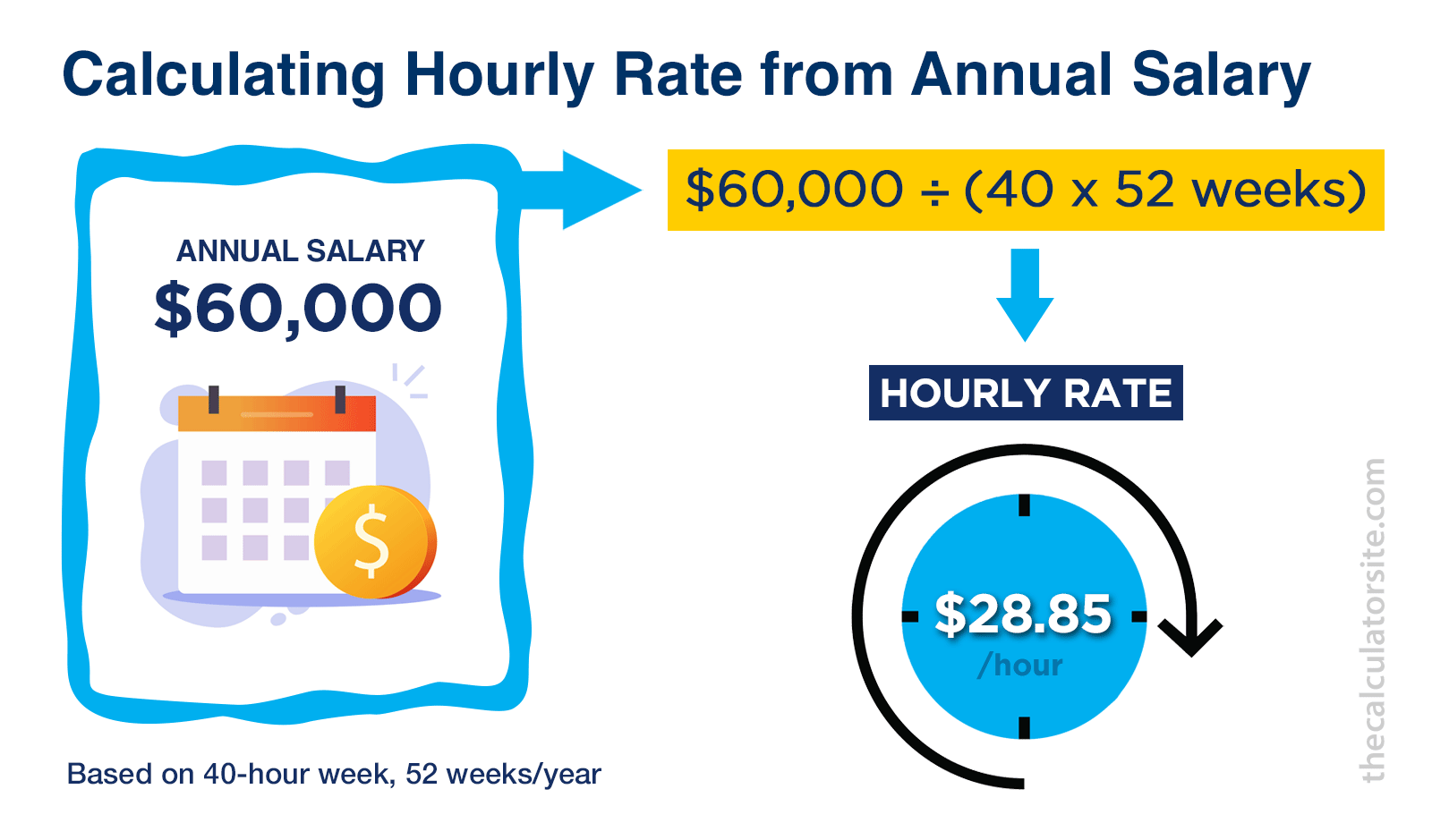
Standard Calculation: Annual Salary / (40 hours/week * 52 weeks/year) = Hourly Rate.
- For example, a $60,000 annual salary: $60,000 / 2080 hours = $28.85 per hour.
However, this assumes a rigid 40-hour work week. Many salaried professionals regularly work more than 40 hours, sometimes significantly so, without additional compensation. To get a truly accurate picture, you must track your actual hours worked, including overtime, weekend work, and time spent checking emails off-hours. If you consistently work 50 hours a week, your calculation changes:
-
Adjusted Calculation: Annual Salary / (50 hours/week * 52 weeks/year) = Hourly Rate.
- For the same $60,000 salary: $60,000 / 2600 hours = $23.08 per hour.
This difference highlights how working extra hours for a fixed salary can effectively decrease your hourly earning power, a critical insight for work-life balance and career decisions.
For Hourly Employees: Simple and Straightforward
For those paid an hourly wage, the calculation appears simpler: your hourly rate multiplied by the number of hours worked. However, even here, nuances exist, particularly concerning overtime and shift differentials.
-
Regular Pay: Hourly Rate * Hours Worked.
- If you make $20 per hour and work 40 hours, your gross pay is $800.
-
Overtime Pay: Beyond a standard 40-hour week, many jurisdictions mandate overtime pay, typically 1.5 times your regular rate.
-
If you work 50 hours at $20/hour with 1.5x overtime: (40 hours * $20) + (10 hours * ($20 * 1.5)) = $800 + $300 = $1100.
-
In this case, your effective hourly rate for that week would be $1100 / 50 hours = $22 per hour.
-
It’s crucial to distinguish between your base hourly rate and your effective hourly rate when overtime or other premium pays are involved, as these can significantly boost your overall earnings per hour.
For Freelancers, Contractors, and Gig Workers: The Project-Based Approach
Freelancers and contractors face the most complex calculation, as their income is often project-based, and their “hours worked” include both billable and unbillable activities. The goal is to determine your effective hourly rate for all the time you dedicate to your business.
-
Total Project Revenue / Total Hours Spent on Project = Effective Hourly Rate per Project.
- If you complete a project for $2,000 and spend 40 hours on it: $2,000 / 40 hours = $50 per hour.
However, this often overlooks the significant amount of time spent on administrative tasks, marketing, client acquisition, invoicing, professional development, and other non-billable but essential activities. To get a truly accurate hourly rate for your entire work commitment, you must factor in these “unbillable” hours.
-
Comprehensive Freelance Calculation: Total Monthly/Annual Revenue / (Total Billable Hours + Total Unbillable Hours) = True Hourly Rate.
- If you earn $4,000 in a month, spend 80 hours on billable work, and 40 hours on unbillable tasks: $4,000 / 120 hours = $33.33 per hour.
This comprehensive approach is vital for setting appropriate rates, understanding profitability, and ensuring you’re fairly compensated for all your efforts, not just the client-facing work.
Beyond the Base: Incorporating Hidden Income and Expenses
The base hourly rate derived from gross pay and hours worked is just one piece of the puzzle. A truly insightful calculation incorporates the value of benefits and subtracts work-related expenses, providing a much clearer picture of your actual financial gain per hour.
Valuing Your Benefits Package
Employer-provided benefits are a significant, often overlooked, component of your total compensation. These “fringe benefits” have a monetary value that, when added to your salary, can significantly increase your effective hourly rate.
-
Health, Dental, and Vision Insurance: If your employer covers a portion or all of your premiums, that’s money you don’t have to spend out-of-pocket. Calculate the annual value of the employer’s contribution.
-
Retirement Contributions: Employer matching contributions to a 401(k), pension plans, or other retirement vehicles are direct additions to your wealth. Determine the annual amount contributed by your employer.
-
Paid Time Off (PTO): Vacation days, sick leave, and paid holidays represent paid time when you’re not working. Calculate the value of these days based on your daily gross wage. For example, 20 days of PTO for a $60,000 salary ($28.85/hour * 8 hours/day = $230.80/day) is worth $4,616 annually.
-
Other Perks: Tuition reimbursement, gym memberships, transportation subsidies, stock options, life insurance, and disability insurance all have monetary value. Sum up the annual cost of these benefits if you were to pay for them yourself.
Once you’ve totaled the annual value of all these benefits, add it to your gross annual salary. Then, recalculate your hourly rate using this new, higher “total compensation” figure. This provides your effective compensation per hour, which is often substantially higher than your direct hourly wage.
Accounting for Work-Related Expenses

Just as benefits add to your compensation, certain work-related expenses reduce your net take-home pay and, consequently, your effective hourly rate. While some expenses might be tax-deductible, they still represent money you spend to earn your income.
-
Commuting Costs: Fuel, public transportation passes, vehicle maintenance, and parking fees directly reduce your discretionary income. Calculate these monthly or annually.
-
Professional Development: Courses, certifications, conferences, and professional memberships that aren’t fully reimbursed by your employer are an investment in your career that comes out of your pocket.
-
Work-Specific Attire or Tools: Uniforms, specialized tools, or professional clothing (if not reimbursed) are necessary expenditures for your job.
-
Home Office Expenses: For remote or hybrid workers, a portion of internet, utilities, and office supplies can be directly attributable to work.
-
Childcare Costs: While not always solely work-related, for many parents, childcare is a direct and substantial expense incurred to enable them to work.
Subtract the total annual amount of these unreimbursed work-related expenses from your annual gross salary (or total compensation including benefits). Then, recalculate your hourly rate. This gives you a more realistic net effective hourly rate after considering the costs of earning your income.
The Impact of Taxes and Deductions
While benefits and expenses adjust your pre-tax hourly rate, the final layer of understanding your true hourly earnings comes from considering taxes and mandatory deductions. Your gross hourly rate is what you earn before anything is taken out, but your net or take-home hourly rate is what you actually get to keep and spend.
-
Gross vs. Net Income: Gross income is your total pay before deductions. Net income is what remains after taxes (federal, state, local), FICA (Social Security and Medicare), and other deductions (e.g., health insurance premiums if you pay a portion, 401(k) contributions) are withheld.
-
Estimating Tax Burden: While exact tax calculations can be complex, you can estimate your average tax rate by looking at your pay stubs or tax returns. Divide your total annual taxes by your gross annual income to get an approximate percentage.
-
Calculating Net Hourly Rate: To find your net hourly rate, subtract your total annual taxes and mandatory deductions from your annual gross income. Then, divide this net income by your total actual hours worked.
- For example, if your $60,000 gross salary leads to $45,000 net income after taxes and deductions, and you work 2080 hours: $45,000 / 2080 hours = $21.63 per hour.
This “take-home” hourly rate is arguably the most practical figure for personal budgeting and understanding your disposable income.
Why Knowing Your True Hourly Rate Matters
Understanding your comprehensive hourly rate is far more than an academic exercise; it’s a powerful tool that informs a multitude of financial and career decisions.
Financial Planning and Budgeting
With a clear understanding of your net effective hourly rate, budgeting becomes more realistic and impactful. You can accurately determine how many hours you need to work to cover essential expenses, achieve savings goals, or pay off debt. This clarity helps in setting achievable financial milestones, from saving for a down payment to planning for retirement. It transforms abstract financial goals into tangible hourly commitments.
Negotiation Power and Career Advancement
Knowing your worth, expressed in a concrete hourly figure, is an invaluable asset in salary negotiations, performance reviews, and evaluating new job offers. If you understand that your total compensation, including benefits, equates to $X per hour, you can confidently justify salary increase requests, benchmark your earnings against industry standards, and make informed decisions when considering career moves. It shifts the conversation from a general salary number to a detailed assessment of value.
Decision Making: Time vs. Money
Your hourly rate provides a tangible metric for making decisions about how you spend your time. Should you fix that leaky faucet yourself, or is it more financially advantageous to hire a plumber? If your net hourly rate is $30, and a plumber charges $100 for a job that would take you 4 hours, doing it yourself means saving $100 but losing out on $120 worth of potential earnings or leisure time. This perspective allows you to outsource tasks efficiently or choose to invest your time where it yields the highest personal or financial return. It also helps evaluate the true cost of commitments, hobbies, or side hustles.
Understanding Your Financial Value
Beyond the numbers, grasping your true hourly rate is empowering. It quantifies your contribution and helps you recognize the financial value of your skills, experience, and time in the marketplace. This understanding can boost confidence, inform professional development choices, and provide a solid foundation for asserting your worth in various contexts, leading to greater financial literacy and independence.
Practical Tools and Strategies for Ongoing Tracking
Calculating your hourly rate isn’t a one-time task. As your salary, benefits, expenses, and work habits evolve, so too will your effective hourly wage. Regular tracking and adjustment are key to maintaining an accurate financial picture.
Spreadsheets and Online Calculators
For many, a simple spreadsheet (e.g., Excel, Google Sheets) is the most flexible tool. You can set up columns for annual salary, total hours worked, benefit values, and work-related expenses, creating formulas to automatically calculate your various hourly rates. This allows for easy adjustments and scenario planning. Additionally, numerous free online hourly wage calculators can provide quick estimates, though they may not accommodate the granular detail of benefits and expenses as effectively as a custom spreadsheet. Search for “true hourly wage calculator” or “total compensation calculator” to find options.
Time Tracking Apps
For freelancers, contractors, and even salaried individuals looking to track actual hours worked (including those extra emails after hours), time tracking apps are invaluable. Tools like Toggl Track, Clockify, or Harvest allow you to log hours against projects or tasks, providing precise data on how much time you’re truly dedicating to work. This data is crucial for accurate hourly rate calculations, especially for those with fluctuating schedules or project-based income. For salaried employees, using such an app for a few weeks can reveal significant discrepancies between perceived and actual hours worked, informing discussions about workload or compensation.
Regular Review and Adjustment
Make it a habit to review and recalculate your hourly rate at least once a year, or whenever significant changes occur. This includes:
-
Annual Recalculation: At the beginning of each new year or after your annual performance review when salaries and benefits might change.
-
Promotions or Job Changes: Any shift in role, salary, or benefits package warrants an immediate recalculation.
-
Lifestyle or Work Changes: If you start a new side hustle, take on more responsibilities, move closer or further from work (impacting commuting costs), or significantly alter your work-life balance, these factors will impact your effective hourly rate.
By regularly updating your calculations, you ensure that this powerful financial metric remains accurate and continues to serve as an effective guide for your financial journey.
Conclusion
Figuring out how much you truly make an hour is more than a simple arithmetic problem; it’s an illuminating exercise in financial literacy. By moving beyond gross salary and incorporating the often-invisible layers of benefits, work-related expenses, and actual hours worked, you unlock a deeper understanding of your economic value. This comprehensive perspective empowers you to budget more effectively, negotiate with confidence, make astute decisions about your time and resources, and ultimately, take greater control over your financial destiny. In an ever-evolving economic landscape, knowing your true hourly rate is not just a number – it’s a compass guiding you toward a more informed and prosperous future. Take the time to do the math; the insights you gain will be invaluable.
aViewFromTheCave is a participant in the Amazon Services LLC Associates Program, an affiliate advertising program designed to provide a means for sites to earn advertising fees by advertising and linking to Amazon.com. Amazon, the Amazon logo, AmazonSupply, and the AmazonSupply logo are trademarks of Amazon.com, Inc. or its affiliates. As an Amazon Associate we earn affiliate commissions from qualifying purchases.