
Investing in the S&P 500 has become a cornerstone strategy for countless individuals aiming for long-term wealth accumulation. It offers a practical pathway to participate in the growth of America’s largest and most influential companies, providing a level of diversification and stability that is hard to achieve with individual stock picking. This guide will demystify the process, explain the underlying principles, and outline actionable steps for you to begin or enhance your investment journey with the S&P 500.
Understanding the S&P 500 Index
Before diving into investment methods, it’s crucial to grasp what the S&P 500 truly represents and why it holds such significance in the financial world.
What is the S&P 500?
The S&P 500, or Standard & Poor’s 500, is a stock market index that represents the performance of 500 of the largest publicly traded companies in the United States. These companies are selected by a committee based on factors like market size, liquidity, and sector representation, making the index a robust barometer for the overall health of the U.S. stock market and the broader economy. Unlike the Dow Jones Industrial Average, which is price-weighted, the S&P 500 is market-capitalization-weighted, meaning companies with larger market values have a greater impact on the index’s performance. Giants like Apple, Microsoft, Amazon, and Google (Alphabet) are consistent fixtures, driving much of its movement.
Why Invest in the S&P 500?
Investing in the S&P 500 offers several compelling advantages, particularly for those with a long-term perspective:
-
Diversification: By investing in the S&P 500, you are inherently diversified across 500 companies spanning 11 major sectors (e.g., technology, healthcare, financials, consumer discretionary). This broad exposure mitigates the risk associated with individual company performance. If one company struggles, its impact on your overall investment is minimized by the performance of the other 499.
-
Long-Term Growth: Historically, the S&P 500 has delivered impressive average annual returns over extended periods, often cited as around 10-12% per year including dividends, though past performance is not indicative of future results. This makes it a powerful engine for compounding wealth over decades.
-
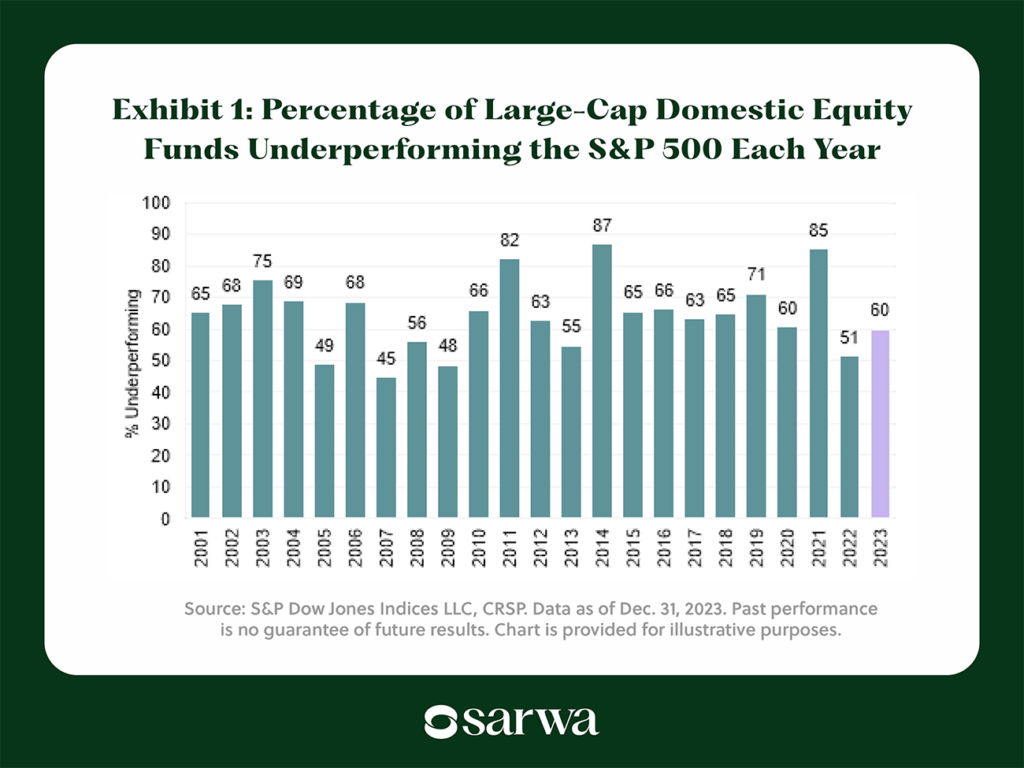
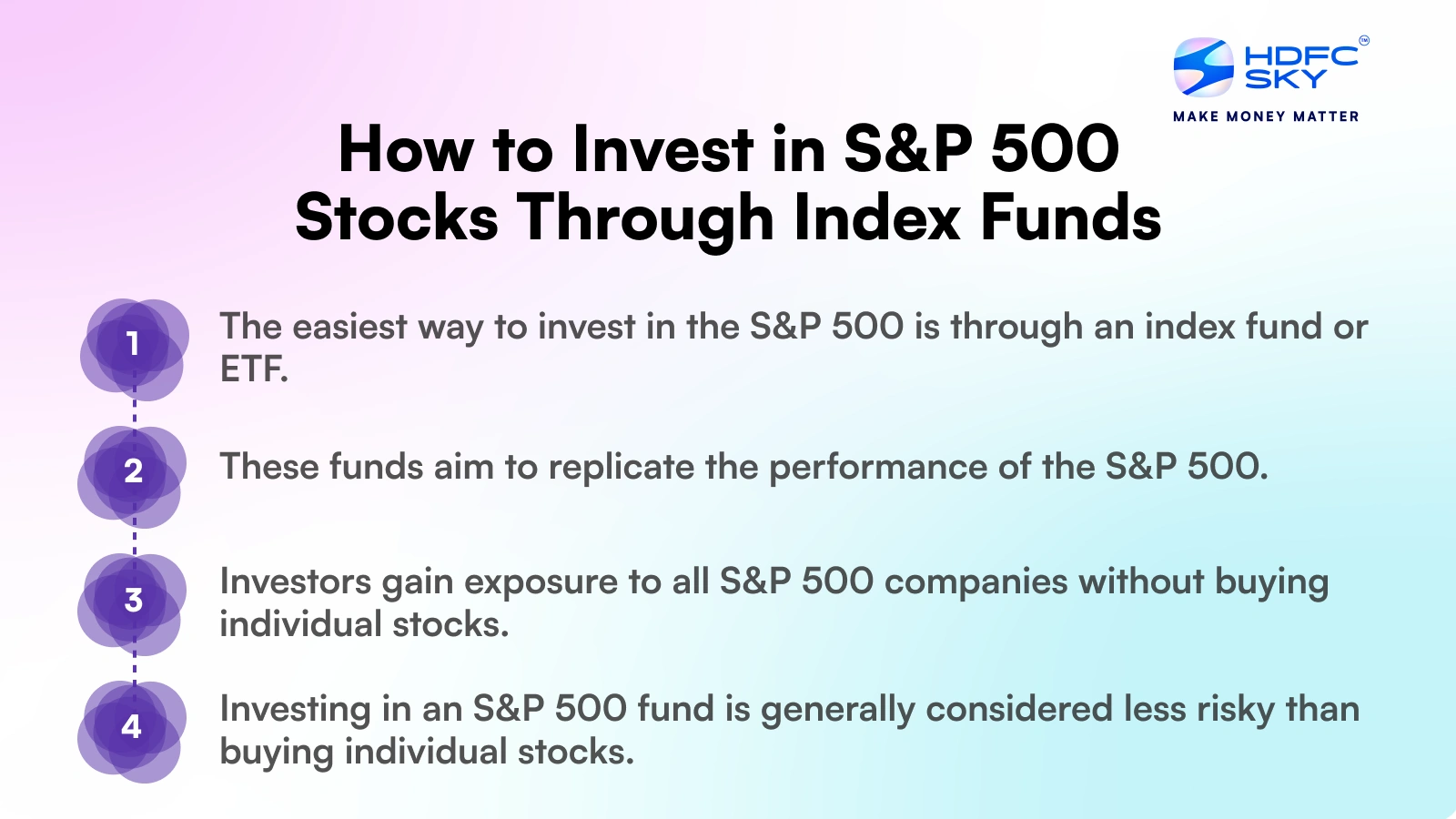
Simplicity and Low Cost: For most investors, the easiest and most cost-effective way to invest in the S&P 500 is through index funds or ETFs, which often come with very low expense ratios. This passive approach removes the need for costly research into individual stocks or paying high fees for active management.
-
Liquidity: The underlying assets are highly liquid, meaning you can typically buy or sell your investment with ease during market hours.
Historical Performance and Expectations
While past performance is never a guarantee of future returns, understanding the S&P 500’s history provides valuable context. Over the last few decades, despite numerous recessions, market crashes, and geopolitical events, the index has shown remarkable resilience and an upward trend over the long run. This consistent growth is largely due to the innovative and adaptive nature of American businesses. Investors should temper expectations by remembering that returns are not linear; there will be periods of significant gains and painful downturns. A realistic expectation involves riding out these cycles, focusing on your long-term goals rather than short-term market fluctuations.
Direct vs. Indirect Investing: Choosing Your Vehicle
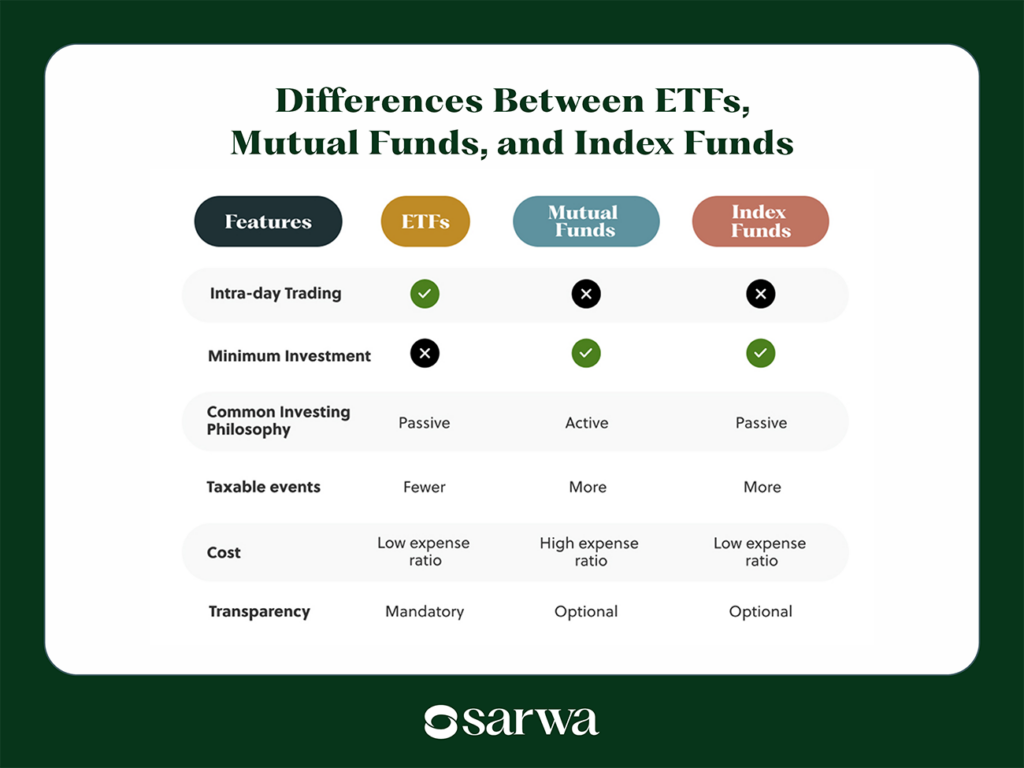
You cannot directly invest in the S&P 500 index itself. Instead, you invest in financial products designed to mirror its performance. The two most popular methods are through Exchange-Traded Funds (ETFs) and Mutual Funds.
Investing via S&P 500 Exchange-Traded Funds (ETFs)
ETFs are a highly popular and efficient way to gain exposure to the S&P 500. An S&P 500 ETF is a type of investment fund that holds stocks of the companies in the S&P 500 index.
-
Definition and Advantages: ETFs trade on stock exchanges like individual stocks throughout the day. This offers flexibility, allowing you to buy or sell shares at any point during market hours at their current market price. S&P 500 ETFs are known for their extremely low expense ratios (the annual fee charged by the fund), tax efficiency, and transparent holdings.
-
Popular Examples: Some of the largest and most widely used S&P 500 ETFs include:
-
SPDR S&P 500 ETF Trust (SPY): One of the oldest and most liquid S&P 500 ETFs.
-
iShares Core S&P 500 ETF (IVV): Known for its low expense ratio.
-
Vanguard S&P 500 ETF (VOO): Another extremely low-cost option from Vanguard, a leader in index investing.
-
-
How to Invest: You can purchase S&P 500 ETFs through any brokerage account. You buy shares just as you would buy individual stocks.
Investing via S&P 500 Mutual Funds
S&P 500 mutual funds, particularly index mutual funds, are another excellent option, especially for those who prefer automated investments or don’t want to actively manage trades.
-
Definition and Advantages: An S&P 500 index mutual fund is a professionally managed fund that pools money from many investors to buy stocks that track the S&P 500 index. Unlike ETFs, mutual funds are typically priced once a day after the market closes. They offer automatic reinvestment of dividends and are often structured for set contributions, making them ideal for dollar-cost averaging.
-
Suitability for Beginners: Many beginners find mutual funds appealing due to their simplicity. Once set up, contributions can be automated, taking the guesswork out of investing.
-
Popular Examples:
-
Vanguard 500 Index Fund Admiral Shares (VFIAX): A highly regarded, low-cost mutual fund option.
-
Fidelity 500 Index Fund (FXAIX): Another competitive offering with a very low expense ratio.
-
-
How to Invest: Mutual funds can be purchased directly from the fund provider (e.g., Vanguard, Fidelity) or through a brokerage platform.
Understanding Expense Ratios and Tracking Error
When selecting an S&P 500 ETF or mutual fund, two key metrics to consider are the expense ratio and tracking error:
-
Expense Ratio: This is the annual fee charged as a percentage of your investment. For S&P 500 index funds and ETFs, these are typically very low, often below 0.10%. Over decades, even small differences in expense ratios can significantly impact your total returns. Always opt for the lowest possible expense ratio.
-
Tracking Error: This measures how closely the fund’s performance matches that of the actual S&P 500 index. A lower tracking error indicates a more accurate replication of the index’s performance, which is exactly what you want from an index fund. Reputable S&P 500 funds typically have minimal tracking error.
Setting Up Your S&P 500 Investment Strategy
Once you understand the vehicles available, the next step is to integrate S&P 500 investing into your broader financial plan.
Opening a Brokerage Account
The first practical step is to open an investment account. You have several options depending on your financial goals and tax situation:
-
Taxable Brokerage Account: A standard investment account where profits (capital gains and dividends) are subject to taxes in the year they are realized. Ideal for money you might need before retirement or for investments beyond retirement account limits.
-
Individual Retirement Account (IRA) / Roth IRA: Tax-advantaged retirement accounts. Traditional IRAs offer tax-deductible contributions now, with taxes paid in retirement. Roth IRAs are funded with after-tax money, and qualified withdrawals in retirement are tax-free.
-
401(k) / 403(b): Employer-sponsored retirement plans. Many plans offer S&P 500 index funds as an investment option. Maxing out these accounts, especially if there’s an employer match, is often a top financial priority.
Choose a reputable brokerage firm (e.g., Vanguard, Fidelity, Charles Schwab, E*TRADE) that offers low fees, a wide range of investment products, and user-friendly platforms.
Dollar-Cost Averaging
Dollar-cost averaging (DCA) is a powerful strategy, especially for long-term S&P 500 investors. It involves investing a fixed amount of money at regular intervals (e.g., $200 every month) regardless of market fluctuations.
- Benefits: DCA helps reduce the risk of investing a large sum at an unfortunate market peak. When prices are high, your fixed amount buys fewer shares; when prices are low, it buys more. Over time, this averages out your purchase price and can lead to better returns than trying to time the market. It also instills discipline and consistency in your investing habits.
Long-Term vs. Short-Term Perspective
The S&P 500 is overwhelmingly a long-term investment. While short-term gains are possible, chasing them is speculative and risky. The true power of S&P 500 investing comes from compounding returns over many years, ideally decades. Emotional decisions based on daily market movements are detrimental. Maintain a long-term mindset, focusing on your financial goals, whether it’s retirement, a down payment on a house, or funding education.
Rebalancing and Portfolio Allocation
While S&P 500 index funds automatically rebalance their holdings to match the index, your overall investment portfolio may need periodic rebalancing. If the S&P 500 represents a significant portion of your portfolio and has grown substantially, you might find it has surpassed your intended asset allocation (e.g., 70% stocks, 30% bonds). Periodically, you might sell a portion of your S&P 500 fund to reinvest in other asset classes that have underperformed, bringing your portfolio back to your desired allocation. This disciplined approach manages risk and ensures you’re not overexposed to any single asset class.
Important Considerations and Potential Pitfalls
While investing in the S&P 500 is a robust strategy, it’s not without its nuances and potential challenges.
Market Volatility and Risk
No investment is entirely risk-free, and the S&P 500 is no exception. While diversified, it is still 100% exposed to the equity market. Stock markets can experience significant downturns (corrections or bear markets), which can cause your investment value to drop substantially in the short term. The key is to understand that these are normal market cycles. Selling during a downturn locks in losses, whereas staying invested allows your portfolio to recover and participate in subsequent gains. Only invest money you won’t need for at least 5-10 years to weather these inevitable storms.
Fees and Taxes
Beyond the expense ratio of the fund, be aware of other potential costs:
-
Brokerage Commissions: While many brokerages now offer commission-free trading for ETFs, some may still charge for mutual fund purchases or specific transactions. Always check your broker’s fee schedule.
-
Capital Gains Tax: If you sell an S&P 500 ETF or mutual fund in a taxable account for a profit, you’ll owe capital gains tax. This is typically lower for long-term gains (assets held over a year).
-
Dividend Tax: S&P 500 funds pay dividends, which are distributions of profits from the underlying companies. These dividends are typically taxable in the year they are received, even if reinvested. Investing in tax-advantaged accounts like IRAs or 401(k)s can defer or eliminate these taxes.
Diversification Beyond the S&P 500
While the S&P 500 offers excellent domestic diversification, a truly robust portfolio extends beyond it.
-
International Exposure: Adding international stock funds (developed and emerging markets) can provide diversification away from the U.S. economy and potentially capture growth in other parts of the world.
-
Bonds: Incorporating bonds or bond funds introduces a different asset class with lower volatility, which can provide stability during stock market downturns, especially as you approach retirement.
-
Other Asset Classes: Depending on your risk tolerance and goals, you might consider small-cap stocks, real estate, or other alternative investments. The S&P 500 should be a core component, but not necessarily the only component, of a well-rounded portfolio.
Avoiding Market Timing
Attempting to predict market highs and lows to buy cheap and sell high is notoriously difficult, even for professional investors. The S&P 500’s long-term upward trajectory is punctuated by unpredictable short-term movements. Studies consistently show that “time in the market” significantly outperforms “timing the market.” Focus on consistent contributions and a long-term investment horizon rather than trying to outsmart the market.
Investing in the S&P 500 is a proven, intelligent strategy for building wealth over time. By understanding what you’re investing in, choosing the right investment vehicles, adopting a disciplined approach like dollar-cost averaging, and maintaining a long-term perspective, you can harness the power of America’s leading companies to achieve your financial goals. Start early, stay consistent, and let the magic of compounding work for you.
aViewFromTheCave is a participant in the Amazon Services LLC Associates Program, an affiliate advertising program designed to provide a means for sites to earn advertising fees by advertising and linking to Amazon.com. Amazon, the Amazon logo, AmazonSupply, and the AmazonSupply logo are trademarks of Amazon.com, Inc. or its affiliates. As an Amazon Associate we earn affiliate commissions from qualifying purchases.