
In the realm of personal finance, we often discuss diversified portfolios, high-yield savings accounts, and the nuances of tax-advantaged retirement vehicles. However, one of the most significant line items in the average household budget is transportation. After housing, a vehicle is typically a consumer’s second-largest investment—and one of their fastest-depreciating assets. Protecting that asset is not merely a matter of mechanical pride; it is a critical component of a sound financial plan. This brings us to a specific tool in the “maintenance-as-investment” category: Seafoam Engine Treatment.
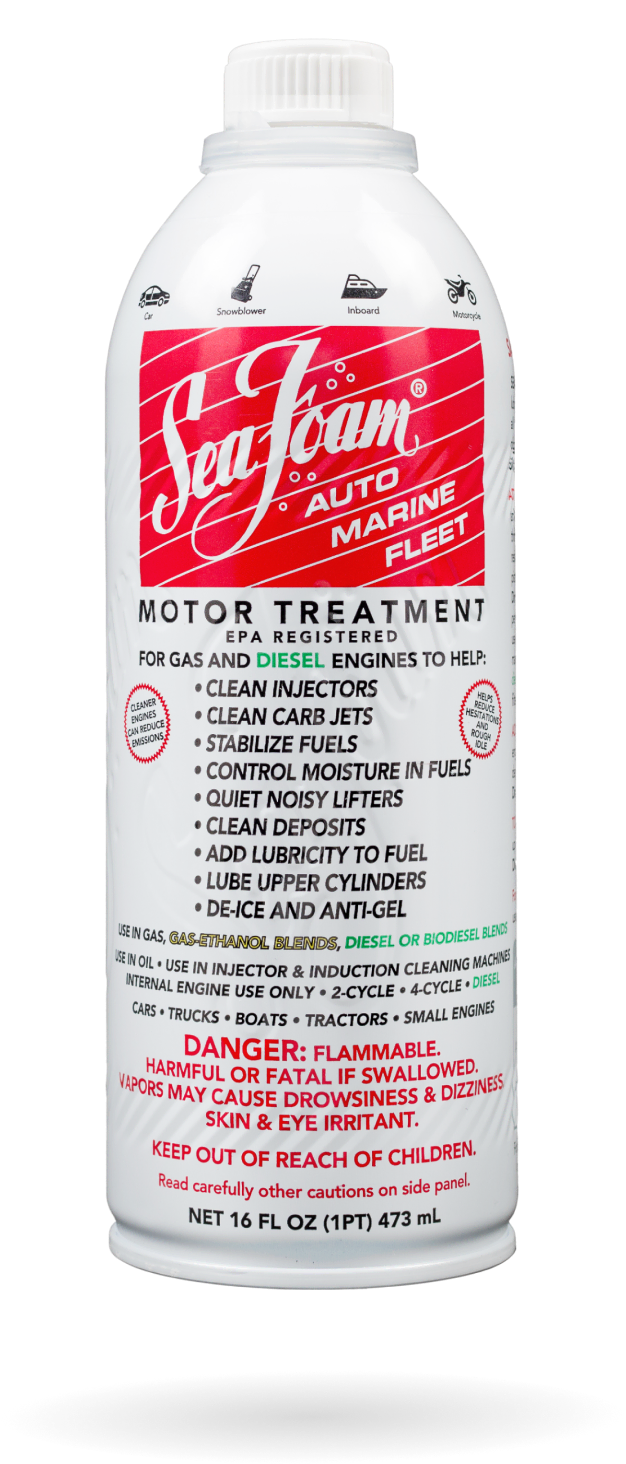
Seafoam is a 100% pure petroleum-based product designed to clean, lubricate, and stabilize internal engine components. From a financial perspective, Seafoam represents a high-ROI (Return on Investment) preventative measure. By understanding what this treatment is and how it functions as a cost-avoidance mechanism, car owners can significantly reduce their total cost of ownership (TCO) and extend the life of their mobile assets.
The Economics of Preventative Maintenance: Why Seafoam Matters for Your Bottom Line
The fundamental principle of business finance is the mitigation of risk. In the context of vehicle ownership, the greatest risks are catastrophic mechanical failure and the compounding costs of inefficiency. Modern internal combustion engines are marvels of engineering, but they are also prone to the accumulation of carbon deposits, gums, and varnishes. These are the byproducts of combustion and the gradual breakdown of fuel and oil.
The Cost of Neglect vs. The Price of Prevention
When carbon builds up on fuel injectors, intake valves, and in the combustion chamber, engine performance degrades. This leads to rough idling, hesitating acceleration, and, most importantly, a decrease in fuel economy. A vehicle that loses just 2 miles per gallon (MPG) due to a dirty fuel system can cost an owner hundreds of extra dollars in fuel expenses over the course of a year.
Seafoam acts as a “liquid tool” to dissolve these deposits. By spending approximately $10 to $15 on a can of Seafoam once or twice a year, an owner is practicing a form of “financial insurance.” Comparing the $15 cost of a treatment to the $500–$1,500 cost of replacing fuel injectors or the $3,000+ cost of an engine rebuild makes the financial utility of Seafoam immediately apparent.
Solubilizing Residue: The Technical Value Proposition
Unlike many chemical cleaners that use harsh detergents or corrosive solvents, Seafoam is a petroleum blend. This is a critical distinction for the risk-averse investor. Because it is petroleum-based, it is compatible with the engine’s existing oil and fuel systems. It works by solubilizing (dissolving) the sticky residues that trap carbon. Once dissolved, these contaminants are safely burned off in the combustion process or trapped in the oil filter. This restorative process returns the engine to its “as-designed” efficiency, which is the baseline for optimal financial performance.
Asset Preservation: Protecting Your Second Largest Investment
Depreciation is the “silent killer” of wealth in the automotive world. While you cannot stop the passage of time or the accumulation of mileage, you can control the functional state of the vehicle. A well-maintained vehicle with 150,000 miles that runs smoothly has a significantly higher resale and trade-in value than a neglected vehicle with the same mileage that suffers from “engine hesitation” or a “check engine” light.
Extending the Useful Life of the Asset
In personal finance, the “wealth-building” phase of vehicle ownership occurs after the car loan is paid off. Every month you can drive a vehicle without a car payment is a month where that “payment” can instead be diverted into an IRA, a brokerage account, or a high-yield savings account.
Seafoam helps owners reach that “wealth-building” phase by preventing the small issues that often lead people to trade in their cars prematurely. Many consumers choose to buy a new car simply because their current vehicle “doesn’t run like it used to.” In many cases, that loss of performance is merely the result of carbon buildup. Seafoam restores that lost performance, allowing the owner to confidently keep the vehicle for an additional 50,000 or 100,000 miles.
Multi-System Versatility: A Three-Pronged Financial Tool
Seafoam is not a single-use product; it can be applied to three major systems, each representing a different area of financial protection:
- The Fuel System: When added to the gas tank, it cleans injectors and carburetors, ensuring the most efficient use of every dollar spent at the pump.
- The Crankcase: When added to the oil, it liquifies oil residues and deposits, preventing the “sludge” that can lead to catastrophic engine failure.
- The Upper Cylinder: When introduced through the vacuum system, it cleans the intake valves and combustion chambers, restoring compression and power.
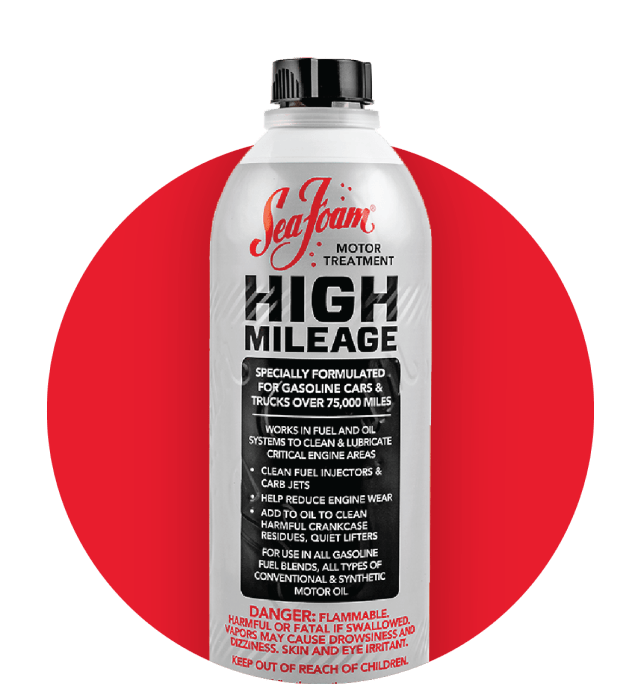
By addressing all three areas, Seafoam provides a comprehensive shield for the engine’s most expensive internal components.
DIY Maintenance as a Financial Side Hustle
One of the most effective ways to increase your net worth is to reduce the amount of money you pay for professional services. In the automotive world, labor rates often exceed $120 per hour. Learning to use products like Seafoam is a form of “sweat equity” that pays immediate dividends.
The Simplicity of Implementation
Seafoam is designed for the layperson. It does not require a specialized toolkit or an advanced degree in mechanical engineering. Adding it to the fuel tank is as simple as refueling; adding it to the oil is as simple as checking the dipstick. By performing these tasks yourself, you are effectively “paying yourself” the labor costs that a mechanic would charge for a professional fuel system cleaning.
Calculating the ROI of Fuel Efficiency
Let’s look at the hard numbers. If an average driver covers 15,000 miles per year in a vehicle that gets 25 MPG, they consume 600 gallons of fuel. At $3.50 per gallon, that is an annual cost of $2,100.
If carbon buildup reduces that efficiency by a modest 10% (down to 22.5 MPG), the fuel consumption rises to 667 gallons, costing $2,334. That is an “efficiency tax” of $234 per year. A $15 can of Seafoam that restores that 10% efficiency yields a 1,460% return on investment. There are very few traditional financial instruments that can offer a 1,400% return with such a low risk profile.
Market Context: Seafoam in the Landscape of Financial Tools
To understand Seafoam’s value, one must compare it to other market alternatives. There are “premium” fuels that claim to have cleaning additives already included. However, from a financial standpoint, paying a $0.40 to $0.70 premium per gallon at every fill-up is significantly more expensive than using a bottle of Seafoam every few months.
The Professional Grade Advantage
Many “off-the-shelf” additives are largely comprised of fillers. Seafoam has maintained its market position for over 80 years because of its concentration and safety profile. For the consumer looking for the best “value for money,” Seafoam represents the professional-grade choice that avoids the “cheap-man-pays-twice” trap.
Business and Fleet Applications
For small business owners or those managing a fleet of delivery vehicles, the financial implications are even more pronounced. In a fleet setting, a 5% gain in fuel economy across ten vehicles can mean the difference between a profitable quarter and a loss. Using Seafoam as part of a scheduled maintenance protocol ensures that the business assets remain on the road and out of the repair shop, maximizing billable hours and minimizing overhead.
Conclusion: The Financial Logic of the Seafoam Treatment
What is Seafoam engine treatment? It is more than just a blend of petroleum ingredients. It is a strategic financial tool designed for the modern era of high vehicle prices and rising repair costs. In an economy where inflation eats away at purchasing power, the ability to maintain and extend the life of existing assets is a superpower.
By incorporating Seafoam into a regular maintenance routine, you are making a calculated investment in your financial future. You are choosing to spend a small, predictable amount today to avoid a large, unpredictable expense tomorrow. You are ensuring that your second largest investment remains an asset rather than a liability. In the end, the “Seafoam Method” is a testament to the fact that the best way to build wealth isn’t always through complex stock trades—sometimes, it’s as simple as taking care of what you already own.
aViewFromTheCave is a participant in the Amazon Services LLC Associates Program, an affiliate advertising program designed to provide a means for sites to earn advertising fees by advertising and linking to Amazon.com. Amazon, the Amazon logo, AmazonSupply, and the AmazonSupply logo are trademarks of Amazon.com, Inc. or its affiliates. As an Amazon Associate we earn affiliate commissions from qualifying purchases.