
The selection of shampoo and conditioner in a professional salon environment is rarely a matter of coincidence or personal preference by the stylist alone. In the multi-billion dollar beauty industry, the “backbar”—the area where stylists wash and prep hair—is a meticulously curated space defined by brand strategy, corporate identity, and psychological marketing. When a client asks what products a salon uses, they are not just asking about ingredients; they are inquiring about the brand promise and the level of expertise that the salon represents.
To understand what salons use, one must look past the liquid in the bottle and examine the strategic partnerships between global manufacturers and local businesses. From luxury positioning to scientific credibility, the products found in professional settings are tools of brand reinforcement that separate the high-street experience from the at-home routine.
The Power of Brand Authority in Professional Haircare
Salons primarily utilize professional-grade brands such as L’Oréal Professionnel, Redken, Wella, Aveda, and Kérastase. These brands are not just chemical formulations; they are symbols of authority. The decision to stock a specific line is the first step in establishing a salon’s corporate identity.
Premium Positioning and Exclusivity
A salon’s choice of brand acts as a silent communicator of its price point and target demographic. For instance, a salon that carries Kérastase is signaling a luxury, high-end experience. The branding of Kérastase is built on “diagnostic” care, positioning the stylist as a “hair doctor.” This elevates the service from a simple wash to a professional consultation. By using products that are difficult to find in traditional big-box retail stores, salons maintain a “pro-only” mystique, reinforcing the idea that the results achieved in the chair cannot be replicated at home without professional guidance.
The Science of Trust: Formulation as Branding
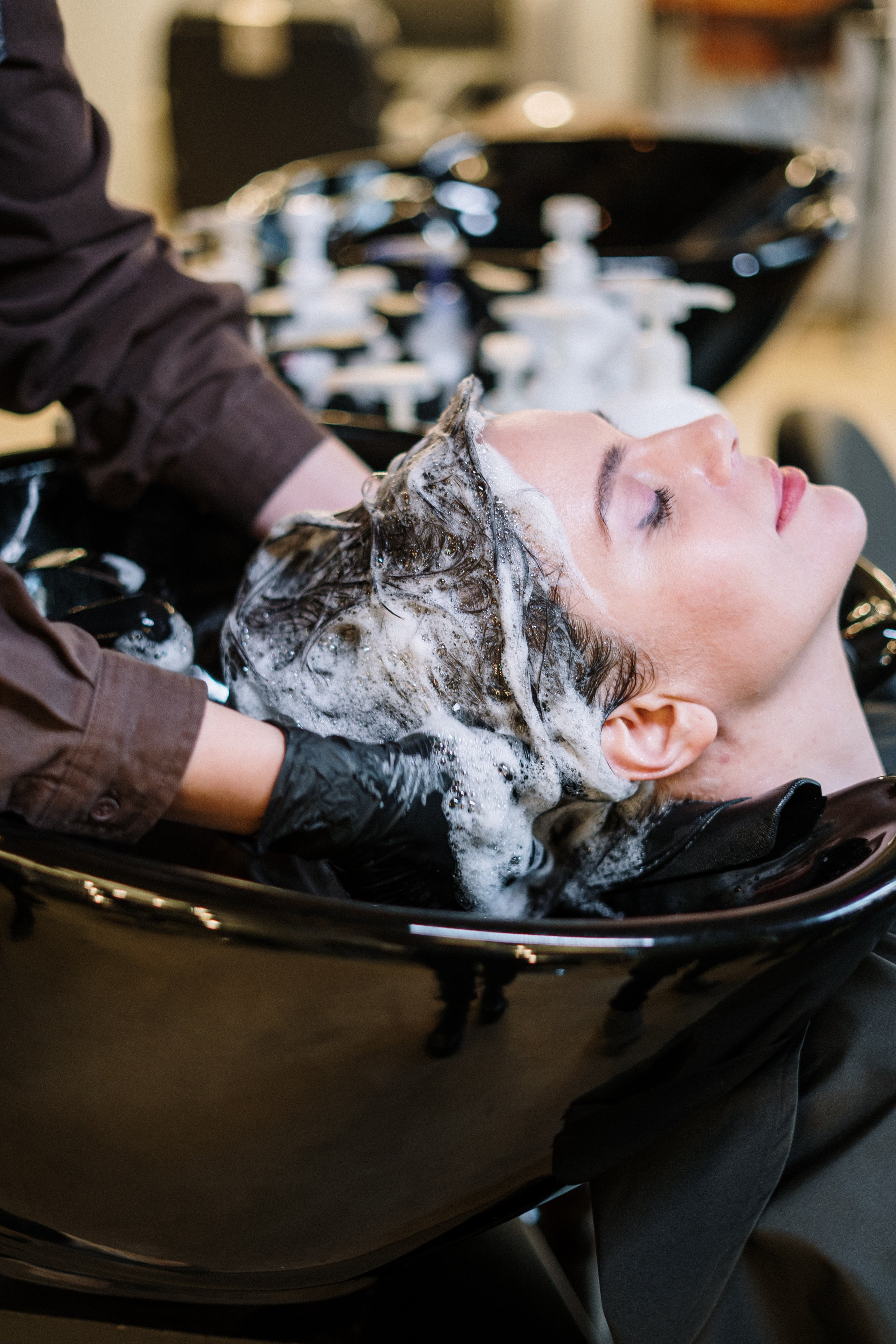
Professional brands invest heavily in R&D to create high-concentration formulas that differ significantly from consumer-grade products. From a brand strategy perspective, this is “Performance Branding.” When a salon uses a product like Redken, which leans heavily into its “Protein and pH” scientific heritage, they are leveraging the brand’s clinical reputation to build trust with the client. The immediate, tangible results—smoothness, shine, and structural integrity—become a live demonstration of the brand’s efficacy, turning the shampoo bowl into a powerful marketing touchpoint.
Strategic Partnerships: The B2B Relationship Between Salons and Global Manufacturers
The presence of a specific shampoo bottle is often the result of a complex B2B (Business-to-Business) contract. Major conglomerates like L’Oréal, Coty, and Estée Lauder operate dedicated professional divisions that treat salons as strategic partners rather than just customers.
The Concept of the “Flagship” Salon
Many high-end salons operate as “Concept” or “Flagship” locations for a single brand. For example, an Aveda Concept Salon exclusively uses Aveda products. This is a masterclass in brand immersion. The salon benefits from the global marketing spend of the parent company, while the brand gains a dedicated physical space where their corporate values—such as Aveda’s commitment to environmental sustainability—can be lived out by the staff and experienced by the consumer.
Education and Brand Loyalty
What salons use is often dictated by the level of education provided by the manufacturer. Brands like Wella or Matrix offer extensive training programs, certifications, and “brand ambassadors.” When a stylist is trained in a specific brand’s “system,” they become an advocate for that brand. This creates a cycle of loyalty: the stylist trusts the brand’s chemistry, the salon owner trusts the brand’s business support, and the client, in turn, trusts the stylist’s recommendation. This ecosystem ensures that the brand remains the dominant force in the salon’s inventory.
The Consumer Psychology of “Salon Exclusive” Branding

One of the most effective strategies in the beauty industry is the “Salon Exclusive” label. Even as the lines between professional and consumer retail blur due to e-commerce, the psychology of exclusivity remains a primary driver for what salons choose to display.
Scarcity and the Value Proposition
When a product is perceived as “professional-only,” its value in the mind of the consumer increases. Salons use brands that prioritize “selective distribution.” By limiting where the shampoo and conditioner can be purchased, the brand protects the salon’s retail margins. This is a vital component of the salon’s business finance model. If a client can buy the same bottle at a supermarket for a lower price, the salon loses its authority. Therefore, salons gravitate toward brands that aggressively protect their professional-only status.
Scent and Sensory Branding
The “salon smell” is a deliberate branding tool. Professional brands like Oribe or Davines spend millions on fragrance development. The goal is to create a sensory anchor. When a client smells the “Cote d’Azur” scent of Oribe products, it triggers a memory of a luxury experience. This sensory branding is a powerful way for salons to differentiate their service. The fragrance becomes synonymous with the salon’s identity, making the choice of shampoo a key element of the overall brand “atmosphere.”
Brand Consistency: Curating the Backbar Experience
The “backbar” is the engine room of the salon. It is where the brand identity is most visible. A cluttered backbar with mismatched bottles suggests a lack of direction, whereas a uniform, aesthetically pleasing display of a single brand suggests sophistication and organized corporate identity.
Visual Identity and Aesthetic Alignment
Salons often choose brands whose packaging aligns with their interior design. A minimalist, industrial-style salon might opt for the clean, apothecary-inspired packaging of Kevin.Murphy or Sachajuan. A more traditional, opulent salon might choose the gold-trimmed bottles of Kérastase. This visual alignment ensures that the brand of the product and the brand of the salon are in total harmony.
The Role of Niche and “Indie” Brands
In recent years, there has been a shift toward “Indie” branding. Modern salons, particularly those catering to Gen Z and Millennial demographics, are moving away from global conglomerates and toward smaller, mission-driven brands like Olaplex or R+Co. These brands offer a different kind of “cool factor”—one that is rooted in social media presence, transparency, and niche communities. For a salon, switching to an indie brand can be a strategic move to reposition itself as modern, trendy, and “in the know.”
The Revenue Model: How Product Selection Drives Business Finance
Beyond the wash-and-style, the shampoos and conditioners used at the backbar serve as the ultimate “sampling” program. The financial health of a salon is often tied to its “retail-to-service” ratio.
Converting Services into Sales
The products used at the bowl are chosen because they facilitate a retail conversation. If a stylist uses a specific purple shampoo to tone a client’s blonde hair, they are demonstrating the product’s value in real-time. This “consultative selling” is a core part of salon branding. The product becomes a solution to a problem, and the salon becomes the authorized dealer of that solution.
Sustainable Branding and Ethical Choices
As consumer awareness grows, many salons are choosing brands based on their Corporate Social Responsibility (CSR) profiles. Brands that are “Carbon Neutral,” “Cruelty-Free,” or “Vegan” are increasingly popular. By using these products, a salon adopts those values into its own brand story. This is a powerful marketing tool in an era where consumers align their spending with their ethics. Using a brand like Davines, which focuses on “Sustainable Beauty,” allows a salon to market itself as an ethical choice, attracting a loyal base of like-minded clients.

Conclusion: The Brand is the Product
The question of what shampoo and conditioner salons use is ultimately a question of brand strategy. Salons do not just use “soap”; they use carefully selected assets that reinforce their market position, build trust through scientific and sensory excellence, and drive revenue through strategic B2B partnerships. Whether it is a global powerhouse like L’Oréal or a niche innovator like Olaplex, the products on the shelf are a reflection of the salon’s corporate identity and its commitment to professional standards. In the high-stakes world of beauty, the bottle at the backbar is one of the most significant brand statements a business can make.
aViewFromTheCave is a participant in the Amazon Services LLC Associates Program, an affiliate advertising program designed to provide a means for sites to earn advertising fees by advertising and linking to Amazon.com. Amazon, the Amazon logo, AmazonSupply, and the AmazonSupply logo are trademarks of Amazon.com, Inc. or its affiliates. As an Amazon Associate we earn affiliate commissions from qualifying purchases.