
In the rapidly evolving landscape of technology, terminology often migrates from niche academic circles into everyday conversation. One such term is “params”—shorthand for parameters. While the word has been a staple of mathematics and computer science for decades, its significance has exploded recently due to the rise of Large Language Models (LLMs) and the ongoing AI revolution. Whether you are a software developer writing your first function or a business leader trying to understand why a “70B model” is more powerful than a “7B model,” understanding parameters is essential.
At its core, a parameter is a limit or boundary that defines the scope of a particular process. In technology, parameters are the specific values or variables that influence how a piece of software behaves, how a system processes information, and how an artificial intelligence learns to predict the next word in a sentence.
Parameters in Traditional Software Development
In the context of traditional programming, parameters are the variables listed in a function’s definition. They act as placeholders for the data that a function requires to perform its task. When a developer calls a function and provides actual values, those values are known as “arguments,” though in casual tech discourse, “params” is often used to describe both the placeholders and the values passed into them.
Function Parameters and Logic
Consider a simple software application that calculates sales tax. The function might be defined with two parameters: price and tax_rate. Without these params, the function is a hollow shell with no data to act upon. By passing different values into these parameters, a developer can reuse the same logic for thousands of different scenarios. This modularity is the bedrock of efficient software engineering.
API Parameters and Web Communication
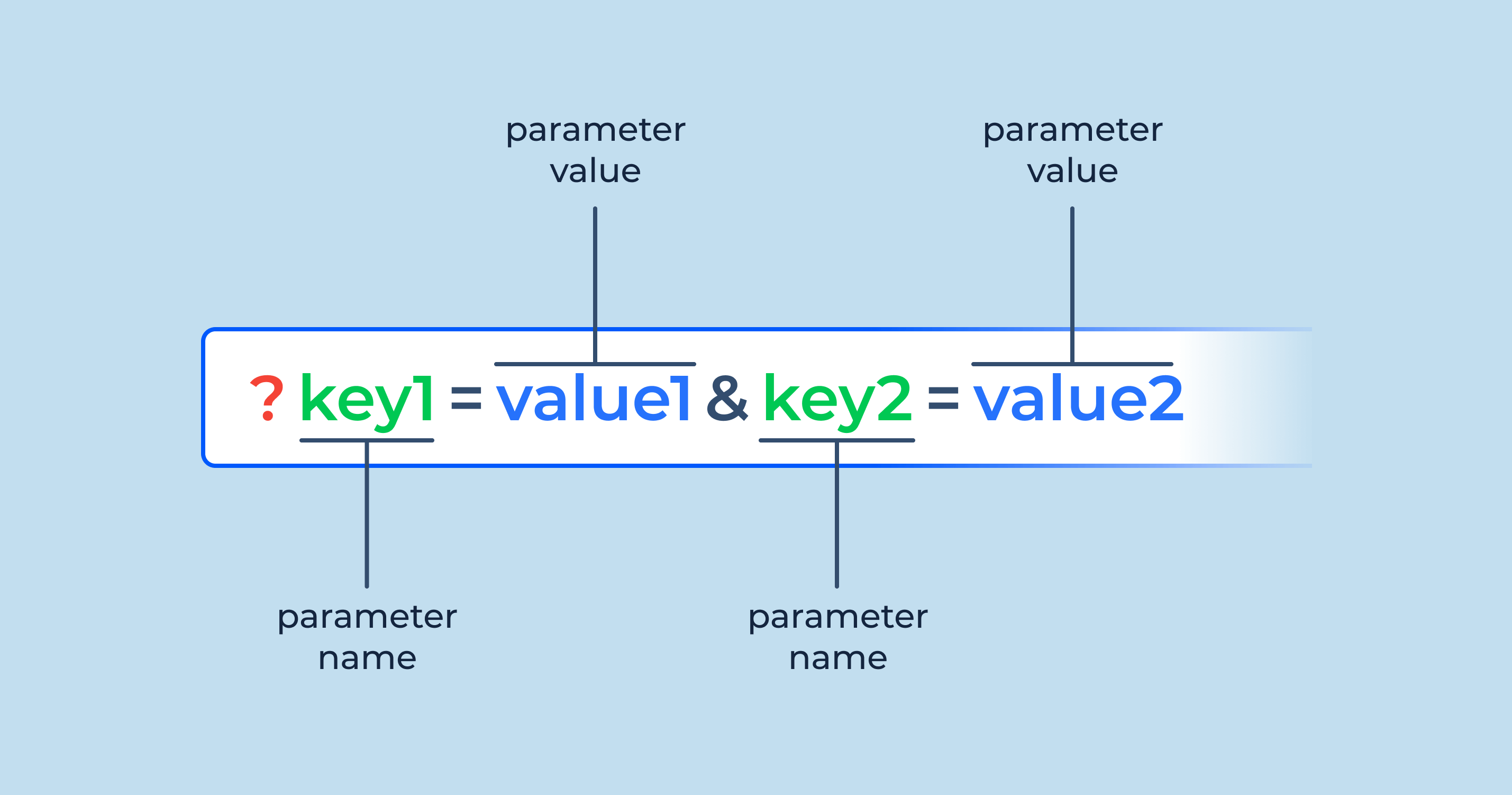
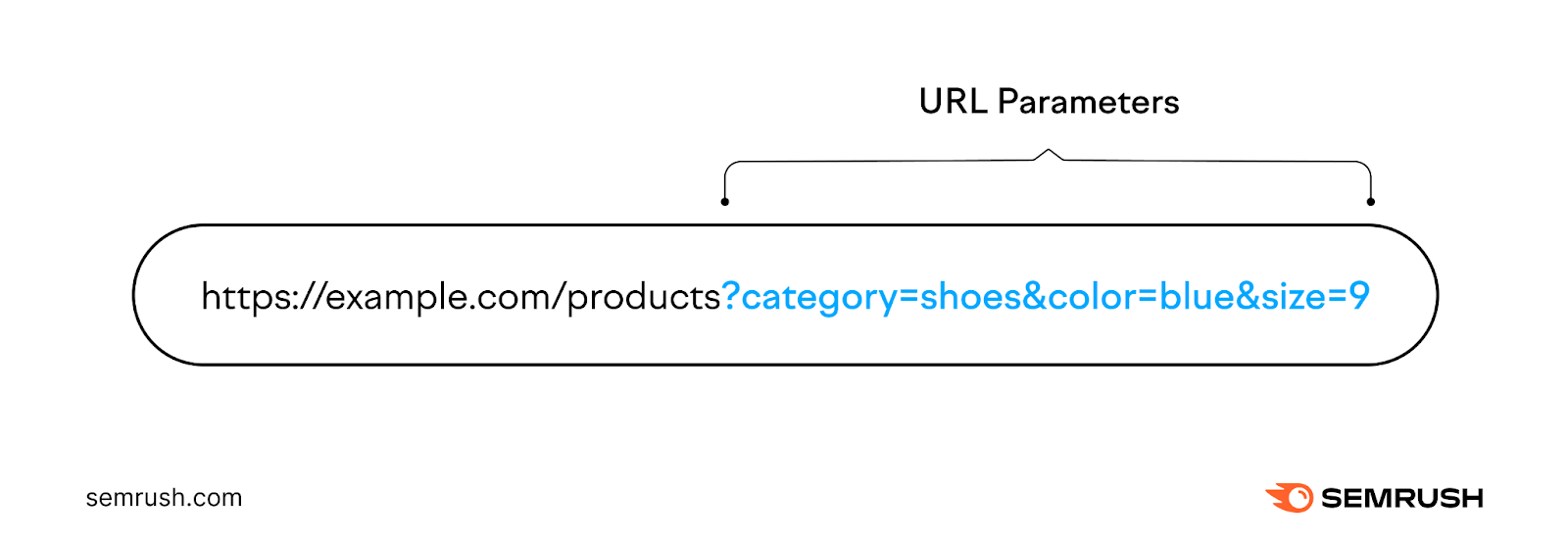
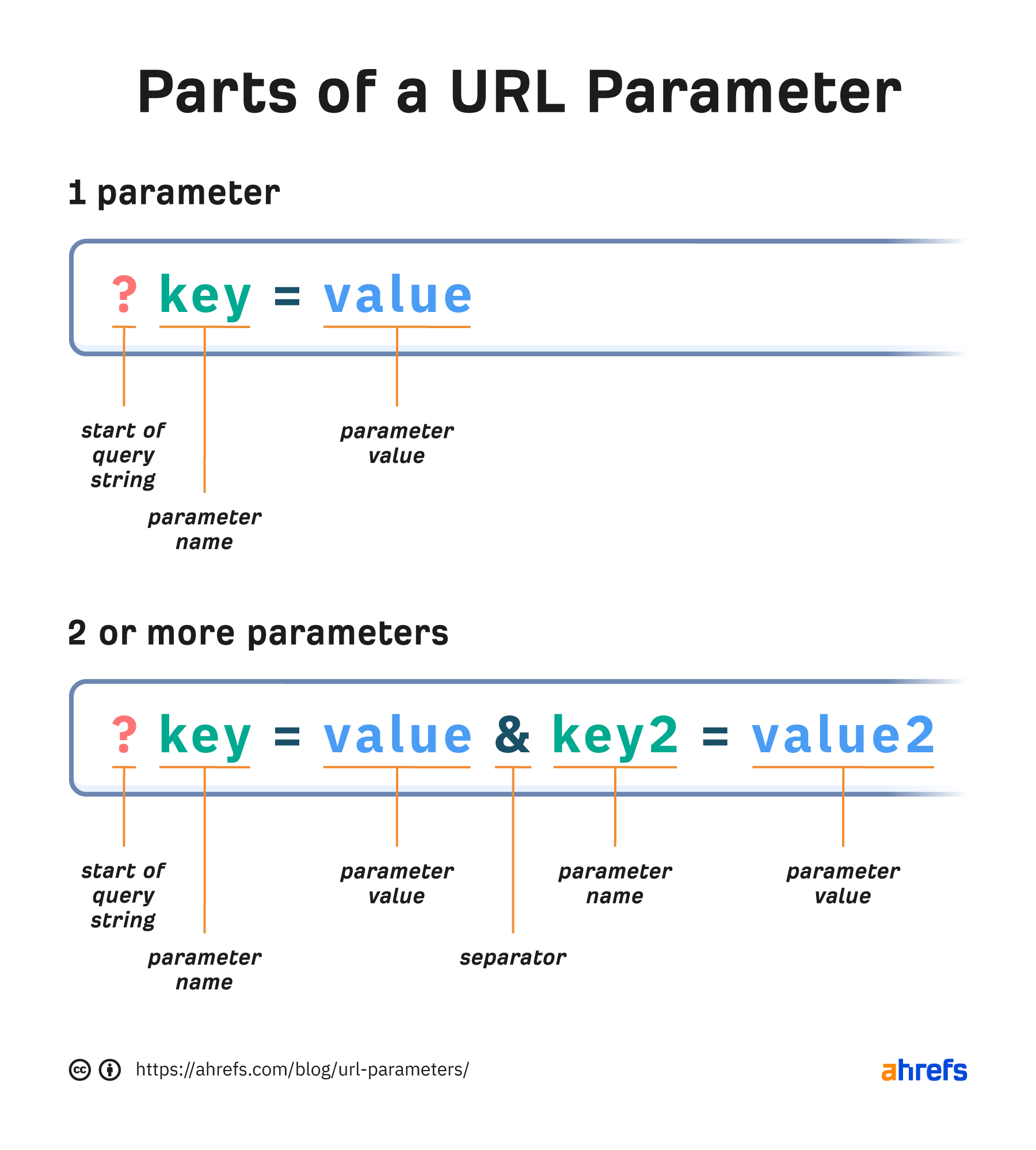
In the world of web development and cloud computing, “query parameters” are used to communicate with servers. When you search for a product on an e-commerce site, the URL often contains strings like ?category=electronics&sort=price_low. These are parameters that tell the server exactly what data to retrieve from the database. Digital security also relies heavily on parameters; configuration parameters determine who has access to certain folders, how long a session lasts before timing out, and which encryption protocols are active.
Command Line Interfaces (CLI)
For system administrators and DevOps engineers, parameters are the “flags” or “switches” used in command-line tools. Running a command like git commit -m "update" uses the -m parameter to signal that a message follows. These parameters allow high-level control over software environments without the need for a graphical user interface, providing the precision required for automation and scripting.
The AI Revolution: Parameters as the Units of Intelligence
While parameters in software define how a function runs, parameters in Machine Learning (ML) and Artificial Intelligence define what a model “knows.” In the context of neural networks, parameters are the internal variables that the model adjusts during the training process to minimize errors and improve accuracy.
Weights and Biases
In a neural network, parameters primarily consist of “weights” and “biases.” Imagine a digital neuron receiving several inputs. Each input is assigned a weight—a numerical value that determines how much influence that specific input has on the final output. The bias is an additional parameter that allows the model to shift the activation function up or down.
During the training phase, the AI is fed massive amounts of data. It makes a prediction, compares it to the correct answer, and then uses an algorithm called backpropagation to adjust its billions of parameters. This iterative process is how a model “learns.” By the end of training, the parameters represent the collective patterns, logic, and information the model has extracted from its training data.
The Significance of Parameter Count
When you hear about models like GPT-4 or Llama-3, they are often categorized by their parameter count. A “7B” model has 7 billion parameters, while a “175B” model has 175 billion. Generally, more parameters allow a model to capture more complexity and nuance. A model with more parameters can understand subtle linguistic cues, solve complex coding problems, and retain a broader range of factual information.
However, the relationship between parameter count and intelligence is not always linear. Large models require significantly more computational power and memory (VRAM) to run. This has led to a major trend in tech: “parameter efficiency,” where developers aim to make smaller models perform as well as their much larger predecessors through better data quality and architectural innovations.
Hyperparameters: The Architect’s Controls
In the world of AI development, there is a crucial distinction between “model parameters” and “hyperparameters.” While model parameters are learned by the AI itself during training, hyperparameters are the external configurations set by the human engineer before the training begins.
Shaping the Learning Process
Hyperparameters act as the “knobs and dials” that control how the learning process unfolds. Common examples include:
- Learning Rate: This determines how large the adjustments to the model parameters should be after each error. If the learning rate is too high, the model might overshoot the optimal solution; if it is too low, the training will take forever.
- Batch Size: This dictates how many examples the model looks at before updating its internal parameters.
- Epochs: This is the number of times the model works through the entire dataset.
The Art of Hyperparameter Tuning
Optimizing these values is one of the most challenging aspects of modern AI research. Developers often use “grid searches” or “automated tuning” to find the perfect combination of hyperparameters that will result in the most accurate model. This layer of parameters sits above the core weights of the model, acting as the structural blueprint that allows the AI to develop its internal intelligence effectively.
Why “Params” Matter for Hardware and Scalability
The technical specifications of parameters have a direct impact on the hardware industry and corporate IT budgets. Because each parameter must be stored in a computer’s memory during processing, the size of a model dictates the type of hardware required to run it.
VRAM and Memory Bottlenecks
In AI, parameters are usually stored as floating-point numbers. A model with 70 billion parameters, stored in a standard 16-bit format, would require roughly 140 GB of video RAM (VRAM) just to load into memory. This is why high-end enterprise GPUs from companies like NVIDIA are in such high demand. They provide the massive memory bandwidth and capacity necessary to hold these billions of parameters and perform calculations on them simultaneously.
Quantization: Doing More with Less
To address these hardware limitations, the tech community has developed a process called “quantization.” This involves reducing the precision of the parameters—for example, converting 16-bit floats into 4-bit or 8-bit integers. While this slightly degrades the model’s accuracy, it drastically reduces the memory footprint, allowing models with billions of parameters to run on consumer-grade laptops or even smartphones. This democratization of parameters is a key driver in the current explosion of local, privacy-focused AI tools.
The Future of Parameters: Beyond Brute Force Scaling
As we look toward the future of technology, the focus is shifting from simply adding more parameters to making those parameters more effective. The “bigger is always better” philosophy is being challenged by new architectures that prioritize efficiency and specialized knowledge.
Mixture of Experts (MoE)
One of the most significant advancements in parameter management is the “Mixture of Experts” architecture. Instead of activating every single parameter for every single query, an MoE model only uses a specific subset of its parameters (an “expert” sub-network) based on the input. This allows a model to have a massive total parameter count (providing vast knowledge) while remaining computationally efficient during use (only using a fraction of those parameters for a given task).
Sparse vs. Dense Models
The tech industry is also moving toward “sparse” models. In a dense model, every neuron is connected to every other neuron in the next layer, resulting in a massive number of parameters. Sparse models identify and eliminate unnecessary connections, focusing the “intelligence” into a smaller, more potent set of parameters. This mirrors the biological process of “synaptic pruning” in the human brain, where redundant neural pathways are removed to improve cognitive efficiency.
Conclusion
Whether you are analyzing a snippet of Python code or evaluating the latest advancements in generative AI, “params” are the fundamental units of value and logic. In traditional software, they provide the flexibility and structure needed for functional applications. In the realm of artificial intelligence, they represent the distilled knowledge of the digital age, functioning as the weights that balance logic, creativity, and prediction.
As hardware continues to evolve and software architectures become more sophisticated, our ability to manage, optimize, and scale these parameters will define the next decade of technological progress. Understanding what params are is no longer just for engineers—it is for anyone who wants to understand the mechanics of the digital world we now inhabit.
aViewFromTheCave is a participant in the Amazon Services LLC Associates Program, an affiliate advertising program designed to provide a means for sites to earn advertising fees by advertising and linking to Amazon.com. Amazon, the Amazon logo, AmazonSupply, and the AmazonSupply logo are trademarks of Amazon.com, Inc. or its affiliates. As an Amazon Associate we earn affiliate commissions from qualifying purchases.