
Navigating the landscape of retirement planning requires a keen eye on legislative shifts and tax code updates. For retirees and those approaching the golden years, one of the most critical components of a financial strategy is the management of Required Minimum Distributions (RMDs). As we look toward 2025, the rules governing how and when you must withdraw money from your tax-deferred retirement accounts have been significantly reshaped by the SECURE 2.0 Act.
Understanding the RMD schedule for 2025 is not merely about compliance; it is about optimizing your tax liability and ensuring the longevity of your portfolio. Failing to adhere to the IRS schedule can result in steep penalties, while a well-timed distribution strategy can save a household thousands of dollars in unnecessary taxation.
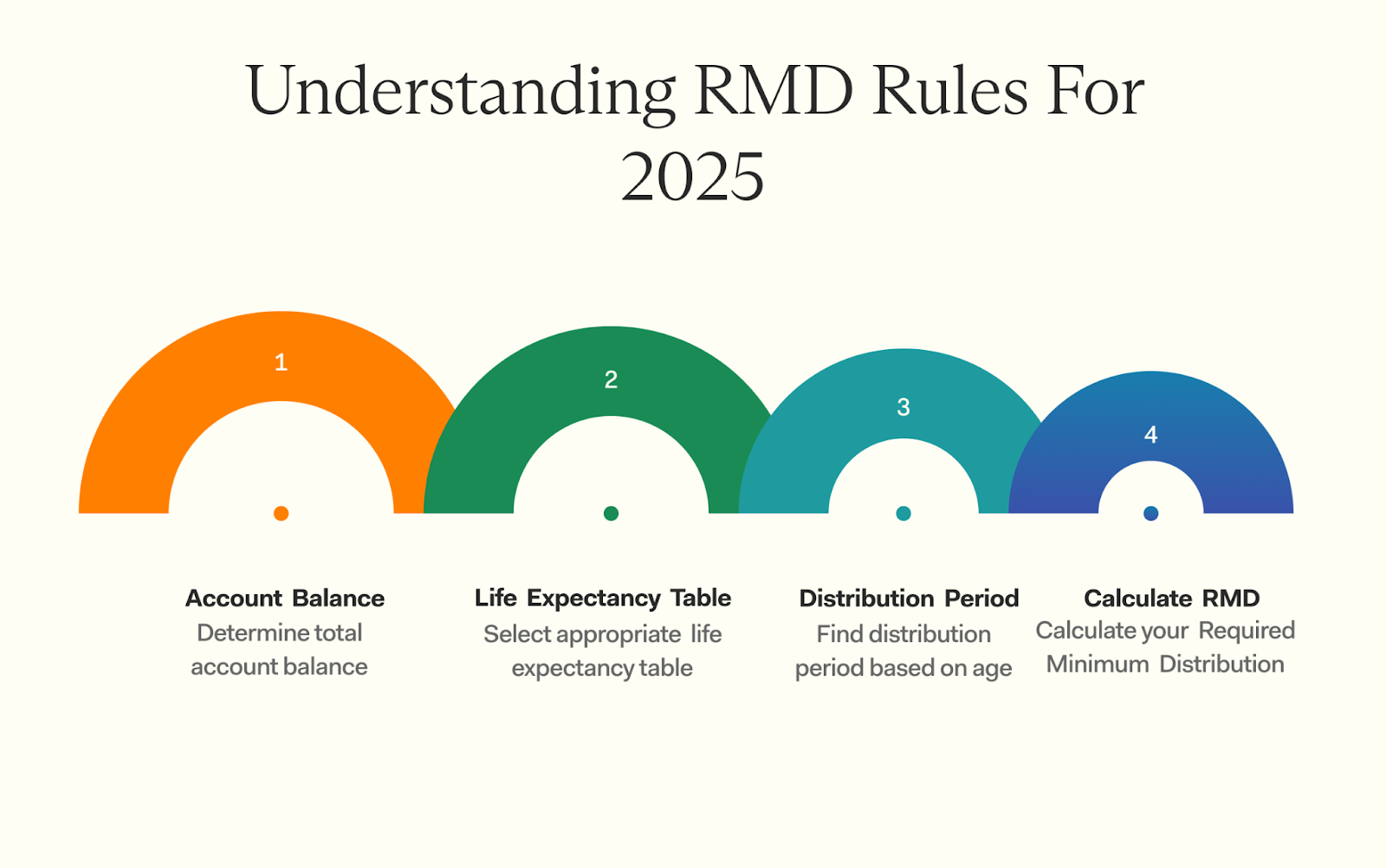
Understanding the SECURE 2.0 Act and 2025 Age Requirements
The primary driver behind the current RMD schedule is the SECURE 2.0 Act of 2022. This legislation effectively pushed back the starting age for RMDs, providing retirees with more time to let their investments grow tax-deferred. For the 2025 calendar year, the rules are specific to your birth year.
The Shift to Age 73
Before the recent legislative changes, the RMD age was 70½, which was later moved to 72. Under SECURE 2.0, the age increased to 73 starting on January 1, 2023. This means that if you reach age 73 in 2025, you are officially entering the window where the federal government requires you to begin taking distributions from your traditional IRAs, 401(k)s, and other employer-sponsored plans.
Specifically, individuals born in 1952 will turn 73 in 2025. This cohort is the primary group that must prepare for their inaugural RMD during the 2025-2026 window. If you were born between 1951 and 1959, your RMD age remains 73. If you were born in 1960 or later, the age will eventually jump to 75, though those changes will not take effect for several years.
Identifying Eligible Account Types
Not all retirement accounts are subject to the same RMD rules. In 2025, you must calculate and take distributions from:
- Traditional IRAs
- SEP IRAs
- SIMPLE IRAs
- 401(k), 403(b), and 457(b) plans
- Inherited IRAs (subject to specific 10-year rules)
A significant update for 2025 and beyond is the treatment of designated Roth accounts within employer-sponsored plans (like a Roth 401(k)). Thanks to SECURE 2.0, these accounts are no longer subject to RMDs during the original owner’s lifetime, aligning them with the rules that have long applied to Roth IRAs. This allows for continued tax-free growth throughout your retirement.
Key Dates and Deadlines for the 2025 Tax Year
The schedule for RMDs is defined by two major milestones: the “Required Beginning Date” for first-timers and the annual deadline for those who have already started their distributions. Misunderstanding these dates is one of the most common causes of IRS penalties.
The April 1 Grace Period for First-Timers
If you turn 73 in 2025, your “Required Beginning Date” is actually April 1, 2026. This grace period allows you to delay your very first distribution until the spring of the year following the year you turn 73.
However, there is a strategic caveat to this delay. If you wait until April 1, 2026, to take your 2025 RMD, you will still be required to take your 2026 RMD by December 31, 2026. This results in two taxable distributions in a single calendar year, which could inadvertently push you into a higher tax bracket, increase your Medicare premiums (IRMAA), or impact the taxation of your Social Security benefits. Most financial advisors suggest taking the first RMD by December 31 of the year you turn 73 to maintain a consistent tax profile.
The December 31 Annual Deadline
For anyone who turned 73 prior to 2025, the schedule is straightforward: you must complete your 2025 RMD by December 31, 2025. It is important to note that “complete” means the funds must have actually left the account. Simply initiating a transfer on the afternoon of New Year’s Eve may not be sufficient if the transaction does not clear until January, leading to potential penalties.
Inherited IRA Deadlines
The schedule for inherited IRAs remains one of the most complex areas of personal finance. Following the 2019 SECURE Act, most non-spouse beneficiaries must empty the inherited account within 10 years. In 2024, the IRS issued final regulations clarifying that if the original owner had already started RMDs, the beneficiary must also take annual distributions during that 10-year window. For 2025, beneficiaries of accounts where the owner died in 2020 or later must ensure they are following the annual distribution schedule to avoid the revamped penalty structure.
How to Calculate Your 2025 RMD Amount
The IRS does not send you a bill for your RMD; the burden of calculation lies with the account owner. The amount you must withdraw in 2025 is based on two primary variables: your account balance at the end of the previous year and your life expectancy as defined by the IRS.

The Uniform Lifetime Table
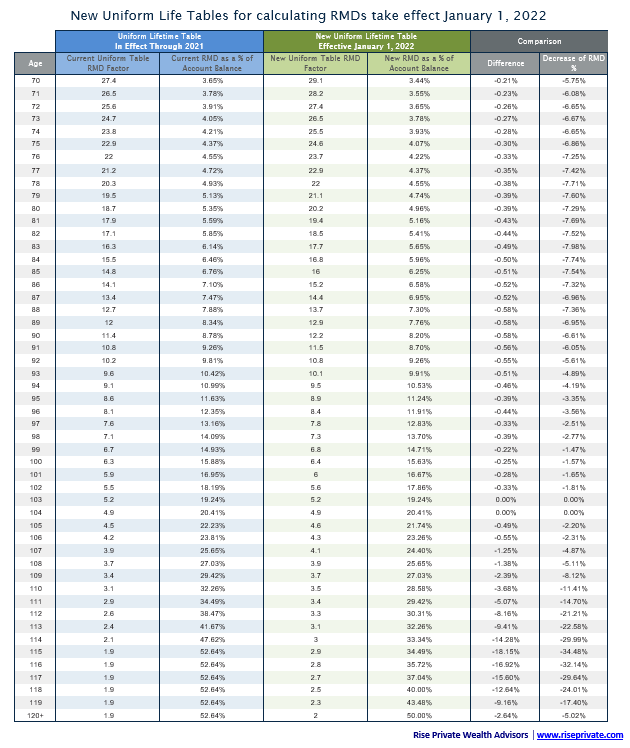
For the vast majority of retirees, the IRS “Uniform Lifetime Table” (Table III) is the tool used to determine the distribution period. This table provides a “divisor” based on your age. As you get older, the divisor decreases, which effectively increases the percentage of the account you are required to withdraw.
For example, at age 73, the distribution period is 26.5 years. At age 80, it drops to 20.2 years. By using these figures, the IRS ensures that you are drawing down the account balance over your projected remaining lifespan, theoretically exhausting the funds near the end of your life.
The Calculation Formula
To find your 2025 RMD, you follow this formula:
(Fair Market Value of Account on Dec. 31, 2024) / (Distribution Period Factor for your age in 2025) = RMD.
If you have multiple Traditional IRAs, you must calculate the RMD for each one separately, but you have the flexibility to withdraw the total aggregate amount from any one (or more) of those IRAs. However, 401(k) plans are different; if you have multiple 401(k)s from former employers, you must calculate and take the RMD from each specific account.
Valuation of Assets
The “Fair Market Value” is generally easy to determine for publicly traded stocks and mutual funds. However, for retirees holding “alternative assets” within a self-directed IRA—such as real estate, private equity, or precious metals—the valuation process for the December 31, 2024, snapshot can be more complex. Ensuring these valuations are accurate is essential, as under-reporting the value leads to an under-calculated RMD.
Strategic Considerations for Managing 2025 Distributions
While RMDs are mandatory, the way you execute them can significantly impact your net worth. Smart financial management involves looking beyond the simple act of withdrawal to see how these funds interact with your broader tax and investment strategy.
Qualified Charitable Distributions (QCDs)
For the charitably inclined, the QCD remains one of the most powerful tools in the tax code. If you are 70½ or older, you can transfer up to $105,000 (indexed for inflation) directly from your IRA to a qualified 501(c)(3) organization.
The beauty of the QCD is that the amount transferred counts toward your RMD for the year but is excluded from your Adjusted Gross Income (AGI). By keeping the RMD out of your AGI, you may stay below thresholds for higher Medicare premiums or keep more of your Social Security benefits from being taxed. In 2025, utilizing a QCD is often a superior strategy compared to taking the distribution, paying the tax, and then claiming a charitable deduction.
The Reduced Penalty for Non-Compliance
Historically, the penalty for missing an RMD was a draconian 50% of the amount not taken. SECURE 2.0 significantly lowered this. Starting in 2023 and continuing through 2025, the excise tax is reduced to 25%. Furthermore, if the error is corrected in a timely manner (generally within two years), the penalty is further reduced to 10%. While a 10% penalty is far better than 50%, it is still an avoidable loss of capital that should be prevented through rigorous scheduling.
Tax-Loss Harvesting and Reinvestment
Taking an RMD does not mean you have to spend the money. If you do not need the distribution for living expenses, the funds can be moved into a regular brokerage account. 2025 presents an opportunity to “re-base” your investments. By selling underperforming assets in a taxable account to offset the tax hit of the RMD (tax-loss harvesting), and then reinvesting the RMD proceeds into a diversified portfolio, you can maintain your market exposure while managing the tax consequences of the mandatory withdrawal.
Long-Term Planning: RMDs Beyond 2025
The 2025 RMD schedule is a single snapshot in a multi-decade retirement journey. As life expectancies increase and tax laws evolve, long-term planning must account for the “tax torpedo” that often occurs when RMDs combined with Social Security push retirees into higher tax brackets than they occupied during their working years.
The Future Jump to Age 75
While the 2025 focus is on age 73, it is vital to remember that for those born in 1960 or later, the RMD age will jump to 75 in 2033. This extended window provides a unique opportunity for “Roth Conversions.” By voluntarily moving money from a Traditional IRA to a Roth IRA before the mandatory distribution age, you can reduce the future size of your RMDs and create a pool of tax-free assets for your heirs.
Aggregating and Consolidating Accounts
To simplify the RMD schedule in 2025, many retirees choose to consolidate multiple old 401(k)s and IRAs. Managing one or two accounts is far less risky than tracking five or six. Consolidation reduces the likelihood of a calculation error and makes it easier to automate distributions with your financial institution.
The Role of Professional Oversight
As the rules surrounding RMDs become increasingly technical—particularly concerning the “10-year rule” for beneficiaries and the nuances of the SECURE 2.0 Act—the value of professional financial advice has never been higher. Coordinating with a tax professional or a financial advisor ensures that your 2025 distribution is calculated correctly, timed perfectly, and integrated into a strategy that preserves your wealth for the years to come.
By staying informed on the 2025 schedule and the underlying mechanics of the IRS requirements, you can transform a mandatory obligation into a managed component of a successful retirement.
aViewFromTheCave is a participant in the Amazon Services LLC Associates Program, an affiliate advertising program designed to provide a means for sites to earn advertising fees by advertising and linking to Amazon.com. Amazon, the Amazon logo, AmazonSupply, and the AmazonSupply logo are trademarks of Amazon.com, Inc. or its affiliates. As an Amazon Associate we earn affiliate commissions from qualifying purchases.