
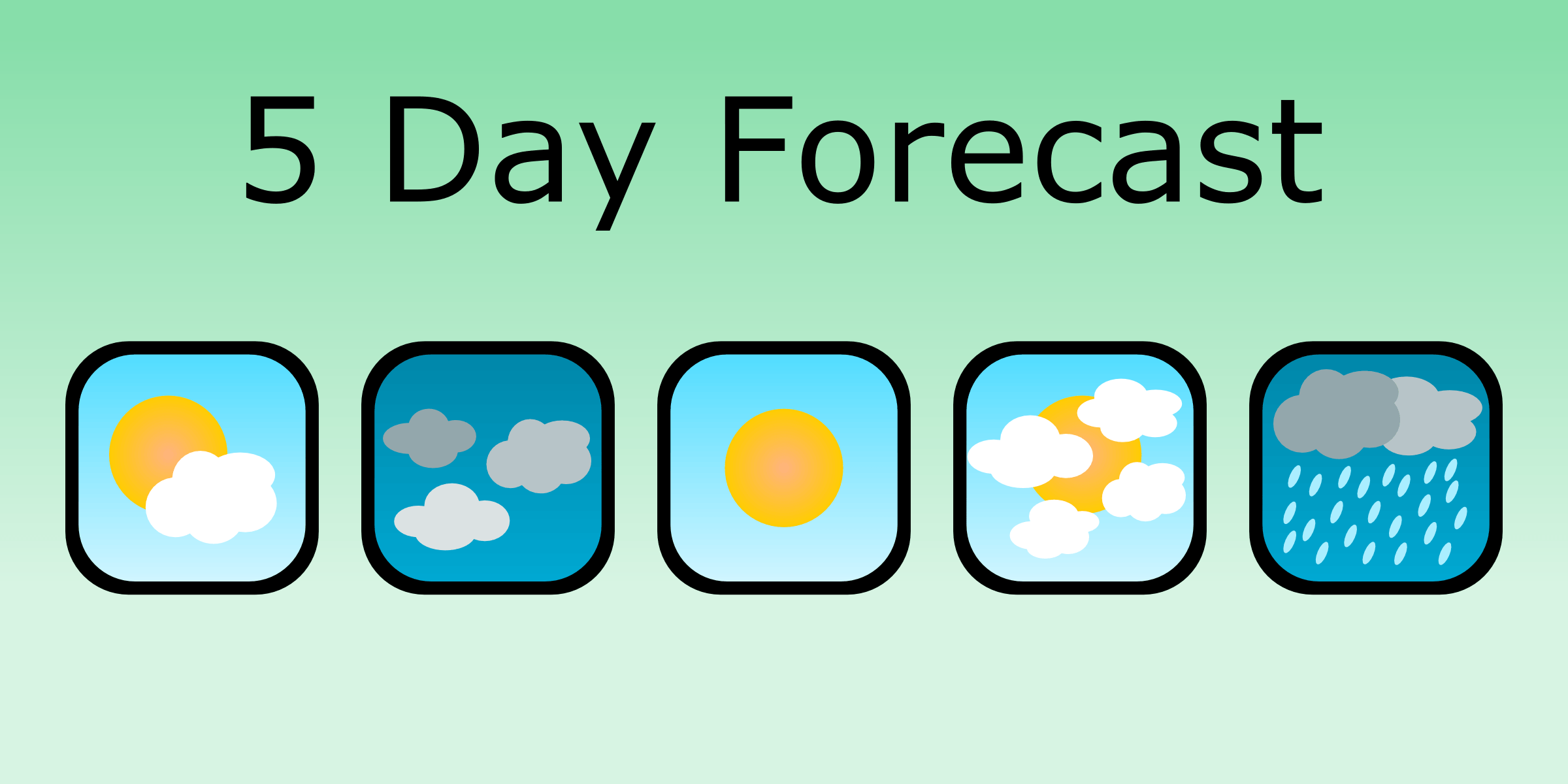
For decades, the simple question “what’s the 5-day forecast?” was met with a degree of healthy skepticism. In the mid-20th century, a prediction five days out was little more than an educated guess based on historical patterns and rudimentary barometric readings. Today, however, that same query triggers a global cascade of data processing, involving some of the world’s most powerful supercomputers, sophisticated artificial intelligence models, and a dense network of orbital and terrestrial sensors. The 5-day forecast has become a benchmark for the capabilities of modern technology, representing a triumph of software engineering, data science, and hardware integration.

The shift from speculative meteorology to precise predictive science is not merely about better thermometers. It is about a massive leap in how we handle information at scale. We are currently witnessing a paradigm shift where traditional physics-based models are being augmented—and in some cases, replaced—by deep learning and neural networks. This evolution in forecasting technology has profound implications not just for our daily commute, but for global logistics, energy management, and the future of the digital economy.
From Barometers to Big Data: The Infrastructure of Prediction
To understand the modern forecast, one must first understand the staggering amount of hardware required to generate it. The transition from manual observation to automated data ingestion has been the single greatest driver of accuracy in the last twenty years. We have moved into an era of “Big Data” meteorology, where the challenge is no longer a lack of information, but the sheer velocity and volume of it.
The Role of Supercomputing in Modern Meteorology
At the core of the 5-day forecast are Numerical Weather Prediction (NWP) models. These are complex mathematical simulations that represent the physics of the atmosphere. Running these models requires High-Performance Computing (HPC) clusters that rank among the most powerful machines on Earth. Organizations like the National Oceanic and Atmospheric Administration (NOAA) in the United States and the European Centre for Medium-Range Weather Forecasts (ECMWF) utilize supercomputers capable of performing quadrillions of calculations per second.
These machines divide the atmosphere into a three-dimensional grid. For every cell in that grid, the software must solve fluid dynamics and thermodynamics equations to predict how air, moisture, and heat will move. The “5-day” window is the sweet spot for these machines; it is a timeframe where the initial conditions provided by sensors are still dominant enough to yield high accuracy before the chaotic nature of the atmosphere introduces too much noise.
IoT and the Proliferation of Real-Time Sensors
While supercomputers do the heavy lifting, they are only as good as the data they receive. The “Internet of Things” (IoT) has revolutionized the “input” side of the forecast. We are no longer reliant solely on official airport weather stations. Today, millions of internet-connected devices—ranging from private backyard weather stations to sensors on commercial aircraft and shipping vessels—provide a real-time pulse of the planet’s surface conditions.
Furthermore, the latest generation of geostationary satellites, such as the GOES-R series, provides high-resolution imagery and atmospheric sounding data at a frequency and clarity that was previously impossible. This constant stream of telemetry allows software to perform “data assimilation,” a process where the model is constantly updated with real-world observations, correcting its course and refining the 5-day outlook every few hours.
The AI Revolution in Forecasting Accuracy
The most significant technological leap in recent years is the integration of Artificial Intelligence (AI). While traditional NWP models rely on the laws of physics, AI models rely on pattern recognition. This distinction is critical because, while physics is absolute, our ability to calculate every interaction in the atmosphere is computationally limited. AI provides a shortcut that is proving to be remarkably effective.
Machine Learning vs. Numerical Weather Prediction
Recently, tech giants like Google DeepMind and NVIDIA have entered the forecasting arena with AI-driven tools like GraphCast and FourCastNet. These models do not “solve” physics equations in the traditional sense. Instead, they are trained on decades of historical weather data. By analyzing how past conditions evolved into subsequent weather patterns, these machine learning models can predict future states with incredible speed.
One of the primary advantages of AI in this field is computational efficiency. While a traditional supercomputer might take hours to produce a 10-day forecast using physics-based models, a trained AI model can produce a similar or superior forecast in seconds on a fraction of the hardware. This allows for “ensemble forecasting,” where hundreds of different scenarios are run simultaneously to determine the most likely outcome, significantly increasing the reliability of the 5-day window.
Neural Networks and Pattern Recognition
Deep learning, specifically Graph Neural Networks (GNNs), has proven particularly adept at handling the spatial relationships inherent in weather. Because weather is a global, interconnected system, what happens in the Pacific today affects the Atlantic in five days. GNNs are designed to process data that exists in a graph structure, making them perfect for modeling the earth’s atmosphere as a web of interconnected nodes.
These AI tools are also better at identifying extreme weather events. Because they have been trained on historical “black swan” events, they are increasingly capable of spotting the subtle precursors to hurricanes, heatwaves, and atmospheric rivers that traditional models might miss due to “smoothing” in their mathematical approximations.
Hyper-Local Intelligence: The New Frontier of Weather Apps

For the average consumer, the tech behind the forecast is most visible through the apps on their smartphones. The “5-day forecast” is no longer a static graphic on the evening news; it is a dynamic, hyper-local service that provides minute-by-minute updates tailored to a user’s exact GPS coordinates.
API Integration and the Developer Ecosystem
The democratization of weather data has been fueled by robust API (Application Programming Interface) ecosystems. Companies like The Weather Company (an IBM business) and AccuWeather provide sophisticated APIs that allow third-party developers to integrate high-level predictive data into everything from fitness apps to autonomous vehicle software.
This “Forecast-as-a-Service” model means that the 5-day outlook is now integrated into our digital lives. Your smart thermostat uses these APIs to pre-cool your home before a predicted heatwave; your delivery app uses them to adjust estimated arrival times based on incoming rain. The software is no longer just telling us what the weather is; it is prompting other software to take action based on what the weather will be.
Edge Computing: Processing Data at the Source
As mobile hardware becomes more powerful, we are seeing a shift toward edge computing in forecasting. Modern smartphones are equipped with high-quality barometers and ambient light sensors. Through crowdsourcing and local processing, apps can now detect pressure drops in a specific neighborhood before the official regional sensors do.
Apple’s acquisition of Dark Sky was a pivotal moment in this space. It signaled a move toward “nowcasting”—the ability to predict rain down to the minute at a specific street address. This requires a sophisticated blend of radar data processing and local device telemetry, representing a masterclass in software optimization for the mobile environment.
Beyond the Atmosphere: How “Forecast Tech” is Transforming Industry
The impact of the 5-day forecast extends far beyond choosing an umbrella. In the tech-driven global economy, predictive accuracy is a multi-billion-dollar asset. Industries are leveraging specialized software to turn meteorological data into actionable business intelligence.
Supply Chain Logistics and Predictive Analytics
For companies like Amazon, FedEx, and global shipping conglomerates, a 5-day forecast is a critical input for logistical algorithms. If a storm is predicted to hit a major hub in five days, AI-driven logistics software can automatically reroute shipments, adjust inventory levels in regional warehouses, and notify customers of potential delays. This proactive approach saves millions in operational costs and reduces the carbon footprint associated with idling ships and trucks.
Renewable Energy Management and Grid Stability
The transition to renewable energy has made weather forecasting more important than ever. Solar and wind power are inherently variable. To maintain a stable electrical grid, utility companies must know exactly how much sun and wind to expect over the next five days.
Sophisticated software platforms now integrate weather forecasts with grid management systems. If a cloudy 5-day period is expected, the software can schedule maintenance for solar farms or ramp up energy storage systems in advance. This “smart grid” tech is the backbone of a sustainable energy future, turning the unpredictable nature of weather into a manageable data point.
The Next Five Years: Future Trends in Predictive Software
As we look toward the future, the “5-day forecast” will continue to evolve, driven by two emerging technologies: Quantum Computing and decentralized data networks. These advancements promise to push the boundaries of what is “knowable” about our environment.
Quantum Computing and Complex Simulations
Traditional silicon-based computers struggle with the sheer number of variables in atmospheric science. Quantum computing, however, operates on principles that are much more aligned with the probabilistic and interconnected nature of the weather. A quantum computer could theoretically simulate the behavior of individual molecules within a storm system, providing a level of granular accuracy that is currently impossible. While we are still in the early stages, the integration of quantum algorithms into forecasting software could extend the high-accuracy window from five days to two weeks or more.
Decentralized Data Networks
The final frontier is the decentralization of data collection. Blockchain-based weather networks are beginning to emerge, where individuals are incentivized with tokens to host standardized weather stations. This creates a “mesh network” of data that is far denser than any government-run system. When combined with AI, this bottom-up approach to data collection could eliminate the “blind spots” in our current models, making the 5-day forecast a near-perfect reflection of the future.
In conclusion, when we ask, “what’s the 5-day forecast?”, we are interacting with one of the most sophisticated technological stacks ever built. From the subterranean cooling of supercomputer hubs to the neural networks running on our phones, the forecast is a testament to our ability to decode the complexities of the natural world through the power of technology. It is no longer just about the weather; it is about the mastery of data, the refinement of AI, and the constant pursuit of digital precision.
aViewFromTheCave is a participant in the Amazon Services LLC Associates Program, an affiliate advertising program designed to provide a means for sites to earn advertising fees by advertising and linking to Amazon.com. Amazon, the Amazon logo, AmazonSupply, and the AmazonSupply logo are trademarks of Amazon.com, Inc. or its affiliates. As an Amazon Associate we earn affiliate commissions from qualifying purchases.