
In the vast landscape of computer science and data structures, efficiency is the currency of progress. As software systems scale to handle billions of data points, the choice of how that data is stored and retrieved becomes the difference between a seamless user experience and a lagging, unusable interface. Among the most specialized and powerful tools for managing string-based data is the Trie.
Derived from the word “retrieval,” though often pronounced like “try,” a Trie is a specialized type of k-ary search tree used to store associative arrays where the keys are usually strings. Unlike a standard binary search tree, no node in the Trie stores the key associated with that node. Instead, its position in the tree defines the key with which it is associated. This structure makes it an indispensable asset in modern software engineering, particularly in fields requiring rapid pattern matching and prefix-based searching.
The Architecture of a Trie: How Data is Organized
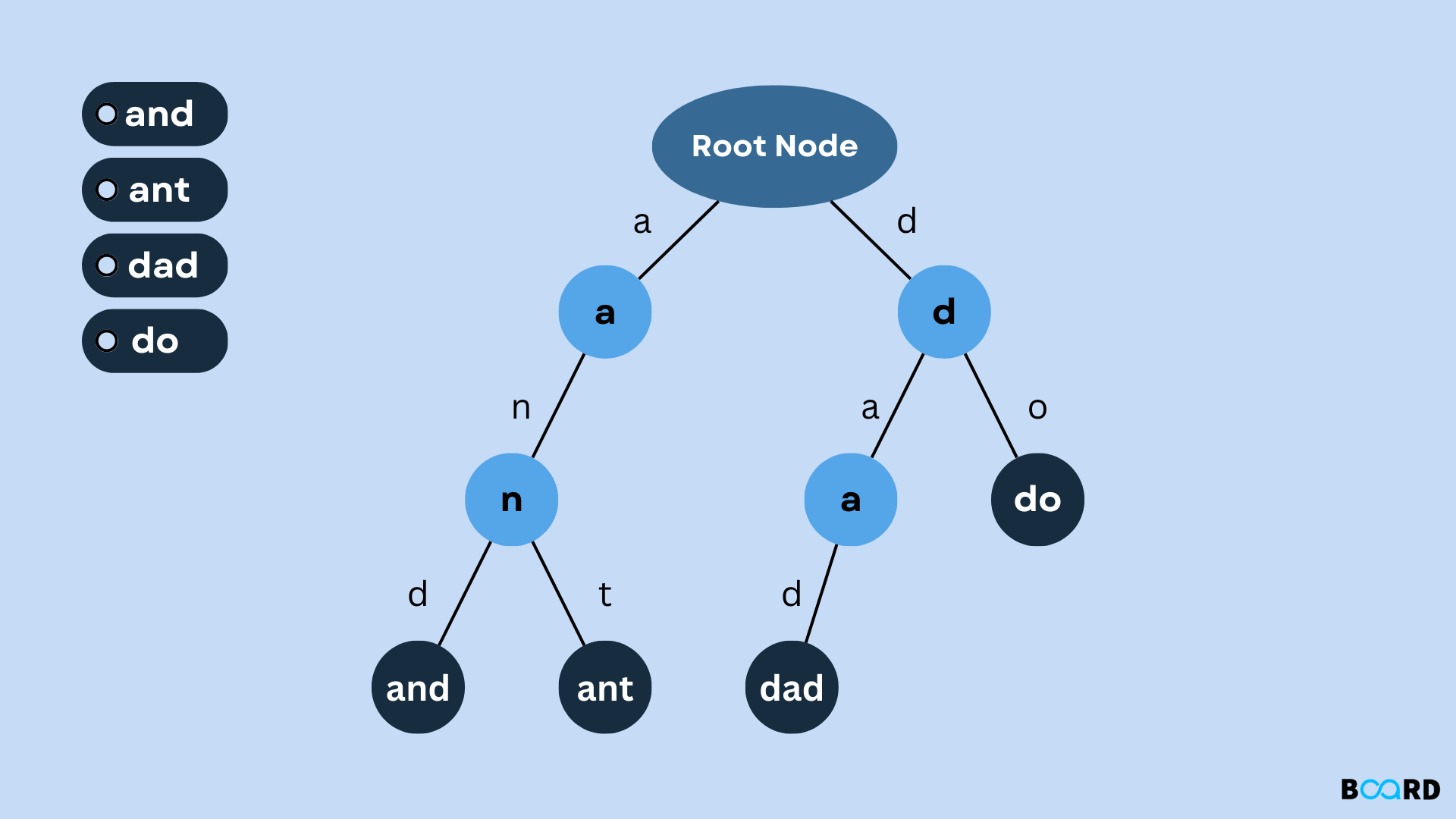
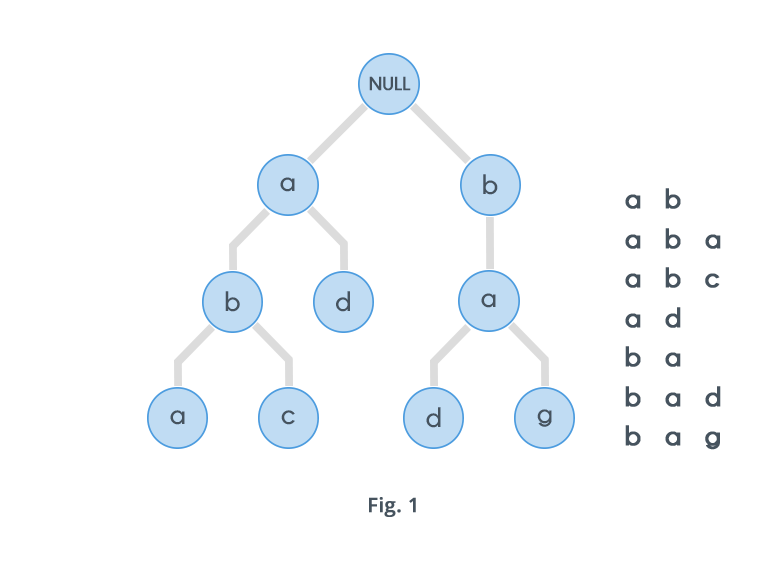
To understand a Trie, one must first visualize the structure of a tree where every path descending from the root represents a sequence of characters. In a standard data structure like a Hash Map, a key is treated as a single, atomic unit. In a Trie, the key is broken down into its constituent characters, and each character guides the navigation through the tree’s levels.
The Root and Path-Based Navigation
Every Trie begins with an empty root node. This root does not represent a character itself but serves as the starting point for every possible string stored within the structure. When a word is inserted into the Trie, the process begins at the root. For the first character of the word, the algorithm looks for a child node corresponding to that character. If it exists, the algorithm moves to that node; if not, a new node is created.
This process repeats for every character in the string. Because the structure is hierarchical, all strings that share a common prefix will share the same initial path through the tree. For example, the words “compute,” “computer,” and “computation” would all share the same nodes for the prefix “comput” before branching off into their respective suffixes. This shared pathing is the fundamental mechanism that gives the Trie its efficiency.
Node Structure and the Alphabet Array
The internal composition of a Trie node is critical to its performance. Typically, a node contains a collection of pointers—one for each possible character in the alphabet being used. In a standard English language Trie, each node might contain an array of 26 pointers (one for A-Z).
However, modern implementations often move beyond simple arrays to save space. They might use a Hash Map within each node to store pointers only for the characters that actually follow, or they might use a linked list. The choice of internal node structure represents a trade-off between the speed of looking up the next character and the memory footprint of the tree.
Terminating Markers and Word Completion
A common question when learning about Tries is: how do we know when a word actually ends? If we store the word “cart,” the path consists of nodes for C, A, R, and T. If we then store “carton,” the path extends further. To distinguish between a prefix that is just a part of a longer word and a prefix that is a word in its own right, each node includes a boolean flag, often called isEndOfWord or isTerminated.
When searching for “cart,” the algorithm follows the path and checks if the isEndOfWord flag is set to true at the ‘T’ node. If it is, the search confirms that “cart” exists in the set. If the flag were false, it would mean “cart” is only a prefix for other words like “carton” or “cartography,” but not an independent entry in the database.
Trie vs. The World: Why Not Use a Hash Map?
When developers need to store strings for quick retrieval, the Hash Map is often the first tool they reach for. Hash Maps offer O(1) average-case time complexity for lookups, which is theoretically faster than the O(L) complexity of a Trie (where L is the length of the string). However, the Trie offers unique advantages that make it superior for specific high-performance applications.
Performance in Prefix Searching
The most significant advantage of a Trie over a Hash Map or a Binary Search Tree (BST) is its ability to perform prefix searches. In a Hash Map, keys are hashed into seemingly random locations. If you want to find all words starting with “pre,” a Hash Map requires you to iterate through every single key in the map to check for a match, resulting in O(N) complexity where N is the total number of words.
In a Trie, finding all words with a specific prefix is a matter of navigating to the node representing the end of that prefix and then performing a depth-first traversal of its children. This makes Tries the backbone of any system that requires “type-ahead” or “starts-with” functionality.

Memory Management and the Space-Time Trade-off
Tries are often criticized for their high memory consumption, particularly when nodes use fixed-size arrays for pointers. If you have a node for every character and an array of 26 pointers for every node, much of that memory remains null or empty.
However, as the dataset grows and strings share more common prefixes, the Trie can actually become more space-efficient than a Hash Map. In a Hash Map, the prefix “international” is stored repeatedly for “internationalization,” “internationally,” and “internationalism.” In a Trie, that prefix is stored exactly once. For massive datasets of related strings, the Trie’s deduplication of prefixes offers a significant structural advantage.
Deterministic Behavior vs. Hash Collisions
Hash Maps are subject to collisions—two different keys resulting in the same hash index. Handling these collisions requires extra logic (like chaining or open addressing) which can degrade performance to O(N) in the worst-case scenario. Furthermore, generating a hash for a long string still takes O(L) time.
A Trie is entirely deterministic. There are no collisions. The time taken to find a word is strictly tied to the length of the word, not the number of items stored in the tree. This provides a level of performance predictability that is highly valued in real-time systems and low-latency applications.
Real-World Applications: Where Tries Power Our Digital Lives
While the Trie might seem like an abstract academic concept, it is working behind the scenes in almost every digital interaction we have today. Its unique ability to handle strings makes it the primary choice for several critical technologies.
Autocomplete and Predictive Text Systems
Every time you type a query into a search engine or a message on a smartphone, an autocomplete algorithm is likely running a Trie traversal in the background. As you type each letter, the system moves one node deeper into the Trie. Once it reaches your current character, it quickly scans the subtree beneath that node to suggest the most frequently visited leaf nodes. Because the Trie is organized by prefix, these suggestions can be returned in milliseconds, keeping up with the speed of human typing.
Spell Checking and Dictionary Validation
Spell checkers use Tries to validate words instantly. By traversing the Trie with the user’s input, the system can determine if a word is valid by checking if the path exists and ends with a termination flag. If a user types “graphly,” the search will fail at the point where “graph” does not have a child ‘l’ that leads to a valid word, allowing the system to flag the error and suggest alternatives from nearby branches.
Networking: IP Routing and Longest Prefix Match
The internet functions on the principle of routing packets to their destinations. Routers maintain tables of IP addresses, but they don’t store every individual address. Instead, they store IP prefixes. When a packet arrives, the router must find the “longest prefix match” to determine the next hop.
A specialized version of a Trie, often called a Bitwise Trie, is used here. By representing IP addresses as strings of bits, the router can quickly traverse the Trie to find the most specific prefix that matches the destination IP. This application is critical for the speed and scalability of global internet traffic.
Advanced Variations and Optimization Strategies
To overcome the inherent weaknesses of the standard Trie—primarily its memory consumption—engineers have developed several optimized variations.
Compressed Tries (Radix Trees)
A Radix Tree, or compressed Trie, optimizes space by merging nodes that have only one child. If the Trie contains the word “butterfly” and no other words start with “b,” a standard Trie would have nine separate nodes. A Radix Tree would collapse these into a single node containing the string “butterfly.” This drastically reduces the number of nodes and pointers, making the structure much more memory-efficient while maintaining the same lookup speed.
Suffix Tries and Pattern Matching
While a standard Trie stores prefixes, a Suffix Trie stores all the suffixes of a given string. This is a powerhouse tool for complex bioinformatics and text processing. It allows for the “Substring Problem” to be solved in linear time. If you need to find if a specific sequence of DNA exists within a massive genome, a Suffix Trie allows you to locate that pattern almost instantly, regardless of where it appears in the string.
Ternary Search Trees: The Middle Ground
A Ternary Search Tree (TST) is a hybrid between a Trie and a Binary Search Tree. Each node in a TST has only three children: a “less than” child, an “equal to” child, and a “greater than” child. This structure provides the prefix-searching capabilities of a Trie but with the space efficiency of a BST. While it is slightly slower than a standard Trie, it is often the preferred choice when memory is at a premium and the alphabet size is large (such as Unicode).
As we move further into the era of Big Data and AI, the Trie remains a cornerstone of efficient software design. Whether it is powering the search bar of a global tech giant or managing the routing tables of a high-speed fiber network, the Trie’s elegant approach to handling string data ensures that our digital infrastructure remains fast, responsive, and scalable. Understanding the Trie is not just about learning a data structure; it is about understanding how modern computing manages the infinite complexity of human language and digital addressing.
aViewFromTheCave is a participant in the Amazon Services LLC Associates Program, an affiliate advertising program designed to provide a means for sites to earn advertising fees by advertising and linking to Amazon.com. Amazon, the Amazon logo, AmazonSupply, and the AmazonSupply logo are trademarks of Amazon.com, Inc. or its affiliates. As an Amazon Associate we earn affiliate commissions from qualifying purchases.