
New York City has long served as the undisputed epicenter of global finance. When we ask “what’s happening in New York today,” the answer is rarely found in the tourist traps of Times Square, but rather in the fluctuating ticker tapes of Lower Manhattan and the high-stakes boardrooms of Midtown. Today, the city is navigating a complex economic landscape characterized by shifting interest rate expectations, a radical transformation in commercial real estate, and a burgeoning venture capital scene that is challenging Silicon Valley for dominance.

To understand the current state of New York is to understand the current state of the global economy. From the institutional movements on Wall Street to the personal finance decisions of the millions who call the five boroughs home, the fiscal energy of the city provides a roadmap for where the world’s money is moving.
The Financial Nerve Center: Wall Street’s Current Performance
The rhythm of New York is dictated by the opening and closing bells of the New York Stock Exchange (NYSE) and NASDAQ. Today, the primary focus of the institutional investment community remains fixed on the Federal Reserve’s monetary policy and its localized impact on the banking sector.
Interest Rate Trajectories and Institutional Sentiment
Current market activity in New York is largely defined by “the pivot” narrative. As inflation data fluctuates, the city’s major investment banks—Goldman Sachs, JPMorgan Chase, and Morgan Stanley—are recalibrating their forecasts. The consensus today is one of cautious optimism, though the “higher for longer” interest rate environment continues to put pressure on regional banks headquartered in the city. Investors are closely watching the yield curve, as New York-based hedge funds adjust their portfolios to hedge against potential volatility in the debt markets.
The Rise of Quantitative and AI-Driven Trading
On the floor of the exchanges and within the high-frequency trading firms of Greenwich Village and Flatiron, a technological revolution is reshaping how money moves. Today’s New York financial landscape is increasingly dominated by algorithmic trading. We are seeing a significant capital flight toward firms that successfully integrate large language models (LLMs) into predictive market analysis. This isn’t just about speed anymore; it’s about the sophisticated synthesis of global data points, all being processed within the square mile of the Financial District.
The Real Estate Rebound: Navigating Manhattan’s Shifting Property Markets
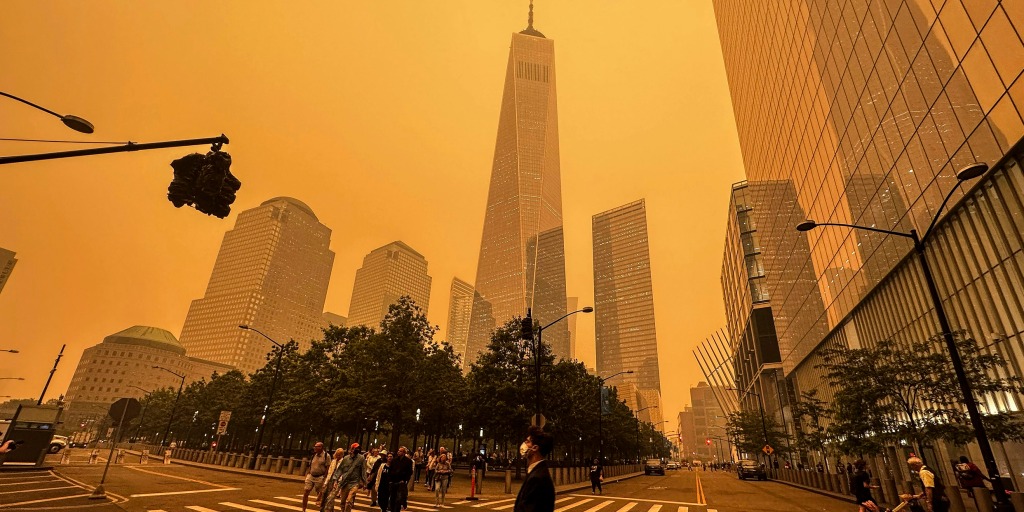
Perhaps no sector represents the “today” of New York better than real estate. The city’s skyline is a physical manifestation of its balance sheet, and currently, that balance sheet is undergoing a period of intense restructuring.
The Flight to Quality in Commercial Office Space
The narrative of the “empty office” is being replaced by a more nuanced reality: the flight to quality. While older, B-class office buildings in Midtown are struggling with vacancy rates, ultra-modern developments like Hudson Yards and the newly renovated corridors of Park Avenue are seeing record-breaking rents. For the sophisticated investor, the opportunity today lies in the conversion of underutilized commercial assets into residential or mixed-use properties. This transition is not just a structural change; it is a multi-billion dollar reallocation of capital that is redefining the city’s tax base.
Residential Markets and the New Investment Standard
In the residential sector, New York today remains one of the most resilient asset classes in the world. Despite high mortgage rates, the demand for luxury condos and multi-family units in Brooklyn and Queens continues to outpace supply. Institutional investors are pivoting toward “build-to-rent” models within the city limits, recognizing that the permanent demand for New York residency provides a unique hedge against inflation. For the individual investor, the barrier to entry has never been higher, leading to a surge in fractional real estate investment platforms that allow for participation in the New York market without the need for multi-million dollar down payments.
Venture Capital and the Rise of Silicon Alley

While San Francisco has historically held the crown for tech innovation, New York’s “Silicon Alley” has matured into a formidable rival. Today, the flow of venture capital in New York is focused on the intersection of finance and technology—FinTech.
The Fintech Dominance
New York is uniquely positioned to lead the Fintech revolution because it sits at the intersection of the world’s largest banks and a massive talent pool of developers. Current funding rounds are heavily skewed toward startups that solve institutional problems: blockchain-based settlement systems, AI-driven compliance tools, and decentralized finance (DeFi) platforms that operate within the regulatory frameworks of New York’s BitLicense. The “happening” today is the institutionalization of crypto and digital assets, led by New York-based firms like BlackRock and Fidelity.
Seed Funding and the Startup Ecosystem
Beyond Fintech, New York is seeing an explosion of growth in HealthTech and PropTech. Venture capital firms located along the High Line are increasingly looking for “capital-efficient” startups. The era of growth-at-all-costs is over; today’s New York entrepreneurs are focused on path-to-profitability and sustainable business models. This shift has created a more robust, albeit more disciplined, startup ecosystem that is attracting international talent who view New York as the best place to build a “recession-proof” business.
The Economic Pulse of the Individual: Personal Finance in the City
For the average New Yorker or the professional looking to move to the city, the economic reality of today is one of strategic management. The high cost of living in the metropolis acts as a catalyst for innovative personal finance strategies.
Navigating the Cost of Living and Inflation
Inflation has hit urban centers particularly hard, and in New York, this is felt most acutely in the service and retail sectors. Residents are increasingly turning to sophisticated budgeting tools and high-yield cash management accounts to offset the rising costs of rent and consumables. We are seeing a “wealth migration” within the city, as professionals move from Manhattan to the “outer-borough” hubs like Long Island City or Astoria to maximize their purchasing power without sacrificing proximity to the city’s economic engines.
The Side Hustle and the Gig Economy 2.0
In the world’s most expensive city, the “side hustle” has evolved from a hobby into a professionalized second income stream. Today’s New Yorkers are leveraging digital platforms to monetize niche skills in consulting, digital marketing, and content creation. This secondary economy is a vital part of the city’s financial health, providing a cushion for residents against the cyclical nature of Wall Street bonuses and corporate layoffs. The “gig economy” in New York today is no longer just about ride-sharing; it is about high-value, freelance intellectual capital.
Institutional Shifts: The Future of New York as a Global Financial Hub
As we look at what is happening in New York today, we must consider the long-term institutional shifts that will define its future. The city is not just reacting to current trends; it is actively shaping the future of how the world handles money.
ESG and the Green Finance Mandate
New York has become a central hub for Environmental, Social, and Governance (ESG) investing. Major asset managers headquartered in the city are now mandated to integrate climate risk into their portfolios. This has led to a surge in “Green Bonds” and sustainable investment vehicles. Today, the New York financial community is a primary driver of the global transition to a low-carbon economy, proving that profitability and sustainability can be aligned within the world’s most competitive markets.
Regulatory Leadership and the Global Standard
The regulatory environment in New York, spearheaded by the New York State Department of Financial Services (DFS), often sets the standard for the rest of the United States and the world. From cybersecurity mandates for financial institutions to the regulation of stablecoins, what happens in New York’s legislative chambers today becomes the global blueprint for tomorrow. For businesses and investors, staying compliant with New York’s rigorous standards is seen as a “seal of approval” that facilitates easier expansion into international markets.
New York today is a city of intense transition. It is shedding the skin of the pre-pandemic era and emerging as a more technologically integrated, fiscally disciplined, and resilient financial powerhouse. Whether it is the evolution of the skyline, the sophistication of its trading floors, or the grit of its startup founders, the “happening” in New York is a testament to the city’s enduring role as the world’s most vital financial engine. For those with their eyes on the pulse of money, all roads—and all trades—still lead to New York.
aViewFromTheCave is a participant in the Amazon Services LLC Associates Program, an affiliate advertising program designed to provide a means for sites to earn advertising fees by advertising and linking to Amazon.com. Amazon, the Amazon logo, AmazonSupply, and the AmazonSupply logo are trademarks of Amazon.com, Inc. or its affiliates. As an Amazon Associate we earn affiliate commissions from qualifying purchases.