
Navigating the financial landscape of Canada requires a deep understanding of the labor market’s foundational floor: the minimum wage. For employees, it represents the baseline of their earning potential and financial security. For business owners and investors, it is a critical variable in operational costs and economic forecasting. In Canada, the minimum wage is not a single, static figure but a complex tapestry of federal and provincial regulations that shift in response to inflation, political climate, and regional economic health.
Understanding the current rates and the mechanisms behind their adjustments is essential for anyone looking to manage their personal finances, plan a business budget, or analyze the broader Canadian economy.

The Jurisdictional Landscape: Federal vs. Provincial Standards
One of the most common points of confusion regarding Canadian compensation is the distinction between federal and provincial jurisdictions. Canada does not have one uniform minimum wage that applies to every worker from coast to coast. Instead, the responsibility is divided based on the nature of the industry and the employer.
The Federal Minimum Wage
The federal minimum wage applies exclusively to workers in federally regulated private sectors. These include industries that are vital to the national infrastructure, such as banks, postal and courier services, interprovincial air, rail, and maritime transportation, and telecommunications.
As of April 1, 2024, the federal minimum wage stands at $17.30 per hour. This rate is adjusted annually on April 1st based on Canada’s Consumer Price Index (CPI) from the previous calendar year. This “indexing” ensures that workers in these critical sectors do not see their purchasing power eroded by the rising costs of goods and services. If a province or territory has a minimum wage higher than the federal rate, federally regulated employers in that specific region must pay the higher of the two amounts.
Provincial and Territorial Authority
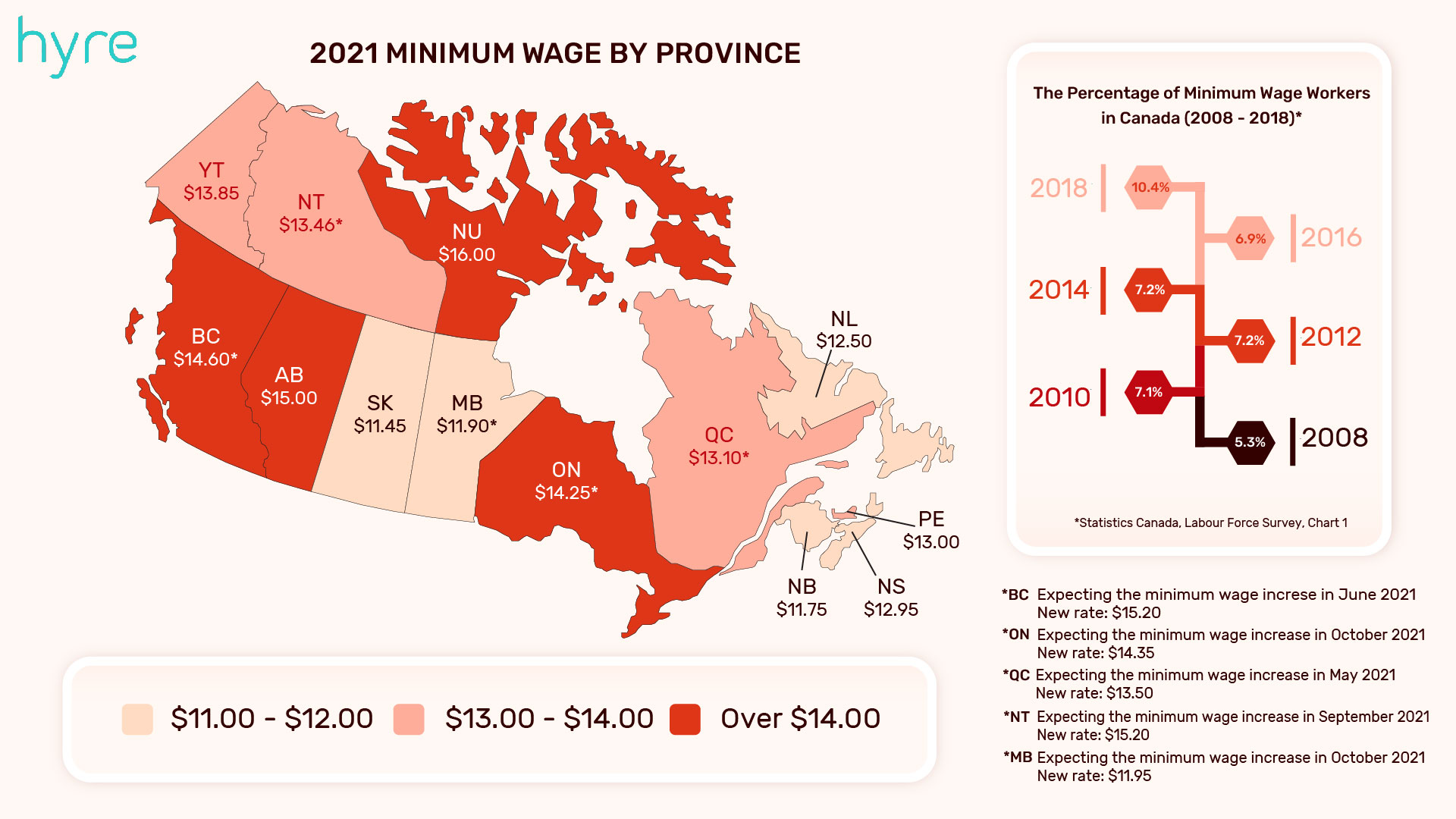
The vast majority of Canadian workers—roughly 94%—fall under provincial or territorial labor laws. Each of the ten provinces and three territories has the legislative power to set its own minimum wage. This leads to significant variance across the country, often reflecting the local cost of living and the prevailing political ideology of the regional government.
For example, a worker in British Columbia or Ontario will earn a significantly higher hourly rate than a worker in Saskatchewan, primarily because the cost of housing and basic necessities in Canada’s major urban centers necessitates a higher baseline for survival.
A Comprehensive Breakdown of Provincial Minimum Wage Rates
To understand the financial reality of the Canadian workforce, one must look at the specific rates currently in effect across the country. These rates are subject to frequent change, often updated annually in either April or October.
High-Wage Provinces: British Columbia and Ontario
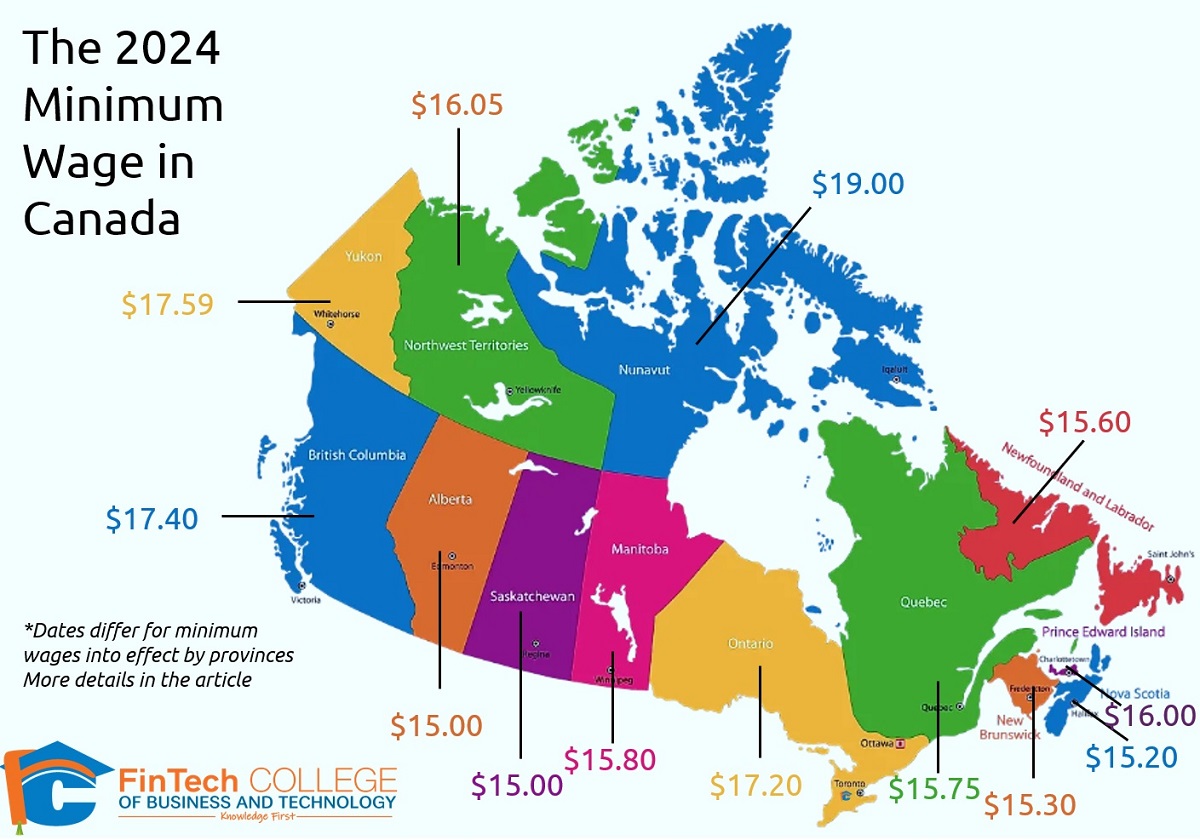
As of mid-2024, British Columbia holds the title for the highest provincial minimum wage at $17.40 per hour. This rate reflects the intense pressure of the real estate market in Vancouver and the surrounding areas. The B.C. government has moved toward a system of permanent indexing to ensure wages keep pace with inflation.
Ontario, Canada’s most populous province and its economic engine, currently sits at $16.55 per hour, with a scheduled increase to $17.20 per hour effective October 1, 2024. Ontario’s wage policy has been a central point of political debate, balancing the needs of a diverse workforce against the operational challenges faced by small businesses in the retail and hospitality sectors.
The Atlantic Provinces and the Prairies
In the Atlantic provinces—New Brunswick, Nova Scotia, Prince Edward Island, and Newfoundland and Labrador—minimum wages have historically been lower than in the west. However, recent years have seen a rapid upward trend. Most Atlantic provinces have now aligned their rates in the $15.00 to $16.00 range. For instance, Nova Scotia and Newfoundland and Labrador both moved to $15.60 per hour in April 2024.
In the Prairies, Alberta maintains a rate of $15.00 per hour, which has remained stagnant for several years, whereas Manitoba and Saskatchewan have implemented more recent hikes. Manitoba sits at $15.80, while Saskatchewan, which previously had the lowest rate in the country, is moving to $15.00 on October 1, 2024.
The Territories: Adjusting for Remote Living Costs
The North presents a unique economic challenge. While the minimum wages in the Yukon ($17.59), the Northwest Territories ($16.05), and Nunavut ($19.00) are among the highest in the country, they must be viewed through the lens of extreme living costs. In Nunavut, the $19.00 rate is the highest in Canada, but the cost of groceries and fuel in remote northern communities is often double or triple the national average, meaning the “real” value of this wage is often lower than the provincial counterparts.
The Economic Reality: Minimum Wage vs. The Living Wage
While the minimum wage is a legal mandate, financial experts and social advocates often point to the “living wage” as a more accurate metric for financial health. A living wage is the hourly amount a worker needs to earn to cover basic expenses—such as housing, food, transportation, and childcare—in a specific community.
Calculating the Gap
In many Canadian cities, there is a stark disparity between the legislated minimum wage and the calculated living wage. For instance, while Ontario’s minimum wage is moving toward $17.20, the living wage in Toronto is estimated to be over $25.00 per hour. This “wage gap” highlights the difficulty many individuals face when trying to move from a state of survival to a state of financial stability.
For those earning minimum wage, personal finance is less about wealth accumulation and more about extreme optimization. When the majority of an income is consumed by fixed costs like rent (which has skyrocketed in almost every Canadian province), there is very little “discretionary income” left for savings or investment.
Inflation and Purchasing Power
The primary enemy of the minimum wage earner is inflation. When the cost of a basket of goods increases by 3% or 4% annually, a stagnant wage effectively becomes a pay cut. This is why the recent trend toward “CPI-indexing”—where wages automatically rise with inflation—is so critical for the “Money” niche. It removes the political delay in wage adjustments, providing a predictable, albeit modest, hedge against the rising cost of living.
Financial Management Strategies for Minimum Wage Earners
Earning the minimum wage in Canada requires a sophisticated approach to personal finance. Without the luxury of a high income, every dollar must be directed with intention.
Mastering the Low-Income Budget
The 50/30/20 rule of budgeting (50% needs, 30% wants, 20% savings) is often impossible on a minimum wage income in cities like Montreal or Calgary. Instead, many financial advisors recommend a “Zero-Based Budget.” This involves assigning every single dollar a job before the month begins.
Key strategies include:
- Housing Optimization: Considering roommates or shared living arrangements to bring rent costs below the 30% threshold of gross income.
- Transportation Analysis: Utilizing public transit over car ownership, which in Canada can save an individual upwards of $8,000 to $10,000 per year in insurance, fuel, and maintenance.
- Debt Avoidance: On a minimum wage income, high-interest credit card debt is a financial death spiral. Prioritizing cash-only spending or immediate repayment is essential.
Utilizing Tax Credits and Government Benefits
A significant portion of a minimum wage earner’s total “financial package” in Canada comes from government transfers. Understanding these tools is part of effective money management.
- GST/HST Credit: A tax-free quarterly payment that helps individuals with low incomes offset the sales tax they pay.
- Canada Workers Benefit (CWB): A refundable tax credit intended to provide tax relief for low-income individuals in the workforce.
- Provincial Credits: Many provinces offer specific credits, such as the Ontario Trillium Benefit or the BC Climate Action Tax Credit.
Scaling Your Income: Beyond the Minimum Wage Threshold
While understanding the minimum wage is important for establishing a baseline, the goal of personal finance is growth. In the modern Canadian economy, there are more avenues than ever to move beyond the minimum wage through strategic side hustles and upskilling.
Leveraging the Gig Economy and Side Hustles
For those currently earning the minimum rate, the “online income” sector provides a way to diversify earnings without the constraints of a second traditional job. Freelance writing, virtual assistance, or participating in the creator economy can offer higher hourly returns than a retail or service job. The key is to treat side hustle income not as “spending money,” but as “investment capital” to be put into Tax-Free Savings Accounts (TFSAs) or Registered Retirement Savings Plans (RRSPs).
Upskilling for High-Value Roles
The Canadian labor market is currently experiencing a “skills gap” in sectors like trade, technology, and healthcare. Many provinces offer grants and subsidies for minimum wage earners to return to school or take certification courses. Transitioning from a minimum wage service role to a skilled trade can often double an individual’s hourly rate within two years, drastically changing their long-term financial trajectory.
The Future of Wages: Economic Trends and Policy Adjustments
The conversation around Canada’s minimum wage is evolving. As we move further into the 2020s, several trends are likely to shape how much Canadians earn at the base level.
The debate over a “Universal Basic Income” (UBI) continues to simmer in Canadian policy circles. Proponents argue that as automation replaces entry-level roles, a minimum wage will no longer be enough to sustain the population. Furthermore, the push for “fair pay” transparency is gaining momentum, with provinces like BC and Ontario introducing legislation that requires employers to include salary ranges in job postings.
For the savvy individual, the minimum wage is not just a number on a paycheck; it is a critical economic indicator. It dictates the cost of services we use, the viability of small business investments, and the social stability of our communities. By staying informed on these rates and the financial tools available to navigate them, Canadians can better position themselves for financial resilience in an increasingly expensive world.
aViewFromTheCave is a participant in the Amazon Services LLC Associates Program, an affiliate advertising program designed to provide a means for sites to earn advertising fees by advertising and linking to Amazon.com. Amazon, the Amazon logo, AmazonSupply, and the AmazonSupply logo are trademarks of Amazon.com, Inc. or its affiliates. As an Amazon Associate we earn affiliate commissions from qualifying purchases.