
For most of human history, answering the question “what will be the temperature tomorrow?” was a matter of folklore, intuition, or simple observation of the horizon. Today, the answer is delivered to billions of people instantly via smartphones, generated by a global technological infrastructure that represents one of the most significant achievements in modern computing. Behind that simple numerical value on a lock screen lies a complex ecosystem of orbital satellites, ocean-bound sensors, high-performance computing (HPC) clusters, and increasingly, sophisticated artificial intelligence.
The transition from visual observation to digital prediction has been driven by the exponential growth of processing power and the refinement of atmospheric physics. However, we are currently entering a new era where traditional numerical models are being augmented—and in some cases replaced—by machine learning models that can predict the weather with unprecedented speed and accuracy.

The Computational Foundations: From Observations to Supercomputers
The modern ability to predict tomorrow’s temperature is rooted in Numerical Weather Prediction (NWP). This approach treats the atmosphere as a fluid and applies the laws of physics and fluid dynamics to simulate its future state. To do this, the global atmosphere is divided into a three-dimensional grid. Each cell in this grid represents a volume of air, and for each cell, computers must solve complex partial differential equations that account for pressure, temperature, moisture, and wind velocity.
Numerical Weather Prediction (NWP) and Grid Resolution
The precision of a temperature forecast is heavily dependent on “grid resolution.” In the early days of digital forecasting, grid cells were dozens of kilometers wide. If a mountain range or a coastline fell within a single cell, the model would effectively “average” the conditions, leading to significant inaccuracies. Today, high-resolution models have shrunk these cells to just a few kilometers, or even hundreds of meters for specialized local forecasts.
This leap in resolution requires massive computational resources. To calculate the interaction between millions of grid cells across the entire planet, meteorological agencies like the National Oceanic and Atmospheric Administration (NOAA) in the United States and the European Centre for Medium-Range Weather Forecasts (ECMWF) utilize some of the most powerful supercomputers in existence.
The Role of Global High-Performance Computing
The supercomputers used for weather forecasting are capable of performing quadrillions of calculations per second (petaflops). These machines run “ensemble forecasts,” where the same model is run dozens of times with slightly different initial conditions. This helps meteorologists understand the level of uncertainty. If all 50 runs of a model suggest the temperature will be 25°C tomorrow, confidence is high. If they range from 15°C to 35°C, the atmosphere is in a chaotic state, and the forecast is less reliable. This technological “brute force” is what has made the five-day forecast today as accurate as the one-day forecast was in the 1980s.
The AI Revolution: Shifting from Physics to Patterns
While supercomputers and NWP models have been the gold standard for decades, they are reaching a point of diminishing returns due to their immense energy consumption and the time required to run a full simulation. This is where Artificial Intelligence (AI) and Machine Learning (ML) are disrupting the field.
Deep Learning and Graph Neural Networks
In the last three years, tech giants like Google, NVIDIA, and Huawei have introduced AI-based weather models that rival or exceed the accuracy of traditional physics-based systems. Models such as Google’s GraphCast and NVIDIA’s FourCastNet do not solve fluid dynamics equations. Instead, they are trained on decades of historical weather data. By “learning” how the atmosphere has behaved in the past, these Graph Neural Networks (GNNs) can recognize patterns and predict future states with remarkable precision.
The shift is fundamental: NWP asks “How must the air move based on the laws of physics?” while AI asks “Based on forty years of data, what usually happens when the pressure and temperature look like this?”
Speed and Efficiency: The AI Advantage
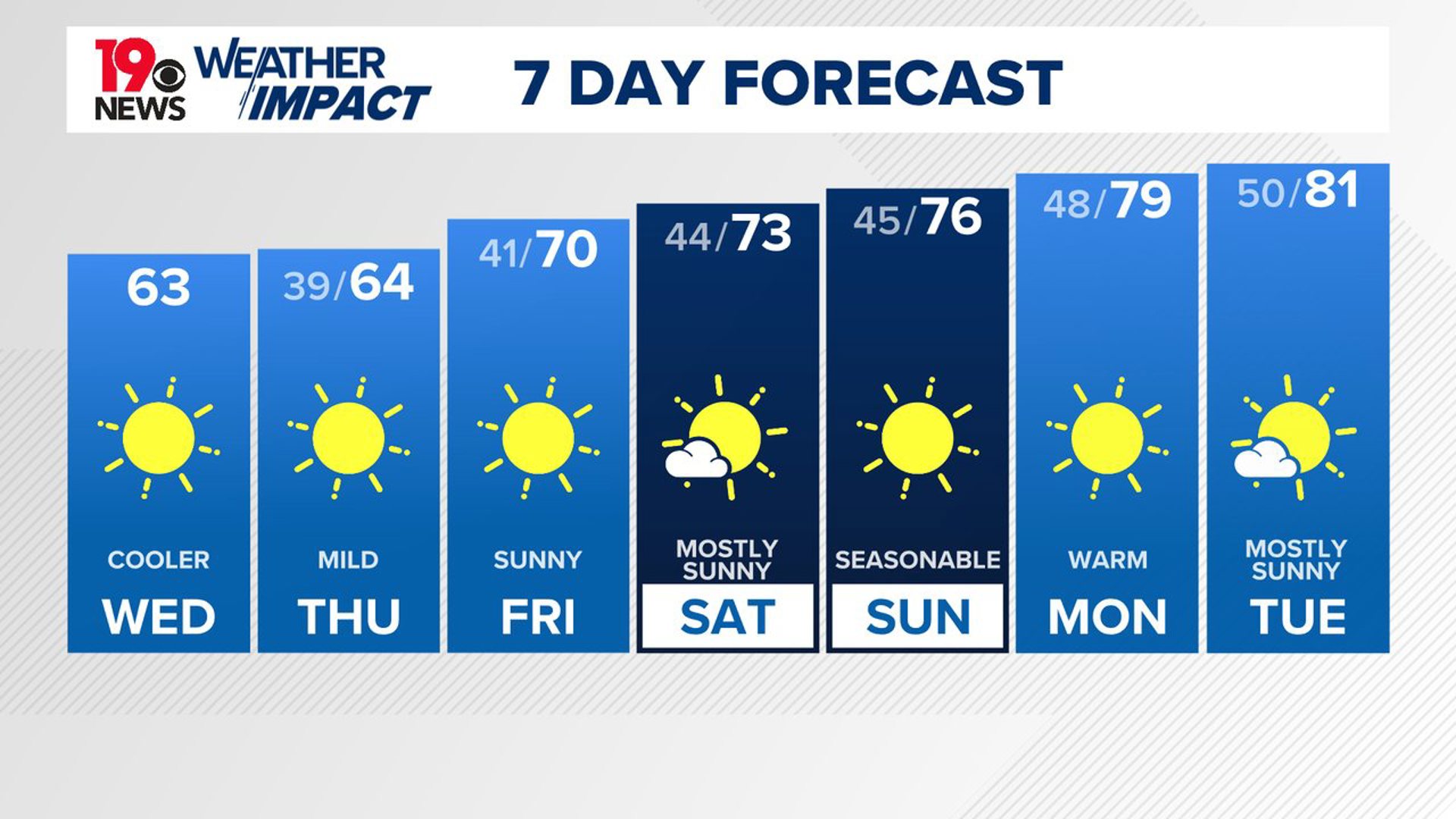
The most significant advantage of AI in answering the question of tomorrow’s temperature is speed. A traditional NWP model might take hours to run on a massive supercomputer cluster. In contrast, once an AI model is trained, it can generate a ten-day global forecast in less than a minute on a single workstation equipped with a high-end GPU. This efficiency allows for more frequent updates and the ability to run larger ensembles, providing a more nuanced view of potential weather risks at a fraction of the energy cost.
Data Acquisition: The Global Nervous System
No model, whether physics-based or AI-driven, can provide an accurate temperature forecast without high-quality input data. The “Internet of Things” (IoT) and satellite technology have created a global nervous system that feeds real-time data into these models.
Satellite Innovation and Remote Sensing
The backbone of weather data comes from geostationary and polar-orbiting satellites. Modern satellites, such as the GOES-R series, are equipped with advanced imagers and sounders that measure infrared and microwave radiation emitted by the Earth and its atmosphere. These measurements are then converted into temperature and humidity profiles at various altitudes.
Furthermore, the rise of “SmallSats” and CubeSats has democratized space-based observation. Private companies are now launching constellations of small satellites that use “radio occultation”—measuring how GPS signals are bent by the atmosphere—to derive precise temperature and pressure data even in the most remote parts of the ocean where ground stations are non-existent.
IoT and the Proliferation of Ground-Level Sensors
On the ground, the density of weather observations has exploded. Beyond official government stations, there are now hundreds of thousands of private weather stations connected to the internet. Companies like IBM (through The Weather Company) utilize data from these personal devices, as well as sensors on aircraft, ships, and even smartphones. Modern smartphones contain barometric pressure sensors to help with GPS positioning; when anonymized and aggregated, this data provides a real-time, high-density map of atmospheric pressure changes, which is a critical precursor to temperature shifts.
The Challenge of Hyper-Local Forecasting
The next frontier in weather technology is “hyper-local” forecasting. While a general forecast might tell you the temperature for your city, it often fails to account for the “micro-climates” created by urban infrastructure.
Urban Heat Islands and Micro-Climates
Cities are significantly warmer than their rural surroundings due to the “urban heat island” effect, where concrete and asphalt absorb and radiate heat. Advanced tech tools are now being used to model these effects at the street level. By integrating Geographic Information Systems (GIS) data with weather models, tech platforms can predict temperature variations from one neighborhood to the next. This is crucial for energy companies managing the grid during heatwaves and for city planners designing “cool zones.”
Digital Twins of the Atmosphere
The concept of a “Digital Twin”—a virtual mirror of a physical system—is being applied to the Earth’s atmosphere. Projects like the European Union’s “Destination Earth” aim to create a high-precision digital model of the entire planet. This would allow scientists to simulate not just tomorrow’s temperature, but how specific technological interventions (like reforestation or urban cooling projects) might alter local climates over years or decades. This convergence of big data, cloud computing, and climate science represents the pinnacle of current meteorological technology.
The Future of Weather Technology: Quantum Computing and Beyond
As we look toward the future, the limits of classical computing may be surpassed by quantum computing. Weather forecasting is a “naturally parallel” problem that is perfectly suited for quantum algorithms. Quantum computers could theoretically handle the vast variables of atmospheric chaos—such as the “butterfly effect,” where tiny changes in initial conditions lead to vastly different outcomes—far more effectively than any silicon-based chip.
Furthermore, the integration of Augmented Reality (AR) is changing how we consume this data. Instead of looking at a number on a screen, users may soon see 3D visualizations of temperature gradients and wind patterns overlaid on their actual environment through AR glasses. This turns the abstract question of “what will be the temperature tomorrow?” into a tangible, visual experience of the atmospheric forces at play.
The journey from primitive thermometers to AI-driven global models highlights a broader trend in technology: the transition from reactive observation to proactive simulation. We no longer just wonder about the weather; we compute it. As AI continues to refine its predictive capabilities and our sensor networks grow denser, the certainty of tomorrow’s forecast will continue to improve, providing a vital tool for economic stability, public safety, and our daily convenience.
aViewFromTheCave is a participant in the Amazon Services LLC Associates Program, an affiliate advertising program designed to provide a means for sites to earn advertising fees by advertising and linking to Amazon.com. Amazon, the Amazon logo, AmazonSupply, and the AmazonSupply logo are trademarks of Amazon.com, Inc. or its affiliates. As an Amazon Associate we earn affiliate commissions from qualifying purchases.