
In the modern data landscape, information is no longer just a static snapshot of a point in time; it is a continuous, high-velocity stream. Whether it is the fluctuating temperature of an industrial boiler, the millisecond-by-millisecond CPU usage of a cloud server, or the rapid-fire price movements of a cryptocurrency exchange, time is the primary axis upon which modern data turns. Traditional relational databases, while versatile, often buckle under the sheer volume and velocity of this “time-series” data. This is where InfluxDB enters the frame.
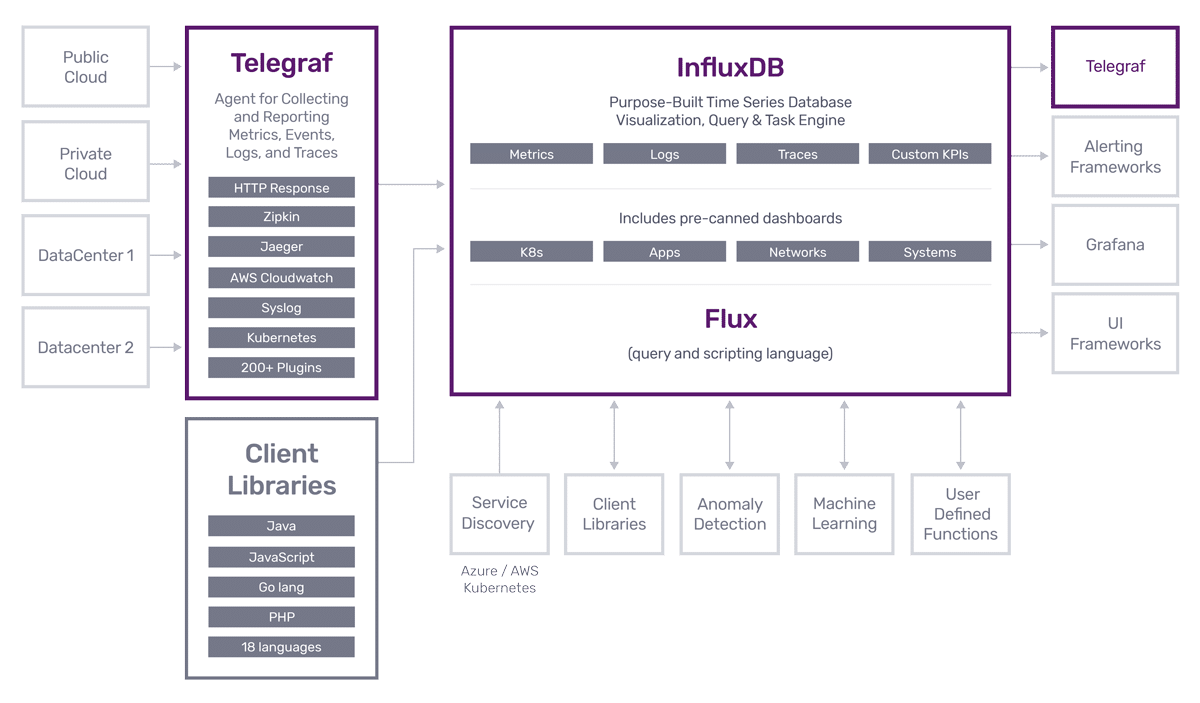
InfluxDB is an open-source time-series database (TSDB) developed by InfluxData. It is specifically engineered to handle high write and query loads, making it the go-to solution for monitoring, analytics, and Internet of Things (IoT) applications. By prioritizing time as a first-class citizen, InfluxDB allows developers to store, retrieve, and analyze billions of data points with microsecond precision.
Understanding Time-Series Data and the Genesis of InfluxDB
To understand why InfluxDB is necessary, one must first understand the nature of time-series data. Unlike a standard database entry—such as a user’s name and email—time-series data is a sequence of data points indexed in time order. It tracks how a system or process changes over seconds, minutes, or hours.
The Definition of Time-Series Data
Time-series data is characterized by its high volume, its chronological nature, and its tendency to be immutable. In a standard retail database, you might update a customer’s address. In a time-series database, you never “update” a temperature reading from 10:00 AM; you simply append a new reading at 10:01 AM. This creates a relentless stream of data that requires specialized storage mechanisms to remain performant.
Time-series data is generally categorized into two types:
- Metrics: Measurements gathered at regular intervals (e.g., checking a server’s RAM usage every 10 seconds).
- Events: Measurements gathered at irregular intervals triggered by specific actions (e.g., a user clicking a button or an error log being generated).
Why Relational Databases Struggle with Time
Relational databases like PostgreSQL or MySQL are built for consistency and complex relationships between different data tables. However, when tasked with inserting 100,000 records per second—a common requirement in IoT—the overhead of managing B-tree indexes and ensuring ACID compliance becomes a bottleneck. Furthermore, deleting old data in a relational database is a heavy operation that can lock tables and degrade performance.
InfluxDB was built from the ground up to solve these specific pain points. It uses specialized storage engines designed for high-speed ingestion and provides built-in functions for time-centric math, such as calculating moving averages or downsampling data (converting per-second data into per-hour averages) to save space.
Core Architecture and Key Features of InfluxDB
The evolution of InfluxDB has seen several iterations, moving from the original “TICK” stack to the more integrated InfluxDB 2.0 and, most recently, the revolutionary InfluxDB 3.0 powered by the IOx engine. Regardless of the version, several core architectural principles define how it operates.
The Data Model: Measurements, Tags, and Fields
InfluxDB uses a unique data model that differs significantly from the tables and rows of SQL.
- Measurement: Think of this as a SQL table. It describes the data being stored (e.g., “cpu_usage”).
- Tags: These are metadata or “dimensions” that are indexed. Tags are used for filtering (e.g.,
host=server-01,region=us-west). Because they are indexed, queries using tags are incredibly fast. - Fields: These are the actual data values being recorded (e.g.,
usage_percent=45.2). Fields are not indexed, which allows for the storage of vast amounts of raw data without the overhead of index management. - Timestamp: Every record in InfluxDB automatically includes a timestamp, typically in nanosecond precision.
High-Performance Storage Engines
The secret to InfluxDB’s speed lies in its storage engine. For much of its history, InfluxDB relied on the Time-Structured Merge Tree (TSM). Similar to Log-Structured Merge (LSM) trees used in databases like Cassandra, TSM is optimized for heavy write loads. It compresses data heavily, often reducing the storage footprint by 90% compared to raw text files.
In the latest iterations (InfluxDB 3.0), the architecture has shifted toward Apache Arrow and Parquet. By leveraging columnar storage formats, InfluxDB now provides even faster analytical queries and integrates seamlessly with the broader data science ecosystem. This shift to the “IOx” engine, written in Rust, allows for nearly unlimited “cardinality”—a historical limitation where having too many unique tag combinations (like millions of unique container IDs) would slow down the database.
Retention Policies and Downsampling
Data grows exponentially in time-series applications. InfluxDB manages this through Retention Policies (RP). You can instruct the database to automatically delete data after a certain period (e.g., “keep high-precision data for 7 days, then delete it”). To preserve the historical trend without the storage cost, users employ Downsampling, where 1-second data is aggregated into 1-hour averages and moved to a long-term storage bucket.
Querying and Ecosystem: Flux, InfluxQL, and Telegraf
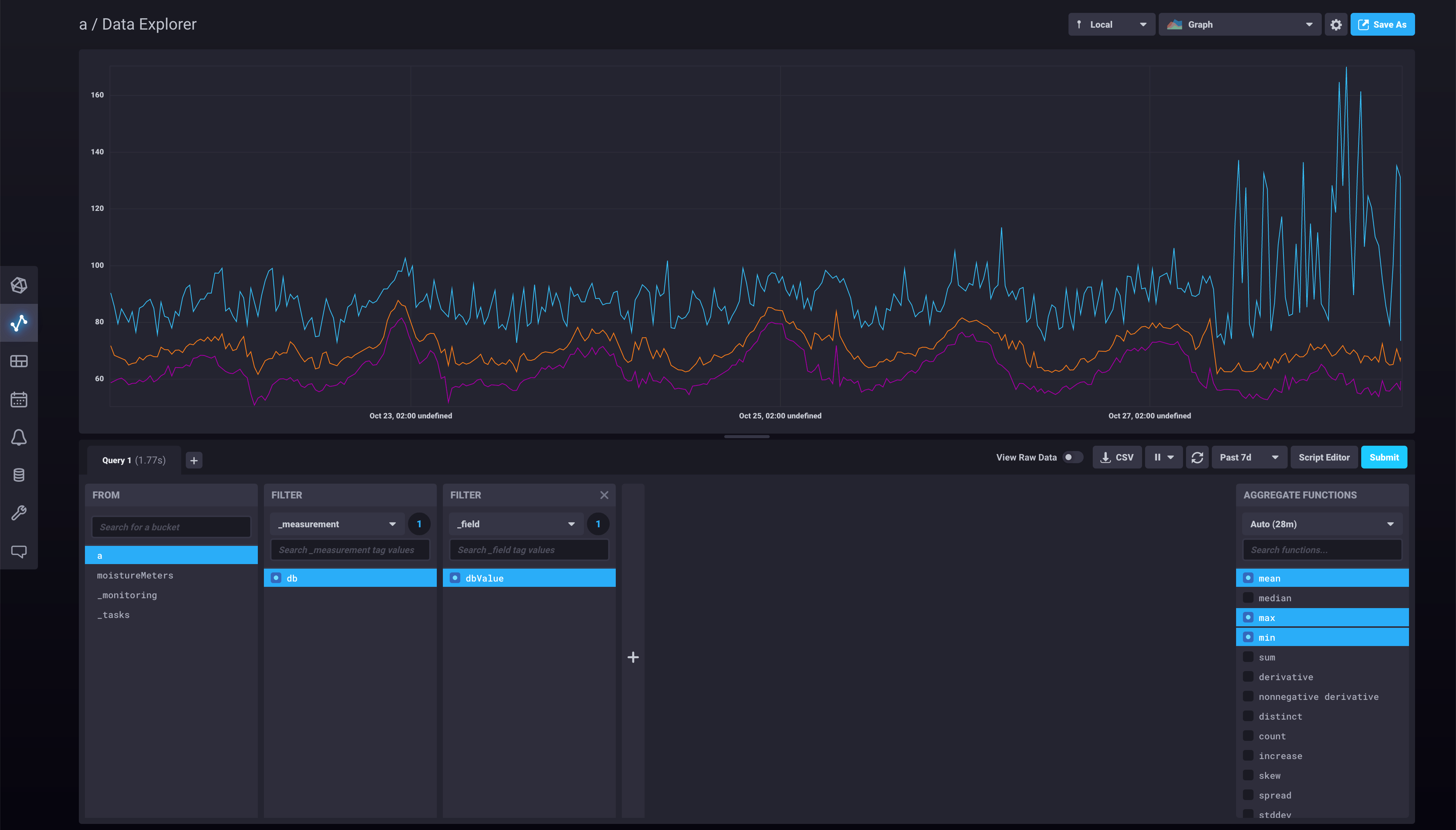
A database is only as useful as its ability to retrieve data. InfluxDB provides two primary ways to interact with data, alongside a massive ecosystem for data collection.
InfluxQL vs. Flux
For years, InfluxQL was the primary language for the database. It is a SQL-like syntax that allows users familiar with relational databases to get started quickly (e.g., SELECT mean(value) FROM cpu WHERE time > now() - 1h).
However, as data analysis needs became more complex, InfluxData introduced Flux. Flux is a functional data scripting language designed for data piping. It allows for sophisticated operations that SQL struggles with, such as joining data from two different buckets, performing complex math across tables, or even sending an alert to Slack if a certain threshold is met—all within the query itself.
The Power of Telegraf
InfluxDB rarely sits alone. It is almost always paired with Telegraf, a plugin-driven server agent for collecting and reporting metrics. Telegraf has over 300 plugins that allow it to “pull” or “receive” data from almost anything: cloud platforms (AWS/Azure), databases (MongoDB/Redis), hardware sensors, and even local system stats. This makes the InfluxDB ecosystem incredibly plug-and-play; a developer can often start monitoring an entire tech stack in minutes.
Real-World Use Cases: Where InfluxDB Shines
InfluxDB is the backbone for thousands of enterprises, powering critical infrastructure across various industries.
Infrastructure and Application Monitoring
This is the most common use case. DevOps teams use InfluxDB to track the health of their servers, containers (Docker/Kubernetes), and network switches. By visualizing this data in dashboards (often using Grafana or the built-in InfluxDB UI), teams can spot trends, predict outages, and perform root-cause analysis when a service goes down.
Industrial IoT (IIoT) and Smart Cities
In manufacturing, sensors on assembly lines produce a constant stream of data regarding vibration, temperature, and output. InfluxDB enables “Predictive Maintenance,” where machine learning models analyze the time-series data to predict when a part will fail before it actually breaks. Similarly, smart city initiatives use InfluxDB to monitor traffic flow, air quality, and energy consumption across urban grids.
Financial Services and Fintech
The financial world is inherently time-bound. From tracking stock price ticks to monitoring transaction latency in high-frequency trading, InfluxDB provides the sub-millisecond precision required to stay competitive. It is also used in fraud detection, where rapid shifts in transaction patterns must be identified and flagged in real-time.
Comparing InfluxDB with the Competition
While InfluxDB is a leader, it is not the only player in the market. Understanding its position relative to competitors like Prometheus and TimescaleDB is essential for any tech professional.
InfluxDB vs. Prometheus
Prometheus is a popular monitoring tool, particularly in the Kubernetes ecosystem. While both handle time-series data, they have different philosophies. Prometheus is primarily a monitoring and alerting system that uses a “pull” model (it asks your services for data). InfluxDB is a general-purpose database that supports both “pull” and “push” models and is better suited for long-term storage and high-cardinality events. Many organizations use both, using Prometheus for real-time alerting and InfluxDB for long-term historical analysis.
InfluxDB vs. TimescaleDB
TimescaleDB is built as an extension of PostgreSQL. The advantage of TimescaleDB is that it allows you to use standard SQL and join time-series data with relational data easily. However, InfluxDB generally offers better compression and is often easier to scale horizontally in high-velocity IoT environments where the overhead of a full relational engine is not desired.
The Future of InfluxDB: Embracing the Open Data Ecosystem
The tech industry is moving toward “Open Observability,” and InfluxDB is evolving to meet this trend. By adopting Apache Arrow as its core data format in the latest versions, InfluxDB is breaking down the walls between the database and the data science world. This allows tools like Python’s Pandas library or Apache Spark to process InfluxDB data without the heavy “serialization” costs that used to plague data transfers.
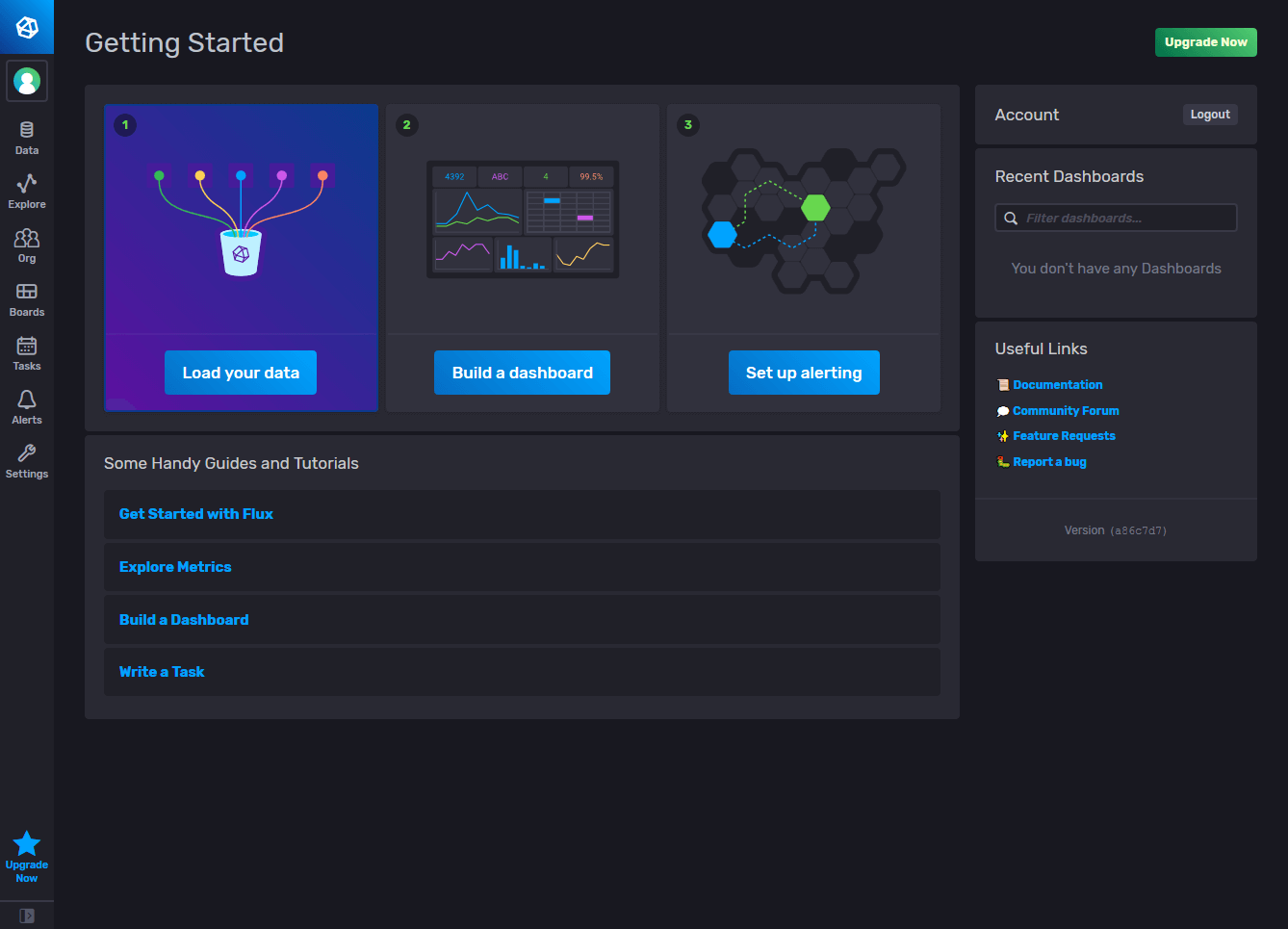
Furthermore, the move toward a cloud-native, serverless architecture means that InfluxDB is becoming increasingly accessible. Developers no longer need to worry about managing the underlying storage or “sharding” their data; they can simply point their Telegraf agents to the cloud and start querying.
In conclusion, InfluxDB is more than just a place to store numbers; it is a specialized engine designed to capture the pulse of modern technology. As the world becomes increasingly instrumented—from the watches on our wrists to the turbines in our power plants—the need for a high-performance, scalable, and intuitive time-series database like InfluxDB will only continue to grow. Whether you are a DevOps engineer monitoring a global cloud or a data scientist analyzing market trends, InfluxDB provides the precision and power required to turn the chaos of raw timestamps into actionable intelligence.
aViewFromTheCave is a participant in the Amazon Services LLC Associates Program, an affiliate advertising program designed to provide a means for sites to earn advertising fees by advertising and linking to Amazon.com. Amazon, the Amazon logo, AmazonSupply, and the AmazonSupply logo are trademarks of Amazon.com, Inc. or its affiliates. As an Amazon Associate we earn affiliate commissions from qualifying purchases.