
The internet is often perceived as a vast, decentralized cloud of information, a borderless digital expanse where billions of devices communicate instantaneously. However, beneath this chaotic surface lies a meticulously organized framework that ensures every packet of data reaches its intended destination. At the heart of this framework is the Internet Assigned Numbers Authority (IANA). While it may not be a household name like Google or Apple, IANA is the fundamental administrative function that keeps the global internet operational, interoperable, and stable.
The Fundamental Role of IANA in the Digital Ecosystem
To understand IANA, one must first recognize that the internet relies on uniqueness. For two computers to communicate, they must have unique identifiers—much like a global telephone system requires unique phone numbers. If two houses had the same physical address, the postal service would fail. Similarly, if two devices shared the same IP address or if two websites claimed the same domain name without a central registry, the digital world would collapse into a state of permanent error.
Defining the Internet Assigned Numbers Authority
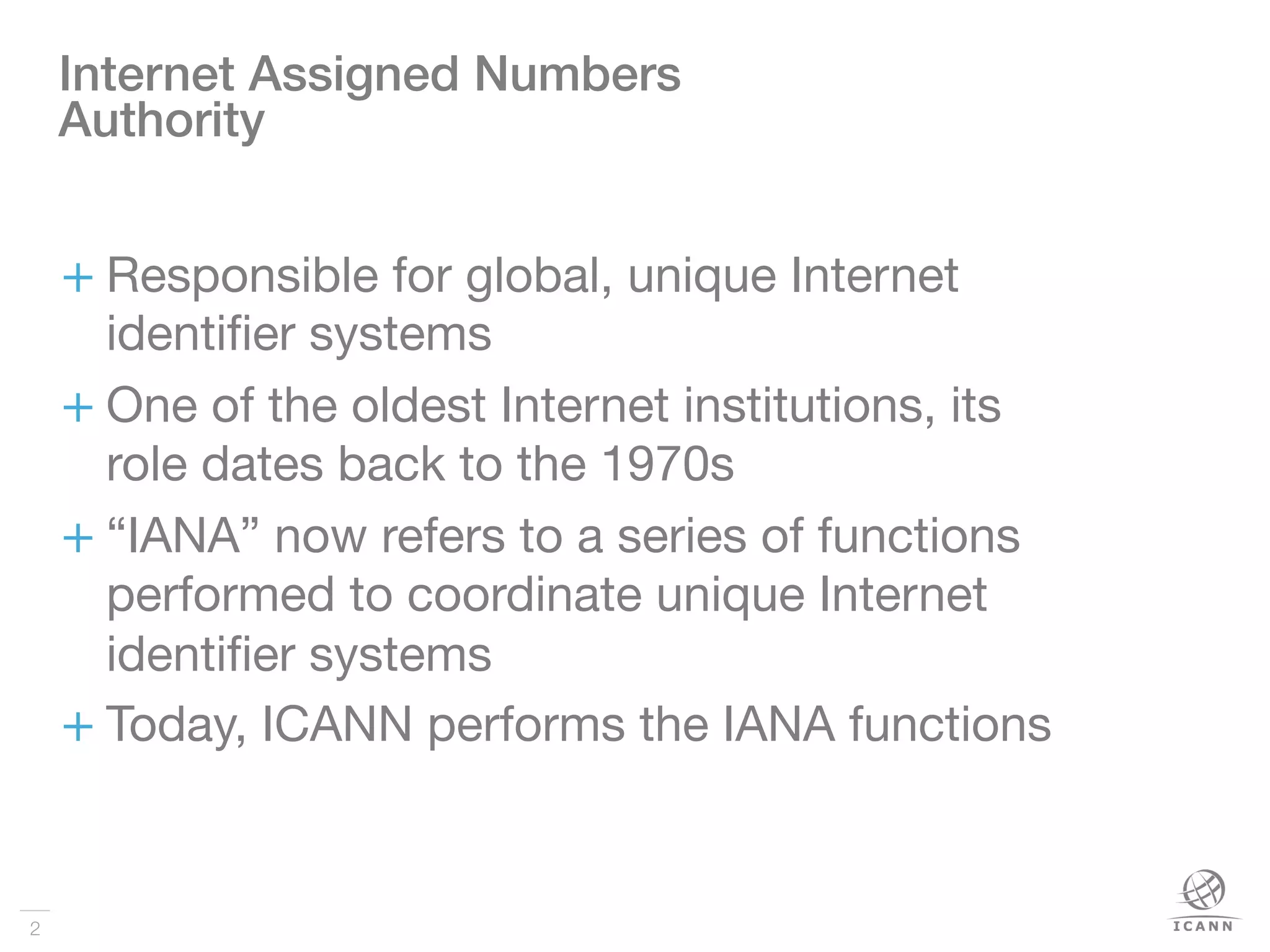
IANA is a set of functions responsible for the global coordination of the internet’s unique identifiers. These include IP addresses, domain names, and protocol parameters. It acts as the ultimate bookkeeper for the internet’s underlying infrastructure. By maintaining the “master copies” of the registries that define how data is routed and how devices recognize one another, IANA ensures that the internet remains a single, unified global network rather than a fragmented series of incompatible local intranets.
The Relationship Between IANA and ICANN
Technically, IANA is not a standalone organization but a department within the Internet Corporation for Assigned Names and Numbers (ICANN). ICANN is a non-profit, multi-stakeholder organization that oversees the internet’s naming and numbering systems. While ICANN handles the high-level policy-making and governance, IANA is the operational arm that carries out the technical administrative work.
The relationship between the two is vital for the “multi-stakeholder model” of internet governance. This model ensures that no single government, corporation, or individual has absolute control over the internet. Instead, decisions are made through a collaborative process involving technical experts, civil society, governments, and the private sector. IANA serves as the neutral executor of these consensus-based policies.
The Three Pillars of IANA Functions
The work of IANA is generally categorized into three distinct functional areas: domain names, number resources, and protocol parameters. Each of these pillars is essential for different aspects of network connectivity.
Domain Name System (DNS) Root Zone Management
The Domain Name System (DNS) is often described as the internet’s phonebook. It translates human-readable names like “www.example.com” into the machine-readable IP addresses that computers use to find each other. IANA sits at the very top of this hierarchy, managing the “Root Zone.”
The Root Zone is the highest level of the DNS structure. IANA is responsible for delegating the management of Top-Level Domains (TLDs)—such as .com, .org, .uk, and .jp—to specific organizations known as registries. When a new TLD is created or when the administrative details of an existing one change, IANA processes the request, verifies that it meets technical and policy requirements, and updates the Root Zone database. Without this central coordination, your browser would have no definitive way of knowing where to find the servers responsible for specific domain extensions.
Number Resources: IP Addresses and ASNs
Every device connected to the internet requires a unique Internet Protocol (IP) address. IANA manages the global pool of these addresses, including both the aging IPv4 standard and the modern IPv6 standard.
IANA does not assign IP addresses directly to individual users or businesses. Instead, it allocates large blocks of addresses to the five Regional Internet Registries (RIRs) that cover different parts of the world: ARIN (North America), RIPE NCC (Europe and the Middle East), APNIC (Asia Pacific), AFRINIC (Africa), and LACNIC (Latin America and the Caribbean). These RIRs, in turn, distribute the addresses to Internet Service Providers (ISPs), who then assign them to end-users.
In addition to IP addresses, IANA manages Autonomous System Numbers (ASNs). ASNs are used by major networks (like those owned by ISPs or large tech companies) to identify themselves to other networks, allowing for the complex routing of data across the global web through the Border Gateway Protocol (BGP).
Protocol Parameters and Registry Maintenance
The third pillar of IANA’s work is perhaps the most technical: the maintenance of protocol parameter registries. For the internet to function, software developers and hardware manufacturers must agree on how different applications communicate. These agreements are called protocols.
In collaboration with the Internet Engineering Task Force (IETF), IANA maintains thousands of registries that list the “magic numbers” used in these protocols. This includes port numbers (for example, port 80 is reserved for HTTP traffic, and port 443 for HTTPS) and MIME types (which tell your browser whether a file is an image, a video, or a PDF). By providing a central, authoritative list of these parameters, IANA prevents technical conflicts that would otherwise prevent different brands of software and hardware from working together.

Why IANA Matters for Global Cybersecurity and Stability
In an era of increasing cyber threats and digital warfare, the stability of IANA’s functions is a matter of global security. If the IANA registries were compromised or manipulated, the consequences would be catastrophic. Traffic could be diverted to malicious servers, emails could be intercepted at the architectural level, and entire regions could be effectively disconnected from the global network.
Maintaining the Unique Identifier System
The “uniqueness” guaranteed by IANA is a prerequisite for security. Digital certificates, which secure our online banking and private communications through encryption, rely on a stable DNS. If the underlying mapping of names to numbers were to fail, the trust models of the modern web would dissolve. IANA’s role in managing the cryptographic keys for the Root Zone (DNSSEC) is a critical component of this security layer, adding a level of digital signature to DNS data to prevent spoofing and man-in-the-middle attacks.
The Shift from IPv4 to IPv6
We are currently in a multi-decade transition from IPv4, which offers about 4.3 billion addresses, to IPv6, which offers a virtually infinite number (340 undecillion). IANA has been instrumental in managing this transition. As the global pool of IPv4 addresses was exhausted, IANA’s role shifted toward ensuring the equitable distribution of the remaining blocks and promoting the adoption of IPv6. This transition is essential for the continued growth of the Internet of Things (IoT), where billions of everyday objects require their own unique digital identities.
Resilience Against Fragmentation
There is a growing concern among technologists regarding “splinternet”—the idea that the internet could fragment into several isolated networks controlled by different geopolitical powers. IANA acts as a bulwark against this fragmentation. By maintaining a single, globally recognized set of registries, it ensures that a device in Tokyo can communicate with a server in Berlin or a smartphone in Nairobi using the exact same protocols and address formats. IANA represents the technical consensus that keeps the internet “one.”
The Evolution of IANA Oversight: From Jon Postel to Global Stewardship
The history of IANA is as fascinating as its technical functions. For many years, the IANA functions were performed primarily by one man: Jon Postel. Known as the “God of the Internet,” Postel managed the assignments of names and numbers with a notebook and a sense of stewardship that defined the internet’s early culture of openness.
The Early Years and the Legacy of Jon Postel
In the 1970s and 80s, the internet was a research project funded by the U.S. Department of Defense. Postel, based at the University of Southern California’s Information Sciences Institute, handled the IANA tasks under a government contract. His work established the principles of fairness and technical merit that still guide the organization today. After his passing in 1998, the responsibility was transitioned to the newly formed ICANN.
The NTIA Transition and Global Stewardship
For nearly two decades, the U.S. government, via the National Telecommunications and Information Administration (NTIA), held a formal oversight role over the IANA functions. This arrangement was a point of international contention, as many nations argued that a global resource like the internet should not be overseen by a single government.
In 2016, a historic transition took place. The U.S. government officially ended its oversight role, handing full control of the IANA functions to the global multi-stakeholder community. Today, IANA is managed by Public Technical Identifiers (PTI), an affiliate of ICANN. This move solidified IANA as a truly international entity, governed by the people who use, build, and maintain the internet worldwide.
Looking Ahead: IANA’s Role in a Decentralized Future
As we move toward a future dominated by AI, decentralized finance, and edge computing, the role of IANA continues to evolve. While technologies like blockchain offer decentralized ways of managing data, the physical and logical routing of the internet still requires the centralized coordination that IANA provides.
Challenges of Modern Connectivity
The explosion of devices in the age of AI and the “always-on” society places immense pressure on the registries IANA maintains. As new protocols emerge to handle high-speed data transfers and lower latency for applications like autonomous vehicles or remote surgery, IANA must remain agile. The organization must ensure that these new technologies do not create “silos” that break the interoperability of the web.
Ensuring an Open and Interoperable Web
Ultimately, IANA is the silent guardian of the open internet. By ensuring that every domain name, IP address, and protocol parameter is unique and universally recognized, it allows for the free flow of information across the globe. As long as the internet exists as a unified network, the functions performed by IANA will remain the bedrock upon which all other digital innovations are built. Understanding IANA is not just about understanding technical registries; it is about understanding the cooperative spirit that allows a billion different voices to coexist in a single, shared digital space.
aViewFromTheCave is a participant in the Amazon Services LLC Associates Program, an affiliate advertising program designed to provide a means for sites to earn advertising fees by advertising and linking to Amazon.com. Amazon, the Amazon logo, AmazonSupply, and the AmazonSupply logo are trademarks of Amazon.com, Inc. or its affiliates. As an Amazon Associate we earn affiliate commissions from qualifying purchases.