
In the world of commerce, time is not merely a measurement of the day; it is a fundamental unit of currency. For business owners, e-commerce entrepreneurs, and independent contractors, the question of what time FedEx starts delivery is rarely about personal convenience. Instead, it is a critical variable in the equation of operational efficiency, supply chain management, and cash flow optimization. FedEx, as a global leader in logistics, operates on a highly synchronized schedule that begins long before the sun rises, with delivery vehicles typically hitting the pavement as early as 8:00 AM local time.
Understanding these delivery windows is essential for any professional looking to maximize their “time-to-market” or reduce the overhead associated with idle labor. When a business understands exactly when their capital—in the form of inventory or critical documents—will arrive, they can more effectively manage their bottom line.
Understanding FedEx Delivery Windows: The Financial Impact on Small Businesses
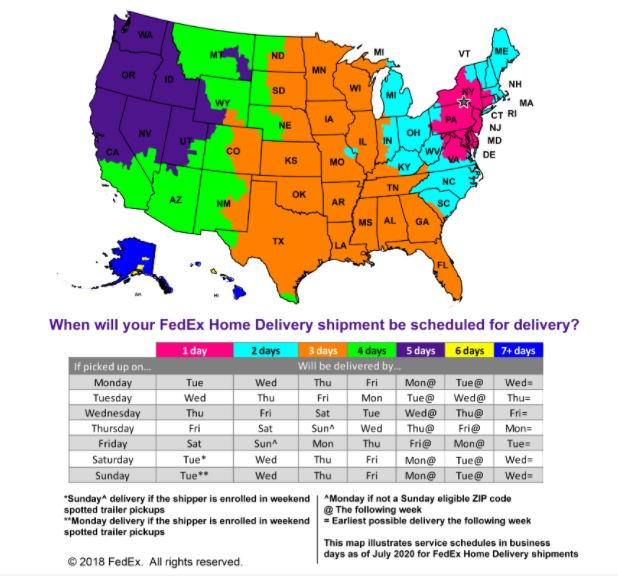
The standard operating window for FedEx Ground and FedEx Home Delivery typically spans from 8:00 AM to 8:00 PM. However, for the business entity, the “start time” is the most significant metric. The commencement of the delivery day at 8:00 AM allows businesses to synchronize their morning workflows with the arrival of necessary assets. If a repair shop receives specialized parts at 8:15 AM rather than 4:00 PM, that shop can bill for labor hours that same day, effectively increasing their daily revenue capacity.
Express vs. Ground: The Cost of Speed and Certainty
From a financial perspective, the choice between FedEx Express and FedEx Ground is a study in risk management and return on investment (ROI). FedEx Express services are governed by strict time-certain commitments. For instance, FedEx First Overnight is designed to deliver as early as 8:00 AM, 8:30 AM, 9:00 AM, or 9:30 AM, depending on the destination’s proximity to a sorting hub.
While the premium for Express services is higher, the “cost of delay” often justifies the expense. For a law firm awaiting signed contracts to close a multi-million dollar merger, the difference between an 8:00 AM delivery and a 2:00 PM delivery isn’t just six hours—it could be the difference between a deal closing within the current fiscal quarter or slipping into the next.
Residential vs. Commercial Delivery Priorities
FedEx Ground generally delivers to businesses during their normal operating hours, Monday through Friday. FedEx Home Delivery, conversely, operates every day of the week, including Sundays for most of the population. For the “side hustler” or home-based entrepreneur, the 8:00 AM start time for residential routes means they can process inventory, photograph items for listing, and ship them out before the local post office or FedEx Office location closes for the day. This creates a high-velocity “circular economy” where capital is tied up in physical goods for the shortest time possible.
Leveraging Early Deliveries for Inventory Management and Side Hustles
In the modern “gig economy” and the world of high-turnover resale (such as sneakers, electronics, or vintage apparel), the speed at which one can receive and flip inventory determines their profit margin. If FedEx starts its route at 8:00 AM and you are at the beginning of that route, you have a distinct competitive advantage over a rival who receives their shipment at 5:00 PM.
The Resale Market and “Just-in-Time” Inventory
Many successful online income streams rely on the “Just-in-Time” (JIT) inventory model. Instead of holding massive amounts of stock—which ties up liquid assets—entrepreneurs use FedEx’s reliable morning start times to receive goods and immediately dispatch them to buyers. By receiving a shipment at 8:30 AM, an entrepreneur can fulfill pending orders by noon, ensuring that their merchant account is credited sooner. This acceleration of the cash conversion cycle is the secret to scaling a small business with limited initial capital.
Minimizing “Held Capital” Through Faster Turnaround
Every hour a product sits in a delivery truck is an hour that your capital is “dead.” Professional investors and business managers look at “Days Sales of Inventory” (DSI) as a key performance indicator. By utilizing FedEx’s earliest delivery tiers, businesses can lower their DSI. When you know FedEx starts delivery at 8:00 AM, you can schedule your staff to arrive at 8:30 AM, ensuring that the labor cost is immediately applied to productive tasks (unboxing and processing) rather than waiting for a mid-afternoon arrival.
FedEx First Overnight: Is the Premium Worth the ROI?

The most expensive service in the FedEx portfolio is often the First Overnight option. From a personal finance perspective, this might seem like an unnecessary luxury. However, from a business finance perspective, it is a strategic tool. If a manufacturing line is down due to a broken component, the cost of “downtime” can be thousands of dollars per hour. In this scenario, paying $150 for an 8:00 AM delivery instead of $30 for a 4:00 PM delivery is a net gain of thousands. Calculating the ROI of shipping start times is a hallmark of sophisticated business management.
Calculating the ROI of FedEx Shipping Tiers
To truly master business finance, one must view shipping not as a flat expense, but as a variable cost that fluctuates based on the value of time. When deciding which FedEx service to use, and considering their start times, a business should perform a simple cost-benefit analysis.
Analyzing Shipping Costs as a Percentage of Revenue
A healthy business generally keeps its shipping and logistics costs within a specific percentage of total revenue—usually between 5% and 10% for e-commerce. However, if a faster delivery start time allows you to charge a “rush” premium to your own customers, your shipping cost as a percentage of revenue may actually decrease, even if the absolute dollar amount spent with FedEx increases. For example, if a customer pays an extra $50 for “Early Morning Delivery,” and FedEx charges you an extra $30 for that tier, you have generated a $20 profit on the logistics alone.
Indirect Costs of Late Deliveries: Customer Lifetime Value (CLV)
While FedEx starts delivery at 8:00 AM, not everyone is at the top of the route. If your business consistently receives goods late in the day, it pushes your fulfillment into the next business day. This delay can negatively impact your Customer Lifetime Value (CLV). In a world where consumers expect “Amazon-speed” fulfillment, using FedEx’s early delivery windows to ensure same-day processing can improve customer retention. A loyal customer is significantly more profitable over time than the cost of a premium shipping label today.
Tax Deductions for Shipping and Business Logistics
It is also important to remember that for legitimate business entities, the costs associated with FedEx deliveries—including the surcharges for early morning start times—are generally 100% tax-deductible as ordinary and necessary business expenses. This effectively reduces the “real” cost of the service by your marginal tax rate. If you are in a 25% tax bracket, a $100 FedEx Express shipment effectively costs you $75, making the pursuit of early delivery times even more financially viable.
Strategic Logistics: How Delivery Start Times Influence Market Competition
In the macro-economic sense, the efficiency of carriers like FedEx enables a level of market competition that was previously impossible for small-scale investors and businesses. By understanding the operational clock of a global logistics giant, a one-person business can compete with massive corporations.
Competing with Amazon’s Fulfillment Network
Amazon’s dominance is built on its logistics. For an independent brand to compete, they must utilize FedEx’s infrastructure to mirror that speed. By leveraging FedEx’s early 8:00 AM start times and “Hold at Location” features (where packages can often be picked up even earlier than they would be delivered), small businesses can achieve delivery parity with larger competitors. This levels the playing field, allowing the focus to shift from “who can get it there fastest” to “who has the better product.”
Using Delivery Early-Bird Windows to Secure Contracts
For B2B (business-to-business) companies, the ability to promise an 8:00 AM arrival for samples, prototypes, or contracts is a powerful marketing tool. It signals to your clients that your business is high-functioning and respects their time. In high-stakes consulting or creative fields, being the first package on the desk at the start of the business day can be the psychological edge that wins a contract.
The Future of Logistics Tech in Reducing Business Overhead
As FedEx continues to integrate AI and advanced route optimization, the “start time” of 8:00 AM is becoming more of a guaranteed milestone rather than a goal. For the business-minded individual, staying abreast of these logistical shifts is paramount. Future integrations may allow for even more granular control over delivery windows, allowing businesses to bid for specific “start time” slots that align perfectly with their internal labor schedules. This level of precision will further reduce waste in the global economy, allowing capital to flow faster and more efficiently than ever before.
In conclusion, knowing that FedEx starts delivery at 8:00 AM is only the beginning. The real value lies in understanding how to weaponize that 8:00 AM start time to increase operational velocity, protect margins, and provide superior value to the end consumer. Whether you are managing a growing e-commerce empire or a service-based firm, the synchronization of your financial goals with FedEx’s delivery clock is a proven strategy for sustainable growth.
aViewFromTheCave is a participant in the Amazon Services LLC Associates Program, an affiliate advertising program designed to provide a means for sites to earn advertising fees by advertising and linking to Amazon.com. Amazon, the Amazon logo, AmazonSupply, and the AmazonSupply logo are trademarks of Amazon.com, Inc. or its affiliates. As an Amazon Associate we earn affiliate commissions from qualifying purchases.