
The Wall Street Journal (WSJ) Prime Rate is one of the most significant benchmarks in the American financial landscape. While the name suggests a direct involvement of a news organization in banking, the WSJ Prime Rate is actually a consensus figure derived from a survey of the largest 30 banks in the United States. It represents the base interest rate that these commercial banks charge their most creditworthy corporate customers. For the average consumer and business owner, this rate is not just a corporate metric; it is the fundamental “base” upon which many consumer interest rates are built, influencing everything from credit card APRs to small business loans.

Understanding the WSJ Prime Rate is essential for anyone navigating the modern economy. Because this rate dictates the cost of borrowing, it serves as a pulse for the broader financial system. When the prime rate is low, capital flows more freely, and debt is less expensive. When it rises, the cost of living and doing business increases, often acting as a mechanism to cool down an overheating economy.
The Mechanics of the WSJ Prime Rate: How It Is Determined
To understand what the prime rate is today, one must first understand the relationship between the commercial banking sector and the Federal Reserve. The WSJ Prime Rate does not move in a vacuum; it is historically and mechanically tied to the federal funds target rate.
The Federal Reserve Connection
The Federal Open Market Committee (FOMC) meets several times a year to set the federal funds rate—the interest rate at which commercial banks borrow and lend their excess reserves to each other overnight. While the Federal Reserve does not “set” the prime rate, the banking industry uses the federal funds rate as its primary guide.
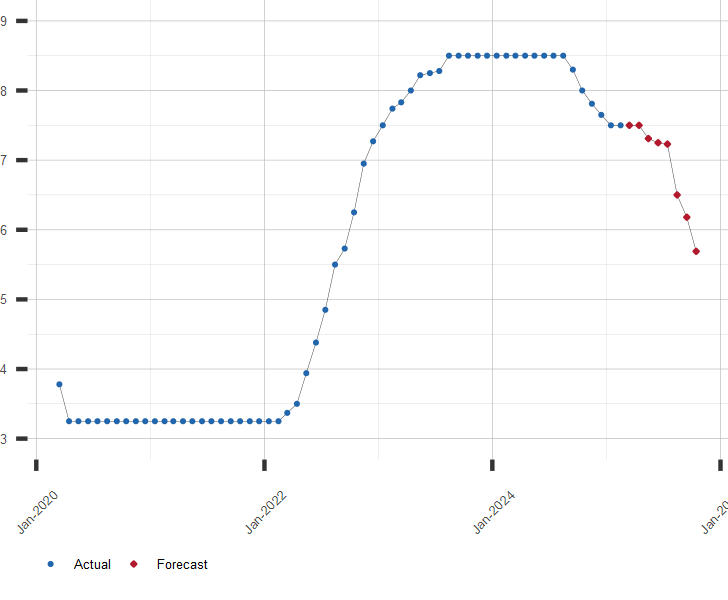
By convention, the WSJ Prime Rate is typically 3 percentage points (300 basis points) higher than the federal funds target rate. For example, if the Federal Reserve sets the federal funds rate at 5.25% to 5.50%, the WSJ Prime Rate will almost universally be quoted at 8.50%. This 3% spread accounts for the banks’ overhead, the cost of doing business, and a built-in profit margin, while still offering a “prime” rate to the least risky borrowers.
The “Base Rate” for Commercial Lending
The Wall Street Journal acts as the official recorder of this rate through its daily survey. According to the Journal’s methodology, the prime rate changes only when 23 out of the 30 largest banks in the country change their individual prime rates. This ensures that the rate reflects a true industry consensus rather than the outlier decision of a single institution.
For institutional investors and corporations, the prime rate is the floor. Very few entities borrow below this rate. However, for the general public, the prime rate is the starting point. Most consumer loans are expressed as “Prime + X%.” Therefore, even if you are not a major corporation, the movements of the WSJ Prime Rate directly dictate the interest you pay on your monthly statements.
Why the WSJ Prime Rate Matters to the Average Consumer
While the prime rate is technically a commercial lending benchmark, its ripple effects are felt in every corner of personal finance. Most variable-rate debt products are directly indexed to the WSJ Prime Rate.
Credit Cards and Variable APRs
The most immediate impact of a change in the WSJ Prime Rate is seen on credit card statements. The vast majority of credit cards have a variable Annual Percentage Rate (APR). If you look at the terms and conditions of your credit card agreement, you will likely see a phrase such as “Your APR is the Prime Rate plus 12.99%.”
When the Federal Reserve raises interest rates, the WSJ Prime Rate follows suit, usually within 24 to 48 hours. Consequently, your credit card interest rate increases by the same amount. This can have a compounding effect on household debt. In a high-interest environment, carrying a balance becomes significantly more expensive, as a 1% increase in the prime rate can add hundreds of dollars in annual interest charges for those with significant balances.
Home Equity Lines of Credit (HELOCs)
For homeowners, the WSJ Prime Rate is a critical figure because Home Equity Lines of Credit (HELOCs) are almost always tied to it. Unlike a traditional fixed-rate mortgage, a HELOC is a revolving line of credit where the interest rate fluctuates based on the market.
When the prime rate is low, HELOCs are an incredibly cheap way to fund home renovations or consolidate debt. However, in a rising-rate environment, homeowners can see their monthly interest-only payments jump significantly. This makes the WSJ Prime Rate a key indicator for homeowners to watch when deciding whether to draw from their equity or look for fixed-rate alternatives like a home equity loan.

Personal and Small Business Loans
Small business owners often rely on lines of credit and Short-Term loans to manage cash flow and inventory. Many of these commercial products are indexed to the prime rate. A higher WSJ Prime Rate increases the “cost of capital,” meaning businesses must generate higher returns to justify borrowing for expansion. For personal loans, while many are fixed-rate, those with variable terms will see their interest costs rise in tandem with the WSJ survey results.
Historical Trends and the Current Economic Landscape
The WSJ Prime Rate has seen dramatic swings over the last several decades, reflecting the shifting priorities of U.S. monetary policy. To understand where the rate is today, we must look at the trajectory that brought it here.
Navigating High-Interest Environments
In the late 1970s and early 1980s, the prime rate reached historic highs, peaking at 21.5% in 1981 as the Federal Reserve fought to curb rampant inflation. Conversely, following the 2008 financial crisis and again during the 2020 global pandemic, the prime rate dropped to near-historic lows as the Fed slashed the federal funds rate to near zero to stimulate economic activity.
Today’s rate environment is a direct response to the post-pandemic inflationary surge. As the Federal Reserve aggressively hiked rates to cool the economy, the WSJ Prime Rate climbed to levels not seen in over fifteen years. This shift has transitioned the economy from an era of “easy money” to an era where liquidity has a high price tag.
Predicting Future Shifts in the Prime Rate
Investors and financial analysts closely monitor FOMC meetings and economic indicators like the Consumer Price Index (CPI) and employment data to predict the next move of the WSJ Prime Rate. If inflation remains “sticky” or above the Fed’s 2% target, the prime rate is likely to remain elevated. Conversely, if the labor market cools significantly or inflation hits the target, the market anticipates rate cuts, which would lead to a corresponding drop in the WSJ Prime Rate.
For consumers, staying informed about these macro trends is vital. A predicted drop in the prime rate might be a reason to delay a large purchase or wait to open a new line of credit, while a predicted hike might be a signal to accelerate debt repayment.
Strategies to Manage Debt in a High-Rate Environment
When the WSJ Prime Rate is high, the financial strategy shifts from leveraging debt for growth to protecting assets and minimizing interest expenses. There are several tactical moves consumers and businesses can take to mitigate the impact of an elevated prime rate.
Fixed-Rate vs. Variable-Rate Debt
One of the most effective ways to insulate yourself from a rising prime rate is to move away from variable-rate debt. For example, if you have a variable-rate personal loan, you might consider refinancing into a fixed-rate loan. While the fixed rate might be higher than what you paid years ago, it provides the security of a consistent payment regardless of what the WSJ survey reports in the future.
Refinancing and Debt Consolidation
In a high-rate environment, the spread between what you pay on a credit card (often 20% or higher) and what you would pay on a consolidated personal loan remains significant. Even as the prime rate rises, consolidating high-interest credit card debt into a fixed-rate personal loan can save thousands in interest.
Furthermore, business owners should review their lines of credit. If the prime rate has pushed their interest costs too high, it may be time to look for Small Business Administration (SBA) loans or other products that might offer more favorable terms or fixed-rate options.
The Strategic Importance of the Prime Rate
The WSJ Prime Rate is more than just a number on a financial chart; it is a fundamental pillar of the American economy. It dictates the rhythm of consumer spending, the feasibility of business expansion, and the overall cost of the “American Dream” when that dream involves borrowing.
By keeping a close eye on the WSJ Prime Rate today, you are effectively monitoring the heartbeat of your own financial health. Whether you are managing credit card debt, looking to tap into home equity, or planning a business venture, the prime rate is the benchmark that will define your costs. In an ever-changing economic climate, knowledge of this rate allows for proactive rather than reactive financial management, ensuring that you can navigate both high-interest hurdles and low-interest opportunities with confidence and precision.
aViewFromTheCave is a participant in the Amazon Services LLC Associates Program, an affiliate advertising program designed to provide a means for sites to earn advertising fees by advertising and linking to Amazon.com. Amazon, the Amazon logo, AmazonSupply, and the AmazonSupply logo are trademarks of Amazon.com, Inc. or its affiliates. As an Amazon Associate we earn affiliate commissions from qualifying purchases.