
In the vast landscape of telecommunications and electronic signal processing, few concepts are as foundational or as enduring as Amplitude Modulation (AM). As we navigate an era defined by 5G connectivity, fiber optics, and complex digital protocols, understanding the fundamental mechanics of how we first learned to imprint information onto electromagnetic waves is essential. Amplitude Modulation represents the first major breakthrough in wireless communication, turning raw radio frequencies into a medium capable of carrying the human voice, music, and data across continents.
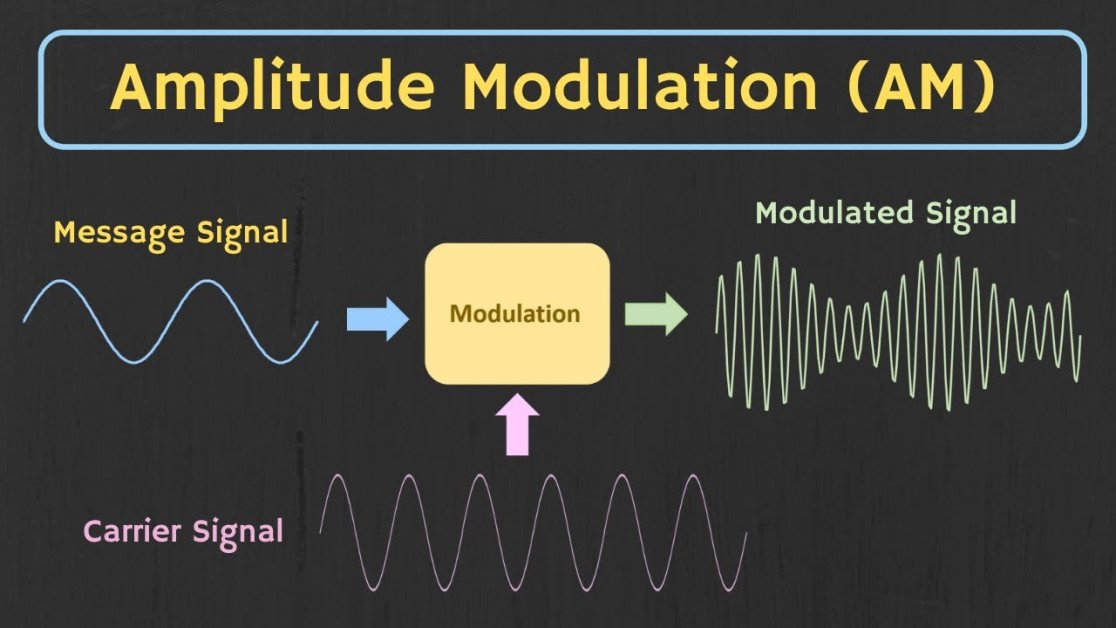
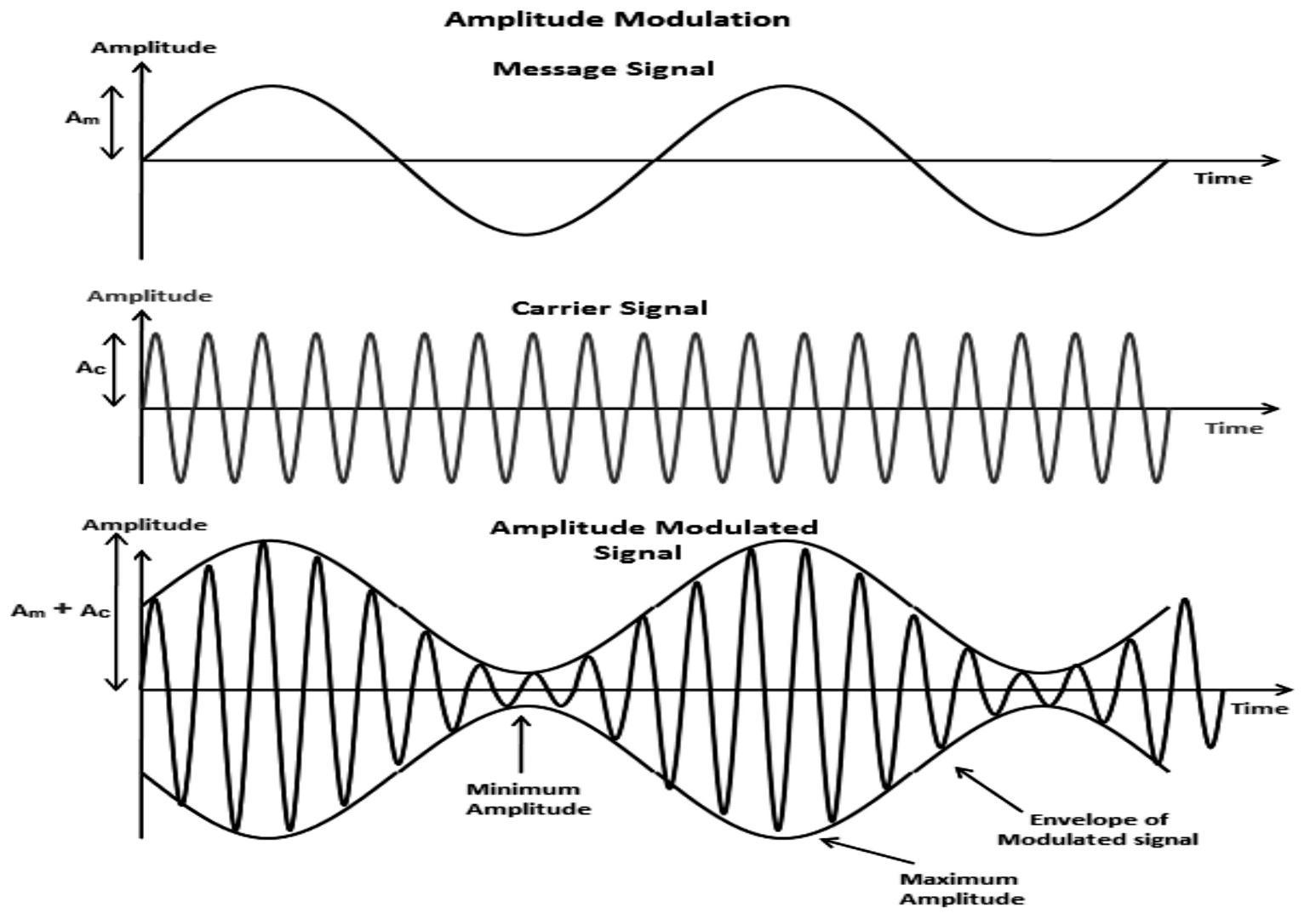
At its core, Amplitude Modulation is a technique used in electronic communication, most commonly for transmitting information via a radio carrier wave. In this process, the strength—or “amplitude”—of the carrier wave is varied in direct proportion to that of the message signal, such as an audio signal or a digital data stream. While newer and more robust methods of modulation have since emerged, the principles of AM remain deeply embedded in modern technology, from aviation communication to the complex QAM protocols that power our high-speed internet.

The Engineering Principles of Signal Modulation
To understand Amplitude Modulation, one must first understand the concept of the carrier wave. In any wireless communication system, information cannot simply be “thrown” through the air at its natural frequency. For instance, human speech exists in a low-frequency range (roughly 20 Hz to 20 kHz). If we attempted to transmit these low frequencies directly as electromagnetic waves, the antennas required would need to be miles long to match the wavelength.
Instead, engineers use a “carrier wave”—a high-frequency electromagnetic wave that acts as a vehicle for the information. Modulation is the process of modifying one or more properties of this carrier wave so that it can carry a signal. In the case of Amplitude Modulation, the frequency and phase of the carrier remain constant, while its amplitude is modified.
The Anatomy of an AM Wave
An AM signal is composed of three distinct parts: the carrier wave, the upper sideband, and the lower sideband. When a carrier wave is modulated by an input signal, the process creates new frequencies. If you have a carrier frequency of 1000 kHz and you modulate it with a 5 kHz audio tone, the resulting signal will occupy a range of 995 kHz to 1005 kHz.
This range is known as the bandwidth. In traditional AM broadcasting, the bandwidth is relatively narrow, which allows many stations to exist on the radio dial without overlapping. However, this narrow bandwidth also limits the “fidelity” or quality of the audio, which is why AM radio is often associated with talk shows and news rather than high-fidelity music.
The Modulation Index
A critical technical parameter in this process is the “modulation index” or “modulation depth.” This value determines how much the carrier wave’s amplitude varies relative to its unmodulated level. A modulation index of 1.0 (or 100%) means the signal reduces the carrier to zero at its lowest point and doubles it at its peak. If the index exceeds 1.0, “overmodulation” occurs, resulting in “clipping” and severe distortion of the transmitted data. Engineering a perfect balance in the modulation index is vital for maintaining signal integrity and power efficiency.
The Historical and Technical Evolution of AM
The journey of Amplitude Modulation began in the late 19th and early 20th centuries. While Guglielmo Marconi is credited with the first successful transatlantic radio transmissions, his early “spark-gap” transmitters could only send Morse code—essentially turning the signal on and off. It was Reginald Fessenden and Lee de Forest who pioneered the continuous waves necessary for actual voice transmission.
From Spark-Gap to Continuous Wave
Fessenden’s breakthrough in 1906, where he transmitted a Christmas Eve program featuring violin playing and Bible readings, was the first true demonstration of Amplitude Modulation. This was made possible by the development of high-frequency alternators and, later, the vacuum tube. The vacuum tube allowed for the precise amplification and control of electronic signals, making sophisticated modulation practical for the first time.
As vacuum tube technology gave way to solid-state transistors in the mid-20th century, AM transmitters became smaller, more efficient, and more reliable. This era saw the rise of the “superheterodyne receiver,” a revolutionary circuit design that improved the ability of radios to isolate a specific AM frequency from the clutter of other signals.
The Digital Shift and QAM
While traditional analog AM has declined in popularity for consumer media, the concept of varying amplitude has evolved into Quadrature Amplitude Modulation (QAM). This is a highly advanced form of modulation used in modern tech like Wi-Fi, cable modems, and cellular networks. QAM combines two carrier waves (the In-phase and Quadrature components) and modulates both their amplitudes and phases. This allows for the transmission of massive amounts of digital data within a limited frequency spectrum, proving that the logic of AM is still the backbone of the digital revolution.
Advantages and Limitations in the Tech Landscape
Every modulation technique involves a series of trade-offs between range, power, and clarity. Amplitude Modulation is no exception. In the context of modern engineering, understanding these pros and cons is essential for choosing the right protocol for a specific application.
The Benefit of Range and Simplicity
The primary advantage of AM is its simplicity. The hardware required to modulate and, more importantly, demodulate (extract the information from) an AM signal is incredibly basic. A simple “envelope detector” consisting of a diode and a capacitor is often all that is needed to turn an AM radio wave back into audible sound.
Furthermore, AM signals in the Medium Frequency (MF) and High Frequency (HF) bands have unique propagation characteristics. They can travel long distances by reflecting off the ionosphere—a phenomenon known as “skywave” or “skip.” This allows AM signals to be received hundreds or even thousands of miles away from the transmitter, especially at night. This makes AM indispensable for maritime communication, international shortwave broadcasting, and emergency alerts in remote areas.
The Challenge of Noise and Interference
The greatest weakness of AM is its susceptibility to “noise.” Because the information is stored in the amplitude (the strength) of the wave, any external electromagnetic interference that affects the wave’s strength will be interpreted as part of the signal.
Natural phenomena like lightning and man-made interference from power lines, electric motors, and LED lights create “static” on an AM signal. This is why AM radio often sounds crackly during a thunderstorm. Unlike Frequency Modulation (FM), where the information is stored in the timing of the waves rather than their height, AM has no inherent way to filter out this amplitude-based noise.
Modern Applications: Beyond the Radio Dial
It is a common misconception that Amplitude Modulation is a “dead” technology. While it may have been eclipsed by FM and digital streaming for music, it remains a critical component in several high-stakes technical fields.
Aviation and Air Traffic Control
If you have ever listened to a pilot communicating with air traffic control, you were listening to Amplitude Modulation. The aviation industry uses the VHF (Very High Frequency) band from 108 to 137 MHz, specifically employing AM. The reason is technical and safety-oriented: when two FM signals overlap, the stronger one completely “captures” the receiver, silencing the weaker one (the capture effect). In AM, if two pilots talk at once, their signals heterodyne, creating a “squeal” that alerts the controller that multiple people are trying to communicate. In life-or-death situations, hearing a faint, garbled voice is better than hearing nothing at all.
Sensing and Instrumentation
AM principles are widely used in specialized sensors and laboratory equipment. For example, in Atomic Force Microscopy (AFM), a technique used to image surfaces at the molecular level, “Amplitude Modulation Mode” is used to detect the forces between a sharp probe and the sample. By measuring how the oscillation amplitude of the probe changes as it nears the surface, scientists can map out individual atoms.
The Foundation of Modern Internet (QAM)
As mentioned previously, Quadrature Amplitude Modulation is the “supercharged” version of AM. Modern Wi-Fi standards (like Wi-Fi 6) and 4G/5G LTE networks use high-order QAM (such as 256-QAM or 1024-QAM). This tech represents data as points on a “constellation diagram,” where each point corresponds to a specific amplitude and phase. Without the fundamental logic of amplitude modulation, the high-speed streaming and low-latency gaming we enjoy today would be physically impossible.
Comparing AM and FM: A Technological Perspective
The debate between AM and FM is often framed in terms of “which is better,” but in engineering, the answer depends entirely on the use case.
- Bandwidth: AM requires much less bandwidth than FM. An AM station typically uses about 10 kHz of spectrum, whereas an FM station uses 200 kHz. This efficiency is why the AM band can host so many stations.
- Power Efficiency: AM is less power-efficient. A large portion of the power in an AM transmission is used by the carrier wave itself, which carries no data. In contrast, FM utilizes power more effectively for the actual information transmission.
- Circuit Complexity: AM transmitters and receivers are significantly easier and cheaper to build. This made AM the standard for the first half-century of electronics and continues to make it a go-to for low-cost, long-range communication devices.
- Signal Quality: FM provides superior audio quality because it is immune to amplitude noise. If the signal strength fluctuates due to distance or obstacles, the FM receiver can still decode the frequency shifts perfectly, whereas the AM receiver will experience a drop in volume and an increase in static.
Conclusion: The Enduring Legacy of Amplitude Modulation
Amplitude Modulation is more than just a relic of the early days of radio; it is a fundamental pillar of electronic theory. It taught us how to manipulate the electromagnetic spectrum to bridge the gap between human thought and distant reception. From the early experiments of Fessenden to the high-speed data packets of a 5G network, the ability to encode information into the rise and fall of a wave’s power remains a cornerstone of the modern world.
As we look toward future technologies—such as terahertz communication and quantum networking—the lessons learned from Amplitude Modulation continue to inform how we manage noise, bandwidth, and power. Whether it is keeping airplanes safe in the sky or delivering gigabit internet to our homes, AM’s legacy is active in nearly every “connected” moment of our lives. Understanding AM is not just about looking back at the history of tech; it is about understanding the very language of the airwaves that surround us.
aViewFromTheCave is a participant in the Amazon Services LLC Associates Program, an affiliate advertising program designed to provide a means for sites to earn advertising fees by advertising and linking to Amazon.com. Amazon, the Amazon logo, AmazonSupply, and the AmazonSupply logo are trademarks of Amazon.com, Inc. or its affiliates. As an Amazon Associate we earn affiliate commissions from qualifying purchases.