
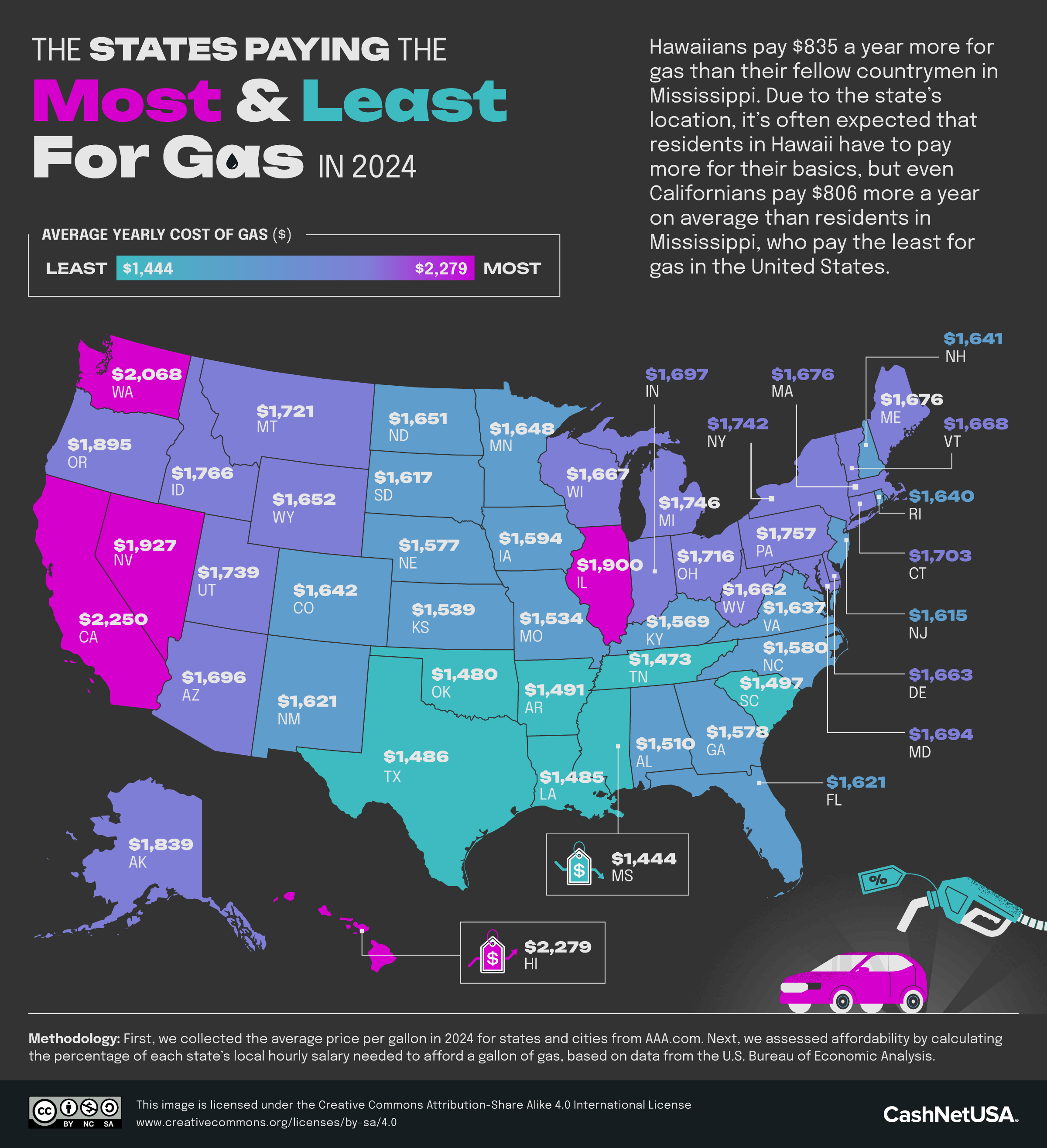
For the average American household, transportation represents one of the most significant recurring expenses, second only to housing. Within that category, fuel costs are the most visible and volatile variable. When consumers ask, “What is the cheapest gas price in the US?” they are rarely looking for a single static number; rather, they are seeking an understanding of the economic landscape that dictates why a gallon of regular unleaded might cost $2.80 in Mississippi while exceeding $5.00 in California. Navigating these price fluctuations is more than just a matter of convenience—it is a critical component of sophisticated personal financial management.
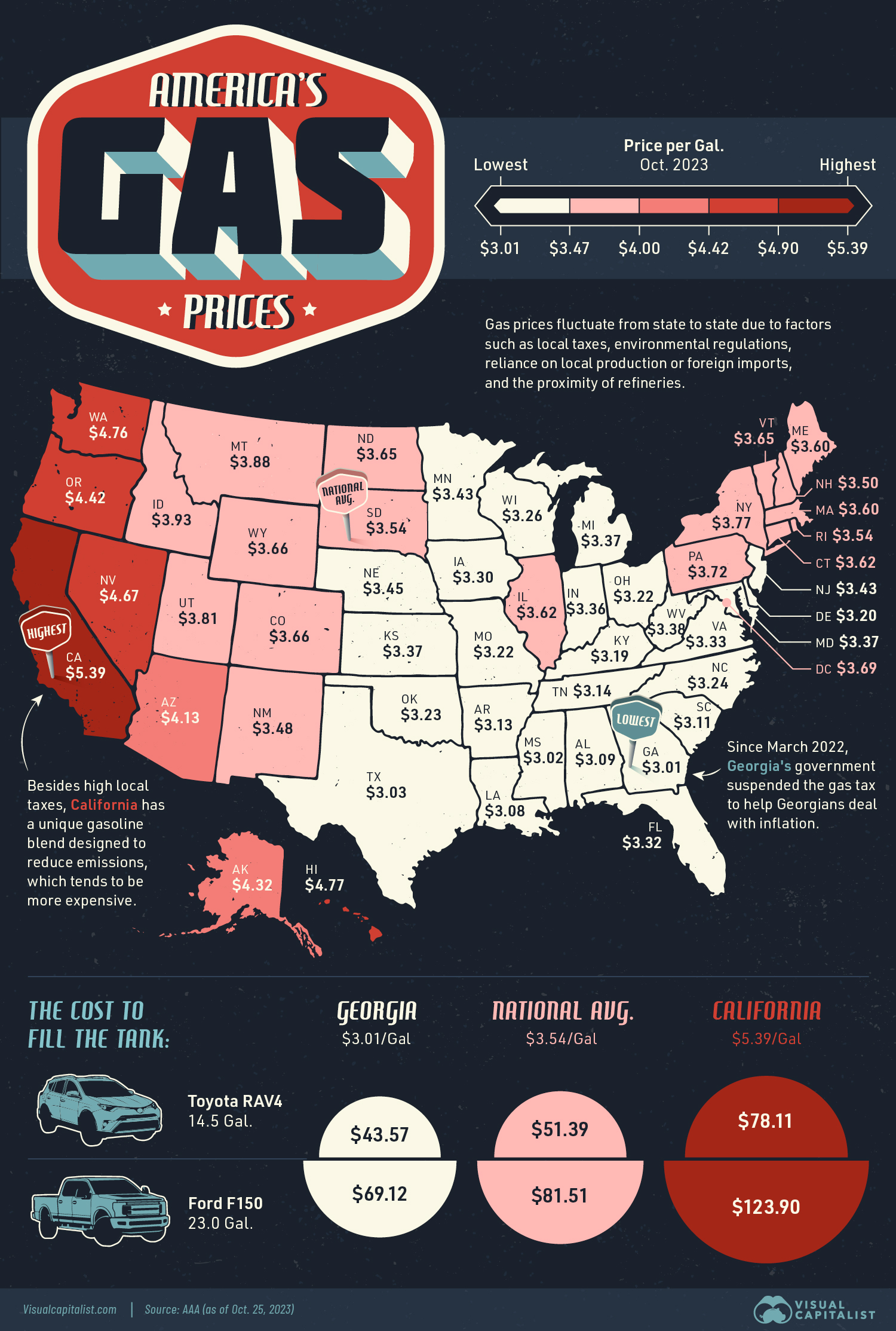
Understanding the “cheapest” price requires a deep dive into the intersection of global commodity markets, state-level fiscal policy, and localized retail competition. By mastering these dynamics, individuals can better forecast their monthly expenditures and implement strategies to minimize the impact of energy inflation on their bottom line.
Understanding the Geographic Disparity of Fuel Costs
The disparity in fuel prices across the United States is not a matter of random chance; it is the result of a complex logistics network and varying regulatory environments. To find the cheapest gas in the country, one must look toward the regions where supply is high and the cost of doing business is low.
The Proximity to Production: The Gulf Coast Powerhouse
Historically, the cheapest gas prices in the United States are consistently found in the Gulf Coast region, specifically in states like Mississippi, Texas, Louisiana, and Arkansas. This geographic advantage is primarily due to the region’s massive refining capacity. The Gulf Coast serves as the heart of the U.S. petroleum industry, housing the infrastructure necessary to process crude oil into finished gasoline.
When gasoline is produced in Texas and sold in Texas, the “midstream” costs—transportation via pipelines, trucks, or barges—are minimized. In contrast, states in the Pacific Northwest or New England must pay a premium for the logistical challenge of moving fuel over long distances. Consequently, consumers in the South often enjoy a baseline price that is 20% to 30% lower than the national average simply due to their proximity to the source.
The Burden of State Taxation
Beyond logistics, the single most influential factor in determining where the cheapest gas is located is state-level taxation. Federal excise taxes on gasoline are uniform across the country, but state taxes vary wildly. As of recent fiscal years, states like Pennsylvania and California levy taxes that can exceed 50 to 60 cents per gallon, while states like Alaska or Missouri may charge less than half that amount.
For the savvy personal financier, understanding these tax boundaries is essential. It is common for “border shopping” to occur, where drivers cross state lines specifically to fill their tanks in a lower-tax jurisdiction. This creates a micro-economic environment where gas stations near state borders must balance their prices against neighbors who may be operating under entirely different tax mandates.
The Macroeconomic Drivers of Low Gas Prices
While geography sets the floor for prices, global and national economic trends dictate the ceiling. The quest for the cheapest gas is often a race against macroeconomic volatility.
Crude Oil Benchmarks and Global Supply Chains
Approximately 50% to 60% of the price a consumer pays at the pump is determined by the cost of crude oil. Two primary benchmarks—West Texas Intermediate (WTI) and Brent Crude—act as the North Star for gasoline pricing. When global supply increases, perhaps through increased production from OPEC+ or domestic shale output, the cost of the raw material drops, leading to lower prices at the pump.
However, the “cheapest” gas often appears during periods of economic cooling. Lower demand for industrial transportation and personal travel leads to a surplus of supply. For the individual investor or budget-conscious consumer, tracking the WTI index can provide a two-to-three-week lead time on whether gas prices are likely to fall or rise, allowing for better cash flow planning.
Seasonal Fluctuations and Refining Cycles
The time of year significantly impacts the definition of “cheap.” The U.S. Environmental Protection Agency (EPA) mandates different gasoline blends for summer and winter. Summer-grade fuel is more expensive to produce because it is designed to be less volatile and evaporate less easily in high temperatures, which helps reduce smog.

Consequently, the cheapest gas prices in the U.S. almost always occur in the late autumn and winter months. During this period, refineries switch to cheaper winter blends, and demand typically drops as leisure travel decreases. Understanding this cycle allows households to anticipate a “seasonal raise” in their discretionary income during the colder months as fuel costs recede.
Strategic Financial Moves to Secure the Lowest Prices
Finding the cheapest gas is not merely about finding the right zip code; it is about leveraging financial tools and consumer habits to artificially lower the price per gallon. In a world where margins are tight, these strategies can result in hundreds of dollars in annual savings.
Warehouse Clubs and Membership Value Propositions
One of the most effective ways to access the cheapest gas in any given market is through warehouse clubs like Costco, Sam’s Club, or BJ’s Wholesale. These entities often use gasoline as a “loss leader”—a product sold at little to no profit to entice members into the store.
From a personal finance perspective, the membership fee must be weighed against the potential savings. If a membership costs $60 per year and the gas at the club is consistently 20 cents cheaper than the local average, a driver only needs to purchase 300 gallons of fuel to break even. For most American commuters, this break-even point is reached within the first few months of the year, making the warehouse model a highly effective hedge against rising fuel costs.
Optimizing Personal Finance via Fuel Rewards and Credit Cards
The modern financial ecosystem offers a variety of “stackable” rewards that can drive the net price of gasoline down even further. Many major fuel brands offer loyalty programs that provide a direct discount per gallon. When these are paired with high-yield cash-back credit cards specifically categorized for gas stations, the savings can be substantial.
For example, using a credit card that offers 3% to 5% cash back on fuel, combined with a 5-cent-per-gallon loyalty discount, can effectively lower the price of gas by 15 to 25 cents per gallon. In the context of a $4.00 gallon of gas, this represents a significant percentage of savings that can be redirected toward investments or high-yield savings accounts. Using apps like GasBuddy or Upside further enhances this process by providing real-time data on the cheapest localized prices, ensuring the consumer never pays more than the market minimum.
The Future of Fuel Costs and Personal Budgeting
As we look toward the future, the definition of “cheap” in the context of transportation is evolving. The transition toward a more diversified energy economy means that traditional gasoline prices will be influenced by new variables.
The Impact of Electric Vehicle Adoption on Gas Demand
The rise of Electric Vehicles (EVs) presents an interesting paradox for the gasoline market. On one hand, reduced demand for gasoline could lead to lower prices as refineries compete for a smaller pool of customers. On the other hand, a decrease in demand could lead to the closure of refineries, reducing supply and potentially driving prices higher in certain regions.
For the individual, the cheapest “gas” price might eventually be the cost of a kilowatt-hour. Transitioning to an EV is a long-term capital investment that fundamentally changes a household’s relationship with energy costs. Analyzing the “total cost of ownership” is becoming more important than simply tracking the price per gallon at the corner station.
Inflationary Pressures and Long-term Financial Resilience
Gas prices are often a leading indicator of broader inflationary pressures. When fuel costs rise, the cost of transporting goods rises, which eventually manifests as higher prices at the grocery store and retail outlets. Therefore, securing the cheapest possible fuel is not just about saving money at the pump; it is about protecting one’s purchasing power against the cascading effects of energy inflation.
Building financial resilience involves creating a “fuel buffer” in one’s budget. This means budgeting for the national average but actively seeking out the regional minimums. By living on the “average” but spending at the “minimum,” consumers create a surplus that can be used to fund emergency accounts or retirement vehicles.
In conclusion, the cheapest gas price in the U.S. is a moving target influenced by geography, taxes, and global markets. However, by understanding the mechanics of the Gulf Coast refining advantage, leveraging membership clubs, and utilizing high-yield reward structures, consumers can effectively dictate their own personal fuel economy. In the grand scheme of personal finance, mastering the “small” recurring costs like gasoline is what allows for the “large” accumulation of long-term wealth. Fuel efficiency, in both a mechanical and a financial sense, remains a cornerstone of a robust economic plan.
aViewFromTheCave is a participant in the Amazon Services LLC Associates Program, an affiliate advertising program designed to provide a means for sites to earn advertising fees by advertising and linking to Amazon.com. Amazon, the Amazon logo, AmazonSupply, and the AmazonSupply logo are trademarks of Amazon.com, Inc. or its affiliates. As an Amazon Associate we earn affiliate commissions from qualifying purchases.