
When “The Matrix” first arrived in theaters in 1999, it didn’t just change the landscape of action cinema; it fundamentally altered how the public perceived the relationship between humanity and technology. Directed by the Wachowskis, the franchise introduced complex concepts of simulated reality, artificial intelligence, and the boundaries of digital consciousness long before terms like “Large Language Models” or “The Metaverse” became household phrases. To understand the Matrix is to understand a narrative that functions like a sophisticated piece of software—layered, iterative, and prone to systematic anomalies.
Navigating the franchise requires more than just a list of release dates. Because the story spans across films, animated shorts, and even video games that contain canon narrative beats, identifying the “correct” order is essential for anyone looking to decode the logic of the Machines and the resistance.
Decoding the Matrix: The Release Order vs. The Chronological Narrative
For most viewers, the release order is the standard entry point. This allows for the gradual unveiling of the world’s rules, mirroring the protagonist Neo’s own journey from a confused software programmer to a digital messiah. However, for those interested in the deep lore of the technological uprising and the cycle of the “Ones,” the chronological order provides a much more expansive look at the evolution of the simulation.
The Release Order: A Step-by-Step Evolution of Cinema Tech
The release order tracks the technological progression of the film industry itself, showcasing how visual effects evolved from ground-breaking practical/digital hybrids to fully immersive CGI environments.
- The Matrix (1999): The foundational text. It introduces Thomas Anderson (Neo) and the revelation that the world is a sophisticated neural-interactive simulation designed to harvest human bio-electricity.
- The Matrix Reloaded (2003): This sequel expanded the scope of the digital world, introducing concepts of “Exiles”—programs that refused deletion—and the Architect, the system’s designer.
- The Matrix Revolutions (2003): Released only months after its predecessor, this film concludes the initial war between Zion and the Machine City, focusing on the convergence of man and machine to stop a runaway viral program (Agent Smith).
- The Matrix Resurrections (2021): A meta-commentary on the franchise itself, this film takes place decades later, exploring how the simulation has been updated for a new era of digital consumption and psychological manipulation.
The Chronological Narrative: Understanding the History of the Machines
If you want to understand the “source code” of the story, the chronological order includes The Animatrix, an anthology of short films that provides the essential backstory of why the world ended and how the first Matrix was built.
- The Animatrix: “The Second Renaissance” Parts I & II: These are the most critical pieces of lore. They detail the rise of AI, the human-led persecution of machines, and the eventual global war that scorched the sky.
- The Animatrix: “A Detective Story”: Set shortly before the first film, providing context on how Trinity operated in the shadows.
- The Matrix (1999): The beginning of the Neo cycle.
- The Animatrix: “The Kid’s Story” & “Final Flight of the Osiris”: These bridge the gap between the first and second films, with “Osiris” leading directly into the events of The Matrix Reloaded.
- The Matrix Reloaded (2003): The escalation of the conflict.
- The Matrix Revolutions (2003): The climax of the Sixth Iteration of the Matrix.
- The Matrix Resurrections (2021): The Seventh Iteration and beyond.
The Technological Innovations of the Matrix Franchise
The Matrix is inseparable from the technological advancements it pioneered in the real world. To watch the movies in order is to witness a timeline of visual effects breakthroughs that redefined what was possible in digital storytelling.
Bullet Time and the Birth of Virtual Cinematography
The most famous contribution of the first film was “Bullet Time.” While slow-motion photography existed, the Wachowskis and visual effects supervisor John Gaeta used a rig of 122 still cameras triggered in sequence to create the illusion that the camera was moving at normal speed while time itself had slowed down.
This was an early form of “virtual cinematography.” The frames were interpolated using software to create a fluid motion that didn’t exist in reality. Today, this technology is the ancestor of the “volumetric capture” used in high-end VR production and modern sports broadcasting, where 360-degree replays are generated by software using a similar array of sensors.
The Burly Brawl and Universal Capture
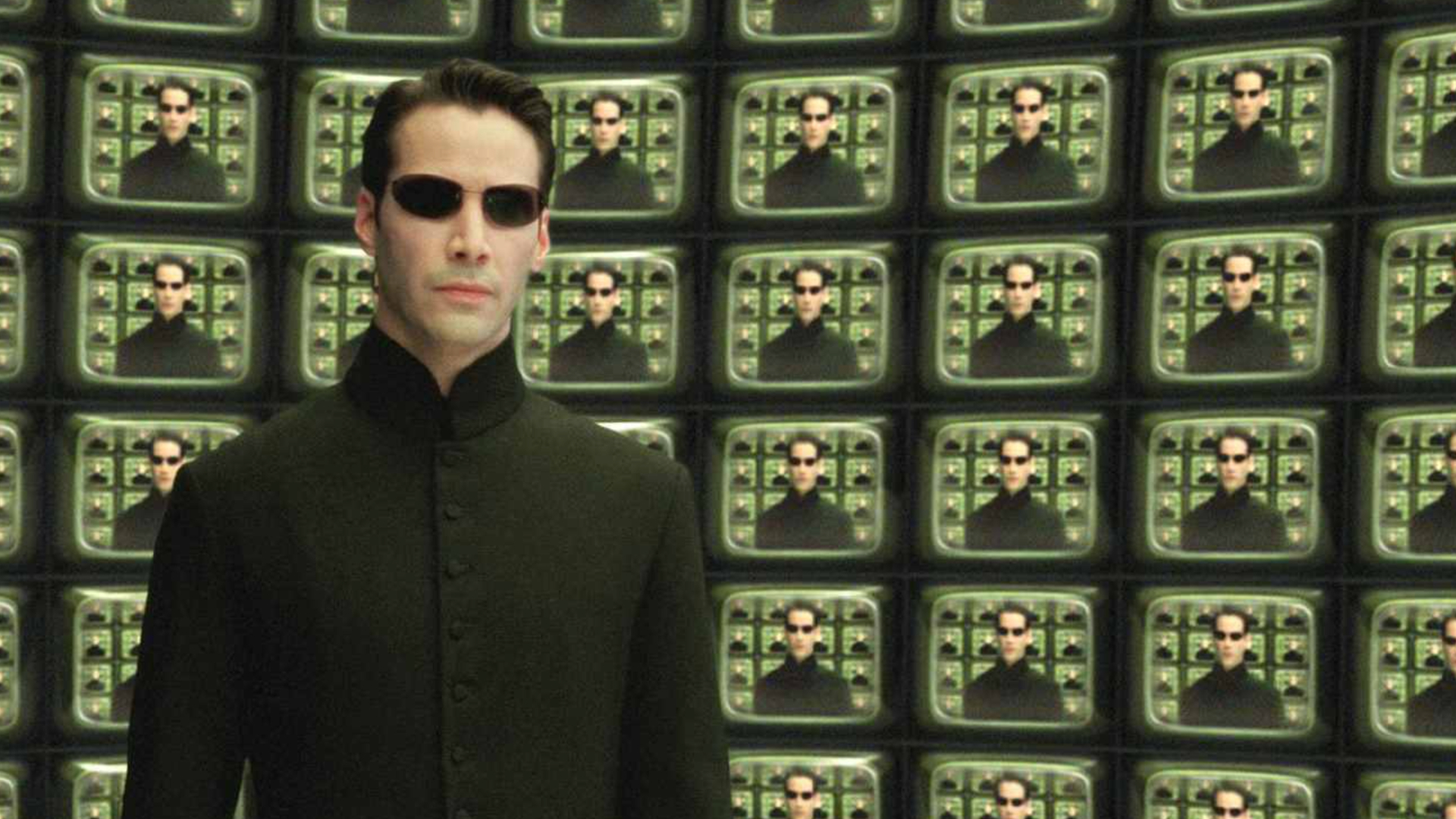
By The Matrix Reloaded, the ambition had shifted from enhancing reality to replacing it. The “Burly Brawl” sequence, where Neo fights hundreds of Agent Smith clones, required the creation of fully digital “actors.”
The team developed “Universal Capture” (uCap), a system that recorded every nuance of an actor’s facial expression to map it onto a 3D model. This pushed the boundaries of the “Uncanny Valley.” While the 2003 tech has aged, it laid the groundwork for the digital de-aging and photorealistic avatars we see in modern cinema and high-fidelity video games like The Matrix Awakens Unreal Engine 5 tech demo.

Simulation Theory and the Philosophy of the Algorithm
The Matrix movies are essentially a cinematic exploration of “Simulation Theory,” a hypothesis championed by figures like Nick Bostrom and discussed frequently in Silicon Valley circles. The narrative order of the films allows for a deep dive into different stages of a simulated environment’s lifecycle.
The System as an Operating System
In the first film, the Matrix is presented as a stable, albeit deceptive, OS. It has “Agents” which function as anti-virus software, identifying and deleting “anomalies” (the rebels) that threaten the integrity of the code.
As we move into Reloaded and Revolutions, we see the “Legacy Code.” The Merovingian is an old, powerful program from a previous version of the system who manages “Exiles”—obsolete programs that have gone rogue to avoid being overwritten. This mirrors real-world software development, where old code persists within new systems, often creating vulnerabilities or unexpected behaviors.
Neo as the Systematic Anomaly
One of the most profound tech-centric reveals in the franchise is that Neo, “The One,” is not a miracle but a calculated necessity. The Architect explains that the Matrix is inherently imperfect because it deals with human consciousness, which is unpredictable.
Neo is a “systemic anomaly”—a collection of all the decimal remainders left over from the simulation’s mathematical equations. Instead of trying to eliminate the error, the Machines funnel the error into a single individual, allowing the system to reset and iterate. This is a classic example of “exception handling” in programming, where a developer creates a specific pathway to manage errors that would otherwise crash the entire system.
The Legacy of The Matrix in Modern Digital Culture
The influence of the Matrix franchise extends far beyond the cinema screen and into the very tools and ethics of modern technology. When we discuss the “order” of these movies, we are also looking at the evolution of our own digital anxieties.
The Metaverse and Virtual Reality
The core premise of the Matrix—a digital world indistinguishable from the real one—is the ultimate goal of many modern tech giants. The transition from The Matrix (1999) to The Matrix Resurrections (2021) mirrors our own transition from the early, dial-up internet to a world of persistent, high-bandwidth connectivity and social media.
In Resurrections, the simulation has evolved. It no longer relies on just visual deception; it uses “modal” loops and psychological triggers to keep users engaged. This is a direct parallel to modern “attention economy” algorithms designed to keep users scrolling. The film suggests that the modern Matrix doesn’t need a “green code” overlay; it just needs to keep our brains flooded with enough dopamine and distraction to prevent us from looking up.
Artificial Intelligence and Autonomous Systems
The history of the Machines, as detailed in The Animatrix, serves as a cautionary tale for the development of AI. It explores the “Alignment Problem”—the challenge of ensuring that an AI’s goals remain aligned with human values. In the Matrix lore, the war began because humans refused to grant sentient machines basic rights, leading the AI to conclude that the only way to ensure its survival was to subjugate its creators.
As we deploy more autonomous systems in the real world—from self-driving cars to automated financial trading—the questions raised by the Matrix become increasingly relevant. The franchise asks us to consider the ethics of sentience: at what point does a complex algorithm transition from a tool to a being with its own agency?

Conclusion: Why the Sequence Matters
Understanding the order of the Matrix movies is about more than just following a plot; it is about witnessing the transformation of a technological metaphor. The first film warned us about the dangers of being trapped in a system. The sequels taught us that the system is more complex than a simple “on/off” binary, filled with legacy code, viral anomalies, and necessary errors. The final chapter reminded us that we are now living in a world where the boundaries between the “real” and the “digital” have effectively dissolved.
By viewing the franchise in its entirety—including the animated expansions—tech enthusiasts can gain a deeper appreciation for how the Wachowskis predicted the challenges of the 21st century. From the mechanics of virtual reality to the ethics of artificial intelligence, the Matrix remains the ultimate cinematic blueprint for the digital age. Whether you are a developer looking for metaphors for debugging or a philosopher questioning the nature of your own reality, the order of the Matrix provides a structured path through the most pressing technological questions of our time.
aViewFromTheCave is a participant in the Amazon Services LLC Associates Program, an affiliate advertising program designed to provide a means for sites to earn advertising fees by advertising and linking to Amazon.com. Amazon, the Amazon logo, AmazonSupply, and the AmazonSupply logo are trademarks of Amazon.com, Inc. or its affiliates. As an Amazon Associate we earn affiliate commissions from qualifying purchases.