
Understanding the type of government in the United States is more than a civic exercise; for investors, entrepreneurs, and finance professionals, it is a prerequisite for understanding the world’s largest economy. At its core, the United States is a federal constitutional republic and a representative democracy. However, from a financial and economic perspective, this structure functions as a complex regulatory and fiscal engine that governs how capital is raised, how property is protected, and how wealth is distributed.
To navigate the American financial landscape, one must look past the ballot box and examine how the mechanics of this government type create the “rules of the game” for the global economy. The stability of the U.S. dollar, the predictability of the legal system, and the openness of the capital markets are all direct products of this specific governmental framework.

The Constitutional Republic: A Foundation for Property Rights and Capital Stability
The United States operates as a constitutional republic, meaning the government is limited by law—specifically the Constitution—and the people exercise power through elected representatives. For the world of money and finance, the most critical aspect of this structure is the protection of individual and corporate rights against arbitrary state intervention.
The Rule of Law and Contract Enforcement
In many global markets, the greatest risk to capital is political instability or the sudden seizure of assets by the state. The American constitutional framework mitigates this risk through a robust judicial system that operates independently of the executive branch. This ensures that contracts are enforceable and property rights are near-sacrosanct. When a business enters into a loan agreement or an investor purchases a bond, the “type of government” ensures that those legal obligations are backed by a predictable court system. This reliability is the primary reason the U.S. remains the top destination for Foreign Direct Investment (FDI).
Separation of Powers and Fiscal Policy
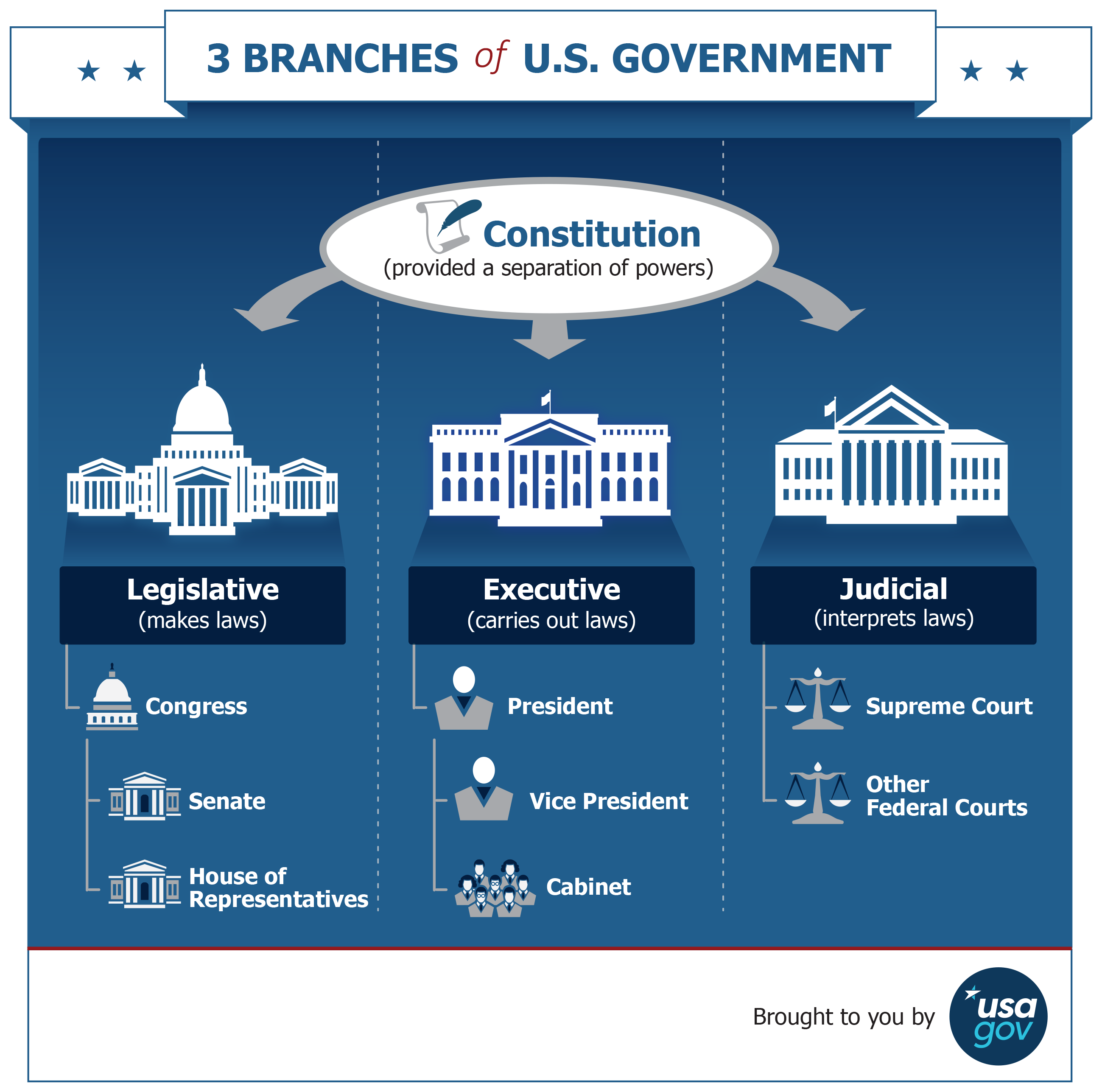
The division of government into three branches—legislative, executive, and judicial—creates a system of checks and balances that directly impacts fiscal policy. Unlike a parliamentary system where the executive and legislative functions are fused, the American system often experiences “divided government.”
While this can lead to legislative gridlock, from a financial perspective, it often prevents radical, sudden shifts in economic policy. Significant changes to the tax code, such as the Tax Cuts and Jobs Act of 2017, require a rigorous legislative process. This inherent friction provides a level of macro-economic stability that allows long-term investors to plan decades into the future without fearing that a single election will overnight dismantle the entire financial regulatory framework.
The Federal System: 50 Laboratories of Financial Policy
America’s identity as a federal republic means that power is shared between the national government and the 50 individual states. This “dual sovereignty” has profound implications for personal finance, business operations, and taxation.
State-Level Taxation and Business Environments
Because states have the authority to set their own fiscal policies, the U.S. functions as a competitive marketplace for capital and labor. For example, states like Texas, Florida, and Nevada leverage the absence of state income tax to attract high-earning individuals and corporate headquarters. Conversely, states like California and New York focus on high-service, high-tax models to fund infrastructure and education.
For the business owner, the type of government in America allows for “jurisdictional arbitrage.” Companies can choose to incorporate in Delaware due to its sophisticated Chancery Court and business-friendly legal precedents, even if their physical operations are located elsewhere. This internal competition forces states to refine their financial incentives, ultimately driving innovation and efficiency across the national economy.
Regulatory Diversity in Financial Services
The federalist structure also extends to financial regulation. While federal bodies like the Securities and Exchange Commission (SEC) oversee national markets, state-level regulators often govern insurance, real estate, and local banking. This layered approach provides a safety net; if federal oversight is seen as too lax or too overbearing, state attorneys general often step in to enforce consumer protection laws. For the individual investor, this means multiple layers of recourse when dealing with financial fraud or institutional negligence.
The Representative Democracy and the Engine of Market Capitalism
While the U.S. is a republic by structure, it is a representative democracy by process. The citizenry elects officials who make decisions on spending, debt, and economic priorities. This democratic element ensures that the government remains responsive to the economic needs of the population, though it also introduces the “political business cycle.”
The Federal Reserve and Monetary Independence
A unique feature of the American governmental apparatus is the Federal Reserve, the nation’s central bank. While created by an act of Congress, it operates with a high degree of independence from the democratic process. This “technocratic” layer of government is tasked with the dual mandate of maximizing employment and stabilizing prices.
For those focused on money and investing, the Fed is perhaps the most influential governmental body. By setting the federal funds rate and managing the money supply, it dictates the cost of borrowing for everything from mortgages to corporate M&A. The fact that the Fed is insulated from direct political pressure—unlike in some other government types where the executive might print money to fund short-term populist goals—is a cornerstone of the U.S. dollar’s status as the world’s primary reserve currency.
Public Debt and the Legislative Power of the Purse
In the American system, the “power of the purse” resides with Congress. This means that all government spending and the authority to issue debt must be approved by elected representatives. The recurring debates over the debt ceiling are a direct result of this democratic oversight. While these debates can cause short-term market volatility, they represent a fundamental check on executive overreach and ensure that the nation’s balance sheet is, at least in theory, subject to public scrutiny and debate.
Navigating the Financial Implications of the American Model
For the individual looking to build wealth or manage a business, the “type of government” in America translates into a specific set of risks and opportunities. The system is designed to reward risk-taking and capital accumulation, but it also requires a high degree of self-reliance.
The Shift Toward Individual Financial Responsibility
The American model of government generally favors market-based solutions over state-provided social safety nets, compared to many European social democracies. This is reflected in the shift from defined-benefit pensions to defined-contribution plans like the 401(k) and IRA. In this system, the government provides the tax-advantaged “vessel” for wealth creation, but the responsibility for investment choices and retirement security falls on the individual. Understanding the tax code—a product of legislative compromise—is therefore one of the most important financial skills an American can possess.
Intellectual Property and the Innovation Economy
The U.S. government is one of the few in the world with a constitutional mandate “to promote the Progress of Science and useful Arts.” This is achieved through the patent and trademark system. In an information-age economy, the type of government that prioritizes intellectual property (IP) rights is the one where innovation flourishes. From a “Money” perspective, the U.S. government acts as a guarantor of intangible assets, allowing tech startups and pharmaceutical companies to command multi-billion dollar valuations based on their IP alone.
Conclusion: The Synergy of Governance and Wealth
The type of government in America—a federal constitutional republic with strong democratic traditions—is the silent partner in every financial transaction. It provides the legal infrastructure for markets to function, the judicial oversight to ensure fairness, and the competitive federalist environment that encourages economic mobility.
For the investor, the primary takeaway is that the American system is designed for durability and the protection of capital. While political rhetoric may fluctuate and election cycles may create temporary uncertainty, the underlying constitutional protections for property and the independence of key financial institutions like the Federal Reserve create a resilient environment for long-term wealth building. By understanding these structural components, one can better navigate the complexities of taxes, regulations, and market trends that define the American economic experience.
aViewFromTheCave is a participant in the Amazon Services LLC Associates Program, an affiliate advertising program designed to provide a means for sites to earn advertising fees by advertising and linking to Amazon.com. Amazon, the Amazon logo, AmazonSupply, and the AmazonSupply logo are trademarks of Amazon.com, Inc. or its affiliates. As an Amazon Associate we earn affiliate commissions from qualifying purchases.