
For many property owners and real estate investors, a steep embankment is often viewed as a “dead zone”—a topographical liability that demands expensive maintenance while offering zero utility. In traditional property management, these inclines are cost centers, requiring specialized mowing equipment, high labor costs, and constant battles against erosion. However, from a financial perspective, shifting the paradigm from maintenance to production can transform these unusable slopes into high-yield assets.
Turning a hill that is too steep to mow into a productive landscape is an exercise in niche agricultural business and strategic asset appreciation. By selecting the right high-value crops or long-term groundcovers, an owner can mitigate risk, eliminate recurring maintenance overhead, and generate a side income or significant property value increase.
Turning Topographical Liabilities into Financial Assets
In the world of personal finance and real estate, every square foot of land should ideally work for the owner. When land sits idle or, worse, requires constant capital infusion for basic upkeep, it drags down the overall Return on Investment (ROI) of the property. A steep hill is a prime example of this inefficiency.
The Hidden ROI of Steep Terrain
The financial benefit of planting a steep slope goes beyond simple aesthetics. First, there is the immediate reduction in “maintenance depreciation.” Mowing a steep hill is not just difficult; it is dangerous and hard on equipment, leading to higher insurance premiums for commercial properties or increased repair costs for residential owners. By replacing grass with self-sustaining, high-value perennials, you effectively “fire” your most expensive maintenance tasks.
Furthermore, verticality offers a unique advantage for certain types of high-margin crops. Many high-value plants thrive on the superior drainage provided by a slope, which prevents root rot and allows for higher density planting than would be possible on flat ground. When viewed through the lens of a micro-business, a steep hill increases your usable surface area relative to your property’s flat footprint.
Reducing Long-Term Maintenance Overheads
Consider the lifetime cost of mowing a one-acre steep slope. Between fuel, equipment depreciation, and the labor hours (or the cost of a professional landscaping service), the expenses can run into the thousands of dollars annually. Over a ten-year horizon, this is a significant leak in a personal or business budget.
Transitioning this space into a permanent, low-maintenance planting scheme converts that recurring expense into a one-time capital investment. If the chosen plants are “set-and-forget” varieties or profit-generating perennials, the break-even point is often reached within three to five years, after which the land begins to contribute to the owner’s net worth rather than detracting from it.
High-Value Niche Crops for Vertical Revenue
If you are looking to generate an active or passive side hustle from your terrain, the choice of vegetation is critical. The goal is to select plants that require minimal intervention once established but command a premium in the marketplace.
Lavender and Perennial Herbs for Small-Batch Manufacturing
Lavender is perhaps the gold standard for profitable slope management. It thrives in well-drained, poor-quality soil—precisely what is found on most steep hills. From a business standpoint, lavender is highly versatile. A well-maintained lavender slope can be monetized in several ways:
- Essential Oils: High-grade lavender oil commands significant prices in the wellness and cosmetic markets.
- Dried Bundles: Direct-to-consumer sales at farmers’ markets or via online platforms like Etsy can yield high margins with minimal processing.
- Agri-tourism: If the slope is visible and accessible, it can serve as a backdrop for “pick-your-own” events or professional photography sessions, creating a secondary revenue stream.
Other perennial herbs like rosemary, thyme, and sage also perform well on slopes and can be dried and packaged for artisanal culinary brands, capitalizing on the growing trend of locally sourced, organic spices.
Elderberry and Berry Cultivation for the Health Market
For slopes with slightly more moisture, elderberries represent a surging market opportunity. The demand for elderberry syrup and supplements has exploded in the health and wellness sector. Elderberries are remarkably hardy and their extensive root systems make them excellent for stabilizing steep banks.
Similarly, high-bush blueberries or raspberries can be trellised or allowed to grow in managed thickets on a slope. While the harvest labor is higher, the “organic, hillside-grown” branding allows for premium pricing. For the investor, this is a way to turn a “mowing problem” into a “specialty food business.”
Specialized Groundcovers for Real Estate Appreciation
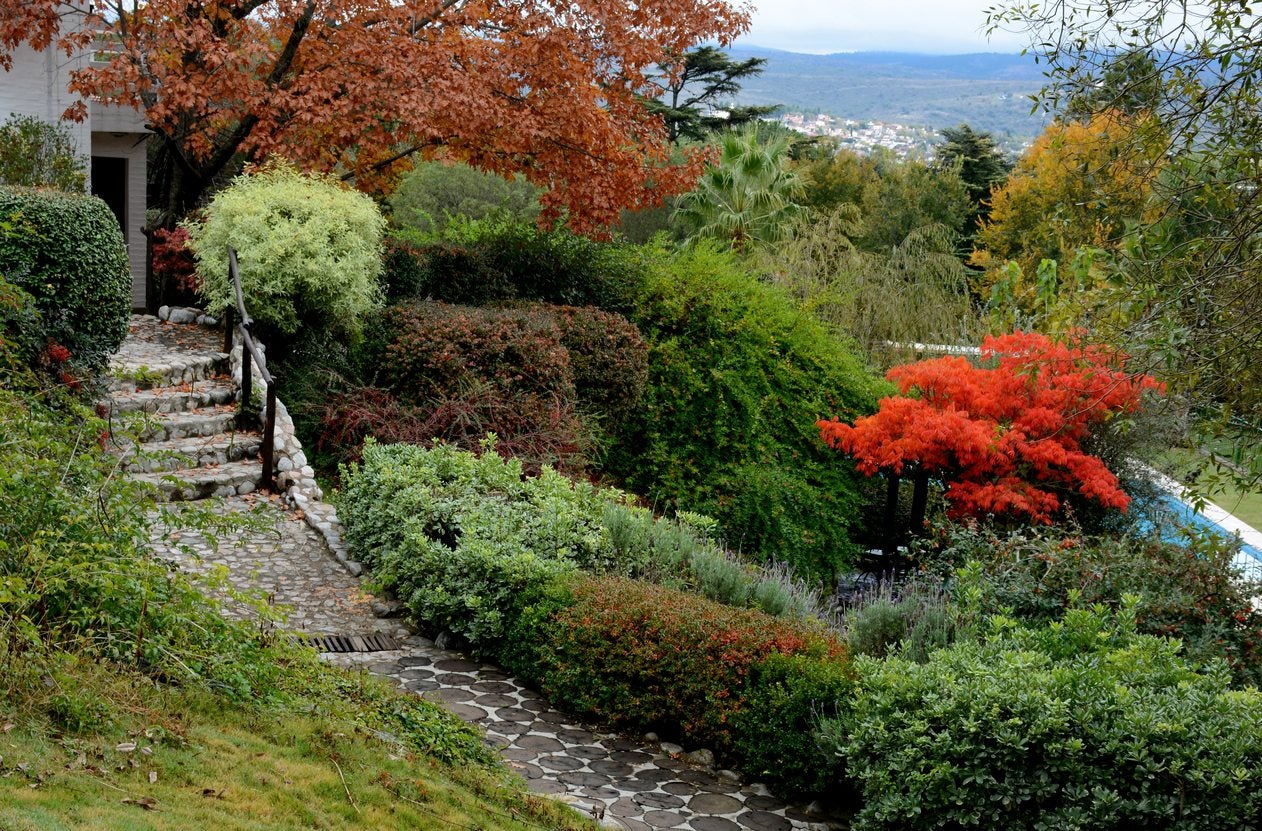
If active farming is not the goal, the focus should shift to “value-add” landscaping. Groundcovers like creeping juniper, vinca minor, or pachysandra create a lush, evergreen carpet that requires zero mowing. In the real estate market, a property that features a “maintenance-free” landscape is a significant selling point. For a commercial developer, this translates to lower Common Area Maintenance (CAM) fees, making the units more attractive to savvy tenants.
The Business of Erosion Control: Protecting Your Real Estate Investment
Beyond generating income, planting a steep hill is a defensive financial strategy. Erosion is the silent thief of land value. A single heavy rainstorm on an untended slope can wash away topsoil, undermine foundations, and create massive liabilities in the form of silt runoff into neighboring properties or public sewers.
Mitigating Risk through Bio-Engineering
Traditional engineering solutions for steep slopes—such as retaining walls—are incredibly expensive, often costing tens of thousands of dollars for even a modest incline. Bio-engineering, or using deep-rooted plants to stabilize the soil, is a fraction of the cost.
Plants with “fibrous” root systems act like a natural rebar for the soil. From a financial risk management perspective, investing $2,000 in native grasses and deep-rooted shrubs is an insurance policy against a $50,000 landslide or foundation repair. This is a crucial consideration for any property owner looking to preserve the long-term equity of their real estate investment.
Sustainable Practices as a Brand Differentiator
In today’s market, “Green” branding has tangible value. Whether you are a homeowner looking to sell or a business owner looking to attract customers, a steep hill planted with native, pollinator-friendly species serves as a visible commitment to sustainability.
This can be leveraged in marketing materials to justify higher price points or to qualify for “Green Building” certifications, which can lead to tax breaks or lower interest rates on commercial loans. Transforming a “mowable” lawn into a bio-diverse hillside is an investment in your brand’s social capital.
Monetizing the Landscape: From Side Hustle to Scalable Business
Once the plants are in the ground and the slope is stabilized, the transition from a landscaping project to a business venture begins. The steepness of the hill, once a barrier, now becomes part of the “origin story” of the products.
Direct-to-Consumer Sales and Local Markets
The rise of the “micro-farm” has made it easier than ever to monetize small plots of land. Using social media and local e-commerce platforms, products harvested from your hillside can be sold directly to the local community. This eliminates the middleman and maximizes the profit per square foot.
For instance, if you plant “edible” groundcovers like creeping thyme or wild strawberries, these can be marketed as niche, gourmet ingredients to local chefs. The scarcity of these products often allows the grower to set the price, rather than being a price-taker in a commoditized market.
Agri-Tourism and Aesthetic Value Add
For those with significant acreage, the “unmowable” hill can become a destination. Vineyards have used steep slopes for centuries to maximize sun exposure and drainage, but the model applies to more than just grapes. Wildflower hillsides can be used for “bee-keeping” businesses, where the honey is sold at a premium because of the specific floral source.
The aesthetic beauty of a productive hillside also increases the “curb appeal” of a property. In residential real estate, a beautifully landscaped slope can add 5% to 15% to the total property value compared to a weed-choked or difficult-to-maintain grass incline. For a $500,000 home, that is a $25,000 to $75,000 increase in equity.
Tax Incentives and Financial Planning for Difficult Terrain
Finally, many jurisdictions offer financial incentives for converting managed turf into “conservation” areas or productive agricultural land. In the United States, programs through the USDA or local Soil and Water Conservation Districts may offer grants or cost-sharing to help pay for the initial planting of steep slopes to prevent erosion.
Furthermore, if the slope is used for a legitimate business purpose—such as a lavender farm or a nursery—the costs associated with the plants, irrigation, and tools are tax-deductible as business expenses. This allows the property owner to use pre-tax dollars to improve their land, effectively subsidizing the increase in property value.
In conclusion, a hill that is too steep to mow is not a waste of space; it is an untapped financial opportunity. By moving away from the expensive and hazardous cycle of mowing and toward a strategy of high-value planting, property owners can protect their investment, reduce their overhead, and potentially launch a profitable new business venture. Whether the goal is capital appreciation or cash flow, the answer lies in what you choose to plant.
aViewFromTheCave is a participant in the Amazon Services LLC Associates Program, an affiliate advertising program designed to provide a means for sites to earn advertising fees by advertising and linking to Amazon.com. Amazon, the Amazon logo, AmazonSupply, and the AmazonSupply logo are trademarks of Amazon.com, Inc. or its affiliates. As an Amazon Associate we earn affiliate commissions from qualifying purchases.