
In the complex ecosystem of global finance, few metrics carry as much weight—or spark as much debate—as the percentage of a nation’s Gross Domestic Product (GDP) allocated to military spending. For economists, investors, and taxpayers, this figure is more than a measure of national security; it is a profound statement of fiscal priority. It represents a fundamental choice in the allocation of scarce resources, often referred to in economic theory as the “guns versus butter” model. This article explores the financial intricacies of defense budgets, the macroeconomic implications of high military expenditure, and what these numbers mean for the global investment landscape.
Understanding the Fiscal Weight of Defense Budgets
To understand the financial impact of military spending, one must first look at the relationship between a nation’s total economic output and its defense appropriations. GDP represents the total value of all goods and services produced within a country over a specific period. When we talk about military spending as a percentage of GDP, we are essentially discussing the “defense burden”—the slice of the economic pie that is diverted from the civilian economy to the state’s security apparatus.
Defining Military Expenditure vs. Total GDP
Military expenditure is not a monolithic figure. From a financial accounting perspective, it encompasses far more than just hardware and weaponry. It includes personnel costs (salaries and benefits), operations and maintenance, research and development (R&D), and procurement. In many developed nations, the cost of maintaining a standing army and providing healthcare for veterans accounts for a significant portion of the budget even before a single tank or aircraft is purchased.
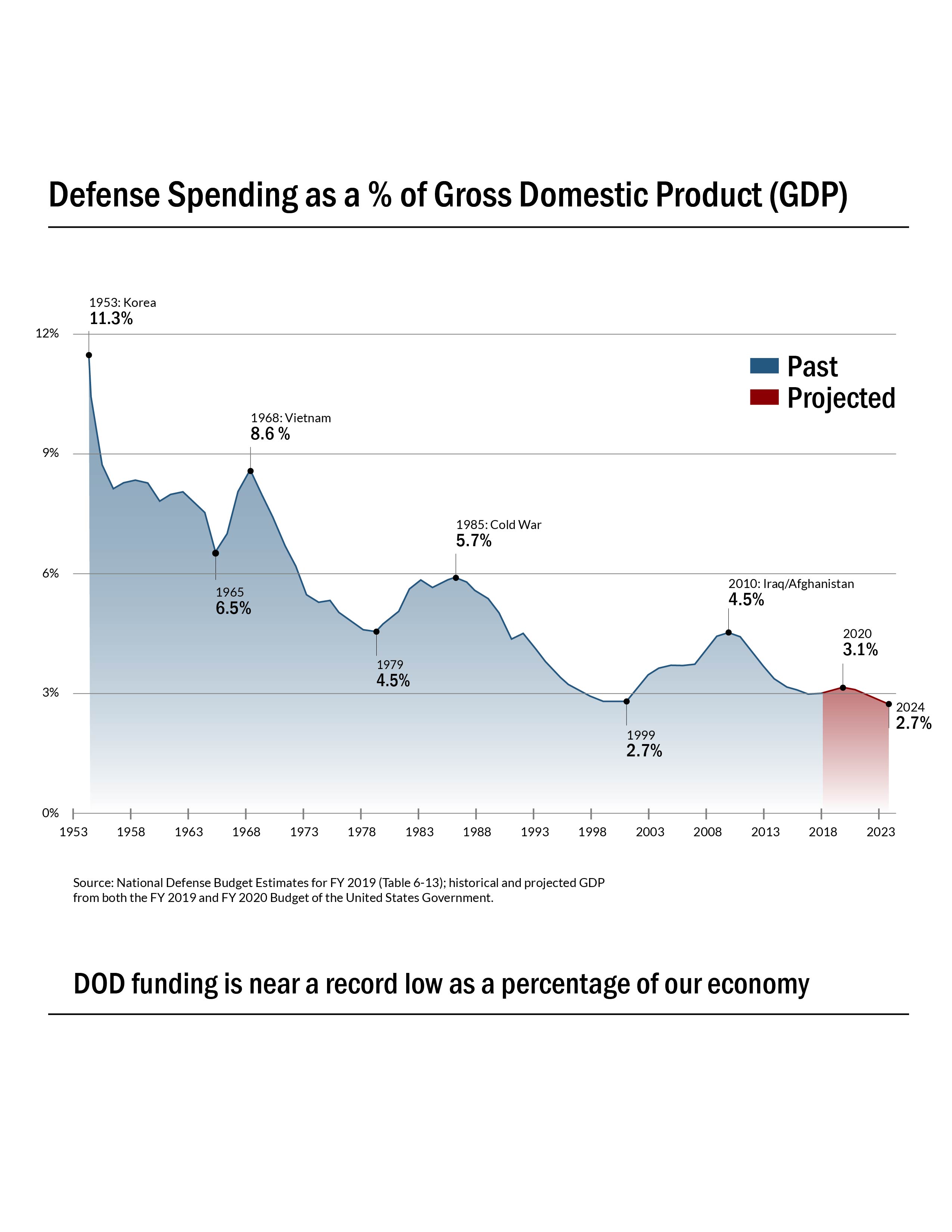
When this expenditure is measured against GDP, it provides a normalized view of how much an economy is “taxed” by its security requirements. For instance, a small nation spending 5% of its GDP on defense may be under more financial strain than a superpower spending 3% of a much larger GDP. For financial analysts, the trend line of this percentage is often more telling than the raw dollar amount, as it signals shifts in fiscal policy and national risk appetite.
The “Guns vs. Butter” Debate in Modern Economics
At its core, military spending is an exercise in opportunity cost. Every dollar funneled into a missile system is a dollar that cannot be invested in infrastructure, education, or healthcare. This is the classic “guns versus butter” trade-off. From a business finance perspective, this is a question of capital allocation.
High defense spending can act as a drag on long-term economic growth if it leads to “crowding out.” This occurs when heavy government borrowing to fund the military drives up interest rates, making it more expensive for private businesses to borrow and invest. However, proponents of defense spending point to the “multiplier effect,” where government contracts stimulate industrial production and create high-skilled jobs, potentially offsetting the initial cost.
Global Trends: Who Spends the Most and Why?
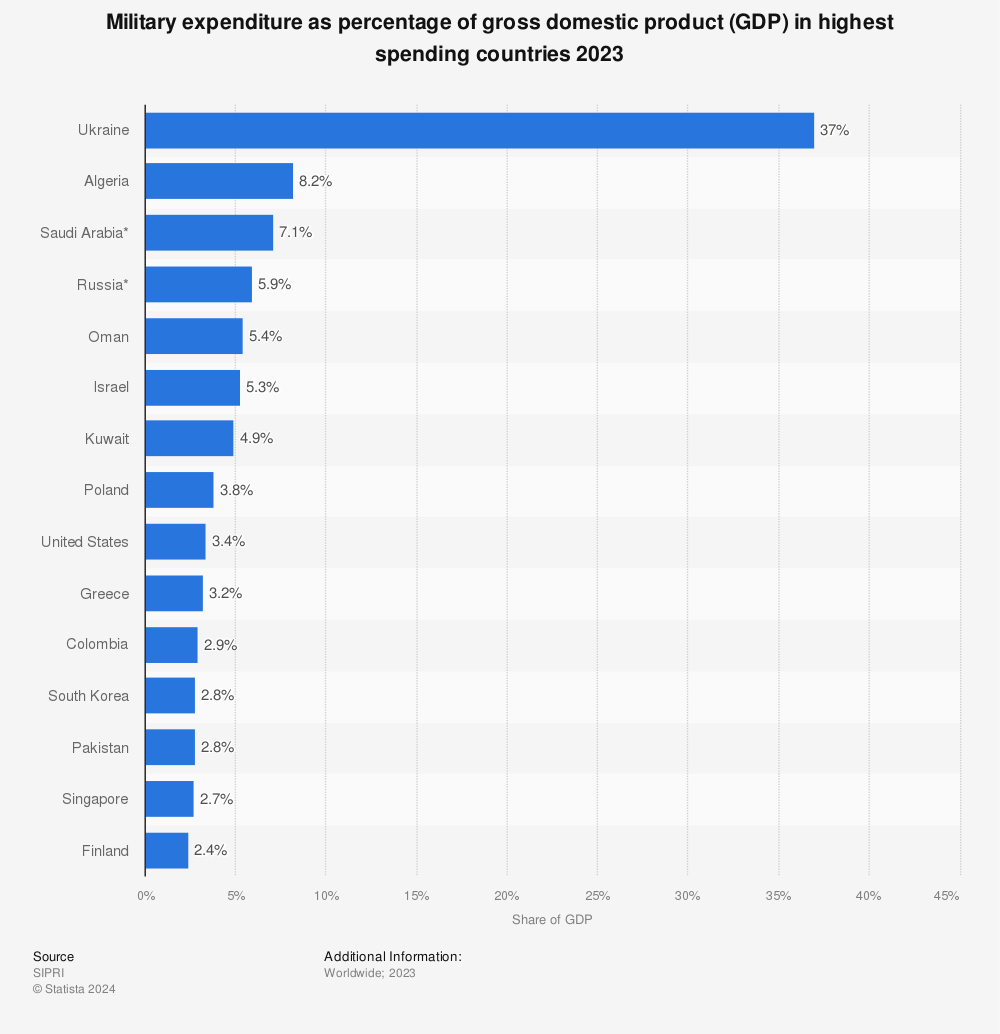
The distribution of military spending as a percentage of GDP is highly uneven across the globe, dictated by geopolitical tensions, historical alliances, and economic capacity.
The 2% NATO Benchmark and Economic Pressures
In the realm of international finance and diplomacy, the 2% target set by NATO is perhaps the most famous benchmark in defense economics. This guideline suggests that member states should spend at least 2% of their GDP on defense. For many European nations, reaching this target has been a significant fiscal challenge, requiring difficult budgetary adjustments.
From a financial planning perspective, the push to meet the 2% threshold represents a massive transfer of capital. For a country with a $2 trillion GDP, moving from 1.2% to 2% spending necessitates an additional $16 billion in annual expenditure. This shift requires either increased taxation, a reduction in other public services, or an increase in sovereign debt. Investors monitor these shifts closely, as they often precede large-scale procurement cycles that benefit specific industrial sectors.
Emerging Markets and the Escalation of Defense Portfolios
In emerging markets, the percentage of GDP spent on the military often fluctuates based on regional stability and the desire for technological sovereignty. Countries in the Middle East, for example, frequently top the charts, with some nations spending upwards of 7% to 10% of their GDP on defense.
This high level of spending is often viewed by financial analysts as a double-edged sword. While it secures the state, it can lead to significant fiscal deficits and a reliance on volatile commodity prices (like oil) to fund the budget. Conversely, nations like India and China have seen their raw defense spending skyrocket in tandem with their GDP growth, even if their percentage of GDP spent on military remains relatively stable. This demonstrates how a growing economic engine can support a massive military expansion without necessarily increasing the relative fiscal burden on the state.
The Impact of Military Spending on National Economies

The financial ramifications of defense spending extend far beyond the budget office. It influences inflation, technological innovation, and the overall health of the manufacturing sector.
Crowding Out Effect on Private Investment
One of the primary concerns for financial strategists is the “crowding out” effect. When a government prioritizes military spending, particularly through deficit spending, it competes with the private sector for capital. This can lead to higher yields on government bonds, which in turn raises the benchmark for corporate lending. For a mid-sized corporation looking to expand, the financial “noise” created by a massive defense budget can lead to tighter credit markets and reduced capital expenditure (CAPEX).
Furthermore, military spending is often criticized for being “unproductive” in a traditional economic sense. While a bridge or a broadband network facilitates further economic activity and trade, a fighter jet does not generate a direct return on investment (ROI) once it is built. It is a sunk cost designed for deterrence rather than commerce.
Technological Spillovers and Economic Stimulus
However, the narrative of military spending as a purely “extractive” financial force is incomplete. Historically, some of the most significant technological breakthroughs of the modern era—the internet, GPS, and jet engines—were the products of military R&D.
From a venture capital and private equity perspective, the military acts as a “de-risker” for fundamental research. The government takes on the initial financial risk of developing unproven technologies. Once these technologies mature, they “spill over” into the civilian market, creating entirely new industries and investment opportunities. Therefore, a portion of the GDP spent on military R&D can be viewed as a long-term investment in national innovation, provided the mechanisms for technology transfer are efficient.
Investment Implications: The Defense Sector and the Stock Market
For individual and institutional investors, the percentage of GDP spent on the military is a key macro indicator for the aerospace and defense (A&D) sector.
Defense Stocks as a Hedge Against Geopolitical Volatility
The defense sector is often categorized as a “defensive” play in a portfolio—pun intended. Because military budgets are set by governments and are often tied to multi-year contracts, defense companies tend to have more predictable cash flows than consumer-facing businesses. When a nation announces an increase in defense spending as a percentage of GDP, it typically leads to a re-rating of stocks in that sector.
Investors look for companies that dominate “Program of Record” contracts. These are long-term commitments that can span decades, providing a financial moat that is rare in other industries. Additionally, during times of geopolitical uncertainty, defense stocks often act as a hedge, performing well when the broader market is rattled by the prospect of conflict.
Analyzing the Sustainability of High Defense Spending
A critical aspect of financial analysis is determining whether high levels of military spending are sustainable. A nation spending 5% of its GDP on its military while running a 10% fiscal deficit is on a precarious path. Eventually, the cost of servicing the national debt can eclipse the defense budget itself.
Investors must look at the “debt-to-GDP” ratio alongside “defense-to-GDP” to get a full picture of a country’s fiscal health. If military spending is perceived to be unsustainable, it can lead to currency devaluation and capital flight. For global investors, the goal is to identify nations that can maintain a robust defense posture without compromising their sovereign credit rating.
Future Outlook: Digital Warfare and the Shifting Financial Landscape
As we look toward the future, the nature of military spending is undergoing a fundamental transformation. The traditional “iron and steel” military is being augmented, and in some cases replaced, by digital and autonomous systems. This has significant implications for how GDP is allocated.
The shift toward cyber-defense, artificial intelligence, and electronic warfare means that a larger percentage of military budgets is being directed toward software and tech services rather than traditional heavy manufacturing. This shift is attracting a new class of “DefenseTech” startups and silicon-valley style venture capital into a space once dominated by a few massive conglomerates.
For the economy, this is a positive development. Software-based defense spending often has lower “maintenance” costs than physical hardware and higher potential for dual-use civilian applications. As nations recalibrate their defense spending for the 21st century, the focus will likely shift from the total percentage of GDP spent to the efficiency of that spend. In an era of tightening budgets and aging populations, the winners will be the nations that can achieve maximum security at the lowest possible cost to the civilian economy.
Ultimately, military spending as a percentage of GDP remains a vital barometer of a nation’s financial health and strategic intent. For those navigating the world of money and finance, understanding these numbers is essential for gauging the stability of markets, the direction of innovation, and the long-term sustainability of national economies.
aViewFromTheCave is a participant in the Amazon Services LLC Associates Program, an affiliate advertising program designed to provide a means for sites to earn advertising fees by advertising and linking to Amazon.com. Amazon, the Amazon logo, AmazonSupply, and the AmazonSupply logo are trademarks of Amazon.com, Inc. or its affiliates. As an Amazon Associate we earn affiliate commissions from qualifying purchases.